Disclaimer: UK Tool Guide is reader-supported. When you buy through links on our site, we may earn an affiliate commission at no extra cost to you.
Angle grinders are versatile power tools that can be used for tasks such as cutting, grinding, sharpening, removing rust and preparing metal surfaces. They can be useful for DIY jobs ranging from trimming metal pipe and cutting bolts to cleaning up welds and removing rust from old tools.
In the UK, angle grinders are available in several sizes, power levels and configurations. 115mm grinders are a common choice for general DIY, while 125mm models offer a little more cutting capacity. Larger 230mm grinders are designed for heavier-duty work and can be useful for applications such as cutting masonry, concrete and thicker materials.
Choosing the right angle grinder depends on the jobs you plan to do, the materials you need to work with, your budget and whether you prefer a corded or cordless tool. Cordless grinders can offer excellent portability and modern brushless motors provide strong performance, while corded models can be useful when you need continuous power without stopping to change or recharge batteries.
In this guide, we’ll look at the main types of angle grinder available in the UK, the features worth considering and the different disc sizes and accessories available. We’ll also cover what to look for if you’re buying an angle grinder for general DIY rather than professional trade use.
Best Angle Grinders UK – Quick Summary
If you’re looking for an angle grinder for DIY, the right choice depends on the type of work you plan to do, the disc size you need and whether you want a corded or cordless tool.
Here are the angle grinders covered in this guide:
| Angle Grinder | Type | Disc Size | Suitable For |
|---|---|---|---|
| DeWalt DCG405N | Cordless | 115mm | General DIY and metalwork |
| Makita GA4530R | Corded | 115mm | General DIY and occasional cutting |
| Milwaukee M18 FUEL | Cordless | 115mm | Heavier-duty DIY and trade-style work |
| Bosch GWS 7-115 | Corded | 115mm | Compact general DIY use |
| Einhell TE-AG 18/115 | Cordless | 115mm | DIY users already using the 18V battery system |
These models cover a range of corded and cordless options, from compact 115mm grinders for general DIY to higher-performance cordless models.
Before choosing a grinder, consider the jobs you actually expect to do. For many DIY projects, a 115mm grinder provides a useful balance of size, handling and cutting capacity. Larger 125mm and 230mm models are also available if your projects require greater cutting depth or heavier-duty work.
Prices and specifications can change, so check the manufacturer’s current specifications before buying.
1. DEWALT DCG405N – 18V Brushless 115mm Angle Grinder
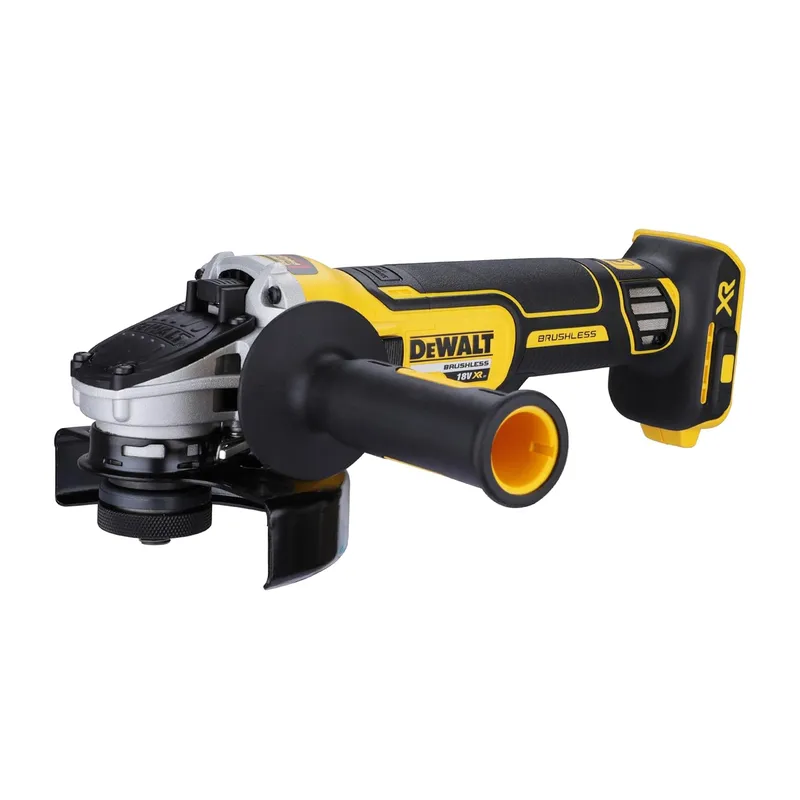
The DEWALT DCG405N is an 18V cordless angle grinder designed for use with 115mm discs. Its brushless motor, cordless design and compact format make it suitable for a range of general cutting and grinding tasks.
The DCG405N is supplied as a body-only tool, so you’ll need a compatible DEWALT battery and charger unless you already have them. DEWALT’s 18V XR battery system includes several battery capacities, giving users the option to balance runtime against overall tool weight.
Why Consider the DEWALT DCG405N?
One of the main reasons to consider the DCG405N is its 18V XR cordless platform. If you already own compatible DEWALT XR batteries, buying a body-only grinder can be a convenient way to add an angle grinder without purchasing another battery system.
The brushless motor is designed to improve efficiency and durability compared with older brushed designs. The cordless format also makes the grinder useful where there is no convenient power supply or where avoiding a trailing cable is helpful.
The 115mm disc size keeps the grinder relatively compact and makes it suitable for many general DIY cutting and grinding applications.
Features
The DCG405N includes several features intended to improve control and protection during use, including:
- 18V XR brushless motor – designed for efficiency and durability.
- Electronic brake – helps stop the disc quickly when the tool is switched off.
- Electronic clutch – helps reduce the reaction from kickback if the disc becomes pinched or stalls.
- Mesh debris covers – help limit dust and debris entering the motor.
- 115mm disc size – suitable for a range of cutting and grinding accessories.
- DEWALT XR battery compatibility – useful if you already own compatible 18V XR batteries.
What Can You Use It For?
With the correct accessory and guard configuration, an angle grinder such as the DCG405N can be used for jobs including:
- Cutting metal such as bolts, brackets and suitable pipe
- Grinding and cleaning metal surfaces
- Removing rust and corrosion
- Grinding welds
- Cutting suitable masonry materials with the appropriate diamond disc
The accessory must always be suitable for both the material and the particular grinder, and you should follow the manufacturer’s instructions for the tool and disc.
Pros
- Cordless 18V design
- Brushless motor
- Compact 115mm format
- Electronic brake and clutch
- Useful if you already own DEWALT XR batteries
- Suitable for a range of DIY cutting and grinding jobs
Cons
- Supplied body-only, so the battery and charger may need to be purchased separately
- A cordless grinder can become heavier with a larger-capacity battery
- 115mm disc size provides less cutting depth than a larger grinder
- Battery runtime depends on the battery capacity and the work being carried out
Who Is the DCG405N Suitable For?
The DCG405N may suit DIY users who:
- Already own DEWALT 18V XR batteries
- Want a cordless grinder for occasional DIY work
- Need a compact grinder for cutting and grinding metal
- Prefer not to work with a mains cable
- Want a brushless grinder with electronic protection features
If you don’t already own DEWALT batteries, remember to include the cost of a compatible battery and charger when comparing the overall price with a corded grinder or another cordless system.
Best Uses
For general DIY, the DCG405N is suited to jobs such as:
- Cutting bolts and threaded rod
- Cutting suitable metal pipe and brackets
- Grinding welds
- Removing rust and corrosion
- General metal preparation and grinding
For masonry, tiles or other specialist materials, use an accessory specifically designed for that material and check the manufacturer’s instructions before use.
My View
The DEWALT DCG405N remains a useful 115mm cordless angle grinder, particularly for DIYers who already have compatible DEWALT 18V XR batteries.
However, rather than describing it as the definitive “best overall” grinder, I’d look at it as one option in the 115mm cordless category. The right choice depends on the work you need to do, the battery platform you already use and the price of the complete tool setup.
DEWALT’s current UK range also includes newer 125mm 18V brushless grinders, so anyone buying a grinder in 2026 should compare the DCG405N with the manufacturer’s current models and specifications before making a decision.
Check Price for DeWalt DCG405N on Amazon UK2. Makita GA4530R – 720W Corded 115mm Angle Grinder
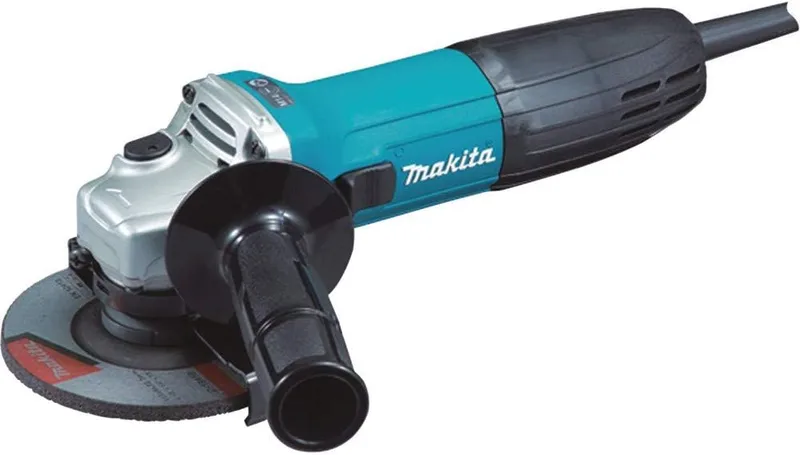
The Makita GA4530R is a compact 115mm corded angle grinder with a 720W motor. Its relatively small size and slim barrel design make it worth considering for general DIY jobs where a lightweight, easy-to-handle grinder is useful.
Because it is corded, the GA4530R doesn’t rely on batteries, making it suitable for users who want continuous mains power for cutting and grinding tasks.
Why Consider the Makita GA4530R?
The GA4530R combines a 720W motor with a compact 115mm design, making it suitable for a range of everyday DIY applications.
Its slim barrel grip can also make the tool easier to hold and control compared with larger-bodied grinders. However, comfort and handling are personal preferences, so it’s worth considering the grinder’s dimensions and weight alongside the type of work you plan to do.
Performance and Typical Uses
The GA4530R can be used with suitable accessories for tasks such as:
- Cutting suitable metal sections
- Cutting bolts, screws and brackets
- Removing rust and corrosion
- Grinding and cleaning metal surfaces
- Sharpening suitable tools
As with any angle grinder, the disc or accessory must be suitable for the material and the specific application.
One advantage of a corded grinder is that runtime isn’t limited by battery capacity. You do, however, need access to a suitable mains power supply and have to manage the power cable while working.
Key Features
- 720W motor – suitable for a range of general cutting and grinding applications.
- 115mm disc size – a common size for compact DIY angle grinders.
- 11,000 rpm no-load speed – check that any disc or accessory you use is rated appropriately.
- Anti-restart function – helps prevent the grinder from restarting automatically after an interruption to the power supply.
- Slim barrel grip – designed to provide a compact handhold.
- 240V corded design – provides continuous mains power without battery changes.
Pros
- Compact 115mm design
- 720W motor
- Corded operation provides continuous power
- Anti-restart protection
- Slim barrel grip
- Suitable for a range of general DIY jobs
Cons
- Requires access to mains power
- Less convenient than a cordless grinder when working away from a power supply
- Not designed for the cutting capacity of a larger 230mm grinder
- Fewer electronic protection features than some newer premium grinders
Who Is the Makita GA4530R Suitable For?
The GA4530R may suit:
- DIYers looking for a compact corded grinder
- Beginners who prefer a relatively small tool
- Users who don’t want to maintain a cordless battery platform
- Home workshops with convenient mains power
- People who mainly expect to carry out occasional cutting and grinding work
If you’re regularly cutting very thick steel, masonry or other heavy-duty materials, you may need a grinder with a different disc size and specification.
Best Uses
For general DIY, suitable applications include:
- Cutting bolts and threaded sections
- Cutting small metal brackets and sections
- Removing rust and corrosion
- Cleaning and grinding metal
- General workshop maintenance
Always use the correct disc for the material and application, and follow the grinder and accessory manufacturer’s instructions.
My View
The Makita GA4530R is a straightforward 115mm corded grinder that can make sense for DIY users who want a compact mains-powered tool.
Its 720W motor, 115mm disc size and anti-restart function give it a useful combination of features for general DIY work. Whether it represents the best value for you will depend on the current price, the work you intend to do and whether you prefer corded or cordless operation.
For someone who already has suitable mains power available and only needs an angle grinder occasionally, a compact corded model such as the GA4530R can be a practical alternative to buying into a cordless battery platform.
View on Amazon UK3. Milwaukee M18 FUEL – 115mm Cordless Angle Grinder for Heavy-Duty Work
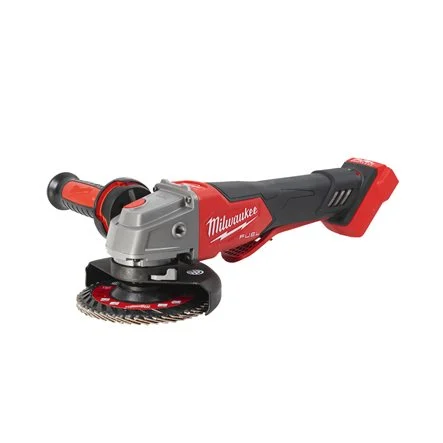
The Milwaukee M18 FUEL M18 FSAGV115XPDB-0X is an 18V cordless 115mm angle grinder designed for demanding cutting and grinding applications. It uses Milwaukee’s POWERSTATE brushless motor and REDLINK PLUS electronics, with features including RAPIDSTOP braking and a variable-speed control.
Milwaukee states that the grinder delivers corded performance similar to a 1,200W grinder, while retaining the portability of the M18 battery platform. The model is supplied without batteries, so the overall cost needs to be considered if you are not already using Milwaukee M18 tools.
Why Consider the Milwaukee M18 FUEL?
The main reason to consider this grinder is its combination of cordless convenience and higher-performance features.
The POWERSTATE brushless motor is combined with REDLINK PLUS electronics and Milwaukee’s REDLITHIUM battery system. The grinder also has a five-step speed dial, allowing the speed to be adjusted for different applications such as working with stainless steel and aluminium or removing rust and paint.
The 115mm disc size keeps the grinder within the compact angle-grinder category, while the manufacturer lists a maximum cutting depth of 28mm for this model.
Features
- POWERSTATE brushless motor – designed to provide high output and durability.
- REDLINK PLUS electronics – manages communication between the tool, motor and battery.
- RAPIDSTOP brake – Milwaukee states that the disc can stop in less than two seconds.
- Five-step variable speed control – useful for applications where different speeds are appropriate.
- Anti-kickback protection – designed to help reduce sudden tool movement in bind-up situations.
- Paddle switch with line-lockout – helps prevent automatic start-up after an interruption to the power supply.
- Anti-vibration side handle – designed to reduce vibration reaching the user’s hands.
- FIXTEC system – allows tool-free accessory changes on compatible accessories.
- Removable dust screen – helps protect the motor from debris.
- 115mm guard – designed for use with 115mm accessories.
Pros
- Cordless 18V design
- Brushless motor
- Variable-speed control
- Electronic braking and anti-kickback protection
- Paddle switch with line-lockout
- Compatible with the Milwaukee M18 battery system
- Designed for demanding professional applications
Cons
- More expensive than basic DIY grinders
- Heavier once a battery is fitted
- Battery and charger are not included with the body-only version
- 115mm disc size limits cutting depth compared with larger grinders
- The cost is harder to justify if you don’t already own M18 batteries
Who Is the Milwaukee M18 FUEL Suitable For?
This grinder may suit:
- Tradespeople who already use the Milwaukee M18 battery platform
- Professional users who need a cordless grinder for demanding work
- DIY users who regularly carry out heavier metalwork
- Users who want variable-speed control
- Anyone who values features such as electronic braking and anti-kickback protection
For occasional DIY jobs, a simpler corded 115mm grinder may provide enough capability at a lower overall cost.
Best Uses
With the correct accessory and guard configuration, the M18 FUEL can be used for applications such as:
- Cutting suitable metal sections
- Cutting rebar and steel components
- Grinding welds
- Removing rust and corrosion
- General metal preparation
- Cutting suitable masonry materials with the appropriate diamond accessory
Always check that the disc is suitable for the material, application and grinder before use.
My View
The Milwaukee M18 FUEL is a high-performance cordless 115mm angle grinder aimed more towards demanding DIY and professional use than occasional light-duty work.
Its combination of a brushless motor, variable-speed control, electronic braking, anti-kickback protection and M18 battery compatibility makes it a feature-rich option. Milwaukee’s stated 1,200W corded-equivalent performance also gives some context for where the grinder sits within the range.
However, the price and battery requirements are important considerations. If you already own M18 batteries, the body-only version can make more sense. If you are starting from scratch, compare the total cost of the grinder, battery and charger with suitable corded alternatives before buying.
View on Amazon UK4. Bosch Professional GWS 7‑115 – Compact Angle Grinder
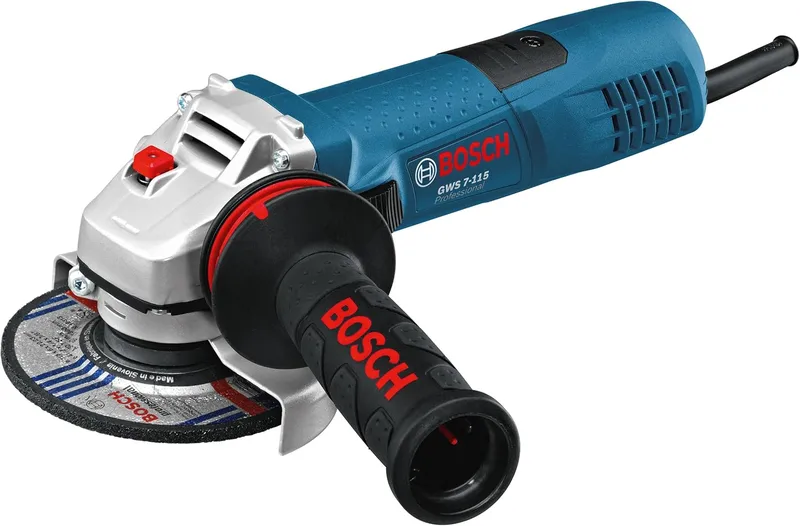
The Bosch GWS 7-115 Professional is a compact 115mm corded angle grinder designed for users who want a relatively small tool for general cutting and grinding work.
It has a 720W motor, an 11,000 rpm no-load speed and a slim 176mm grip circumference. Bosch also lists restart protection as one of its safety features.
The compact design makes the GWS 7-115 worth considering for DIY users who prefer a smaller grinder or regularly work where space is limited.
Why Consider the Bosch GWS 7-115?
One of the main features of the GWS 7-115 is its 176mm grip circumference. Bosch specifically highlights the slim grip as a feature designed to make the grinder easier to handle.
The 720W motor and 115mm disc size put it firmly in the compact general-purpose grinder category. It isn’t intended to provide the cutting capacity of a larger 230mm grinder, but the smaller format can be useful for everyday metalworking and DIY tasks.
Bosch lists the GWS 7-115 for applications including rough grinding of metal and stone, as well as cutting metal, tiles and bricks when used with the appropriate accessory.
Features
- 720W motor – provides power for a range of general cutting and grinding applications.
- 115mm disc size – a common size for compact angle grinders.
- 176mm grip circumference – Bosch’s slim-grip design for easier handling.
- 11,000 rpm no-load speed – accessories must be rated appropriately for the grinder.
- Restart protection – helps prevent the tool from automatically restarting after an interruption to the power supply.
- Compact design – useful when working in areas where a larger grinder would be awkward.
Pros
- Compact 115mm design
- 720W motor
- Slim 176mm grip
- Restart protection
- Suitable for general DIY cutting and grinding
- Bosch Professional range
Cons
- Corded rather than cordless
- 115mm disc limits cutting depth compared with larger grinders
- Not intended for the cutting capacity of a 230mm grinder
- 720W output is more suited to general work than very demanding applications
Who Is the Bosch GWS 7-115 Suitable For?
The GWS 7-115 may suit:
- DIYers who prefer a compact grinder
- Users who regularly work in tighter spaces
- Anyone looking for a straightforward corded 115mm grinder
- Users who already own Bosch Professional tools
- People carrying out occasional metal cutting, grinding or surface preparation
If your projects regularly involve thick steel, deep masonry cuts or other demanding applications, a larger or more powerful grinder may be more appropriate.
Best Uses
With the correct accessory, the GWS 7-115 can be used for tasks such as:
- Cutting suitable metal sections
- Cutting bolts and brackets
- Grinding metal surfaces
- Removing rust and corrosion
- Cleaning up welds
- Cutting suitable tiles or masonry materials
Always check the accessory manufacturer’s instructions and use a disc that is suitable for both the material and the grinder.
My View
The Bosch GWS 7-115 is a compact 115mm corded angle grinder aimed at users who value a relatively small format and straightforward operation.
Its 720W motor, slim grip and restart protection give it a useful specification for general DIY work. The main limitation is the same one you’ll find with other 115mm grinders: the smaller disc size means less cutting depth than larger machines.
If compact size and a corded power supply suit your projects, the GWS 7-115 is worth considering alongside other 115mm grinders before buying.
View at Amazon UK5. Einhell TE‑AG 18/115
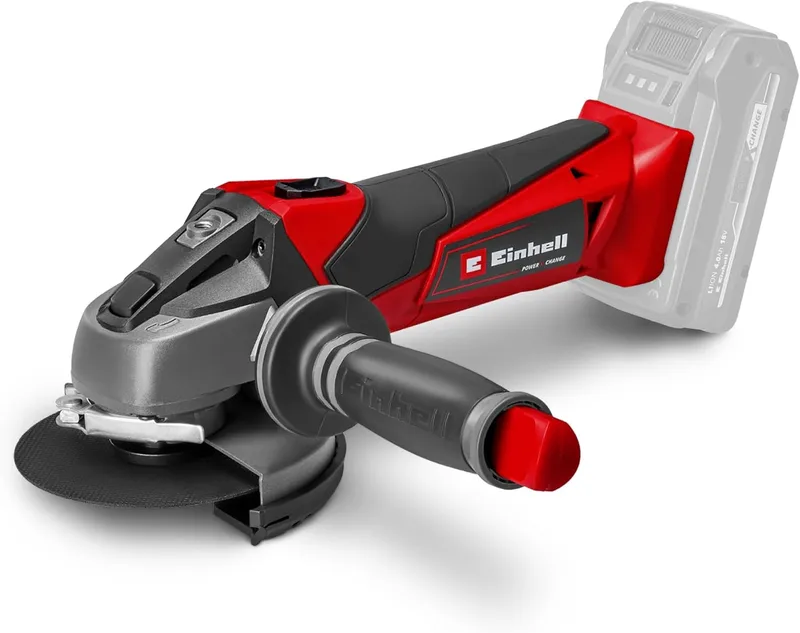
The Einhell TE-AG 18/115 is an 18V cordless angle grinder from Einhell’s Power X-Change battery system. It is aimed at DIY users who want the convenience of cordless operation without moving into the higher-priced professional tool ranges.
The 115mm disc size makes it suitable for a range of general cutting and grinding applications, while the Power X-Change system means the same battery can be used with other compatible Einhell tools.
Why Consider the Einhell TE-AG 18/115?
One of the main advantages of the TE-AG 18/115 is its place within the Power X-Change battery platform. If you already own compatible Einhell batteries, a body-only grinder can be a convenient way to add an angle grinder to your collection.
The grinder also has features aimed at making it easier to use for general DIY work, including a soft-start function and adjustable guard.
As with any cordless grinder, the battery you use will affect the overall weight, runtime and cost of the complete setup.
Typical Uses
With the correct disc or accessory, the TE-AG 18/115 can be used for tasks such as:
- Cutting suitable bolts and metal sections
- Removing rust and corrosion
- Grinding and cleaning metal
- General DIY metalwork
- Outdoor jobs where a power cable would be inconvenient
For masonry, tiles or other specialist materials, use an accessory specifically designed for the application and follow the manufacturer’s instructions.
Key Features
- 18V Power X-Change system – compatible with other tools using the same battery platform.
- 115mm disc size – suitable for a range of general DIY applications.
- Soft-start function – provides a more controlled start-up.
- Tool-free guard adjustment – allows the guard position to be adjusted without a separate tool.
- Auxiliary handle – provides an additional hand position for controlling the grinder.
Pros
- Cordless design
- Part of the Power X-Change battery system
- 115mm disc size
- Soft-start function
- Tool-free guard adjustment
- Suitable for general DIY use
Cons
- Battery and charger may need to be purchased separately
- Runtime depends on the battery capacity and work being carried out
- Less suited to demanding continuous work than higher-powered professional grinders
- Adding batteries increases the overall purchase cost
Who Is the Einhell TE-AG 18/115 Suitable For?
The TE-AG 18/115 may suit:
- DIYers looking for a cordless grinder
- Users who already own Power X-Change batteries
- Homeowners who only need an angle grinder occasionally
- People working outdoors or away from convenient mains power
- DIY users who don’t need a professional heavy-duty grinder
If you’re regularly cutting thick steel or carrying out demanding fabrication work, it’s worth comparing the grinder’s specifications with higher-performance cordless or corded models.
Best Uses
For general DIY, suitable applications can include:
- Cutting small metal sections
- Cutting bolts and brackets
- Removing rust and corrosion
- Light grinding work
- General outdoor maintenance
Always select an accessory that is suitable for the material, application and grinder.
My View
The Einhell TE-AG 18/115 is a cordless 115mm grinder aimed at general DIY users, particularly those already using the Power X-Change battery platform.
Its main attraction is the combination of cordless convenience, a compact 115mm format and compatibility with Einhell’s wider battery system.
If you’re starting from scratch, compare the complete cost of the grinder, battery and charger with corded alternatives and other cordless systems. If you already own compatible Power X-Change batteries, however, the body-only grinder may be a more straightforward addition to your existing tool collection.
View on Amazon UKHow to Choose An Angle Grinder
Choosing an angle grinder depends on the type of work you plan to do, how often you’ll use it, the materials you’ll work with and whether you prefer corded or cordless power.
For many DIY users, the choice between corded and cordless is one of the first decisions to make. Both have advantages, so it is worth considering how and where you expect to use the grinder.
Corded vs Cordless Angle Grinders
Cordless Angle Grinders
Cordless grinders can be useful when portability and freedom of movement are important. Modern brushless models can provide strong performance, while an 18V battery system can also be shared with other compatible tools.
They can be particularly convenient for outdoor work, garden projects and jobs where running a mains cable would be inconvenient.
Benefits of cordless grinders:
- No mains cable while working
- Easy to move around the work area
- Convenient for outdoor and remote jobs
- Useful if you already own compatible batteries
- Modern brushless models can provide strong performance
Drawbacks:
- Battery and charger may need to be purchased separately
- Runtime is limited by battery capacity and workload
- Larger batteries add weight
- Battery-powered tools can cost more as a complete setup
A cordless grinder can make sense if portability is important or you already use the same battery platform for other tools.
Corded Angle Grinders
Corded grinders connect directly to the mains and can provide continuous power without stopping to recharge or change a battery.
They can be particularly useful in a garage, workshop or other location where a suitable power supply is readily available.
Benefits of corded grinders:
- Continuous mains power
- No battery charging required
- Often lower purchase cost than a complete cordless setup
- No battery weight
- Suitable for longer periods of use where mains power is available
Drawbacks:
- Requires access to a suitable power supply
- Less convenient when working away from a socket
- The cable needs to be kept clear of the work area
- An extension lead may be required for some jobs
A corded grinder can be a practical choice if you mainly work at home, in a garage or workshop, and don’t need the portability of a cordless model.
Corded or Cordless: What Should You Consider?
Rather than choosing based solely on power, think about where you’ll use the grinder and how often.
| If you… | Consider |
|---|---|
| Already own compatible batteries | Cordless |
| Work mainly in a garage or workshop | Corded |
| Regularly work outdoors | Cordless |
| Want continuous power | Corded |
| Only use a grinder occasionally | Either |
| Want to avoid battery costs | Corded |
| Use several tools from one battery platform | Cordless |
The complete cost is also important. A body-only cordless grinder may look inexpensive, but the battery and charger can significantly increase the final price if you don’t already own them.
Angle grinders are commonly grouped by the diameter of the disc they use. The disc size affects the grinder’s cutting depth and overall size, although the actual cutting capacity depends on the particular model.
For general DIY, 115mm and 125mm grinders are common sizes to consider. Larger 230mm grinders are designed for deeper cuts and more demanding applications.
115mm Angle Grinders
115mm grinders are a compact option for general DIY work.
- Relatively small and easy to handle
- Suitable for many cutting and grinding applications
- Widely available in both corded and cordless models
- Useful for cutting suitable metal sections, bolts and brackets
- Suitable for rust removal and general metal preparation
For many occasional DIY jobs, a 115mm grinder provides a useful combination of size and cutting capacity.
125mm Angle Grinders
125mm grinders are slightly larger and can provide a little more cutting depth than 115mm models.
- Greater cutting capacity than a 115mm grinder
- Available in corded and cordless versions
- Suitable for general DIY and more demanding applications
- Useful where you need more cutting depth but don’t want a large 230mm grinder
A 125mm model can be a useful option if your projects regularly involve slightly thicker materials.
230mm Angle Grinders
230mm grinders are substantially larger than 115mm and 125mm models and are designed for applications where greater cutting depth is required.
- Much greater cutting depth
- Suitable for certain masonry and concrete cutting applications
- Can be used for larger and thicker materials with the correct accessory
- Generally heavier and more demanding to handle
Because of their size and the type of work they are designed for, 230mm grinders require particular care and are generally less suitable as a first angle grinder for basic DIY.
Which Disc Size Do You Need?
For many DIY users, the choice comes down to 115mm or 125mm. Consider the maximum material thickness you expect to cut, how much portability you need and how comfortable you are handling the tool.
Always check the manufacturer’s specified maximum disc diameter and cutting depth for the particular grinder rather than choosing based on disc size alone.
Motor Power
Motor power is worth considering when choosing an angle grinder, but wattage should not be the only factor. The disc size, motor design, intended use and features of the particular grinder can all affect how suitable it is for a job.
Corded Angle Grinder Power
Corded grinders are usually rated by their electrical input power in watts. As a general guide:
| Power rating | Typical use |
|---|---|
| 700–900W | General DIY, metal cutting and grinding |
| 900–1200W | More demanding DIY and regular use |
| 1200W+ | Heavier-duty cutting and grinding |
A 720W grinder can still be a useful option for general DIY. For example, the Bosch GWS 7-115 is a 720W 115mm grinder designed for applications including cutting metal, tiles and bricks with the appropriate accessory.
Rather than choosing a grinder simply because it has a higher wattage, consider the type and thickness of material you expect to cut or grind and check the manufacturer’s specifications.
Cordless Angle Grinder Power
Cordless grinders are generally described by their battery voltage, such as 18V, rather than by a wattage rating.
18V cordless grinders are widely available and can provide useful performance for general DIY. Brushless motors are also common on higher-specification cordless models and can offer advantages in efficiency and motor design.
For example, Bosch’s GWS 18V-7 is an 18V cordless 115mm grinder with a brushless motor, with Bosch stating that it delivers performance equivalent to a 700W corded grinder.
However, don’t assume that every 18V grinder will perform the same. Compare the manufacturer’s specifications for the particular model, along with battery capacity, disc size and intended applications.
Corded vs Cordless Motor Power
| Corded | Cordless |
|---|---|
| Continuous mains power | Powered by a rechargeable battery |
| No battery charging required | Portable and convenient away from sockets |
| Power is specified in watts | Usually specified by battery voltage |
| Useful for longer periods of work | Battery capacity affects runtime |
| No battery weight | Battery adds weight to the tool |
If you already own compatible batteries, a cordless grinder can make sense because you may be able to use your existing batteries and charger. If you are starting from scratch, remember to consider the cost of the complete setup, including the tool, batteries and charger.
For occasional workshop use near a power socket, a corded grinder can be a straightforward option. For outdoor work, vehicles or locations without convenient mains power, cordless can offer greater flexibility.rded Power Ratings
- 700–900W → Ideal for DIY
- 900–1200W → Stronger performance for tougher jobs
- 1200W+ → Heavy‑duty cutting and grinding
For most homeowners, 720–900W is more than enough.
Cordless Power Ratings
Cordless grinders are rated by battery voltage:
- 18V → Standard for most cordless grinders
- Brushless motors → Stronger, more efficient, longer‑lasting
If you want serious performance, choose an 18V brushless model.
- Corded (230V): Unlimited runtime and consistent power. Perfect if you work near garage sockets or at a workbench.
- Cordless (18V): Total freedom to work anywhere (gardens, vans, outbuildings), but requires keeping charged spare batteries on hand.
🛠️ Workshop Setup Tip: Buying individual cordless tools body-by-body is the quickest way to overspend on your workshop setup. If you are starting fresh, it is significantly cheaper to secure your batteries and chargers via a combo kit first. Read our full review of the best cordless drill twin packs uk to see the top-rated brushless drill and impact driver combinations that will kickstart your unified 18V tool platform.
Safety Features
Angle grinders can operate at high speeds and are capable of cutting and grinding tough materials, so safety features are worth considering when choosing a model.
The exact features vary between grinders, but the following are useful to look for.
Electronic Brake
An electronic brake helps slow or stop the disc quickly when the tool is switched off. This can reduce the time the disc continues spinning after you release the switch. The exact braking system varies between models, so check the manufacturer’s specification.
Soft Start
Soft-start technology gradually brings the motor up to speed rather than reaching full speed immediately.
This can make the grinder feel more controlled when starting, particularly on larger models, although it should not be treated as a substitute for a secure grip and correct operating technique.
Anti-Kickback Protection
Some angle grinders include electronic protection that detects situations such as a sudden disc bind or stall and shuts the motor down.
This can help reduce the risk associated with certain kickback situations, but it does not eliminate the risk of kickback. Correct discs, guards and safe working practices are still essential.
Tool-Free Guard Adjustment
A tool-free guard allows you to reposition the disc guard without using a separate tool.
The guard should always be positioned correctly for the operation and accessory being used. Never remove or bypass the guard simply to make a particular cut or grinding operation easier.
Restart Protection
Restart protection is designed to prevent the grinder from automatically restarting after an interruption to the power supply.
This can be particularly useful with corded grinders if the power is interrupted while the tool’s switch is still engaged. The grinder should require the user to switch it off and then restart it normally.
Other Features Worth Considering
Depending on the model, you may also find features such as:
- Overload protection – helps protect the motor if the grinder is heavily loaded.
- Anti-vibration handles – can make longer periods of work more comfortable.
- Paddle or dead-man switches – designed to stop the tool when the switch is released.
- Electronic speed control – available on some models where variable-speed operation is required.
Safety features can make a grinder easier to use, but they do not make an angle grinder safe to use incorrectly. Always use the correct disc and guard for the job and follow the manufacturer’s instructions.
Weight & Ergonomics
Weight and ergonomics are worth considering when choosing an angle grinder, particularly if you expect to use it for longer periods or in awkward positions.
A grinder that feels comfortable in the hand can be easier to position and control, while a heavier model may become tiring during extended use.
What to Look For
- Slim grip – can make the grinder easier to hold, particularly for users with smaller hands.
- Manageable weight – a lighter grinder may be easier to handle for overhead or awkward-position work.
- Low vibration – can make longer periods of use more comfortable.
- Good balance – cordless models should feel reasonably balanced with the battery fitted.
- Auxiliary handle – provides an additional gripping position and can be useful when controlling the grinder during cutting and grinding.
Don’t focus on the weight figure alone. A slightly heavier grinder may feel more comfortable if the weight is well distributed and the handles provide a secure grip.
For example, the Bosch GWS 7-115 is a compact 115mm corded grinder with a relatively slim grip design. This type of compact grinder may suit DIY users who prefer a smaller tool for general cutting and grinding work.
If possible, consider how the grinder feels in your hand before buying, or check the manufacturer’s dimensions, weight and handle design. For cordless models, remember that the battery adds to the overall weight, so check the complete tool-and-battery setup rather than looking only at the bare tool weight.
Battery Compatibility (Cordless Buyers)
If you’re buying a cordless angle grinder, it’s worth considering the battery platform before choosing a particular model.
Many manufacturers use shared battery systems, allowing the same batteries to power a range of compatible tools.
Common UK battery platforms include:
- DEWALT XR 18V
- Milwaukee M18
- Makita LXT 18V
- Einhell Power X-Change 18V
- Bosch Professional 18V
If you already own cordless tools from one of these systems, choosing a compatible angle grinder can be convenient because you may be able to use your existing batteries and charger.
If you’re starting from scratch, consider the complete cost of the platform, including the grinder, batteries and charger, rather than comparing the bare-tool price alone.
Why Battery Compatibility Matters
If you’re buying a cordless angle grinder, it’s worth considering the battery platform before choosing a particular model.
Many manufacturers use shared battery systems, allowing the same batteries to power a range of compatible tools.
Common UK battery platforms include:
- DEWALT XR 18V
- Milwaukee M18
- Makita LXT 18V
- Einhell Power X-Change 18V
- Bosch Professional 18V
If you already own cordless tools from one of these systems, choosing a compatible angle grinder can be convenient because you may be able to use your existing batteries and charger.
If you’re starting from scratch, consider the complete cost of the platform, including the grinder, batteries and charger, rather than comparing the bare-tool price alone.
Why Battery Compatibility Matters
If you’re buying a cordless angle grinder, it’s worth considering the battery platform before choosing a particular model.
Many manufacturers use shared battery systems, allowing the same batteries to power a range of compatible tools.
Common UK battery platforms include:
- DEWALT XR 18V
- Milwaukee M18
- Makita LXT 18V
- Einhell Power X-Change 18V
- Bosch Professional 18V
If you already own cordless tools from one of these systems, choosing a compatible angle grinder can be convenient because you may be able to use your existing batteries and charger.
If you’re starting from scratch, consider the complete cost of the platform, including the grinder, batteries and charger, rather than comparing the bare-tool price alone.
Using one battery platform across several tools can mean:
- Fewer batteries and chargers to manage
- Easier battery replacement between compatible tools
- Less need to buy a separate battery with every bare tool
- Greater choice when adding other tools from the same system
However, batteries are not interchangeable simply because they have the same voltage. For example, an 18V DEWALT battery is not compatible with an 18V Makita or Milwaukee tool.
Always check the manufacturer’s stated battery compatibility before buying.g.
Price Guide: What You Should Expect to Pay
Angle grinder prices vary considerably depending on the disc size, motor, brand, safety features and whether the tool is corded or cordless.
Rather than choosing purely by price, consider what you actually need the grinder to do and whether you already own compatible batteries.
| Approximate price | What to expect |
|---|---|
| Under £50 | Basic corded 115mm grinders and some entry-level models |
| £50–£100 | More established DIY and mid-range corded models |
| £100–£200 | Higher-specification corded or cordless body-only models |
| £200+ | Premium cordless models, larger grinders or kits including batteries and chargers |
These are general UK price ranges rather than fixed prices. Prices can change with promotions, retailers and product availability.
Corded Angle Grinders
Corded models are often the least expensive way to get started because you don’t need to buy a battery and charger.
For occasional DIY, a basic 115mm corded grinder may be sufficient. Spending more can give you features such as improved motor performance, electronic controls, better ergonomics or additional safety features.
Cordless Angle Grinders
Cordless grinders can cost more initially, particularly if you need to buy the battery and charger as well as the grinder.
If you already own compatible batteries, a body-only grinder can be considerably more practical because you may not need another battery and charger.
When comparing cordless prices, check whether the product is:
- Bare tool only
- Supplied with a battery
- Supplied with a battery and charger
- Supplied as a complete kit
A £100 cordless grinder without a battery is not necessarily cheaper than a £150 kit if you would otherwise need to buy the battery and charger separately.
Don’t Buy More Grinder Than You Need
For general DIY, you don’t necessarily need the most expensive or highest-powered angle grinder.
Consider the disc size, materials, frequency of use, power source and safety features before deciding how much to spend. For many occasional DIY jobs, a straightforward 115mm grinder may provide all the capacity you need.
Prices change regularly, so check the current retailer and manufacturer information before buying.
Which Grinder Should YOU Choose?
The right angle grinder depends mainly on how you plan to use it, whether you already own compatible batteries and how much cutting or grinding you expect to do.
Here is how the models covered in this guide compare:
| If you need… | Model to consider | Why |
|---|---|---|
| A straightforward corded grinder | Makita GA4530R | 720W 115mm design with continuous mains power |
| A compact corded grinder | Bosch GWS 7-115 | 720W 115mm grinder with a compact design |
| Cordless convenience | DEWALT DCG405N | 18V cordless 115mm grinder for users already using the DEWALT XR battery platform |
| Higher-performance cordless equipment | Milwaukee M18 FUEL | 18V 115mm grinder with features aimed at demanding applications |
| An entry-level cordless option | Einhell TE-AG 18/115 | 18V 115mm grinder for users already using the Power X-Change platform |
What Should You Consider?
If you mainly work near a power socket and want to avoid battery costs, a corded 115mm grinder may be a straightforward option.
If portability is important or you already own compatible batteries, a cordless 115mm grinder may be more convenient.
If you regularly work with thicker materials or more demanding applications, look at the grinder’s disc size, cutting capacity, motor specifications and safety features rather than choosing based on brand or price alone.
For cordless models, remember to include the cost of the battery and charger unless you already own compatible ones.
Before buying, check the manufacturer’s current specifications and make sure the grinder is suitable for the materials and accessories you intend to use.
115mm vs 230mm: Which Size Do You Need?
The difference between a 115mm and 230mm angle grinder is significant. The larger grinder can accommodate a much larger disc and generally provides considerably greater cutting depth, but it is also larger and heavier.
115mm (4.5 Inch)
A 115mm grinder is a common size for general DIY and is suitable for many smaller cutting and grinding jobs.
It can be useful for:
- Cutting suitable metal pipe, brackets and bolts
- Removing rust and surface corrosion
- Grinding and cleaning metal
- Cutting tiles with the correct diamond or tile-cutting accessory
- General DIY cutting and grinding
Its smaller size can make it easier to handle in confined spaces, although you should always use both hands and follow the manufacturer’s instructions for safe operation.
230mm (9 Inch)
A 230mm grinder is designed for applications where greater cutting depth and heavier-duty work are required.
It can be useful for:
- Cutting masonry and concrete with the correct diamond blade
- Cutting paving and other suitable building materials
- Deeper cuts through larger sections of material
- Heavy-duty cutting and grinding applications
230mm grinders are generally larger and heavier than 115mm models, so they require more space and careful handling.
Which Size Makes Sense for DIY?
For general DIY involving smaller metalwork, rust removal and occasional cutting, a 115mm grinder may provide sufficient capacity.
A 230mm grinder becomes more relevant when your projects involve thicker materials or deeper masonry and concrete cuts.
Don’t choose based on disc diameter alone. Check the manufacturer’s specified cutting depth, maximum disc size and intended applications for the particular grinder.
Essential Angle Grinder Accessories
1. Metal Cutting Discs
The right accessory can make an angle grinder useful for a wide range of cutting, grinding and surface-preparation jobs. However, discs and accessories are designed for specific applications, so always check that the accessory is suitable for your grinder, material and intended operation.
1. Metal Cutting Discs
Thin metal cutting discs, including 1mm discs, are available for angle grinders and are commonly used for cutting relatively thin sections of metal.
Best for:
- Cutting bolts, screws and threaded rod
- Cutting suitable metal pipe
- Cutting angle iron and box section
- Cutting brackets and other small metal sections
The correct disc thickness depends on the material, the type of cut and the manufacturer’s recommendations. Thinner discs can be useful for smaller metal-cutting jobs, while thicker cutting discs may be more appropriate for other applications.
Why Use a Cutting Disc?
A cutting disc is designed to make a cutting operation rather than side grinding. Using the correct disc for the job helps the grinder work as intended and reduces the risk of using an accessory outside its designed application.
Always check:
- The disc is the correct diameter for your grinder
- The disc’s maximum RPM rating is suitable for the grinder
- The disc is specifically designed for the material you’re cutting
- The disc is undamaged and within its usable condition
- The guard and other safety equipment are fitted correctly
Never use a cutting disc for side grinding. Cutting discs are designed for cutting and can be damaged if subjected to loads they were not designed to withstand.
For other jobs, such as removing rust, smoothing welds or preparing surfaces, use a suitable grinding or surface-preparation accessory rather than a cutting disc.
2. Grinding Discs
Grinding discs are thicker and designed for removing material rather than cutting. They’re perfect for shaping metal or cleaning up rough edges.
Best for:
- Smoothing welds
- Removing burrs
- Shaping metal edges
- Heavy material removalGrinding discs are generally thicker than cutting discs and are designed to remove material from a surface rather than make a cut through it.
- They can be useful for shaping and smoothing suitable metal surfaces and removing unwanted material.
- Best for:
- Smoothing welds
- Removing burrs and sharp edges
- Shaping suitable metal surfaces
- Removing surface material
- Preparing metal before further work
- Important Difference
- A grinding disc is designed for grinding, while a cutting disc is designed to make cuts.
- Never use a cutting disc for side grinding or deliberately apply sideways pressure to a cutting disc. Use the accessory for the operation it was designed for and follow the manufacturer’s instructions.
- Tip
- Grinding can remove material quickly, particularly with a coarse abrasive disc. Work carefully and avoid removing more material than necessary.
- Always check that the grinding disc is suitable for your angle grinder, has the correct diameter and RPM rating, and is intended for the material you’re working on. Inspect the disc for damage before use and replace it if it is cracked, damaged or otherwise unsuitable.
Tip:
Grinding discs remove material quickly — use with care to avoid taking off too much.
3. Flap Discs (Sanding/Finishing Discs)
Flap discs use overlapping abrasive flaps to remove material and finish metal surfaces. They can be useful when you want to combine material removal with surface finishing without switching between a grinding disc and a separate sanding accessory.
Best for:
- Smoothing welds
- Removing rust and surface corrosion
- Removing old paint from suitable metal surfaces
- Shaping and finishing metal
- Cleaning up rough edges after cutting
Flap Disc Grit Guide
The grit you choose depends on how much material you need to remove and the finish you want:
| Grit | Typical use |
|---|---|
| 40 grit | Faster, heavier material removal |
| 60 grit | General shaping and material removal |
| 80 grit | Smoother finishing and light material removal |
Finer grits are also available when a smoother finish is required.
Flap Discs vs Grinding Discs
A flap disc can provide a smoother finish than a coarse grinding disc while still allowing you to remove some material. However, it is not a replacement for every type of grinding disc.
Choose the accessory according to the job and the finish you need. Always check the flap disc’s maximum RPM, diameter and intended material before fitting it to your grinder.
As with any angle grinder accessory, inspect the disc before use and replace it if it is damaged or unsuitable.
4. Diamond Cutting Discs
Diamond cutting discs are designed for cutting hard mineral-based materials where a conventional metal cutting or abrasive disc would not be suitable.
Best for:
- Paving slabs
- Concrete
- Brick and block
- Tiles
- Natural and manufactured stone
Different diamond discs are designed for different materials, so check the manufacturer’s recommendations before buying.
Why Use a Diamond Disc?
Diamond cutting discs can be well suited to masonry and other hard mineral materials and may provide a longer service life than some conventional abrasive discs.
However, performance and disc life vary depending on the disc design, material being cut, cutting depth and frequency of use.
Always check:
- The disc is suitable for the material
- The diameter matches your grinder
- The maximum RPM rating is suitable
- The disc is designed for the type of cutting you intend to do
- Any wet-cutting requirements are followed
Diamond discs can produce significant amounts of dust when cutting masonry and concrete. Use appropriate dust-control measures and suitable respiratory protection where required, and follow the grinder and disc manufacturer’s instructions.y.
5. Wire Wheels & Wire Cups
Wire wheels and wire cup brushes are useful for cleaning and preparing metal surfaces. They can remove loose rust, paint, scale and other surface contamination without being primarily intended for heavy material removal.
Best for:
- Removing surface rust
- Removing loose paint and coatings
- Cleaning suitable metal surfaces
- Cleaning around welds
- Preparing metal before painting or further finishing
Types of Wire Accessories
- Wire wheel → useful for cleaning edges, profiles and more detailed areas
- Wire cup → useful for cleaning larger, relatively flat surfaces
- Smaller wire brushes → useful for accessing tighter areas, where the accessory is specifically designed for the grinder
Important Safety Warning
Wire bristles can break off and be thrown from the brush at high speed. Always wear suitable eye protection and follow the manufacturer’s recommendations for additional PPE.
Before use, check the brush for damaged or loose wires and make sure it is securely fitted to the grinder. Never exceed the accessory’s maximum rated speed.
Use the correct guard where required and keep other people away from the immediate work area while the grinder is operating..
6. Polishing Pads & Backing Plates
With a suitable backing plate and polishing pad, some angle grinders can be used for polishing certain metal surfaces.
This is a more specialised application, so check that the grinder, backing plate and pad are all designed to work together before use.
Best for:
- Polishing suitable stainless-steel surfaces
- Buffing and finishing metal
- Certain metal restoration projects
- Specialist polishing applications
What About Automotive Polishing?
Some variable-speed angle grinders can be used for certain automotive polishing tasks when fitted with the correct accessories and operated within the manufacturer’s recommended speed range.
However, a standard high-speed angle grinder is not automatically suitable for polishing vehicle paintwork. Excessive speed can generate heat and potentially damage the surface.
For regular automotive paint correction or polishing, a dedicated polishing machine may be more appropriate.
Important
Always check the maximum and minimum operating speeds specified for the polishing pad and backing plate. Never exceed the accessory’s rated speed.
Make sure the backing plate and pad are correctly fitted and compatible with the particular grinder before use.
7. Multi‑Material Discs
Some specialist multi-material discs are designed to cut more than one type of material. They can be useful when a particular project involves different materials and the disc manufacturer specifically states that it is suitable for them.
Potential uses:
- Cutting certain metals and other approved materials
- Cutting selected building materials
- Occasional DIY jobs involving more than one material
The materials a multi-material disc can safely cut depend on the specific disc. Always check the manufacturer’s instructions rather than assuming that a disc is suitable for every material.
Important Safety Point
Never use a standard metal cutting disc on wood. A metal cutting disc is not designed for wood and using the wrong accessory can increase the risk of binding, kickback or disc damage.
Wood-cutting accessories for angle grinders require particular care because wood can behave differently from metal or masonry during cutting. Only use an accessory specifically designed and approved for use with your particular grinder and the material being cut.
Before fitting any multi-material disc, check:
- The materials it is rated for
- The grinder’s compatible disc diameter
- The maximum RPM rating
- Whether a specific guard or fitting is required
- The manufacturer’s instructions for the intended application
If you’re regularly cutting different materials, using a purpose-designed disc for each material can be a simpler and more predictable approach.
8. Safety Accessories (Highly Recommended)
Angle grinders can produce sparks, flying particles, noise and dust, depending on the material and accessory being used. The right protective equipment should be selected for the particular job.
Essential Protection
- Safety glasses or suitable eye protection – protects against flying particles and debris.
- Face shield – can provide additional face protection, particularly during cutting and grinding. A face shield should generally be used alongside suitable eye protection rather than as a replacement for it.
- Hearing protection – useful because angle grinders can produce high noise levels.
- Suitable respiratory protection – may be required when cutting or grinding materials that produce hazardous or significant amounts of dust. Choose protection appropriate for the material and follow relevant guidance.
- Sturdy footwear – helps protect your feet from dropped materials and debris.
What About Gloves?
Suitable gloves may be appropriate for some angle-grinder tasks, particularly where there is a risk from sharp material or hot surfaces. However, gloves should not be treated as a substitute for safe working practices, and you should follow the grinder and PPE manufacturer’s guidance.
Anti-vibration gloves may also be available for some applications, although they should not be relied upon to remove the risks associated with vibration.
Protective Clothing
For work that produces sparks or hot particles, suitable non-flammable work clothing can provide additional protection. Avoid loose clothing that could interfere with the tool or rotating accessories.
The correct PPE depends on the material, accessory and type of work being carried out. Always follow the manufacturer’s instructions and relevant workplace or health-and-safety guidance.
9. Tool‑Free Disc Change Systems
Some angle grinders include features that make changing accessories quicker and more convenient. The exact system varies between manufacturers and models.
Common features include:
- Quick-release or tool-free nuts – allow certain compatible discs to be fitted without a traditional spanner.
- Push-button spindle locks – lock the spindle while the disc or accessory is being removed or fitted.
- Tool-free guard adjustment – allows the guard position to be changed without a separate tool.
These features can be useful if you regularly switch between different accessories, such as cutting and grinding discs.
Are Tool-Free Systems Worth Having?
They can save time, particularly when changing accessories regularly, but they shouldn’t be treated as a replacement for careful disc changes.
Before changing any disc or accessory:
- Switch the grinder off and disconnect it from the power source.
- For cordless models, remove the battery.
- Wait until the disc has completely stopped.
- Check that the replacement accessory is the correct type, diameter and RPM rating for the grinder.
- Fit the accessory according to the manufacturer’s instructions.
The exact fitting system and compatible accessories vary between grinders, so check the manufacturer’s instructions before using a quick-change system.
Summary: The Accessories You Should Always Have
For most UK DIYers, the essential starter kit includes:
- 1mm metal cutting discs
- 60–80 grit flap discs
- A diamond disc for masonry
- A wire wheel for rust removal
- A grinding disc for heavy shaping
With these five accessories, your grinder can handle almost any task around the home or woor many UK DIYers, a useful starting selection of angle grinder accessories might include:
| Accessory | Typical use |
|---|---|
| Metal cutting discs | Cutting suitable bolts, pipe, brackets and other metal sections |
| Flap discs | Smoothing welds, removing rust and finishing metal |
| Diamond cutting disc | Cutting suitable masonry, concrete, brick, tiles or stone |
| Wire wheel or cup | Removing surface rust, paint and other coatings |
| Grinding disc | Removing material, smoothing welds and shaping suitable metal |
You don’t necessarily need all five. Choose accessories based on the jobs you actually plan to do, and make sure each disc or accessory is specifically rated for your grinder and the material you’re working on.
Always check the accessory’s diameter, maximum RPM, intended application and any manufacturer instructions before fitting it to your grinder.
For beginners, buying fewer suitable accessories is generally more useful than building up a large collection that may not be needed.rkshop.
FFrequently Asked Questions About Angle Grinders
1. What size angle grinder is best for home use?
For many general DIY jobs, a 115mm angle grinder can be a practical choice because it is relatively compact and a wide range of compatible accessories are available.
A 115mm grinder can be suitable for jobs such as cutting smaller metal sections, removing rust, grinding welds and preparing metal surfaces.
A 125mm grinder provides greater disc diameter and can offer additional cutting capacity, while 230mm grinders are much larger and are generally intended for deeper cuts and more demanding applications.
The right size depends on the materials you expect to work with and the cutting depth you need.
2. Are cordless angle grinders powerful enough?
Modern cordless angle grinders can provide substantial performance, particularly higher-specification 18V brushless models.
Some manufacturers publish comparisons between particular cordless models and corded grinders, but performance varies between models. For example, Bosch lists the GWS 18V-7 as an 18V 115mm grinder with a brushless motor, while Milwaukee’s current 115mm M18 brushless model is specified as delivering performance similar to an 800W grinder.
Cordless grinders can be useful for:
- Outdoor work
- Work away from mains sockets
- Quick cutting and grinding jobs
- Situations where cable management is inconvenient
For longer periods of continuous work, a corded grinder avoids battery charging and changing. Consider the complete cost of the tool, batteries and charger when comparing the two.
3. Can I cut wood with an angle grinder?
Some specialist accessories are marketed for cutting or shaping wood with an angle grinder, but wood cutting with an angle grinder requires particular care because of the potential for the accessory to catch or bind.
A standard metal cutting disc should never be used to cut wood. Use only an accessory specifically designed and approved for the particular grinder and application.
For most general DIY wood-cutting jobs, a circular saw, jigsaw or reciprocating saw is usually a more appropriate tool.
If you’re considering a specialist wood-cutting accessory, check the manufacturer’s instructions carefully rather than assuming that any multi-material or carbide accessory is suitable.
4. What PPE should I wear when using an angle grinder?
The appropriate PPE depends on the material, accessory and type of work.
Useful protection can include:
- Suitable eye protection to protect against flying particles
- A face shield for additional face protection where appropriate
- Hearing protection because grinders can be noisy
- Suitable respiratory protection where dust presents a hazard
- Sturdy footwear to protect against dropped materials and debris
- Suitable protective clothing when working with sparks or hot particles
Gloves may be appropriate for some tasks, but they should not be relied upon as a substitute for safe working practices.
Always follow the grinder, disc and PPE manufacturer’s instructions.
5. Why does my angle grinder kick back?
Kickback can occur when a disc or accessory binds, catches or stalls in the material, causing the grinder to move suddenly.
Possible contributing factors include:
- The disc becoming trapped in the material
- Twisting the grinder during a cut
- Using an unsuitable or damaged accessory
- Applying excessive force
- Incorrect positioning of the tool or workpiece
To reduce the risk:
- Use the correct accessory for the material and operation
- Keep the disc and guard correctly positioned
- Allow the tool to work at its intended rate rather than forcing it
- Maintain a secure grip and stable working position
- Keep the workpiece properly supported
- Inspect discs and accessories before use
Some grinders also have electronic kickback protection or safety clutches. These features can reduce certain risks, but they do not eliminate the possibility of kickback.
6. How long do angle grinder discs last?
There is no reliable fixed lifespan for an angle grinder disc.
Disc life depends on factors such as:
- The type and quality of the disc
- The material being worked on
- Material thickness
- Amount of pressure applied
- Cutting or grinding technique
- Frequency of use
Instead of judging a disc by a set number of cuts or minutes, inspect it before use and follow the manufacturer’s guidance.
Replace an accessory if it is cracked, damaged, excessively worn or otherwise unsuitable for continued use.
Diamond discs can have a long service life, but their lifespan also varies according to the disc design and the material being cut.
7. Can I use a 125mm disc on a 115mm grinder?
Not unless the manufacturer specifically states that the grinder is designed to accept that disc size.
You must use a disc diameter that is within the grinder’s specified range. Never assume that a slightly larger disc will fit safely.
The accessory must also have a suitable maximum RPM rating, correct fitting dimensions and be compatible with the grinder’s guard and spindle arrangement.
Never modify the guard or grinder to accommodate a larger disc.
8. Why does my grinder get hot?
Some heat is normal during angle-grinder operation, particularly when cutting or grinding under load.
Excessive heat can indicate that the tool is being overloaded or that there is a problem with the accessory or tool.
Possible causes include:
- Applying too much pressure
- Prolonged heavy use
- A worn or unsuitable disc
- Restricted cooling airflow
- Excessive load on the motor
- A battery or electronic system becoming hot under heavy use
If the grinder becomes unusually hot, smells of burning, loses performance or shows other signs of a problem, stop using it and allow it to cool. Check the manufacturer’s instructions before continuing.
Don’t continue using a grinder simply because it is still operating if it is showing signs of overheating.
9. What’s the difference between cutting discs and grinding discs?
Cutting discs are designed to make cuts through suitable materials, while grinding discs are designed to remove material from a surface.
Cutting discs are generally thinner than grinding discs, but thickness varies between products.
The two types should not be used interchangeably.
Never use a cutting disc for side grinding. Use the accessory for the operation it was designed for and follow the manufacturer’s instructions.
10. How do I know when to replace an angle grinder disc?
Inspect the disc or accessory before each use.
Replace it if you find:
- Cracks
- Chips or other visible damage
- Excessive wear
- Signs that it has been damaged during use
- Any other condition that makes it unsuitable according to the manufacturer
Don’t rely solely on how much material the disc has removed. A disc can become unsuitable because of damage even if plenty of abrasive material remains.
If you’re unsure whether an accessory is safe to use, don’t use it. Check the manufacturer’s guidance and replace it with a suitable accessory.
The grinder’s guard and other protective equipment should also remain correctly fitted. HSE guidance highlights the importance of guarding abrasive wheels to help contain fragments and prevent contact with the rotating wheel.
Final Thoughts: Which Angle Grinder Should You Choose?
Choosing an angle grinder comes down to how you plan to use it, the materials you expect to work with, how often you’ll use it and whether you prefer corded or cordless power.
For general DIY, a 115mm grinder can provide a useful balance of size, handling and cutting capacity. A 125mm model may be worth considering if you need a little more cutting capacity, while 230mm grinders are better suited to larger and more demanding cutting applications.
Your choice between corded and cordless is also important. A corded grinder can be a straightforward option if you mainly work near a power socket and want continuous power without batteries. A cordless grinder offers greater portability and can make sense if you already own compatible batteries from a particular platform.
The models covered in this guide represent different approaches:
- DEWALT DCG405N – 18V cordless 115mm option for users already using the DEWALT XR battery system.
- Milwaukee M18 FUEL – higher-specification 18V cordless option for demanding applications.
- Makita GA4530R – straightforward 720W corded 115mm grinder.
- Bosch GWS 7-115 – compact 720W corded 115mm grinder.
- Einhell TE-AG 18/115 – 18V cordless option for users already using the Power X-Change platform.
Before buying, compare the disc size, cutting capacity, motor specifications, safety features, ergonomics, battery compatibility and total cost rather than choosing on brand or price alone.
Most importantly, make sure the grinder and accessory are suitable for the material and operation you intend to carry out. With the correct grinder, disc and safety equipment, an angle grinder can be a useful addition to a DIY workshop.
Ready to Choose Your Angle Grinder?
Below are quick links to the top picks so you can compare prices and check availability:
👉 Dewalt DCG405N – Best Overall
👉 Makita GA4530R – Best Budget Corded
👉 Milwaukee M18 Fuel – Best for Heavy‑Duty Use
👉 Bosch GWS 7‑115 – Best Compact Grinder
👉 Einhell TE‑AG 18/115 – Best Value Cordless
Want to See More Options?
If you’d like to explore more grinders, discs, or accessories, you can browse the full range on Amazon:
See All Angle Grinders on Amazon UKThanks for Reading
If you found this guide helpful, feel free to check out the related tool guides on your site. Building out these internal links will also strengthen your topical authority and help your site rank even higher.
Useful Guides for Beginners:
- Need the right discs for your new grinder? Read our comparison on Cutting vs Grinding Discs: What’s the Difference?
- Changing your first disc? Check out our step-by-step guide on How to Change an Angle Grinder Disc Safely.