Why does my angle grinder keep cutting out? If your angle grinder keeps cutting out while you’re working, the cause could be something as simple as overload protection or a low battery, or it could indicate a problem with the grinder, power supply or internal components.
A grinder that stops when you apply heavy pressure may be responding to its built-in protection system. A grinder that repeatedly cuts out without an obvious reason, stutters or loses power intermittently may need further investigation.
The troubleshooting process also depends on whether you’re using a cordless battery grinder or a corded 240V/110V model.
In this guide, we’ll look at the most common reasons an angle grinder keeps cutting out and explain what you can safely check before deciding whether the tool needs servicing or repair.
If the grinder smells of burning, shows visible electrical damage, produces unusual sparks or behaves unpredictably, stop using it until the problem has been identified.
1. The Grinder May Be Triggering Its Electronic Protection
Many modern angle grinders include electronic protection systems designed to respond to conditions such as overload, stalling, overheating or kickback. The exact protection features vary between manufacturers and models.
For example, some modern grinders use electronic clutches or kickback protection that can stop the motor if the disc becomes pinched or the tool detects a stall. Some models also have overload or thermal protection. These features are designed to protect the tool and help reduce the consequences of certain operating conditions.
You’re Applying Too Much Pressure
If the grinder runs normally but cuts out when you press hard against the material, you may be overloading the motor.
An angle grinder is designed to work with the disc doing the cutting or grinding rather than relying on heavy downward pressure.
Try this:
- Reduce the pressure you’re applying.
- Let the grinder maintain its working speed.
- Use the correct disc for the material.
- Avoid trying to remove too much material in one pass.
- If cutting, keep the disc aligned with the cut rather than forcing it sideways.
If the grinder continues cutting out even when you are using light pressure, investigate the other possible causes below.
The Disc Has Become Pinched or Jammed
A cutting disc can bind if the material moves during the cut or the cut closes around the disc.
Some modern grinders detect a stall or pinch and shut the motor down as part of their protection system.
Make sure the workpiece is properly supported and secured before cutting. Avoid positioning the material in a way that allows the cut to close onto the disc.
If the grinder cuts out because of a jam, switch it off and allow the disc to stop completely before investigating.
The Grinder Is Overheating
Heavy grinding and cutting can generate considerable heat. Some grinders include thermal protection that temporarily shuts the tool down if temperatures become too high.
If this happens, switch off the grinder and allow it to cool naturally. Keep the ventilation openings clear and avoid covering the tool while it is cooling.
Don’t assume that a fixed cooling period such as 10 or 15 minutes applies to every grinder. Follow the manufacturer’s instructions for your particular model.
2. Check the Battery on a Cordless Angle Grinder
If your cordless angle grinder keeps cutting out, the battery is one of the first things worth checking.
The Battery May Be Low
A battery that is nearly discharged can cause a cordless grinder to stop under load, particularly when cutting or grinding a demanding material.
Check the battery indicator and try a fully charged compatible battery if you have one available.
Battery Capacity Isn’t the Whole Story
A higher Ah battery does not automatically mean that a grinder will never cut out.
Ah (amp-hours) mainly describes the battery’s capacity, while the battery’s ability to deliver current also depends on its design and the tool’s requirements.
A compact battery may provide less working time under heavy loads than a larger pack, but the exact performance depends on the battery and grinder combination.
If your grinder repeatedly cuts out with a fully charged battery, check whether the battery is compatible with the tool and whether the manufacturer’s instructions identify a particular battery requirement.
Check the Battery Connection
Remove the battery and inspect the connection points for obvious dirt, debris or damage.
Make sure the battery is fully seated and securely latched into the grinder before use.
Don’t use a battery or tool if the casing, contacts or locking mechanism are damaged.
If the grinder works normally with one battery but repeatedly cuts out with another, the battery itself may need further investigation.
3. Check the Disc and How You’re Using the Grinder
The grinder may cut out because it is being asked to do more work than the tool or disc is designed to handle.
Check that the disc is:
- The correct diameter for the grinder
- Rated for the grinder’s maximum speed
- Suitable for the material
- In good condition
- Correctly fitted according to the manufacturer’s instructions
A worn, damaged or unsuitable disc can make cutting and grinding harder and increase the load placed on the grinder.
Also consider the way the grinder is being used. Forcing a cutting disc sideways, making unnecessarily deep cuts in one pass or using a grinding disc incorrectly can increase the load on the tool.
If you’re unsure which disc you need, see our guide to Angle Grinder Discs Explained.
4. Check the Power Cable and Extension Lead
If you have a corded angle grinder, inspect the power cable before using the tool.
Look for:
- Cuts or damaged insulation
- Exposed wires
- Damage around the plug
- Damage where the cable enters the grinder
- Signs of overheating
- Loose or damaged connectors
Never continue using a power tool with a damaged cable.
Check Your Extension Lead
If the grinder is connected through an extension lead or cable reel, check that the lead is suitable for the power demand of the grinder.
A long or undersized extension lead can cause voltage drop, particularly when a high-powered tool is under heavy load. Cable length, conductor size and the electrical load all affect the amount of voltage drop.
If you’re using a cable reel, follow the manufacturer’s instructions about whether it needs to be completely unwound during use.
If the grinder works normally when connected directly to a suitable power supply but cuts out when using an extension lead, the extension setup is worth investigating.
5. Worn Carbon Brushes on Older Corded Grinders
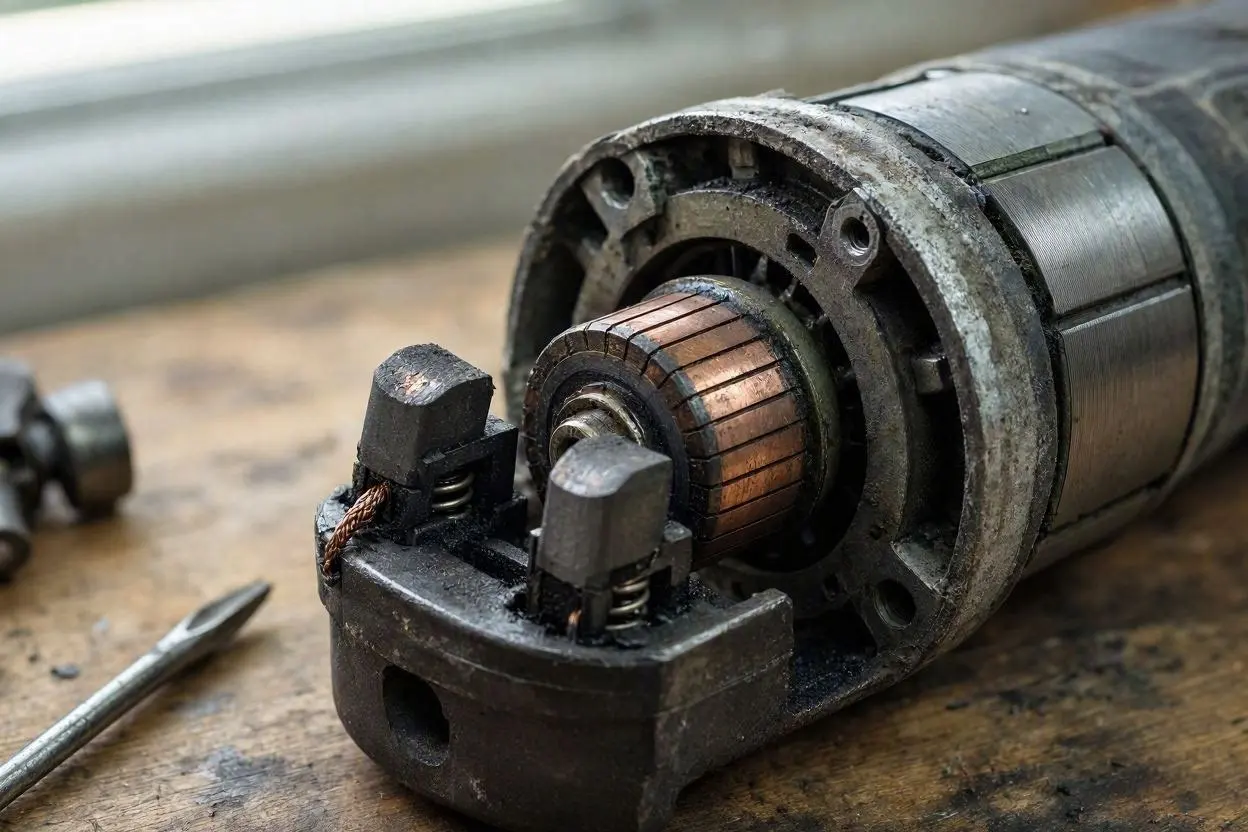
Some older corded angle grinders use carbon brushes to transfer electrical current to the motor. These brushes gradually wear during normal use.
Modern brushless grinders do not use carbon brushes, so this section only applies to grinders that have a brushed motor.
Signs of worn brushes can include:
- Intermittent operation
- Reduced performance
- Excessive sparking from the motor area
- The grinder stopping unexpectedly
- The grinder working again after being switched off and restarted
However, these symptoms can also have other causes, so don’t automatically assume that worn brushes are responsible.
Can You Replace the Carbon Brushes Yourself?
That depends on the grinder.
Some models are designed to allow brush replacement, while others require more extensive disassembly or servicing. The correct replacement parts and inspection procedure also vary between models.
If your grinder’s manual provides instructions for checking or replacing the brushes, follow those instructions carefully.
Do not open the grinder while it is connected to a power supply, and don’t attempt internal electrical repairs if you’re not competent to carry them out.
Never rely on a universal measurement such as 5mm to decide whether brushes need replacing. Use the manufacturer’s specified replacement limit for your particular model.
6. The Grinder Could Have an Internal Fault
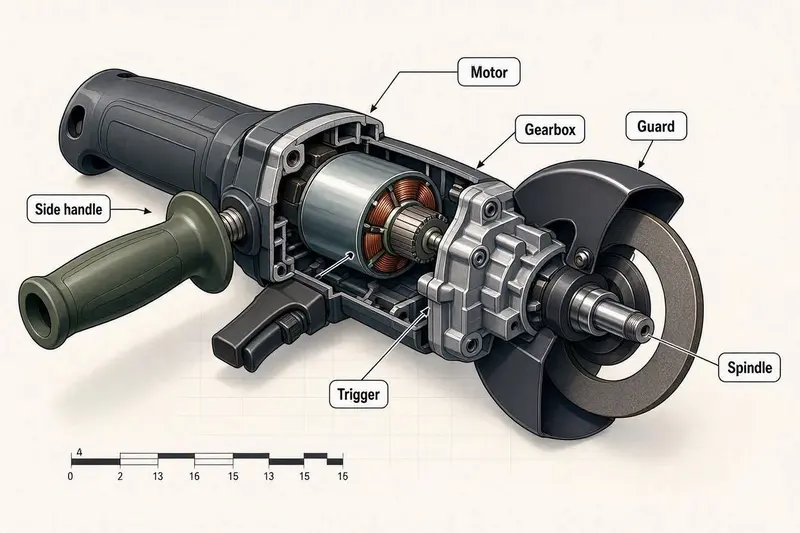
If you’ve checked the battery, disc, power supply and operating conditions and the grinder still keeps cutting out, there may be an internal fault.
Possible problems can include:
- Faulty switches
- Damaged internal wiring
- Worn motor components
- Faulty electronic control systems
- Problems with the power supply or battery connection
- Damage caused by excessive dust or overheating
At this point, continuing to use the grinder may make the problem worse.
If the tool is under warranty, contact the manufacturer or retailer rather than dismantling it yourself.
For an older grinder, a qualified repair technician can determine whether the fault is worth repairing.
When Should You Stop Using an Angle Grinder?
Some cutting out is normal when a grinder’s protection system responds to an overload, stall or excessive temperature.
However, you should stop using the grinder if you notice:
- A burning smell
- Smoke
- Unusual or excessive sparking
- A damaged power cable
- A damaged battery
- Cracked or damaged casing
- Unusual noises or vibration
- Repeated unexplained cut-outs
- A switch that doesn’t operate correctly
Don’t repeatedly restart a grinder that is showing signs of an electrical or mechanical fault.
HSE guidance on portable power tools recommends appropriate inspection and maintenance, including checking items such as cables, casings, controls and motor components. You can read the Health and Safety Executive guidance on portable and transportable electrical equipment for further information.
Summary Troubleshooting Checklist
| Symptom | Possible cause | What to check |
|---|---|---|
| Cuts out when pressing hard | Overload protection | Reduce pressure and let the disc do the work |
| Stops when the disc binds | Stall or kickback protection | Switch off, allow the disc to stop and check the workpiece |
| Cuts out after heavy use | Thermal protection | Allow the grinder to cool and check ventilation |
| Cordless grinder stops under load | Battery or excessive load | Try a fully charged compatible battery and reduce pressure |
| Works with one battery but not another | Battery problem | Check battery condition and compatibility |
| Corded grinder cuts out intermittently | Cable, switch or internal fault | Inspect the cable and have the tool checked if necessary |
| Older grinder sparks heavily | Possible worn brushes or motor fault | Follow the manufacturer’s service instructions |
| Cuts out when using an extension lead | Possible voltage drop or cable problem | Check cable rating, length and condition |
| Repeated unexplained cut-outs | Possible tool fault | Stop using the grinder and arrange inspection or repair |
Final Thoughts
If you’re still wondering why does my angle grinder keep cutting out, start with the simplest possibilities: overload protection, excessive heat, the battery or power supply, and the condition of the disc.
Start with the simple checks: reduce pressure, check the disc, inspect the battery or power cable and make sure the tool is being used within the manufacturer’s instructions.
If the grinder continues to cut out or shows signs of electrical or mechanical damage, stop using it and have it inspected rather than repeatedly trying to restart it.
For more angle grinder advice, see our guides on How to Use an Angle Grinder Safely, Angle Grinder Discs Explained, and How to Remove an Angle Grinder Disc Without the Tool.