A lot of tool review sites on the internet look exactly the same. They use polished manufacturer stock photos, copy-paste the specification sheets from Amazon, and declare a winner without ever lifting a finger.
I don’t do that here.
I am not a professional woodworker or a full-time tradesperson. I am a passionate, heavy-duty UK DIYer. My workshop is my garage, and my testing grounds are real home renovation tasks, garden builds, and repair projects around the house.
I believe that if you are going to spend your hard-earned money on a new power tool or bit set for your home kit, you deserve to know exactly how it performs when it’s covered in brick dust, running low on battery, and pushed to its absolute limits on a busy weekend.
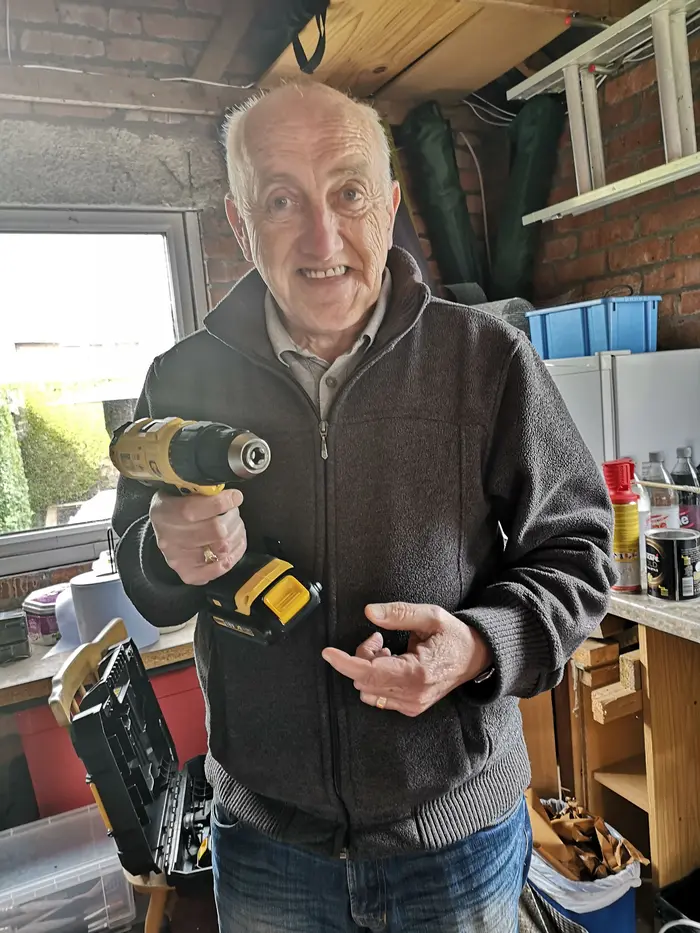
“…I am a passionate, heavy-duty UK DIYer. My workshop is my garage, and my testing grounds are real home renovation tasks (you can read more about my personal DIY journey and background here).”
My Testing Philosophy: Real DIY Baselines
Because I handle a wide variety of household maintenance and property improvement tasks, I have built up a substantial personal tool kit. My primary, daily-use companions are my DeWalt 18V XR Combi Drill and Impact Driver, backed up by a trusted rotation of DeWalt and Makita drill and driver bits.
My garage is also packed with the tools needed to get real household jobs done: full-sized and mini circular saws, an oscillating multi-tool, two jigsaws, an electric tile cutter, mouse and standard sanders, a reciprocating saw, and a massive selection of hand tools and storage solutions.
Because I know these tools inside out, they form my testing baseline. When a new tool arrives on my bench—whether it’s a budget jigsaw or a premium circular saw—I compare its torque, ergonomics, safety features, and overall value directly against the tools I trust to work on my own home every single weekend.
The Testing Process: Built for Real Home Projects
Every tool group requires a different testing methodology based on actual DIY scenarios:
1. Drilling & Fastening (Impact Drivers & Combi Drills)
- The Stress Test: I test tools by sinking heavy structural coach screws into garden sleeper beds or driving 100mm+ decking screws straight into treated timber framing without drilling pilot holes.
- The Control Test: I evaluate variable speed triggers by assembling flat-pack furniture or fixing plasterboard sheets to see if the tool can control its power before it strips a delicate screw head.
2. Cutting & Demolition (Saws & Multi-Tools)
- The Power Test: For my full-sized and mini circular saws, I make continuous cuts through thick, treated timber to check if the motor bogs down. I run the reciprocating saw through tough materials like old fence posts or metal piping to test raw demolition power.
- The Accuracy Test: For jigsaws and oscillating multi-tools, I test intricate cuts—like cutting out a laminate flooring profile around a radiator pipe or making plunge cuts into drywall. I grade how much vibration is transferred into my hands and how straight the blade stays.
3. Prep Work & Tiling (Sanders & Tile Cutters)
- The Endurance Test: I run my mouse and orbital sanders continuously on large door-stripping or furniture upcycling projects to evaluate hand comfort and motor heat after 30 minutes of continuous use.
- Precision Cutting: I use my electric tile cutter on real ceramic and porcelain tiles to grade how cleanly it cuts without chipping the glazed edges, and how messy the water reservoir gets during use.
My 4 Strict Review Rules
- I Base Everything on Hands-On Experience: If I recommend a tool, it’s either because it is sitting on my garage shelf right now, or because I have thoroughly benchmarked its performance against my daily-use DeWalt, Makita, and Parkside kit.
- No Brand Favoritism: I love my DeWalt gear, but if a tool has a stiff reversing switch, a terrible LED light, or uses battery power too quickly, I will call it out plainly. No tool gets a free pass just because of the brand color.
- Real UK DIY Context: I test tools using materials and fasteners you actually buy at UK trade counters like Screwfix, Toolstation, or B&Q—using GoldScrew, ForgeFast, or Spax fixings, and verifying proper UKCA / CE compliance and UK 3-pin plug configurations.
- Transparent Affiliate Disclosures: This site is reader-supported. If you click an Amazon UK link and buy a tool, I earn a small commission at no extra cost to you. Every single penny of that commission goes right back into buying more building materials, more bits, and more tools to test.