Welcome to about UK Tool Guide — a straightforward, UK-focused resource for hand tools, power tools and workshop equipment.
Whether you’re tackling a weekend DIY project, renovating your home, setting up a workshop or simply trying to choose the right tool for the job, the aim of UK Tool Guide is simple:
To provide useful, practical information that helps you understand tools, compare your options and avoid wasting money on equipment you don’t need.
The site is written with UK DIYers in mind, using UK tool sizes, specifications, terminology, retailers and safety guidance wherever relevant.
Who Is Behind UK Tool Guide?
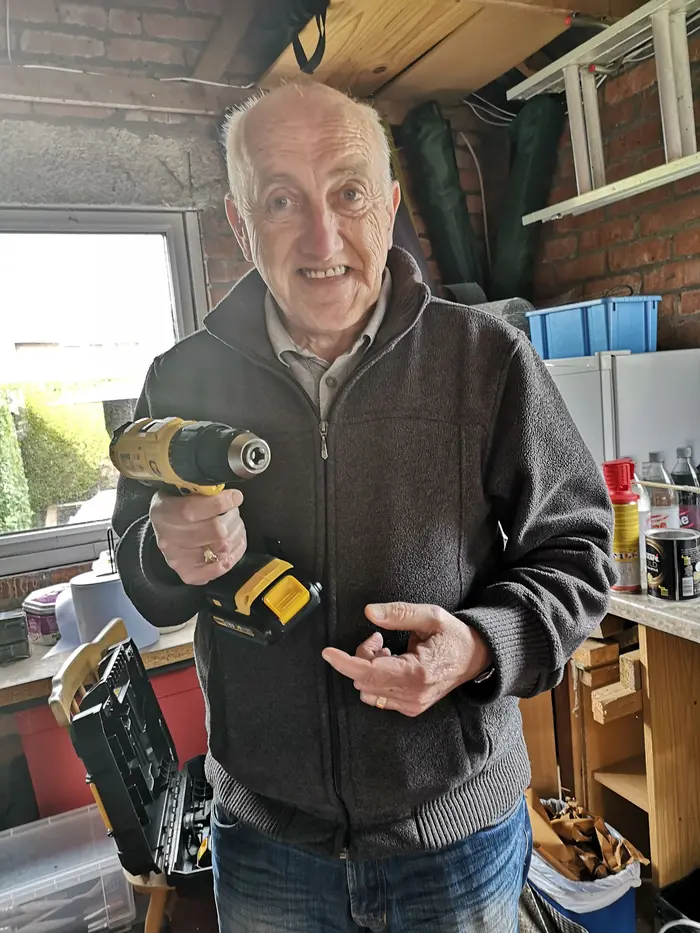
Hi, I’m Enda McLarnon, founder and primary editor of UK Tool Guide.
I’ve spent the last 40 years taking on hands-on renovation projects, DIY builds and workshop tasks around the house. Over that time, I’ve learned that having the right tool can make a job considerably easier, while choosing the wrong tool can lead to wasted time, damaged materials and plenty of frustration.
That experience is one of the reasons I started UK Tool Guide.
There are plenty of websites that list tools and repeat manufacturer specifications. I wanted to create something more useful for ordinary DIYers — explaining what different tools actually do, which features matter, what specifications mean and where a particular tool may or may not make sense.
The site is aimed primarily at DIYers and homeowners, although some of the information will also be useful to tradespeople and more experienced tool users.
Why Focus on the UK Market?
UK Tool Guide is UK-focused because buying and using tools in the UK isn’t always the same as following advice written for another market.
Where relevant, the guides take account of things such as:
- UK electrical standards: Including 230V corded tools and 110V equipment commonly used on UK sites.
- UK battery platforms: Including the cordless systems and tool ranges commonly available from UK manufacturers and retailers.
- UK tool sizes and terminology: Including metric measurements and the sizes of blades, discs and accessories commonly sold in the UK.
- UK availability: Products and specifications are considered from the perspective of someone looking to buy and use tools in the UK.
- UK materials and DIY projects: Guides are written around the types of timber, sheet materials, masonry, fixings and other materials commonly encountered in UK DIY.
- UK safety guidance: Where appropriate, I refer to guidance from organisations such as the Health and Safety Executive (HSE).
The goal isn’t to make every tool unique to the UK. It’s to make the information more relevant to someone actually buying and using tools here.
How I Research and Evaluate Tools
I believe tool advice should be useful without pretending that every product has been personally tested.
When I have first-hand experience of a tool or type of equipment, I use that experience to help explain how it performs in practical DIY situations.
For products I haven’t personally tested, I don’t present personal experience as fact. Instead, I research the available information and compare products using sources such as:
- Manufacturer specifications and documentation
- Product manuals and technical information
- UK retailer information
- Independent and verified customer feedback
- Relevant safety guidance
- Comparisons between competing models and specifications
- Practical considerations based on how the tool is intended to be used
I also look beyond headline specifications. A higher wattage, larger battery or faster speed doesn’t automatically make a tool more suitable for a particular DIY job.
Depending on the type of tool, I may consider factors such as:
- Performance — What the tool is designed to do and how its specifications relate to real-world use.
- Build and design — Construction, handling, controls and features that may affect everyday use.
- Useful features — Features that can genuinely make a tool easier or more practical to use.
- Compatibility — Batteries, blades, discs, accessories and other systems that may affect your buying decision.
- Practicality — Whether the tool is appropriate for the type and frequency of work a typical DIYer is likely to undertake.
- Value — Whether you’re paying for features that are useful to you rather than simply paying for a bigger specification.
Where manufacturers provide different specifications for different versions or markets, I try to make those differences clear rather than assuming that every model is identical.
For product comparisons, the aim is not simply to declare a winner. Different tools can make sense for different users, so I try to explain what each option offers, where it may be useful and what you should check before buying.
How This Site Is Funded
UK Tool Guide is funded through advertising and affiliate relationships.
Where appropriate, I may use affiliate links to retailers and manufacturers. This means that if you click one of these links and subsequently make a qualifying purchase, UK Tool Guide may receive a small commission.
This comes at no additional cost to you.
The site currently participates in affiliate programmes including the Amazon Associates Program. Amazon’s UK Associates programme allows websites and publishers to earn commissions from qualifying purchases made through their referral links.
Affiliate income helps contribute towards the costs of running the website, including hosting, maintenance, research and content production.
Editorial Independence
Affiliate links do not mean that a manufacturer or retailer has paid for a positive review.
No company pays UK Tool Guide to give a product a favourable opinion.
When comparing products, the aim is to explain the available information as clearly and fairly as possible, including limitations and potential drawbacks where they are relevant.
If I haven’t personally tested a product, I will not claim that I have.
If a specification varies between models, versions or markets, I will try to point that out rather than presenting an uncertain figure as fact.
For more information, please read my full Affiliate Disclosure and Privacy Policy.
A Practical Approach to Tool Advice
UK Tool Guide isn’t intended to tell everyone to buy the most expensive tool or the tool with the biggest specification. For many DIY jobs, a straightforward tool may be all you need.
A 165mm circular saw may be perfectly adequate for one person, while someone regularly cutting thicker timber may benefit from a larger model. A corded grinder may make more sense for frequent workshop work, while a cordless model can be more convenient for occasional jobs away from a power socket.
The right choice depends on what you’re actually going to use the tool for.
That’s the approach I try to take throughout UK Tool Guide: explain the options, highlight the important differences and let you decide which one fits your own work.
Get in Touch
Have a question about a particular tool?
Spotted an error in one of our guides?
Or is there a tool, accessory or DIY topic you’d like to see covered?
I’d be happy to hear from you. Visit my Contact Page.
Thank you for visiting UK Tool Guide!