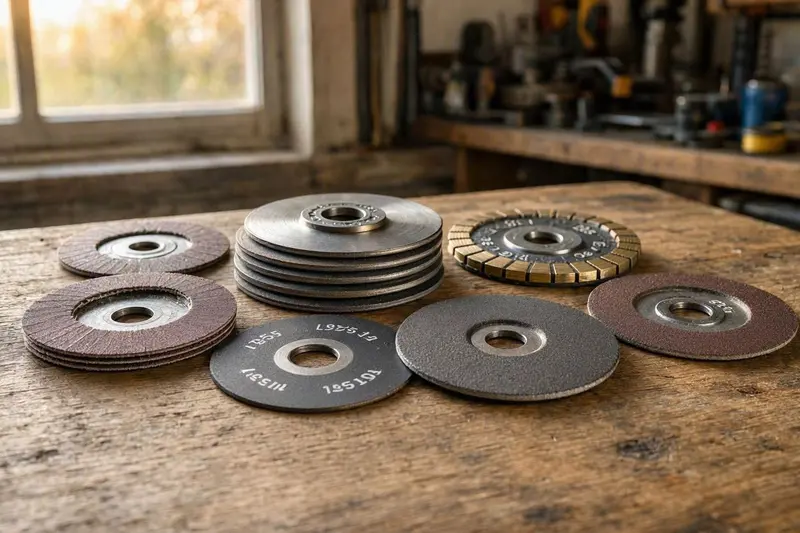
Angle grinder discs come in a wide range of types, sizes and materials, and choosing the correct disc is important for getting the right result and using your grinder safely.
The accessory you fit determines what your angle grinder can be used for. A cutting disc is designed for cutting, a grinding disc removes material from the surface, while flap discs, wire wheels, diamond discs and polishing accessories are designed for different jobs.
The accessory you fit determines what your angle grinder can be used for. A cutting disc is designed for cutting, a grinding disc removes material from the surface, while flap discs, wire wheels, diamond discs and polishing accessories are designed for different jobs.
If you’re new to angle grinders, choosing the right disc can be confusing. Products can look similar while being designed for completely different applications, and using an unsuitable disc or accessory can damage the material or create a serious safety risk.
In this guide, we’ll explain the most common angle grinder discs and accessories available in the UK, what each one is designed to do, which materials they can be used on and what to check before fitting one to your grinder.
We’ll also cover disc sizes, grit, maximum operating speed, compatibility and some important safety considerations so you can choose the right accessory for the job.
1. Cutting Discs (Metal Cutting Discs)
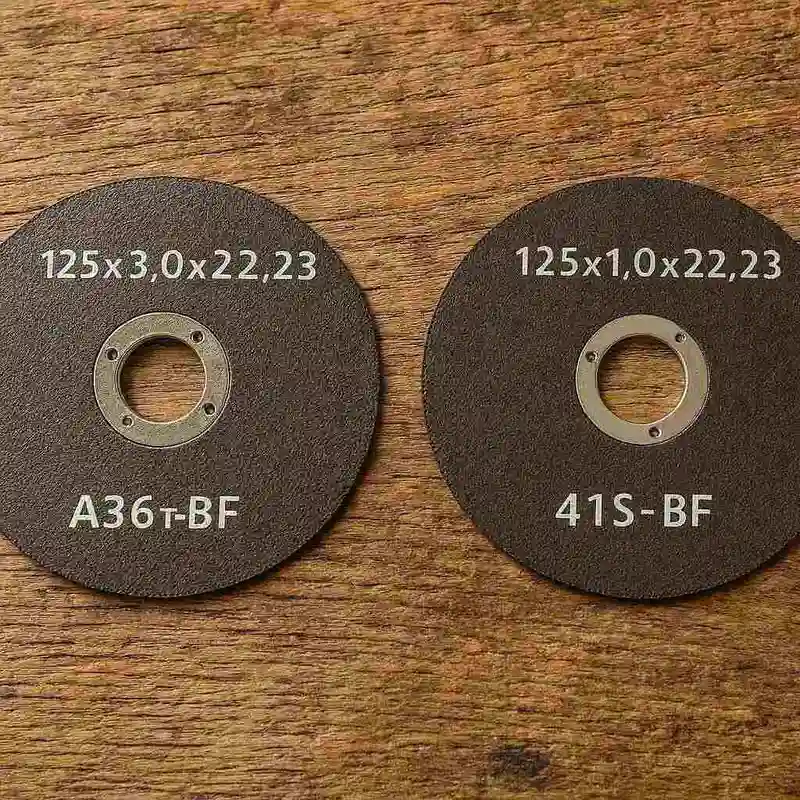
Cutting discs, also called cut-off wheels, are relatively thin abrasive discs designed to cut through suitable materials. They are commonly used for jobs such as cutting bolts, threaded rod, brackets, pipes and sections of metal.
Common uses include:
- Cutting bolts and threaded rod
- Cutting steel rods and sections
- Cutting metal brackets
- Cutting sheet metal
- Cutting suitable pipes
Cutting discs are available in different thicknesses. Thinner discs can produce a narrower cut, while thicker discs may be available for applications where a more substantial cutting wheel is appropriate. The correct disc depends on the material, application and grinder.
Metal and Stainless Steel (Inox) Cutting Discs
Many metal cutting discs use aluminium oxide abrasive. If you’re cutting stainless steel, look for a disc specifically marked Inox and follow the manufacturer’s guidance. Inox discs are formulated to minimise contamination of stainless steel during cutting.
Important Safety Point
A cutting disc is designed for cutting, not side grinding. Applying sideways pressure or using the edge of a cutting disc to grind material can increase the risk of disc damage or breakage.
Before fitting a cutting disc, check:
- The disc diameter is suitable for your grinder
- The disc is designed for the material you’re cutting
- Its maximum operating speed is suitable for the grinder
- The disc is undamaged and in good condition
- The grinder’s guard is correctly fitted
For masonry materials such as brick or concrete, use an appropriate masonry or diamond cutting disc rather than assuming a standard metal cutting disc is suitable.
2. Grinding Discs
Grinding discs are generally thicker than cutting discs and are designed to remove material from the surface of a workpiece rather than cut through it.
They are commonly used for:
- Grinding welds
- Removing sharp edges and burrs
- Shaping suitable metal
- Cleaning up cut ends
- Removing excess material
Grinding discs are available in different thicknesses and specifications, so don’t assume that a particular thickness is suitable for every job. Always choose a disc that is designed for your grinder, the material and the application.
Common Uses for Grinding Discs
A suitable metal grinding disc can be used for tasks such as smoothing welds, cleaning up rough metal edges and removing excess material before further finishing.
Some specialist abrasive wheels are also available for masonry and other materials, but you should only use an accessory that is specifically rated for the material and application.
Beginner Tip
Hold the grinder securely and let the disc remove the material without forcing it into the workpiece. Use the side handle where required by the manufacturer and keep the workpiece properly supported.
Before fitting a grinding disc, check its diameter, maximum operating speed, intended material and application.
For a more detailed comparison, see my guide to the difference between cutting discs and grinding discs.
3. Flap Discs
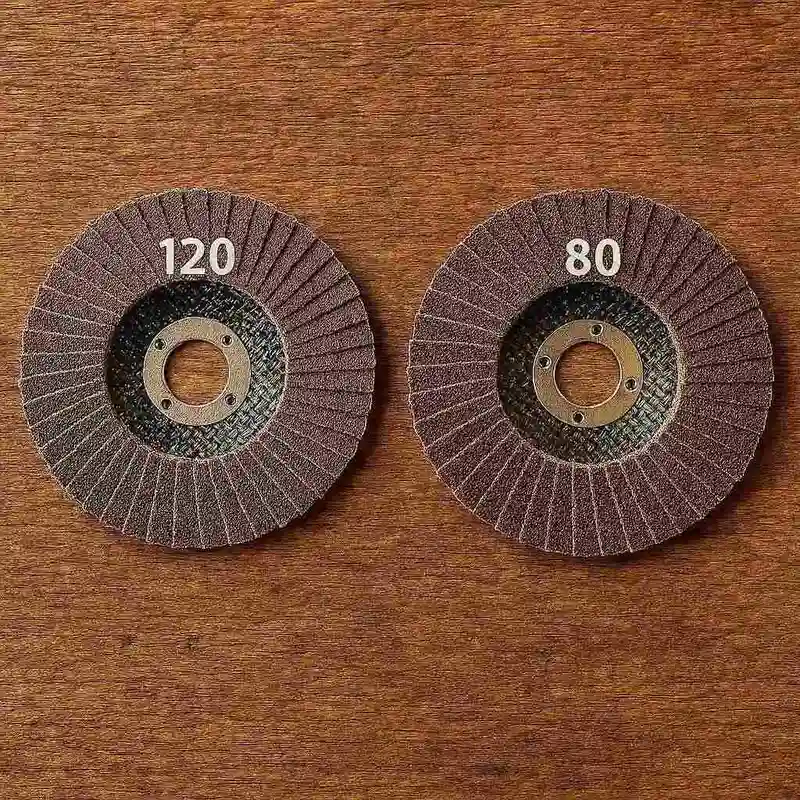
Flap discs are abrasive accessories made from overlapping sections of abrasive material arranged around a central backing. They are commonly used for smoothing, blending and finishing metal.
As the abrasive flaps wear during use, fresh abrasive material is exposed. This makes flap discs useful for removing material while also helping to produce a smoother surface than a coarse grinding disc.
Common uses include:
- Smoothing metal
- Blending welds
- Removing surface rust
- Removing some paint and coatings
- Smoothing rough or sharp edges
- Preparing metal for painting
Choosing the Right Grit
Flap discs are available in different grit sizes, similar to abrasive paper.
As a general guide:
| Grit | Typical use |
|---|---|
| 40–60 | More aggressive material removal |
| 80 | General smoothing and blending |
| 120 | Finer finishing |
The exact result depends on the material, disc type and amount of pressure used, so choose the grit according to the job rather than assuming one grit suits every application.
Beginner tip: If you’re unsure which grit to use, start with a suitable coarser-but-not-excessive grit and work progressively rather than removing more material than necessary.
Always check that the flap disc is suitable for your angle grinder, the material you’re working on and the grinder’s maximum operating speed.
4. Diamond Blades (For Masonry)
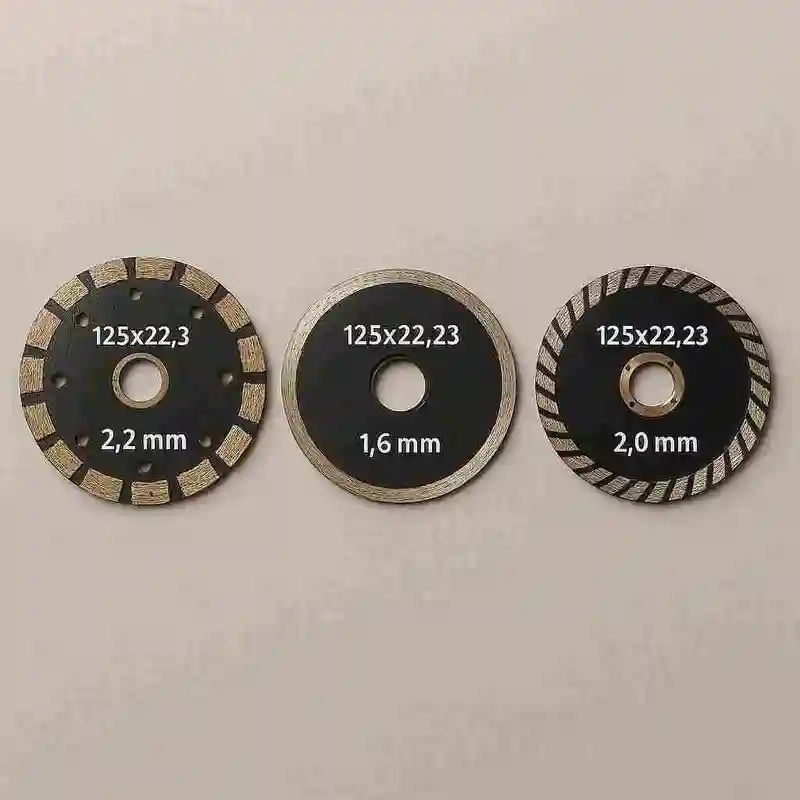
Diamond cutting discs are designed for cutting suitable masonry, tile and other hard mineral materials. They use a steel core with a diamond-containing cutting edge or segments.
Common applications include:
- Brick
- Concrete
- Paving slabs
- Roof tiles
- Ceramic and porcelain tiles
- Stone
The correct diamond disc depends on the material being cut and whether the application is dry or wet cutting.
Common Diamond Disc Types
Segmented rim: The cutting edge is divided into separate segments. These discs are commonly used for materials such as concrete, brick and paving slabs.
Turbo rim: These discs have a continuously grooved cutting edge. The grooves can help remove cutting debris and provide a balance between cutting speed and finish.
Continuous rim: These discs have a continuous cutting edge and are commonly used where a cleaner cut is required, particularly with tiles. Whether the disc should be used wet or dry depends on the specific product, so always follow the manufacturer’s instructions.
Important Safety Point
Cutting masonry and other materials containing crystalline silica can produce respirable silica dust, which can cause serious lung disease. Do not rely on a basic paper dust mask as your only control measure.
Use suitable dust-control methods for the material and task, together with appropriate respiratory protection where required. Follow the manufacturer’s instructions for the grinder and disc, and check the material before cutting.
Beginner tip: Never assume that a diamond disc is suitable for every type of masonry or tile. Check the disc packaging and manufacturer’s instructions for the exact material and cutting method.
For further information about respiratory protection when cutting concrete, see my guide to dust masks for cutting concrete.
5. Wire Wheels & Wire Brushes
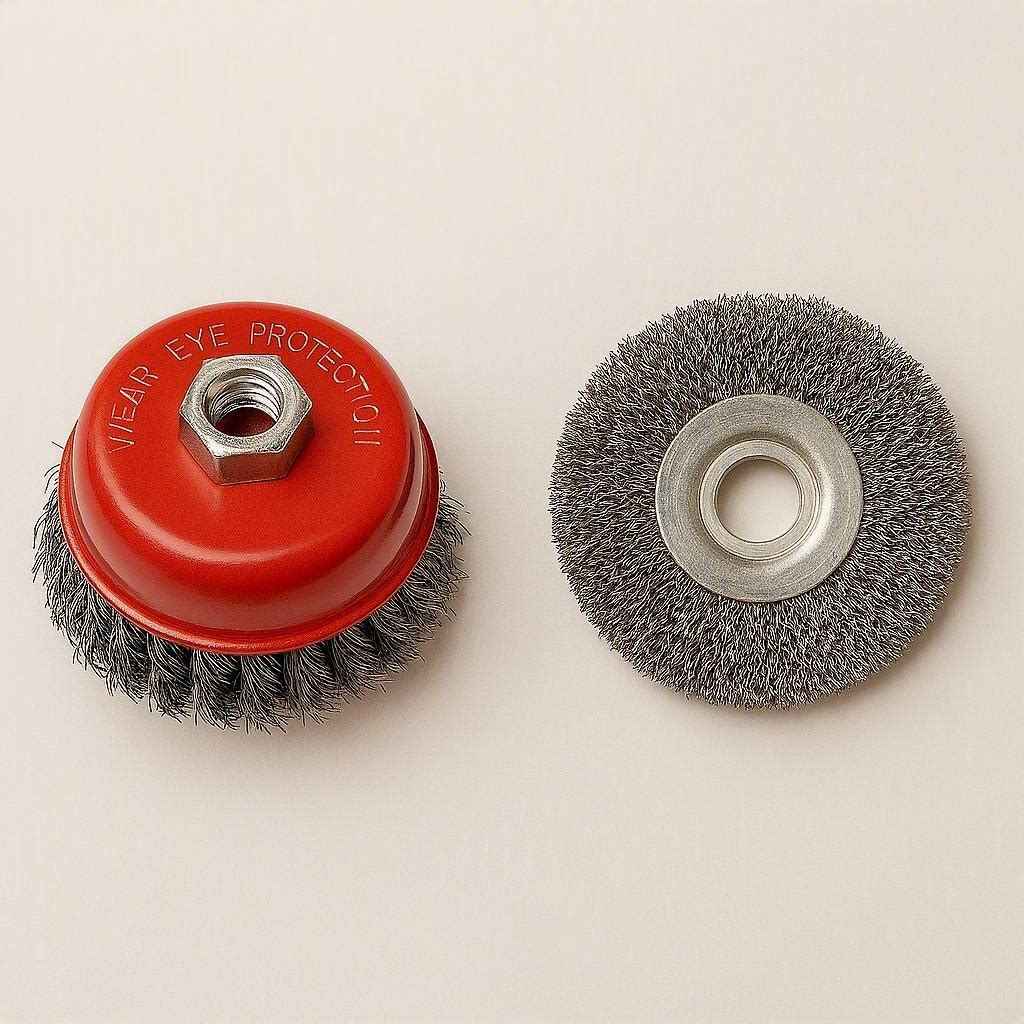
Wire wheels and wire brushes are used for cleaning and preparing metal surfaces, particularly when you need to remove rust, loose paint, scale or other surface contamination.
They use twisted or crimped metal wires that rotate against the workpiece. The amount of material removed depends on the type of brush, the surface and the pressure applied.
Wire Wheels
A wire wheel has a narrower profile and can be useful for working around:
- Welds
- Joints
- Edges
- Corners
- Other areas where access is more limited
Wire Cup Brushes
A wire cup brush has a wider profile and can be useful when cleaning larger areas of metal.
Common uses include:
- Removing surface rust
- Removing loose paint and coatings
- Cleaning scale from metal
- Preparing metal before painting
- Cleaning suitable weld areas
Types of Wire Brush
You may come across different wire configurations, including:
- Crimped wire – generally used for lighter cleaning and surface preparation
- Twist-knot wire – more aggressive and commonly used for heavier rust, scale and coatings
The correct brush depends on the material and the amount of surface contamination you need to remove.
Important safety point: Wire bristles can break away during use and can cause serious eye or skin injuries. Wear suitable eye and face protection, keep the guard correctly fitted where required, and check the brush for damage before use.
Always make sure the wire wheel or cup brush is compatible with your angle grinder and that its maximum operating speed is suitable for the grinder.
6. Polishing Pads
Polishing pads can be fitted to some angle grinders for polishing and improving the finish of suitable metal surfaces. They are used with a polishing compound rather than for removing large amounts of material.
Common applications include:
- Stainless steel
- Aluminium
- Suitable automotive metal parts
- Metal furniture
The type of pad and polishing compound you need depends on the metal and the finish you’re trying to achieve. Surface preparation is also important, as scratches and imperfections may need to be removed before polishing.
Recommended accessory: A polishing pad and compound specifically designed for use with your angle grinder and the material you’re working on.
Always check the pad’s maximum operating speed and compatibility with your grinder before use. Some polishing accessories are designed to operate at lower speeds than typical cutting and grinding discs.
Which Angle Grinder Disc Should You Use? (Quick Guide)
If you’re not sure which angle grinder disc you need, this quick guide gives you a starting point:
| Job | Suitable Disc or Accessory |
|---|---|
| Cutting metal | Thin cutting disc |
| Grinding welds | Grinding disc |
| Smoothing or blending metal | Flap disc |
| Cutting brick, concrete or paving slabs | Diamond cutting disc |
| Cutting tiles | Diamond tile-cutting disc |
| Removing rust or loose paint | Wire wheel or wire cup brush |
| Polishing metal | Polishing pad |
The correct accessory can vary depending on the material, grinder and specific job, so always check that the disc or accessory is suitable for your application.
Before fitting any disc, check:
- Diameter – it must match your grinder
- Maximum operating speed – the disc must be rated for the grinder’s speed
- Material compatibility – make sure it is designed for the material you’re working on
- Condition – don’t use discs that are cracked, damaged or otherwise unsuitable
- Guard and accessory compatibility – use the correct guard and setup for the accessory
It’s also important to remember that cutting discs are designed for cutting, not side grinding. If you need to remove material from the surface of metal, use a suitable grinding or flap disc instead.
You may also find my article on how to change an angle grinder disc really useful if you are new to changing accessories.
Beginner Disc Starter Kit
If you’re just starting out with an angle grinder, you don’t need to buy every type of disc and accessory available. A small selection covering common DIY jobs can be a useful starting point.
A basic starter kit could include:
- Thin metal cutting discs – for cutting suitable metal such as bolts, threaded rod and brackets
- 1 grinding disc – for removing material from suitable metal, such as welds and rough edges
- 1 × 60-grit flap disc – for faster material removal and smoothing
- 1 × 120-grit flap disc – for finer finishing and blending
- 1 wire wheel or wire cup brush – for removing rust, loose paint and surface contamination
- 1 suitable diamond cutting disc – for cutting appropriate masonry or tile materials
This gives you a selection of accessories for many common DIY jobs without having to buy a large collection straight away.
Before buying, check that each disc or accessory is the correct diameter, rated speed and type for your angle grinder and the material you intend to work on. Some accessories are also designed for specific guards or grinder setups, so follow the manufacturer’s instructions.
9. Vital UK Safety Checks to Look For
Before fitting an angle grinder disc, take a few seconds to check the markings and condition of the wheel. Using the wrong or damaged abrasive wheel can create a serious risk of wheel failure.
1. Check the Disc Markings
Look for the relevant BS EN 12413 marking on bonded abrasive wheels, together with the manufacturer’s identification, dimensions, specification and other required information.
The markings can also include restrictions on how the wheel may be used, so don’t assume that every abrasive wheel is suitable for every angle grinder application. HSE guidance provides examples of the information and restrictions that may appear on abrasive wheels.
2. Check the Use-By Date
Resin-bonded abrasive wheels can have a limited shelf life. HSE guidance states that organic-bonded wheels intended for hand-held applications carry a use-by date of three years from the date of manufacture.
Check the expiry or use-by information on the wheel before using it. Do not use an abrasive wheel beyond its marked use-by date.
Store abrasive wheels according to the manufacturer’s instructions and keep them protected from conditions that could damage them.
3. Match the Maximum Operating Speed
Check the maximum operating speed marked on the disc and compare it with the maximum speed of your angle grinder.
The disc’s rated speed must be suitable for the grinder. Never use a disc at a speed higher than its marked maximum operating speed, as excessive speed can cause the wheel to fail.
Don’t assume that a disc is suitable simply because the diameter matches your grinder. Check the complete specification before fitting it.
4. Inspect the Disc Before Use
Before fitting an abrasive disc, check that it is:
- The correct type for the material and application
- The correct diameter and compatible with your grinder
- Within its marked use-by date where applicable
- Free from cracks, chips or other visible damage
- Rated for the grinder’s maximum operating speed
Also make sure the correct guard and accessory setup are being used for the job.
For more information, see our guide on how to use an angle grinder safely, which covers guards, accessories, workpiece support and personal protective equipment in more detail.
For additional guidance on the safe use of abrasive wheels, see the Health and Safety Executive (HSE) guidance on abrasive wheels, which covers important precautions for portable and hand-held grinding machines.
10. Before You Fit Any Disc: Quick Checklist
Before switching on your angle grinder, take a moment to check the following:
- Correct disc type – make sure it is designed for the material and job
- Correct diameter – the disc must be suitable for your grinder
- Correct bore size – check that the centre hole is compatible with the grinder spindle and fittings
- Maximum operating speed – make sure the disc’s rated speed is suitable for your grinder
- Use-by date – check the date on abrasive wheels where applicable
- Disc condition – don’t use a disc that is cracked, chipped or visibly damaged
- Correct guard – make sure the appropriate guard is fitted and positioned correctly
- Accessory compatibility – check the grinder and accessory manufacturer’s instructions before use
Never force an accessory to fit your grinder or modify a disc to make it compatible. If you’re unsure whether a disc is suitable, check the manufacturer’s instructions before using it.