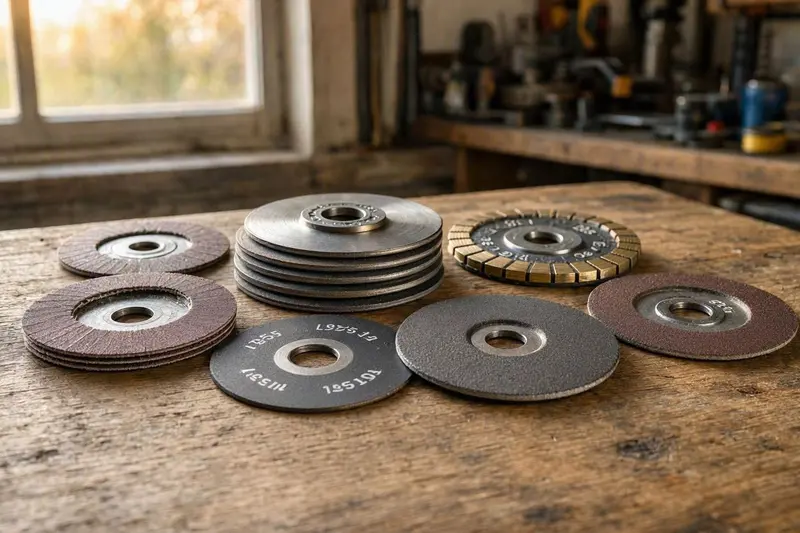
Cutting vs grinding discs is an important distinction to understand if you’re new to angle grinders. Although the two types of disc can look similar and may fit the same grinder, they are designed for different jobs.
A cutting disc is designed to cut through suitable material, while a grinding disc is designed to remove material from a surface. Using the wrong disc, or using a disc for a job it was not designed for, can affect the result and increase the risk of disc damage, kickback or loss of control.
In this guide, we’ll explain the difference between cutting and grinding discs, how to identify them, what each type is designed to do and which disc to use for common DIY jobs.
We’ll also cover some common beginner mistakes and important safety checks so you can choose and use the correct disc for your angle grinder.
1. What Is a Cutting Disc?
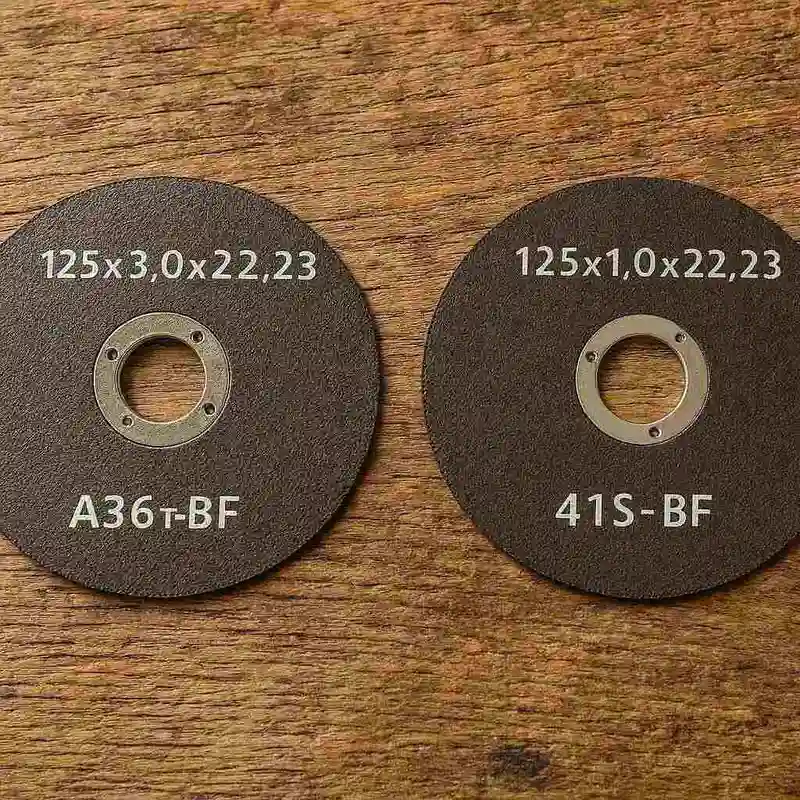
A cutting disc, also called a cut-off wheel, is a relatively thin abrasive disc designed to cut through suitable materials such as metal.
Cutting discs are commonly used with angle grinders for jobs such as:
- Cutting bolts and threaded rod
- Cutting steel bar and tubing
- Cutting brackets and angle iron
- Cutting sheet metal
- Cutting suitable metal sections
- Making straight cuts through other compatible materials
Cutting discs are available in different diameters and thicknesses, and the correct choice depends on your grinder, the material and the type of work you’re doing. Thin discs are commonly used where a narrow cut is required, while other applications may call for a different disc specification.
How Do Cutting Discs Work?
A cutting disc removes a relatively narrow amount of material as the edge of the disc passes through the workpiece.
The disc should be kept aligned with the cut and should not be twisted, levered or subjected to excessive side pressure.
Most importantly, a cutting disc is designed for cutting, not for grinding or removing material from the side of a workpiece.
Before fitting one, check the disc’s diameter, bore size, maximum operating speed and intended application to make sure it is suitable for your angle grinder.
Key rule: Use a cutting disc for cutting only. If you need to remove material from a surface, switch to a suitable grinding or finishing accessory.
Cutting disc = cutting through material.
Grinding disc = removing material from a surface.
2. What Is a Grinding Disc?
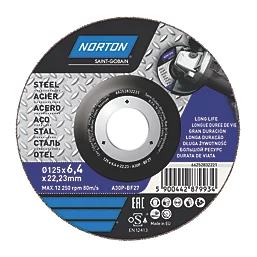
A grinding disc is a thicker abrasive wheel designed to remove material from the surface of a workpiece rather than cut completely through it.
Grinding discs are commonly used with angle grinders for jobs such as:
- Smoothing welds
- Removing sharp edges and burrs
- Shaping metal
- Removing excess material
- Cleaning up rough cut edges
- Preparing metal before further finishing
Grinding discs are available in different diameters, thicknesses and specifications. The correct disc depends on the grinder, material and application, so don’t assume that every thick abrasive disc is suitable for every grinding job.
How Do Grinding Discs Work?
A grinding disc removes material through the abrasive surface of the wheel. This makes it suitable for working across a surface where you need to reduce, shape or smooth the material.
Unlike a cutting disc, a grinding disc is designed to withstand the type of contact involved in grinding. However, you should still avoid excessive pressure or using the disc in a way that is not permitted by the manufacturer.
The correct working position can vary depending on the disc, so follow the manufacturer’s instructions for the particular grinding disc you’re using.
Key rule: A grinding disc is designed for grinding and material removal. Do not use it as a substitute for a cutting disc when you need to cut through a workpiece.
3. Cutting Disc vs Grinding Disc: The Key Differences
Although cutting and grinding discs are both used with angle grinders, they are designed to perform different jobs.
| Feature | Cutting Disc | Grinding Disc |
|---|---|---|
| Main purpose | Cutting through suitable material | Removing material from a surface |
| Typical shape | Thin, flat disc | Thicker abrasive disc |
| Working area | Mainly the outer edge | Abrasive face of the disc |
| Typical jobs | Cutting bolts, rods, brackets and sheet metal | Grinding welds, edges and excess material |
| Side pressure | Should not be used for side grinding | Use only as specified by the manufacturer |
| Cutting through material | Designed for this purpose | Not designed as a cutting disc |
| Disc specification | Varies by diameter, thickness, material and application | Varies by diameter, thickness, abrasive and application |
The Main Difference
The simplest way to remember the difference is:
Cutting disc = cut through material
Grinding disc = remove material from a surface
A cutting disc is relatively thin because it needs to make a narrow cut. A grinding disc is generally thicker and is designed to remove material using its abrasive surface.
Never assume that because a disc fits your angle grinder, it can be used for every type of work. Always check the markings and manufacturer’s instructions to make sure the accessory is suitable for the intended application.
4. Why You Must Use the Right Disc for the Job
Understanding the difference between cutting vs grinding discs is important because each type is designed for a different type of contact with the material. Using one as a substitute for the other can damage the disc and affect control of the grinder.
Never Grind With a Cutting Disc
A cutting disc is designed to make a narrow cut through the material. It is not designed for grinding with the side of the disc.
Using a cutting disc for side grinding or trying to widen a cut by twisting the grinder can place forces on the disc that it was not designed to withstand. This can increase the risk of disc damage and kickback.
If you need to remove material from a surface, use a suitable grinding disc or other finishing accessory instead.
Don’t Cut With a Grinding Disc
A grinding disc is designed for surface material removal rather than cutting completely through a workpiece.
Trying to use one for cutting can make the grinder work harder, increase heat and cause the disc to bind or behave unpredictably. It is also the wrong accessory for making a narrow cutting slot.
If you need to cut through suitable material, fit a cutting disc designed for that application.
The Simple Rule
Cutting disc → cutting
Grinding disc → grinding and surface material removal
If you’re unsure which accessory to use, check the markings on the disc and the manufacturer’s instructions before starting work.
For a wider explanation of angle grinder disc types and accessories, see Angle Grinder Discs Explained.
5. How to Tell the Difference at a Glance
If you’re new to angle grinders, cutting and grinding discs can look surprisingly similar. The easiest way to tell them apart is to check the disc markings and its design, rather than relying on appearance alone.
Cutting Disc
A typical cutting disc is:
- Relatively thin
- Usually flat
- Marked for cutting or cut-off use
- Designed to make a narrow cut through the material
Grinding Disc
A typical grinding disc is:
- Much thicker than a cutting disc
- Often has a more substantial abrasive profile
- Marked for grinding use
- Designed to remove material from a surface
Check the Disc Markings
Before fitting any disc, look at the markings printed on it. These normally provide important information such as:
- The disc’s diameter
- Bore size
- Maximum operating speed
- Intended application or material
- Relevant safety and manufacturer markings
Don’t assume a disc is suitable simply because it fits your angle grinder.
If you’re unsure, check the markings and manufacturer’s instructions before using it.
The thickness and shape can help you identify a disc quickly, but the disc markings are the more reliable way to confirm what it is designed for.
6. Which Disc Should You Use for Your Job?
The simplest way to choose between a cutting disc and a grinding disc is to think about what you need the grinder to do.
Use a Cutting Disc If You Need to:
- Cut bolts or threaded rod
- Cut metal tubing or pipe
- Cut brackets or angle iron
- Cut sheet metal
- Cut suitable steel sections
- Make a narrow cut through a workpiece
A cutting disc is designed to pass through the material using the edge of the disc.
Use a Grinding Disc If You Need to:
- Smooth welds
- Remove excess metal
- Round or shape suitable metal edges
- Remove burrs
- Clean up rough cut edges
- Prepare a surface for further finishing
A grinding disc removes material from the surface of the workpiece rather than cutting through it.
What About Flap Discs?
If you need a smoother finish after grinding, a flap disc may be more suitable than a conventional grinding disc.
Flap discs use overlapping abrasive flaps and are commonly used for smoothing, blending welds and finishing metal. The appropriate grit depends on how much material you need to remove and the finish you want.
Quick Guide
| Your job | Suitable accessory |
|---|---|
| Cut a bolt | Cutting disc |
| Cut metal pipe | Cutting disc |
| Cut angle iron | Cutting disc |
| Smooth a weld | Grinding disc |
| Remove a sharp metal edge | Grinding or flap disc |
| Remove a burr after cutting | Grinding or flap disc |
| Blend a weld | Flap disc |
| Create a smoother finish | Flap disc |
Always check that the disc or accessory is suitable for your material, grinder and intended application before starting work.
If you’re unsure which type of accessory you need, see our guide to Angle Grinder Discs Explained for a wider look at cutting, grinding, flap, diamond and other angle grinder accessories.
7. Beginner Mistakes to Avoid
If you’re new to using an angle grinder, a few simple mistakes can cause poor results or create unnecessary risks.
❌ Using a Cutting Disc for Grinding
Cutting discs are designed for cutting rather than side grinding. Using one incorrectly can place forces on the disc that it was not designed to withstand.
Use: A suitable grinding or finishing accessory for surface work.
❌ Using a Grinding Disc for Cutting
Grinding discs are designed for surface material removal, not for making narrow cuts through a workpiece.
Use: A suitable cutting disc for the material and application.
❌ Twisting the Grinder During a Cut
Twisting, levering or trying to widen a cut with the grinder can cause the disc to bind or catch.
Instead: Keep the cutting disc aligned with the cut and use controlled pressure.
❌ Forcing the Grinder Through the Material
Applying excessive pressure can increase heat, disc wear and the chance of binding.
Instead: Let the disc do the work and maintain steady, controlled pressure.
❌ Ignoring the Disc Markings
A disc may fit your grinder but still be unsuitable for the job.
Instead: Check the diameter, bore size, maximum operating speed, material compatibility and intended application.
❌ Continuing to Use a Damaged Disc
Cracks, chips, distortion or other visible damage are reasons to stop using the disc.
Instead: Switch off the grinder, allow the disc to stop completely and replace the damaged accessory.
❌ Removing the Guard
The guard is an important part of the grinder’s protection system and should not be removed simply to make a job easier.
Instead: Use the correct guard for the disc and application and position it according to the manufacturer’s instructions.
8. Safety Tips When Using Any Disc
Whether you’re cutting or grinding, a few basic safety checks can help you use an angle grinder more safely.
Before You Start
- Use the correct disc for the material and job
- Check the disc for cracks, chips, distortion or other damage
- Check the disc’s diameter, bore size and maximum operating speed
- Make sure the correct guard is fitted and positioned properly
- Secure the workpiece so it cannot move during the job
- Wear appropriate eye and face protection
- Use hearing and respiratory protection where the task and material require it
- Check that the grinder, cable or battery and accessories are in good condition
While You Work
- Hold the grinder securely with both hands where the tool is designed for two-handed use
- Allow the disc to reach full operating speed before contacting the workpiece
- Use steady, controlled pressure rather than forcing the tool
- Keep a cutting disc aligned with the cut and don’t twist or lever it
- Keep sparks and debris away from yourself, other people and flammable materials
- Stop if the grinder begins to vibrate excessively, behaves unexpectedly or the disc becomes damaged
For further guidance on the safe use of abrasive wheels, see the Health and Safety Executive (HSE) guidance on the safety of abrasive wheels.
Never use a cutting disc for side grinding, and never assume that a grinding disc can be used as a cutting disc simply because it fits the grinder.
For a more detailed look at safe angle grinder operation, see our guide to How to Use an Angle Grinder Safely.
For more information about different disc types and accessories, see Angle Grinder Discs Explained.
You may also be interested in why my angle grinder is sparking.
If you need to cut through metal, use a suitable cutting disc. If you need to remove material from the surface, use a suitable grinding disc. Never use one as a substitute for the other.