Disclaimer: UK Tool Guide is reader-supported. When you buy through links on our site, we may earn an affiliate commission at no extra cost to you.
Choosing the best angle grinder discs for metal depends on the job you’re doing. Cutting metal, grinding welds, smoothing edges and removing rust all require different types of accessories, so there isn’t one disc that is suitable for every metalworking task.
A cutting disc is designed to cut through suitable metal, while a grinding disc is used to remove material from the surface. Flap discs can be used for smoothing and blending, while wire wheels and cup brushes are useful for removing rust, loose paint and other surface contamination.
If you’re new to angle grinders, it can be difficult to know which disc you actually need. Discs can look similar while having very different purposes, and choosing an unsuitable accessory can affect the result and increase the risk of disc damage or loss of control.
In this guide, we’ll explain the main angle grinder discs for metal, what each type is designed to do, which jobs they are suitable for and what to look for when choosing one.
We’ll also cover disc thickness, grit, compatibility, maximum operating speed and important safety checks so you can choose the right accessory for your metalworking job.
Quick Answer: Best Angle Grinder Discs for Metal
The right angle grinder disc depends on the job:
- Cutting metal: use a suitable metal cutting disc
- Grinding welds or removing material: use a grinding disc
- Smoothing or blending metal: use a flap disc
- Removing rust or loose paint: use a wire wheel or cup brush
- Fine finishing: use a suitable finer-grit flap disc
There isn’t one disc that is best for every metalworking job. Always choose an accessory that is specifically suitable for the material, application, grinder and operating speed.
Disc Sizes
| Grinder size | Common disc diameter |
|---|---|
| Small angle grinder | 115mm |
| Small/medium angle grinder | 125mm |
| Larger angle grinder | 230mm |
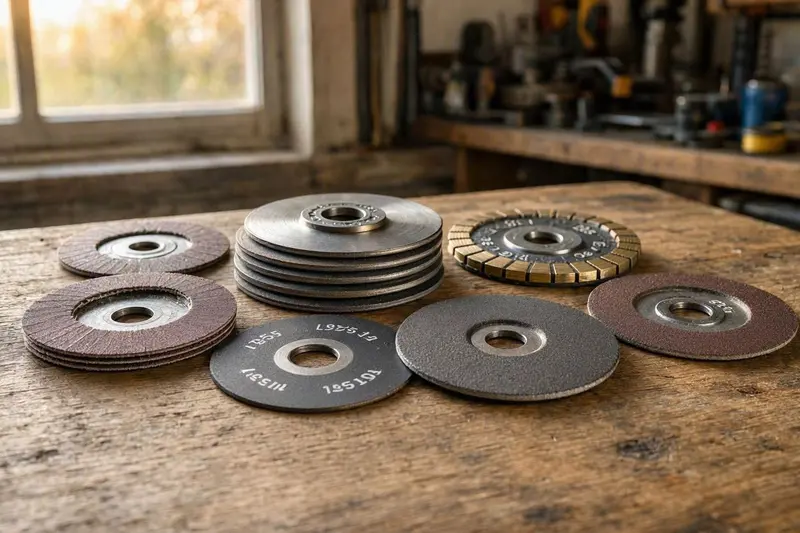
1. Best Metal Cutting Discs (Thin 1–1.2mm)
Metal cutting discs are designed to cut through suitable metal using the outer edge of the disc. They are commonly used for jobs such as cutting bolts, threaded rod, steel bar, angle iron, tubing, brackets and sheet metal.
Cutting discs are available in different diameters and thicknesses, so the right disc depends on your angle grinder, the material you’re cutting and the type of job you’re doing.
What Are Metal Cutting Discs Used For?
Common DIY uses include:
- Cutting bolts and threaded rod
- Cutting steel bar and rod
- Cutting angle iron and metal sections
- Cutting suitable metal tubing and pipe
- Cutting brackets and sheet metal
- Trimming metal components to length
Thin cutting discs can make a relatively narrow cut and may be useful where you want to remove less material. However, the most suitable thickness depends on the disc specification, material and application rather than there being one thickness that is right for every job.
What Should You Look For?
When choosing a metal cutting disc, check:
- Disc diameter — it must match your grinder
- Bore size — it must fit the grinder’s spindle and flange arrangement
- Maximum operating speed — the disc must be rated for the grinder’s speed
- Material/application marking — make sure it is designed for the metal you’re cutting
- Disc condition — don’t use discs that are cracked, chipped or otherwise damaged
- Correct guard — use the guard specified for cutting applications
Many metal cutting discs use aluminium oxide abrasive, while discs designed specifically for stainless steel may have different specifications and markings. Always check the manufacturer’s instructions and the markings on the disc before use.
Important: Cutting Discs Are for Cutting
A cutting disc should be kept aligned with the cut and should not be used for side grinding, widening a cut or levering material apart. Side loading or twisting the disc can place forces on it that it was not designed to handle.
If you want to remove material from the surface of metal rather than cut through it, use a suitable grinding disc or finishing accessory instead.
For a more detailed explanation of the difference between the two, see our guide to Cutting vs Grinding Discs.
2. Best Grinding Discs for Metal (6mm+)
Best Grinding Discs for Metal
Grinding discs are designed to remove material from the surface of metal rather than cut through it. They are generally thicker and more substantial than cutting discs, making them suitable for jobs where you need to remove excess material, smooth rough areas or shape metal.
Common DIY uses include:
- Grinding down welds
- Removing sharp edges and burrs
- Smoothing rough cut ends
- Removing excess metal
- Shaping suitable metal components
- Preparing surfaces before further finishing
What Should You Look For?
When choosing a grinding disc for metal, check:
- Disc diameter — it must match your angle grinder
- Bore size — it must be compatible with the grinder
- Maximum operating speed — the disc must be rated for the grinder’s speed
- Material/application marking — make sure it is suitable for the metal and job
- Disc thickness and specification — choose according to the manufacturer’s recommendations
- Disc condition — never use a cracked, chipped or damaged disc
- Correct guard — use the guard specified for the grinding application
Many general-purpose grinding discs for steel use aluminium oxide abrasive, but different discs are available for different materials and applications. Always check the markings and manufacturer’s instructions rather than assuming a disc is suitable simply because it fits your grinder.
Grinding Disc vs Cutting Disc
The main difference is how the disc is designed to contact the material.
A cutting disc uses its outer edge to make a relatively narrow cut through suitable material. A grinding disc uses its abrasive surface to remove material from the surface.
If you need to cut through a bolt, pipe or section of metal, use a suitable cutting disc. If you need to remove a weld, smooth a rough edge or remove excess material from the surface, a grinding disc may be appropriate.
For a closer comparison, see my guide to Cutting vs Grinding Discs.
3. Best Flap Discs for Smoothing Metal
Flap discs are abrasive finishing accessories made from overlapping pieces, or flaps, of abrasive material attached to a backing plate. They are commonly used for smoothing, blending and finishing metal after cutting or welding.
They can also remove some material while leaving a more controlled finish than a coarse grinding disc, making them useful for a range of DIY metalworking jobs.
What Are Flap Discs Used For?
Common uses include:
- Smoothing welds
- Blending weld areas
- Smoothing rough cut edges
- Removing light surface rust
- Preparing metal before painting
- Removing small amounts of surface material
- Refining the finish left by a grinding disc
Choosing the Right Grit
Flap discs are available in different abrasive grits. As a general guide:
| Grit | Typical use |
|---|---|
| 40–60 grit | More aggressive material removal |
| 80 grit | General smoothing and blending |
| 120 grit | Finer finishing |
The exact result will depend on the metal, disc specification, grinder and amount of pressure used. If you’re unsure, start with a suitable coarser grit and move to a finer grit when you need a smoother finish.
What Should You Look For?
Before buying a flap disc, check:
- Disc diameter — it must match your grinder
- Bore size — it must be compatible with the grinder
- Grit — choose according to the amount of material you need to remove
- Abrasive type — make sure it is suitable for the metal
- Maximum operating speed — the disc must be rated for your grinder
- Condition — don’t use damaged accessories
Flap discs are particularly useful when you want to smooth and blend metal rather than simply remove large amounts of material. For heavier material removal, a suitable grinding disc may be more appropriate.
For a wider explanation of flap discs and other angle grinder accessories, see our guide to Angle Grinder Discs Explained.
4. Best Wire Wheels for Rust & Paint Removal
Wire wheels and wire cup brushes are useful angle grinder accessories for removing rust, loose paint and other surface contamination from suitable metal surfaces. Unlike cutting and grinding discs, they use wire bristles to clean the surface rather than cutting through the material.
The right type depends on the size and shape of the area you’re cleaning, how heavy the rust or coating is and the type of metal you’re working on.
Wire Wheel vs Wire Cup Brush
| Accessory | Typical use |
|---|---|
| Wire wheel | Edges, welds, joints and narrower areas |
| Wire cup brush | Larger, flatter metal surfaces |
A wire wheel has a narrower profile, which can make it useful for cleaning around welds, edges and areas where access is restricted. A wire cup brush covers a wider area and can be more suitable for larger surfaces.
Crimped Wire vs Knotted Wire
Wire brushes are available with different wire arrangements:
- Crimped wire — generally suitable for lighter cleaning, surface rust and loose paint.
- Knotted wire — generally intended for more aggressive cleaning of heavier rust, scale and coatings.
The most aggressive brush isn’t necessarily the right choice. Select the accessory according to the condition of the metal and the manufacturer’s intended application.
What Can Wire Wheels Remove?
Common uses include:
- Removing surface rust
- Removing loose paint
- Removing scale and surface contamination
- Cleaning around welds
- Preparing suitable metal before painting
- Cleaning old metal components, tools and equipment
For heavier coatings or firmly attached material, more than one preparation method may be required. Take care not to damage the underlying metal by using excessive pressure.
What Should You Check Before Buying?
Before fitting a wire wheel or cup brush, check:
- Diameter — it must be suitable for your grinder
- Fitting — check the spindle thread or accessory system
- Wire type — choose according to the cleaning job
- Maximum operating speed — never exceed the brush’s rated speed
- Material compatibility — make sure it is suitable for the metal
- Condition — don’t use a damaged or excessively worn brush
Some wire brushes are specifically designed for particular metals, including stainless steel, so check the manufacturer’s specification rather than assuming a brush is suitable for every type of metal.
Wire Brush Safety
Wire brushes can shed individual bristles during use, so eye protection and suitable face protection are important. Keep the appropriate guard fitted where required and follow the manufacturer’s instructions for the grinder and accessory.
Hold the grinder securely and avoid excessive pressure. Let the brush do the work rather than forcing it against the surface.
If you’re looking for a broader explanation of wire wheels, cup brushes and other angle grinder accessories, see our guide to Angle Grinder Discs Explained.
5. Best Multi‑Material Discs (Metal + Other Materials)
Some manufacturers make multi-material cutting discs that are designed to cut more than one type of material. These can be useful when a DIY job involves different materials and you want one accessory that is specifically rated for those applications.
However, not every multi-material disc is suitable for every material. Always check the disc packaging and manufacturer’s instructions to see exactly what it is designed to cut.
What Can Multi-Material Discs Be Used For?
Depending on the specific disc, suitable applications may include combinations of:
- Steel and other metals
- Stainless steel
- Aluminium
- Masonry
- Other materials specifically listed by the manufacturer
The important point is that the disc’s specification determines what it can safely be used for. Don’t assume that a disc described as multi-material is automatically suitable for wood, plastic, metal and masonry.
Are Multi-Material Discs Worth Using?
For occasional DIY work involving different materials, a correctly specified multi-material disc can reduce the need to change accessories between tasks.
However, a specialist disc designed specifically for the material may be more appropriate for some applications. Always compare the manufacturer’s recommended materials, maximum operating speed and intended use before fitting the disc.
What Should You Check?
Before using a multi-material disc, check:
- The materials it is specifically rated for
- Disc diameter and bore
- Maximum operating speed
- Whether it is suitable for your particular grinder
- Whether the correct guard and setup are being used
- Any additional manufacturer instructions or restrictions
Never use a disc on a material simply because it physically fits the grinder. The accessory must be designed and rated for the material and application.
For most metalworking jobs, a disc specifically designed for the metal you’re cutting or working on may be the more straightforward choice. See my guide to Angle Grinder Discs Explained for more information about the different accessory types.
Which Disc Should You Use? (Quick Reference)
Choosing the right angle grinder accessory depends on what you are trying to do. Use this quick reference to identify the most suitable option for common metalworking jobs.
| Job | Suitable accessory |
|---|---|
| Cutting bolts or threaded rod | Metal cutting disc |
| Cutting steel bar or angle iron | Metal cutting disc |
| Cutting metal pipe or tubing | Metal cutting disc |
| Cutting sheet metal | Suitable metal cutting disc |
| Grinding welds | Grinding disc |
| Removing excess metal | Grinding disc |
| Smoothing rough cut edges | Grinding or flap disc |
| Smoothing and blending welds | Flap disc |
| Fine finishing metal | Finer-grit flap disc |
| Removing surface rust | Wire wheel or cup brush |
| Removing loose paint | Wire wheel or cup brush |
| Cleaning metal before painting | Wire wheel or cup brush |
| Cutting another material | Disc specifically rated for that material |
Quick Rule
If you need to cut through metal, use a suitable metal cutting disc.
If you need to remove material from the surface, use a suitable grinding disc.
If you want to smooth or blend the surface, a flap disc may be appropriate.
If you need to remove rust, loose paint or surface contamination, a wire wheel or cup brush may be suitable.
Always check the accessory’s diameter, bore or fitting, maximum operating speed, material compatibility and manufacturer’s instructions before use.
Beginner Starter Kit (Covers 95% of Metalwork)
If you’re new to metalworking with an angle grinder, you don’t need to buy every type of disc available. A small selection of suitable accessories can cover many common DIY jobs.
A Useful Starter Selection
| Accessory | What it’s useful for |
|---|---|
| Metal cutting discs | Cutting bolts, rods, brackets, pipe and other suitable metal |
| Grinding disc | Grinding welds, removing excess metal and smoothing rough edges |
| 60–80 grit flap disc | Smoothing, blending and general metal finishing |
| 120 grit flap disc | Finer finishing and refining the surface |
| Wire wheel or cup brush | Removing surface rust, loose paint and contamination |
You don’t necessarily need all of these at once. Choose the accessories that match the types of metalworking jobs you expect to do.
What to Check Before Buying
Before adding discs or brushes to your toolkit, check that each accessory is compatible with your angle grinder.
Look for:
- Correct diameter
- Correct bore or fitting system
- Maximum operating speed suitable for your grinder
- Material and application compatibility
- Correct guard and accessory requirements
- Undamaged discs and accessories
It’s also worth buying discs in the sizes and specifications that match your particular grinder rather than assuming that every accessory of the same diameter is interchangeable.
Safety Tips When Working With Metal Discs
Angle grinder discs operate at high speed, so using the correct accessory and setting up the grinder properly is important when working with metal.
Before you start, check:
- The disc is the correct type for the job and material
- The disc is undamaged and free from cracks, chips or other visible defects
- The diameter and fitting are compatible with your grinder
- The maximum operating speed is suitable for the grinder
- The correct guard is fitted and positioned as specified by the manufacturer
- The workpiece is securely supported or clamped
- Your PPE is appropriate for the material and task
- The grinder, cable or battery and accessories are in good condition
While Using the Grinder
Hold the grinder securely and use two hands where the tool is designed for two-handed operation. Allow the disc to reach its normal operating speed before contacting the workpiece and use controlled pressure rather than forcing the grinder through the material.
When using a cutting disc, keep the disc aligned with the cut and do not twist, lever or use sideways pressure to widen the cut.
Grinding, flap and wire accessories have different working characteristics, so follow the manufacturer’s instructions for the particular accessory you’re using.
Control Sparks, Dust and Debris
Cutting and grinding metal can produce hot sparks, abrasive particles and dust. Keep sparks and debris directed away from yourself and other people, and check the surrounding area for flammable materials before starting.
Eye protection is particularly important, while face, hearing and respiratory protection should be considered according to the task, material and working environment.
Never Use a Damaged or Unsuitable Disc
If a disc is cracked, chipped, distorted, damaged around the centre hole or otherwise appears unsuitable, don’t use it.
Likewise, don’t assume that a disc is suitable simply because it fits your grinder. Check the markings and manufacturer’s instructions for the correct material, application, size and operating speed.
If you experience unusual vibration, wobbling, unexpected movement or other abnormal behaviour, switch off the grinder, allow the accessory to stop completely and investigate the cause before continuing.
For a more detailed explanation of safe angle grinder operation, see our guide to How to Use an Angle Grinder Safely.
For additional UK guidance, the Health and Safety Executive (HSE) provides guidance on the safe use of abrasive wheels and portable grinding machines.