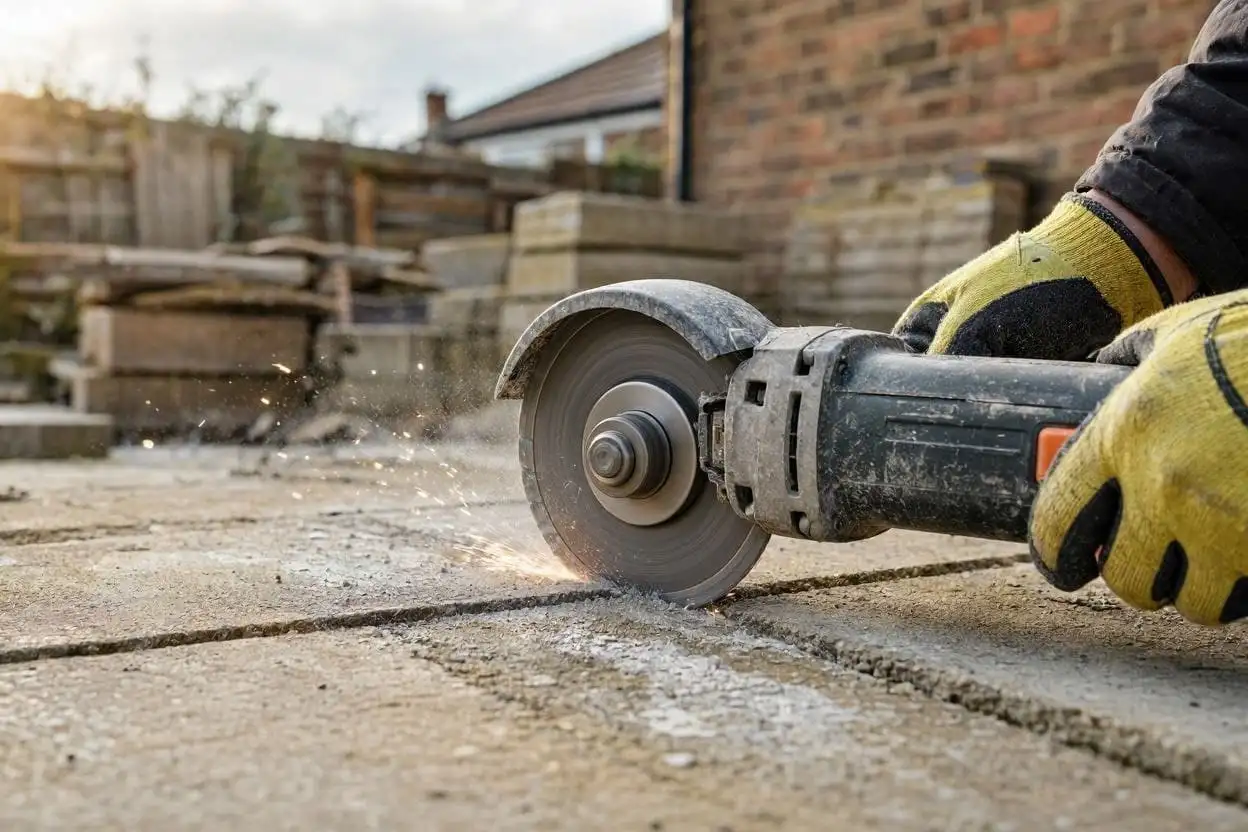
Can you use an angle grinder to cut paving slabs? Yes, provided you use a suitable diamond cutting blade and the grinder, blade and cutting method are appropriate for the paving material.
An angle grinder can be useful for DIY patio and garden projects when you need to make shorter cuts or trim a paving slab to fit around a wall, edge, drain or other obstacle. However, cutting paving materials can produce a significant amount of dust, particularly when working with concrete and natural stone.
The size of the grinder also affects how deeply you can cut. A compact 115mm or 125mm angle grinder may be suitable for many DIY paving jobs, but you should check the actual cutting depth of your grinder and blade rather than assuming it will cut completely through every slab in one pass.
For a cleaner and more controlled result, you’ll also need the right diamond blade for the paving material, a stable workpiece and appropriate dust and safety controls.
In this guide, we’ll explain can you use an angle grinder to cut paving slabs, which blades to consider, how to approach the cut and the important precautions to take when dealing with stone and concrete dust.
1. What Angle Grinder Do You Need to Cut Paving Slabs?
The size of the angle grinder affects how deep you can cut, but the actual cutting depth depends on the grinder model, blade diameter and blade design.
For many smaller paving cuts, a 115mm or 125mm angle grinder can be suitable, particularly when working with thinner paving materials. However, you should always check the manufacturer’s specified cutting capacity rather than relying on the grinder size alone.
If the paving slab is thicker than your grinder can cut in one pass, you may need to make several controlled passes. A larger 230mm angle grinder can provide greater cutting depth, but it is also considerably larger and heavier, so it may not be the most suitable option for every DIY user.
Before cutting, check:
- The maximum cutting depth of your angle grinder
- The diameter and type of diamond blade
- The maximum RPM of the blade
- Whether the blade is suitable for the paving material
- The manufacturer’s instructions for the grinder and blade
For concrete paving slabs, sandstone and other natural stone, make sure the diamond blade is specifically rated for the material you are cutting. Porcelain paving also requires a blade designed for porcelain.
Choosing the correct combination of grinder and blade is more important than simply buying the largest grinder you can find.
Common UK Paving Sizes and Thicknesses
Paving slabs come in a range of sizes and thicknesses. Knowing the thickness is particularly useful when choosing an angle grinder, because it affects whether you can cut through the slab in one pass or need multiple passes.
| Common paving size | Typical thickness | Common use |
|---|
| 300 × 300mm | 25–30mm | Paths and smaller areas |
| 450 × 450mm | 30–35mm | Paths and patios |
| 600 × 600mm | 35–40mm | Patios and larger areas |
| 600 × 900mm | 35–40mm | Patios and paving areas |
2. The Golden Rule: Use a Diamond Blade
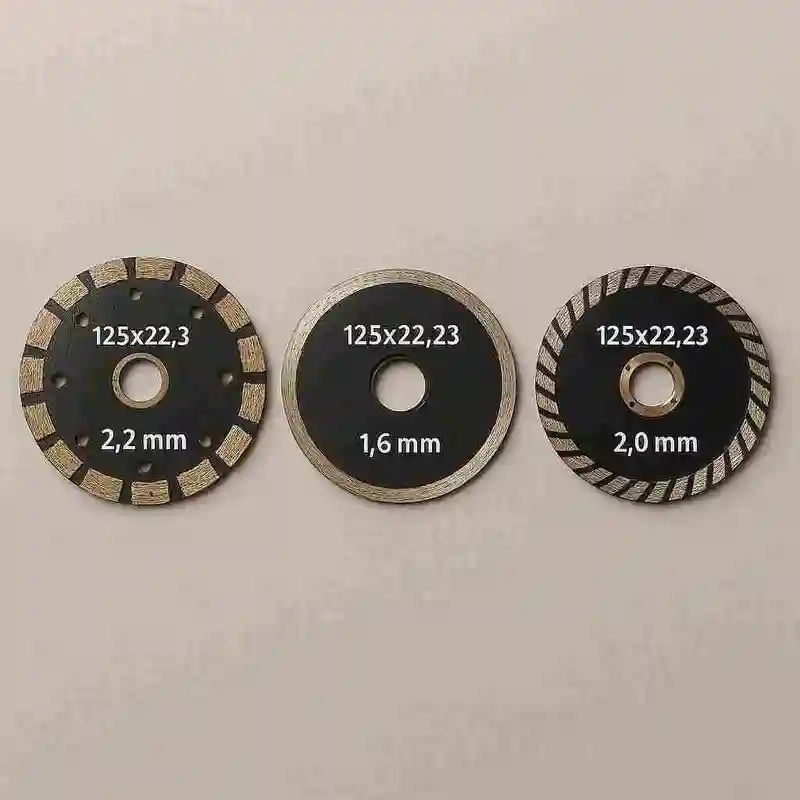
When cutting paving slabs with an angle grinder, you need a diamond cutting blade that is suitable for the material you are cutting.
Paving materials can vary considerably. Concrete, sandstone, limestone and porcelain all have different cutting characteristics, so check that the blade is specifically designed for the material before you start.
A suitable diamond blade should also match your grinder. Check:
- Blade diameter – it must match the size specified for your grinder.
- Bore size – the blade must fit the grinder correctly.
- Maximum RPM – the blade’s rated speed must be compatible with the grinder.
- Material rating – choose a blade designed for concrete, natural stone, porcelain or the specific paving material you are cutting.
- Cutting method – follow the blade manufacturer’s instructions for dry or wet cutting.
Avoid using a blade simply because it fits the grinder. A blade designed for metal or general-purpose cutting is not automatically suitable for paving slabs.
If you’re unsure which blade you need, check the blade packaging and manufacturer’s instructions before fitting it. Using the correct blade can make a significant difference to cutting performance, edge quality and dust production.
Which Diamond Blade Edge Do You Need?
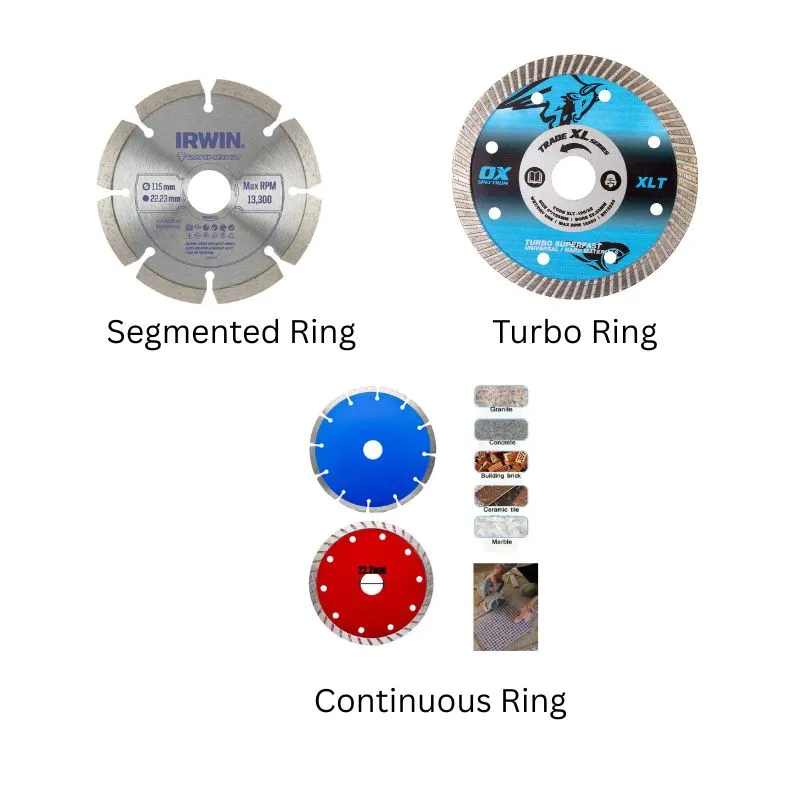
Diamond blades are available with different edge designs, and the most suitable type depends on the paving material you are cutting and the finish you want.
Segmented Diamond Blades
Segmented blades have separate sections around the cutting edge. They are commonly used for concrete, brick and other masonry materials and are designed for efficient cutting.
They can be a practical choice when cutting concrete paving slabs, but always check that the particular blade is rated for the material.
Turbo Diamond Blades
Turbo blades have a continuous serrated or textured rim. They are commonly used for masonry and some natural stone materials and can offer a balance between cutting performance and finish.
If you’re cutting sandstone, limestone or another natural stone, check the blade manufacturer’s recommendations before choosing a turbo blade.
Continuous-Rim Diamond Blades
Continuous-rim blades have a solid cutting edge and are commonly associated with applications where a cleaner cut is important, including some tile and porcelain cutting.
For porcelain paving, use a blade specifically rated for porcelain rather than choosing a blade based only on its edge design. Follow the manufacturer’s instructions for whether the blade is intended for dry or wet cutting.
Which Blade Should You Choose?
The blade edge is only part of the decision. The material rating of the blade is more important than simply choosing segmented, turbo or continuous-rim.
Before buying or fitting a blade, check the manufacturer’s specification for the paving material, cutting method, blade size and maximum operating speed.
How to Safely Cut a Paving Slab: Step-by-Step
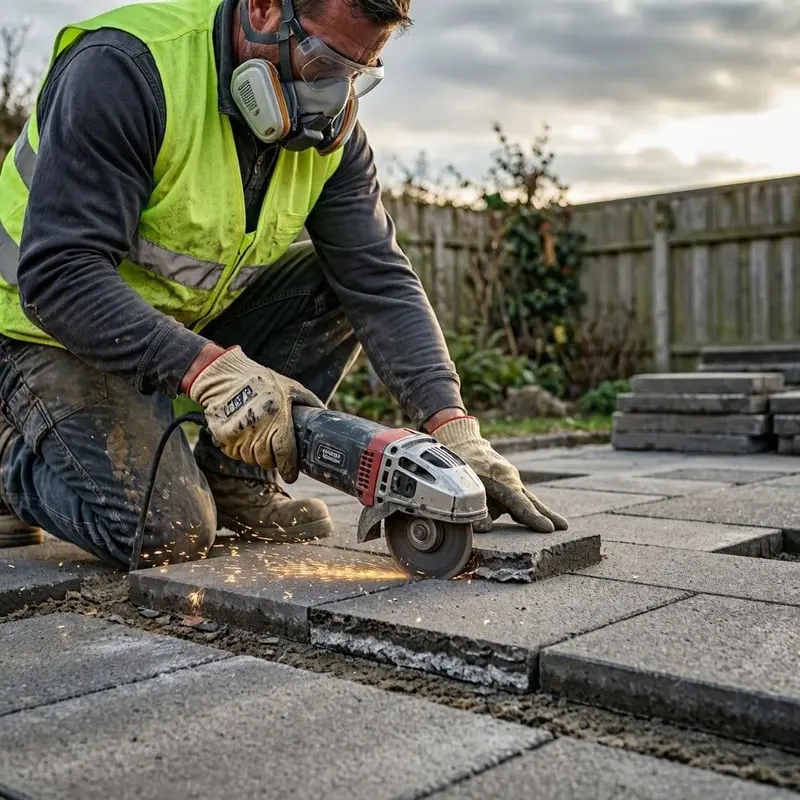
Once you have the correct grinder and diamond blade, take your time with the cut. Paving slabs can be heavy and awkward to handle, and cutting can produce significant dust and noise.
1. Support the Paving Slab
Place the slab on a stable, level surface with enough support underneath it to prevent movement while you cut.
Make sure the section being cut away has enough clearance below it for the blade. Avoid unstable arrangements where the slab can rock, shift or collapse as the cut progresses.
For large or heavy slabs, make sure you have enough space to work safely and consider getting help with positioning the material.
2. Mark Your Cutting Line
Measure carefully and mark the cutting line clearly using a pencil, marker or suitable masonry marking tool.
Double-check your measurements before starting the grinder. It is much easier to correct a measurement than to replace a paving slab that has already been cut incorrectly.
3. Put on the Appropriate PPE
Wear suitable eye protection, hearing protection and sturdy footwear. Depending on the cutting method and dust controls being used, suitable respiratory protection may also be required.
Keep loose clothing, jewellery and anything else that could interfere with the grinder away from the work area.
4. Make a Shallow First Pass
Start the grinder and allow the blade to reach its normal operating speed before beginning the cut.
Make a shallow, controlled pass along the marked line rather than trying to cut through the entire slab immediately.
Keep both hands on the grinder where the tool design allows, maintain a stable stance and let the blade do the cutting. Do not force the grinder through the paving.
5. Continue With Controlled Passes
If the slab is too thick to cut through in one pass, continue with additional controlled passes.
Keep the grinder aligned with the original cutting line and avoid twisting or forcing the blade. Check the cutting depth and the manufacturer’s instructions for your particular grinder and blade.
6. Check the Cut Before Moving the Slab
Once the cut is complete, switch off the grinder and allow the blade to stop completely before putting the tool down.
Do not try to break, twist or move the slab while the grinder is running. Once everything has stopped, check that the cut has separated cleanly and handle the pieces carefully.
7. Clean Up Carefully
Paving dust and fragments can remain around the cutting area. Allow dust to settle or use an appropriate dust-control and clean-up method rather than creating another cloud of airborne dust.
Keep other people away from the immediate cutting area, particularly children and anyone who is not wearing appropriate protection.
You may also want to read How to Use an Angle Grinder Safely.
A Warning About Silica Dust (HSE Guidance)
Cutting materials such as concrete, sandstone and granite can produce fine dust containing respirable crystalline silica (RCS). Breathing RCS dust can cause serious lung disease, including silicosis, so controlling dust should be an important part of any paving-cutting job. In the UK, the Health and Safety Executive (HSE) heavily regulates site work involving silica dust.
The Health and Safety Executive (HSE) identifies cutting concrete paving and similar materials as a task that can produce significant silica exposure. Its guidance recommends effective dust controls, including water suppression or suitable on-tool extraction, together with appropriate respiratory protective equipment where required.
How to Reduce Silica Dust When Cutting Paving
- Avoid dry cutting where a suitable dust-control method is available. Water suppression can substantially reduce airborne dust when used correctly.
- Use suitable equipment. If using water, make sure the grinder, blade and setup are designed for wet cutting and follow the manufacturer’s instructions. Do not improvise a water supply around electrical equipment.
- Consider suitable extraction. Where appropriate, an angle grinder with compatible on-tool extraction and a suitable dust extractor can help control airborne dust.
- Use appropriate respiratory protection. An ordinary paper dust mask should not be assumed to provide adequate protection against RCS. HSE guidance for high-dust paving and kerb cutting refers to RPE with an assigned protection factor (APF) of 20. Suitable tight-fitting RPE also needs to be correctly fitted and, where required, face-fit tested.
- Keep other people away from the cutting area. Dust can travel beyond the immediate cutting point, so avoid cutting close to other people or in poorly ventilated areas.
- Clean up without creating more dust. Avoid dry sweeping dust back into the air. Use an appropriate clean-up method that minimises airborne dust.
For occasional DIY work, the amount of exposure will depend on the material, cutting method, duration and dust controls being used. The important point is not simply to put on a mask and start cutting: reduce the amount of dust produced and use appropriate controls for the job.