Disclaimer: UK Tool Guide is reader-supported. When you buy through links on our site, we may earn an affiliate commission at no extra cost to you.
If you’re new to DIY, choosing your first angle grinder can feel overwhelming. There are different disc sizes, corded and cordless models, power levels and features to consider.
The good news is that you don’t need a large or complicated machine for most beginner DIY jobs. A compact angle grinder with a suitable disc, a properly fitted guard and a comfortable two-handed grip can handle many common tasks around the home and garden.
In this UK guide, we’ll look at angle grinders suitable for beginners, including cordless and corded options at different price points. We’ll focus on factors such as disc size, handling, useful safety features, battery compatibility and the types of DIY jobs each grinder is suited to.
Rather than claiming that one grinder is universally the best or safest, we’ll explain what each model offers so you can decide which features matter most for the work you have planned.
If you’re looking for a wider range of angle grinders, including more powerful options for heavier work, see our main guide to the best angle grinders UK.
Quick Answer: What Is the Best Angle Grinder for Beginners?
For most beginners, a 115mm or 125mm angle grinder is a practical size for general DIY. Cordless models can be convenient if you already own batteries from the same tool platform, while a corded grinder can make sense if you want a simple option without buying batteries and a charger.
When choosing a beginner angle grinder, look for:
- A suitable 115mm or 125mm disc size
- A comfortable two-handed grip
- A properly fitted adjustable guard
- A side handle that gives you good control
- Restart protection or other relevant electronic protection
- A disc-changing system that is straightforward to use
- Batteries and chargers that are readily available if buying cordless
- A manufacturer with suitable accessories and replacement parts
The right choice depends on your existing batteries, the jobs you plan to do and whether you prefer corded or cordless tools.
What Beginners Should Look For
Before choosing your first angle grinder, there are a few features that are particularly useful for DIY beginners.
115mm or 125mm Disc Size
Both 115mm and 125mm angle grinders are common sizes for DIY.
A 115mm grinder is compact and can be convenient for smaller jobs, while a 125mm grinder can offer a little more cutting capacity depending on the model and disc.
Don’t choose a grinder purely because one size is larger. Consider the type of work you expect to do and the accessories available for the machine.
Corded or Cordless?
Cordless grinders can be convenient because there is no power cable to manage, but they require a compatible battery and charger.
If you already own an 18V battery platform, buying a bare cordless grinder can make sense because you may already have the battery and charger.
A corded grinder avoids battery costs and can be a straightforward option if you’ll normally be working close to a suitable power supply.
Neither type is automatically safer. Whichever you choose, you still need to use the correct disc, keep the guard fitted and maintain control of the grinder.
A Comfortable Grip and Side Handle
An angle grinder should feel controllable in your hands.
A side handle gives you an additional gripping position and can help you maintain control during cutting and grinding. Some models allow the handle to be fitted in different positions, which can be useful depending on the job.
Adjustable Disc Guard
The guard is an important part of the grinder’s protection system. Look for a model with a guard that can be adjusted for the intended application. Some grinders have tool-free guard adjustment, while others require a tool.
The important point is not simply how quickly the guard can be adjusted, but that the correct guard is fitted and positioned as specified by the manufacturer.
Useful Electronic Protection
Some modern angle grinders include features such as:
- Soft start
- Restart protection
- Electronic braking
- Overload protection
- Electronic clutch or kickback reduction
These features vary considerably between models. They can be useful, but they don’t replace good technique, the correct accessory or the grinder’s guard.
For example, the DeWalt DCG405N includes an electronic brake and electronic clutch designed to reduce the effects of certain stall or pinch situations.
Easy Disc Changes
Most grinders use a spindle lock and flange nut for changing discs.
Some models include quick-adjustment guards or alternative disc-changing systems. For a beginner, straightforward disc changes can make the tool easier to use, particularly when switching between cutting, grinding and finishing accessories.
Always follow the manufacturer’s instructions for fitting and changing discs.
Consider the Battery Platform
If you choose a cordless grinder, check whether it uses a battery platform you already own.
For example:
- Makita LXT
- DeWalt XR
- Einhell Power X-Change
- Ryobi ONE+
Buying into an existing battery system can reduce the need to purchase additional chargers and batteries.
Don’t Forget the Accessories
The grinder itself is only part of the setup. You’ll also need suitable discs or accessories for the work you intend to do.
Check the accessory’s:
- Diameter
- Bore or mounting system
- Maximum operating speed
- Intended material
- Intended application
A disc fitting the grinder physically does not automatically mean it is suitable for the job.
What Is an Angle Grinder? UK Beginner’s Guide (for complete novices wanting to know the basics)
Best Angle Grinders for Beginners (UK)
Below are the top beginner‑friendly grinders based on ease of use, safety, price, and availability in the UK.
| Grinder | Size | Power | Main reason to consider |
|---|
| Makita DGA452Z | 115mm | 18V cordless | Compact LXT option |
| DeWalt DCG405N | 125mm | 18V cordless | Electronic brake/clutch |
| Bosch GWS 750 | 115mm | 750W corded | Simple corded option |
| Einhell TE-AG 18/115 Li | 115mm | 18V cordless | Power X-Change platform |
| Ryobi R18AG-0 | 115mm | 18V cordless | ONE+ battery platform |
1. Makita DGA452Z (Cordless 18V) — A Compact Beginner Option
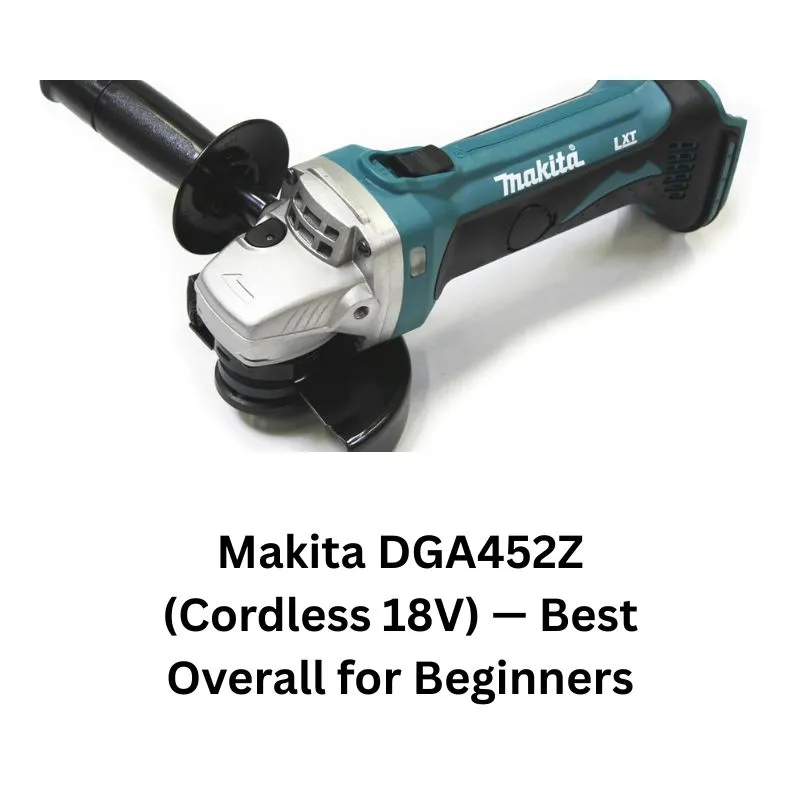
The Makita DGA452Z is a compact 18V cordless angle grinder designed around a 115mm disc. Its slim body and relatively compact format make it worth considering if you want a cordless grinder for general DIY cutting and grinding.
The DGA452Z is part of Makita’s 18V LXT battery system, so it can be particularly useful if you already own compatible Makita LXT batteries and a charger.
Makita lists a 11,000 rpm no-load speed, an anti-restart function and electronic overload protection. The grinder uses an M14 spindle and accepts 115mm discs.
Why Beginners May Like It:
- Compact 115mm design
- Cordless 18V operation
- Slim body for a comfortable grip
- Anti-restart function
- Electronic overload protection
- Uses widely available 115mm accessories
- Part of the Makita 18V LXT battery platform
The anti-restart function is useful if power to the grinder is interrupted, as it is designed to prevent the machine from restarting when power is restored. Makita also states that its electronic protection system helps protect the tool against overload.
Best For:
- General DIY cutting and grinding
- Cutting bolts, brackets and suitable metal sections
- Grinding and smoothing metal
- Garden and home maintenance
- DIYers who already own Makita 18V LXT batteries
Things to Consider
The DGA452Z is a bare tool, so the battery and charger are normally purchased separately. This can be an advantage if you already have Makita LXT batteries, but it increases the initial cost if you’re starting a battery platform from scratch. UK retailers currently list the DGA452Z as a body-only machine.
It’s also worth remembering that cordless convenience doesn’t remove the need for good technique. You still need to fit the correct disc, use the appropriate guard and maintain control of the grinder throughout the job.
My view: The DGA452Z is a straightforward option for a beginner who wants a compact 115mm cordless grinder, particularly if they are already invested in Makita’s 18V LXT system.
Check Price on Amazon UK for Makita DGA452Z2. DeWalt DCG405N (Cordless 18V) — A Feature-Rich Cordless Option
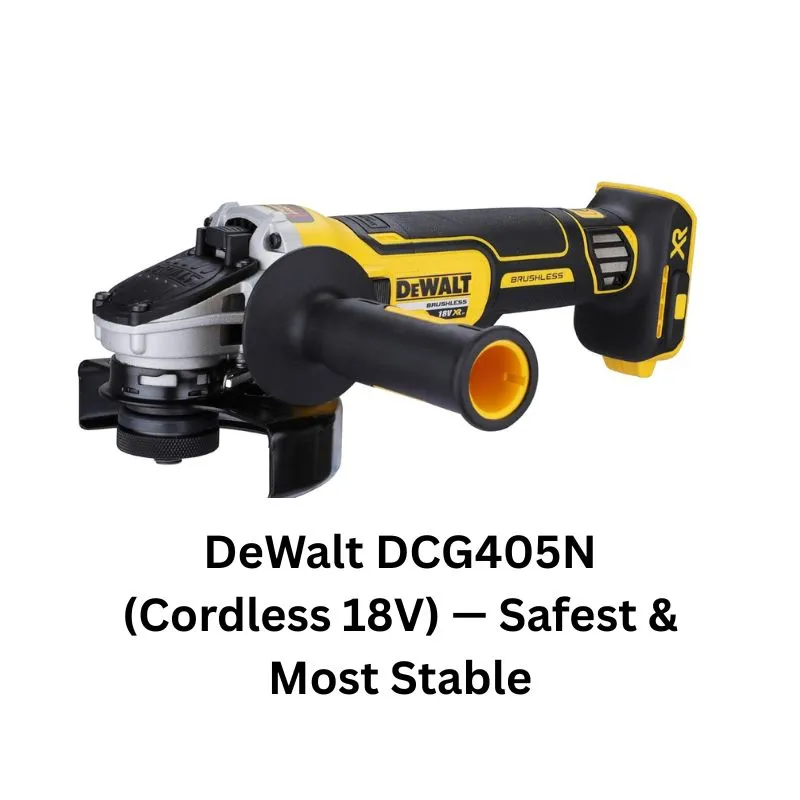
The DeWalt DCG405N is an 18V cordless angle grinder with a 125mm disc size. It is part of DeWalt’s XR battery platform and is aimed at users who want a compact cordless grinder with additional electronic protection features.
The DCG405N uses a brushless motor and includes an electronic brake and electronic clutch. DeWalt says the electronic clutch is designed to reduce the kickback reaction that can occur during a pinch or stall, while the electronic brake stops the disc quickly when the switch is released.
Why Beginners May Like It:
- 18V cordless operation
- 125mm disc size
- Brushless motor
- Electronic brake
- Electronic clutch designed to reduce kickback reaction
- Comfortable two-handed design with side handle
- Part of the DeWalt 18V XR battery system
These features can make the DCG405N an interesting option for beginners who want a cordless grinder with more electronic protection than some basic models.
However, electronic protection does not replace good technique. The correct disc, guard, workpiece setup and two-handed control are still important when using an angle grinder.
Best For:
- General DIY cutting and grinding
- Cutting suitable metal such as bolts, brackets and sections
- Grinding and smoothing metal
- Regular home and workshop jobs
- DIYers who already own DeWalt 18V XR batteries
Things to Consider
The DCG405N is normally sold as a bare tool, so check exactly what is included with the version you’re buying. A battery and charger may need to be purchased separately if you don’t already use the DeWalt XR system.
The 125mm disc size also means you should buy accessories specifically compatible with a 125mm grinder and suitable for the material and application.
If you’re starting from scratch, remember to include the cost of a compatible battery and charger when comparing cordless grinders with corded alternatives.
My view: The DCG405N is worth considering if you want a 125mm cordless grinder with a brushless motor, electronic brake and electronic clutch, particularly if you already own DeWalt 18V XR batteries.
Check Amazon UK for price on the Dewalt 405N3. Bosch GWS 750 (Corded) — A Simple Corded Option
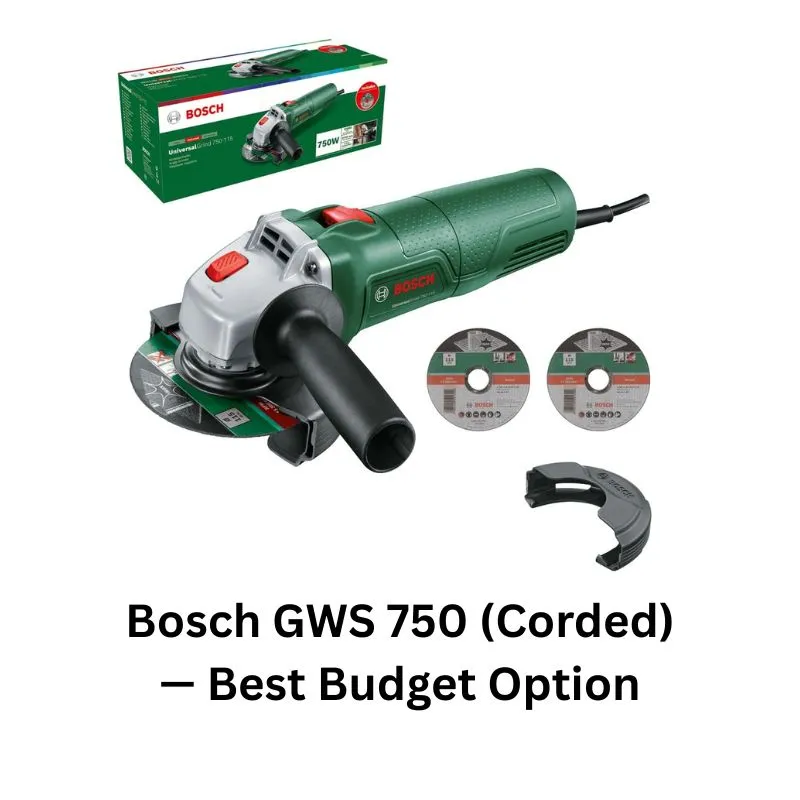
If you prefer a corded angle grinder or don’t want to invest in a cordless battery platform, the Bosch GWS 750 is a straightforward option for general DIY.
The GWS 750 is a compact grinder designed for 115mm discs and uses a 750W motor. Bosch lists a no-load speed of 11,000 rpm, making it suitable for a range of common cutting and grinding applications when used with the correct accessory. (bosch-professional.com)
Why Beginners May Like It:
- 750W corded motor
- Compact 115mm design
- No battery or charger required
- Suitable for common DIY cutting and grinding jobs
- Bosch Professional range of compatible accessories
- Straightforward option for occasional use
A corded grinder can also be useful if you expect to use the tool for longer periods and have a suitable power supply nearby. You don’t have to stop to change or recharge a battery.
Best For:
- DIYers who prefer corded tools
- Occasional cutting and grinding
- Cutting suitable metal such as bolts and brackets
- Grinding and smoothing metal
- Home workshop use
- Buyers who don’t already own a cordless battery platform
Things to Consider
The main difference compared with the cordless options in this guide is the power cable.
You’ll need to work within the cable’s reach and take care to keep the cable away from the rotating disc and your cutting area. A suitable power supply and extension arrangement should also be used where required.
Unlike the cordless grinders above, the GWS 750 doesn’t require you to buy a compatible battery and charger, which can make a corded grinder worth considering if you’re buying your first angle grinder.
It’s also important to check the exact version before buying, as Bosch sells different GWS models with similar names and specifications can vary between versions.
My view: The Bosch GWS 750 is a sensible option if you want a compact 115mm corded angle grinder for occasional DIY work and would rather avoid the additional cost of batteries and chargers.
Check Amazon UK for price of the Bosch GWS 7504. Einhell TE-AG 18/115 (Cordless) — An Affordable Battery-Platform Option
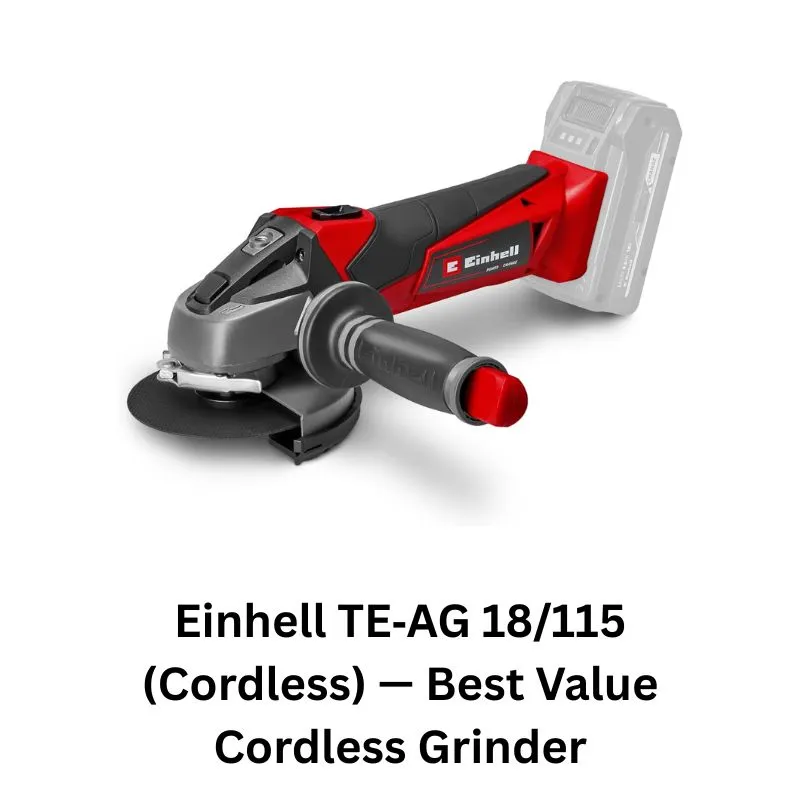
The Einhell TE-AG 18/115 Li is an 18V cordless angle grinder using a 115mm disc. It is part of Einhell’s Power X-Change battery system, so it can be particularly useful if you already own other compatible Einhell tools and batteries.
The grinder is designed for common cutting and grinding applications and includes features such as a soft start function and electronically controlled speed regulation. Einhell also specifies an adjustable disc guard and a two-position auxiliary handle. (einhell.co.uk)
Why Beginners May Like It:
- 18V cordless operation
- Compact 115mm disc size
- Soft start
- Electronic speed control
- Adjustable disc guard
- Two-position auxiliary handle
- Part of the Einhell Power X-Change battery system
The Power X-Change system is one of the main reasons to consider this grinder. If you already have compatible batteries and a charger, a bare tool can be a convenient way to add an angle grinder without buying another battery system.
Best For:
- General DIY cutting and grinding
- Cutting suitable metal such as bolts and brackets
- Grinding and smoothing metal
- Garden maintenance and repairs
- DIYers already using Einhell Power X-Change tools
- Occasional home and workshop jobs
Things to Consider
Check whether you’re buying the bare-tool version or a kit that includes a battery and charger. Einhell sells different versions of the TE-AG 18/115 Li, so the contents of the package can vary.
If you don’t already own a Power X-Change battery, include the cost of the battery and charger when comparing this grinder with corded alternatives.
Battery capacity also affects how long a cordless grinder can be used between charges. A larger Ah battery generally provides more stored energy, but it can also add weight to the tool.
As with any cordless angle grinder, make sure the battery is compatible with the exact model and follow the manufacturer’s instructions for fitting and using it.
My view: The TE-AG 18/115 Li is worth considering if you want a 115mm cordless grinder with useful beginner-friendly features and are interested in Einhell’s Power X-Change battery platform.
Check Amazon UK for price of the Einhell TE‑AG 18/1155. Ryobi R18AG-0 (Cordless) — An Option for the ONE+ Battery System
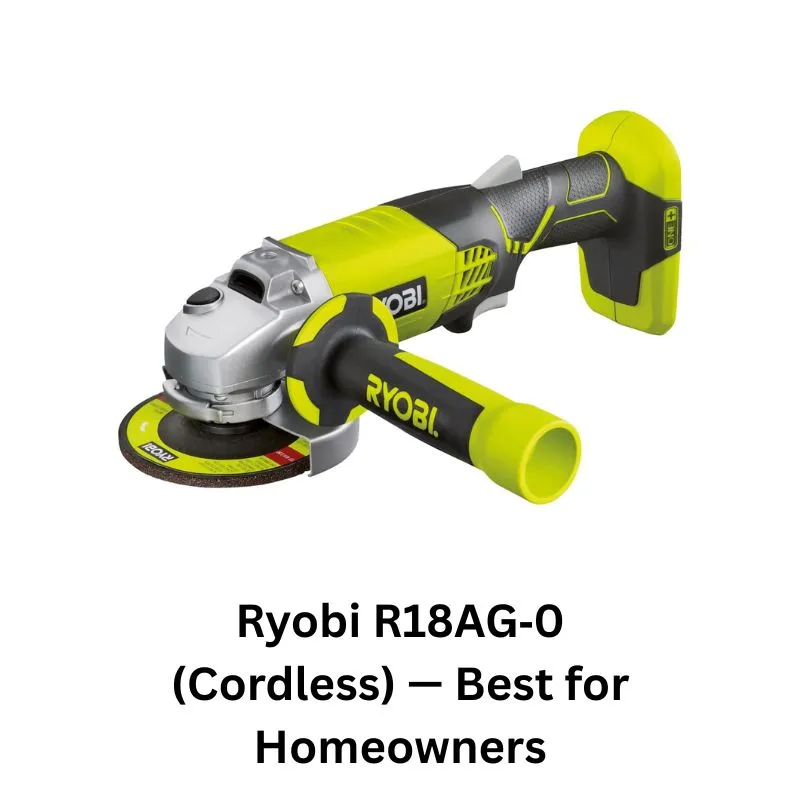
The Ryobi R18AG-0 is an 18V cordless angle grinder designed for 115mm discs and forms part of Ryobi’s ONE+ battery system.
Its main attraction for many DIY users is the battery platform. If you already own other Ryobi ONE+ tools, the same compatible battery can be used across the system, allowing you to add an angle grinder without starting a completely new battery platform.
The R18AG-0 is designed for general cutting and grinding applications and has a compact format that makes it suitable for occasional DIY work.
Why Beginners May Like It:
- 18V cordless operation
- 115mm disc size
- Compatible with the Ryobi ONE+ battery system
- Compact design
- Adjustable guard
- Auxiliary handle
- Suitable for general DIY cutting and grinding
Best For:
- DIYers already using Ryobi ONE+ tools
- Occasional cutting and grinding
- Cutting suitable metal such as bolts and brackets
- Grinding and smoothing metal
- General home and garden maintenance
Things to Consider
The R18AG-0 is a bare tool, so the battery and charger are normally purchased separately. If you don’t already own Ryobi ONE+ batteries, remember to include their cost when comparing it with the other grinders in this guide.
Battery choice can also affect the overall weight and runtime of a cordless grinder. A larger-capacity battery can provide more stored energy but may add weight to the tool.
As with the other cordless grinders in this guide, check the exact package contents before buying because kits and bare-tool versions can differ.
You should also use only discs and accessories that are suitable for the grinder, the material and the intended application.
Our view: The R18AG-0 is worth considering if you want a 115mm cordless angle grinder and already use Ryobi’s ONE+ battery system. For someone starting from scratch, compare the total cost of the grinder, battery and charger rather than looking only at the bare-tool price.
Check Amazon UK for price on the Ryobi R18AG-0Which Grinder Should You Choose?
There isn’t one angle grinder that is right for every beginner. The best option for you will depend mainly on whether you want a corded or cordless tool, whether you already own batteries and the type of DIY work you expect to do.
If You Already Own Makita 18V LXT Batteries
The Makita DGA452Z could be a convenient choice if you already have compatible LXT batteries and want a compact 115mm grinder.
You can use your existing batteries rather than buying into another battery platform.
If You Already Own DeWalt 18V XR Batteries
The DeWalt DCG405N is worth considering if you want a 125mm cordless grinder with features including an electronic brake and electronic clutch.
It’s particularly worth comparing if you expect to use the grinder regularly for cutting and grinding metal.
If You Don’t Want Batteries
The Bosch GWS 750 provides a straightforward corded alternative.
A corded grinder means you don’t need to buy or charge a battery, although you will need a suitable power supply and have a cable to manage while working.
If You Use Einhell Power X-Change Tools
The Einhell TE-AG 18/115 Li makes sense if you already have compatible Power X-Change batteries.
Its 115mm size and cordless design make it suitable for a range of general DIY cutting and grinding jobs.
If You Use Ryobi ONE+ Tools
The Ryobi R18AG-0 is another option if you’re already invested in a battery platform.
Because it uses the ONE+ system, an existing compatible battery can be shared with the grinder.
If You’re Starting From Scratch
If you don’t already own batteries, don’t look only at the price of the bare grinder.
Compare the complete cost of the grinder, battery and charger for cordless models. Then compare that with the cost of a corded grinder.
Also consider what other cordless tools you might buy in the future. Choosing one battery platform can make it easier to share batteries between tools.
A Simple Beginner Checklist
Before buying, ask yourself:
- Do I want corded or cordless?
- Do I already own compatible batteries?
- Will I mainly cut metal, grind, or do both?
- Do I need a 115mm or 125mm grinder?
- Does the grinder have a comfortable two-handed grip?
- Is the correct guard supplied?
- Are suitable discs and accessories readily available?
- What will the complete setup cost, including battery and charger?
For most beginners, these questions are more useful than simply choosing the grinder with the longest list of features.
Essential Accessories for Beginners
Buying an angle grinder is only part of getting started. You’ll also need suitable discs and personal protective equipment for the jobs you intend to carry out.
Don’t assume that an accessory is suitable simply because it fits the grinder. Always check the diameter, bore or mounting system, maximum operating speed and intended application before fitting a disc or accessory.
Metal Cutting Discs
A metal cutting disc is designed for cutting suitable metal.
They can be useful for jobs such as:
- Cutting bolts and threaded rod
- Cutting metal brackets
- Cutting suitable steel sections
- Trimming sheet metal
Cutting discs are available in different thicknesses. A thinner disc can be useful for certain cutting applications, but you should choose a disc that is suitable for your grinder, the material and the job rather than automatically choosing the thinnest option.
Grinding Discs
Grinding discs are designed for removing material from suitable surfaces and can be useful for jobs such as:
- Grinding welds
- Removing excess metal
- Cleaning up rough edges
- Preparing metal before further finishing
A conventional grinding disc should not be used for cutting unless the manufacturer specifically states that it is designed for that application.
Flap Discs
Flap discs use abrasive material arranged in overlapping sections and are useful for smoothing, blending and finishing metal.
Different grit grades are available. Coarser grits remove material more quickly, while finer grits are generally more suitable for finishing.
If you’re unsure which grit or type to use, start by checking the manufacturer’s recommendations for the material and application.
Wire Wheels and Cup Brushes
Wire wheels and cup brushes can be useful for removing:
- Loose rust
- Surface contamination
- Old paint or coatings where the accessory is suitable
These accessories can throw debris from the workpiece, so appropriate eye and face protection is particularly important.
Personal Protective Equipment
The exact PPE required depends on the job, material and manufacturer’s instructions, but beginners should consider:
- Eye protection to protect against sparks and debris
- Hearing protection because angle grinders can be very loud
- Suitable gloves where appropriate for the task and equipment instructions
- Suitable footwear and clothing
- Respiratory protection where the material or process creates hazardous dust or fumes and other controls do not adequately control the exposure
Don’t treat PPE as a substitute for good working practices. Secure the workpiece, use the correct guard and accessory, and control the grinder properly.
What About Dust Masks?
A simple disposable dust mask should not automatically be treated as sufficient protection for every angle-grinder job.
Cutting or grinding some materials can produce hazardous dust or fumes. Painted, coated, treated or unknown materials may require particular care.
Where dust or fumes are produced, consider the material being worked on, ventilation and the appropriate control measures. Follow the manufacturer’s instructions and relevant UK safety guidance.
Beginner Accessory Checklist
Before starting a job, check:
- Is the disc suitable for the material?
- Is it suitable for the application?
- Is the diameter correct for the grinder?
- Is the bore or mounting system compatible?
- Is the maximum operating speed suitable?
- Is the accessory undamaged?
- Is the correct guard fitted?
- Do you have the appropriate PPE and dust or fume controls?
Choosing the right accessory is just as important as choosing the grinder itself. If you’re unsure which disc you need, our guide to [Angle Grinder Discs Explained] covers the main types and their uses.
Safety Tips for Beginners
Angle grinders are powerful tools, and the correct setup and technique are important even for relatively small DIY jobs.
Before using your grinder, work through these basic checks.
Use the Correct Guard
Always use the guard supplied or specified for the grinder and the accessory you are using.
Make sure it is correctly fitted and positioned before starting work. Never remove the guard simply because it makes access to the workpiece easier.
Use Both Hands
Use the grinder’s main handle and auxiliary side handle where the tool is designed for two-handed operation.
A secure grip helps you maintain control if the disc encounters resistance or the grinder moves unexpectedly.
Let the Disc Reach Operating Speed
Start the grinder with the disc clear of the workpiece and allow it to reach its normal operating speed before making contact.
Don’t start the grinder with the disc pressed against the material.
Don’t Twist or Force the Disc
When cutting, allow the disc to do the work.
Avoid excessive pressure, twisting, levering or applying sideways force to a conventional cutting disc. If the grinder begins to struggle, stop and check the disc, material and setup rather than simply pushing harder.
Secure the Workpiece
The material you’re working on should be properly supported and secured.
Don’t try to hold a small piece of metal in your hand while cutting it. A suitable vice or clamping arrangement can help prevent the workpiece from moving during the cut.
Wear Appropriate PPE
At a minimum, consider suitable eye protection and hearing protection when using an angle grinder.
Depending on the material and task, additional protection may be required. Sparks, hot material, dust and debris should all be considered before starting work.
Keep the Work Area Clear
Angle grinders can produce sparks and hot debris.
Remove flammable materials from the immediate area and make sure there is enough space to work without the grinder, cable or battery getting caught on surrounding objects.
Check the Disc Before Use
Don’t use a disc that is cracked, chipped, damaged or otherwise unsuitable.
Check the disc’s diameter, mounting arrangement, maximum operating speed and intended application before fitting it to the grinder.
Switch Off Before Setting the Grinder Down
When you’ve finished the cut or grinding operation, switch the grinder off and keep hold of it until the disc has stopped rotating.
Never place a grinder down while the disc is still rotating.
Follow the Manufacturer’s Instructions
Different angle grinders and accessories can have different requirements.
Always follow the instructions supplied with your particular grinder, guard and accessory.
For a more detailed explanation of grinder safety, including kickback, disc selection, PPE and common beginner mistakes, see our full guide to How to Use an Angle Grinder Safely.
Final Beginner Safety Check
Before switching on, ask yourself:
- Is the correct disc fitted?
- Is the disc undamaged?
- Is the guard correctly fitted?
- Is the workpiece secure?
- Am I wearing the appropriate PPE?
- Is the work area clear?
- Can I maintain control of the grinder throughout the job?
Taking a few seconds to check these things before starting can help you avoid many common beginner mistakes.
You should also read angle grinder uses for beginners.