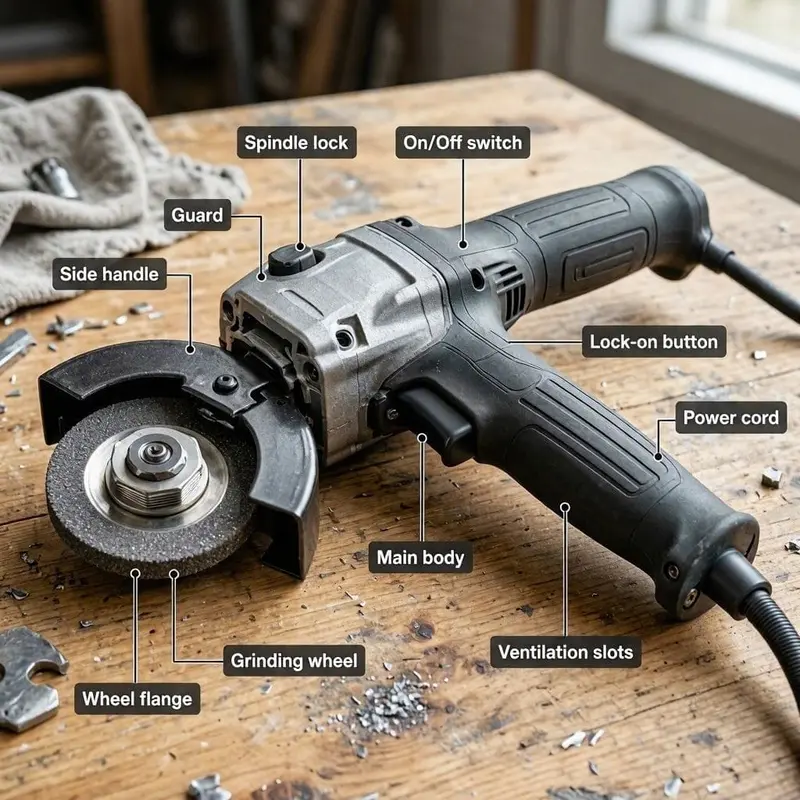
“Yes, you can use an angle grinder on wood in some situations, but an angle grinder is not a general-purpose woodworking tool.”
Angle grinders are designed primarily for tasks such as cutting and grinding metal, but manufacturers also produce specialist accessories for certain woodworking applications, including some carving and material-removal tasks.
The main concern is that an angle grinder is a fast, powerful handheld tool. Wood can behave differently from metal or masonry when an abrasive or toothed accessory contacts the material, and an unsuitable accessory can increase the risk of kickback, loss of control or unexpected movement.
For most ordinary woodworking jobs, a circular saw, jigsaw, reciprocating saw or handsaw is a more appropriate choice, particularly when you need a straight, accurate cut.
In this guide, we’ll explain when an angle grinder may be suitable for wood, which accessories are specifically designed for particular woodworking applications, what you should avoid and when another tool is the better option.
We’ll also cover some important safety considerations for anyone who is considering using an angle grinder on wood for the first time.
Quick Answer: Can You Use an Angle Grinder on Wood?
Yes, you can use an angle grinder on wood for certain shaping, carving and material-removal applications, but only with an accessory that the manufacturer specifically states is suitable for wood and the intended job.
An angle grinder is generally not the best choice for ordinary wood cutting, particularly when you need long, straight or accurate cuts.
For most DIY wood-cutting jobs:
- Long, straight cuts: use a circular saw
- Curved or shaped cuts: use a jigsaw
- Rough or demolition cuts: use a reciprocating saw
- Small or awkward cuts: use an oscillating multi-tool
- Wood shaping or carving: an angle grinder may be suitable with the correct specialist accessory
Always check the grinder and accessory manufacturer’s instructions, secure the workpiece properly and use appropriate protection and dust control.
Suitable Uses: Can You Use an Angle Grinder on Wood?
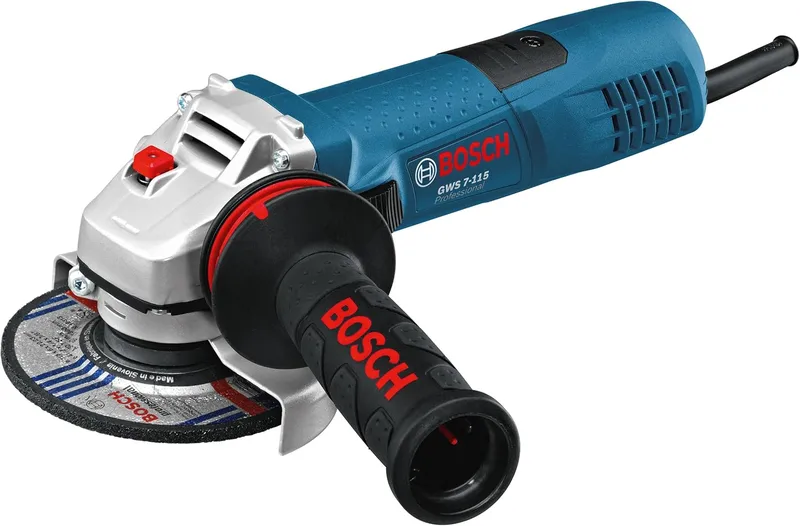
Yes, but you need to use an accessory that is specifically suitable for the woodworking task and follow the manufacturer’s instructions.
An angle grinder can be used for certain wood-shaping, carving and material-removal applications when the manufacturer of the accessory specifically permits its use on wood.
However, that doesn’t mean an angle grinder is suitable for every woodworking job.
For example, if you need to cut a long, straight piece of timber or make an accurate cut through a sheet of plywood, a circular saw or jigsaw is generally a more appropriate tool for the job.
Why Wood Requires Extra Care
Wood can contain knots, nails, screws, staples or other hidden objects. Different types of timber can also behave differently when an accessory contacts the material.
An angle grinder is also a relatively aggressive tool, so it can remove material quickly and may be difficult to control if the accessory catches or the grinder is forced into the workpiece.
The risks can increase if you use an accessory that was not designed or approved for use on wood.
The Important Rule
Don’t fit an accessory to an angle grinder simply because it physically fits.
Before using an angle grinder on wood, check:
- Whether the accessory is specifically rated or approved for wood
- What type of woodworking task it is designed for
- The accessory’s maximum operating speed
- Whether it is compatible with your particular grinder
- The manufacturer’s instructions and safety requirements
- Whether a different woodworking tool would be more suitable for the job
If you’re unsure, choose a purpose-designed woodworking tool instead.
The following sections look at some of the woodworking applications where specialist angle-grinder accessories may be used, as well as situations where using an angle grinder is better avoided.
Suitable Uses for an Angle Grinder on Wood
An angle grinder can be useful for some wood-shaping and material-removal tasks when the accessory is specifically designed or approved for use on wood.
These are generally jobs where controlled material removal is more important than making a precise cut.
1. Wood Shaping and Carving
Specialist wood-carving accessories are available for some angle grinders and can be used to remove wood and create curved or shaped surfaces.
Possible applications include:
- Rough shaping
- Creating curves
- Rounding edges
- Removing larger amounts of material
- Carving and sculpting
Always check that the carving accessory is suitable for your grinder and intended for the type of wood and application.
2. Removing Bark
A suitable specialist accessory can be used for removing bark from logs or other pieces of timber. This can be useful when preparing wood for a project or when working with natural timber.
Take particular care around knots and irregular areas because the shape and hardness of the wood can change significantly across the workpiece.
3. Removing Rotten or Damaged Wood
An angle grinder with a suitable woodworking accessory may be useful for removing small amounts of rotten or damaged timber. For example, it may help when cleaning up a localised damaged area on suitable timber before carrying out a repair.
However, don’t assume that an angle grinder is appropriate for structural repairs. If removing timber could affect the strength or stability of a structure, use an appropriate repair method or seek professional advice.
4. Rough Shaping of Timber
An angle grinder can remove wood relatively quickly when you need to make a rough shape rather than an accurate dimension.
This can include:
- Rounding a timber edge
- Removing excess material
- Shaping irregular pieces of wood
- Preparing a piece for further sanding or finishing
Because material can be removed quickly, use controlled movements and avoid forcing the accessory into the timber.
What About Cutting Wood?
This is where you need to be particularly careful.
Some specialist accessories are designed for cutting or working on wood, but not every wood-cutting accessory is suitable for an angle grinder.
If you need to make a straight or accurate cut through timber, sheet material or a large board, a circular saw, jigsaw or other purpose-designed woodworking tool is generally a more suitable choice.
Before using any accessory on wood, check the manufacturer’s instructions and make sure it is specifically intended for that application.
If you’re still wondering can you use an angle grinder on wood, the answer depends on the accessory, the application and the manufacturer’s instructions.
Accessories Designed for Woodworking Applications
There are specialist accessories that can be used with some angle grinders for woodworking applications. However, you should only use an accessory on wood when the manufacturer specifically states that it is suitable for the grinder and the intended application.
Different accessories are designed for different types of material removal, so always check the packaging and manufacturer’s instructions before fitting one.
1. Specialist Wood-Carving Accessories
Some manufacturers produce specialist carving or shaping accessories for angle grinders.
These can be designed for tasks such as:
- Rough wood shaping
- Carving
- Removing larger amounts of wood
- Creating curves and contours
The exact design and intended use varies between accessories, so don’t assume that any toothed or abrasive attachment is suitable for wood.
2. Multi-Material Accessories
Some manufacturers produce accessories designed for use on more than one material. Depending on the specific product, these may be suitable for certain types of wood as well as other materials.
If an accessory is described as multi-material, check the manufacturer’s specifications to see exactly which materials and applications are covered.
Don’t rely on the appearance of the accessory or the fact that it fits your grinder.
3. Flap Discs for Light Wood Finishing
A flap disc may be suitable for some light wood-finishing or surface-preparation work, depending on the disc manufacturer’s instructions.
However, flap discs can remove material quickly and are primarily associated with metalworking. They should therefore only be used on wood when the particular disc is rated for that application.
If permitted, use controlled pressure and avoid removing more material than necessary.
Check Before Fitting Any Accessory
Before using an angle grinder accessory on wood, check:
- Material compatibility — does the manufacturer specifically allow wood?
- Application — is it intended for cutting, carving, shaping or finishing?
- Maximum operating speed — is it suitable for your grinder?
- Disc or accessory size — is it compatible with the grinder?
- Guard requirements — does the manufacturer specify a particular guard or setup?
- Instructions and restrictions — are there any limitations on how it should be used?
The fact that an accessory fits your angle grinder does not automatically make it suitable for wood.
If the manufacturer does not specify that the accessory is suitable for your intended woodworking application, choose a purpose-designed woodworking tool instead.
Accessories You Should Not Use on Wood
Not every angle grinder disc or accessory is suitable for woodworking. Never use an accessory on wood unless the manufacturer specifically states that it is suitable for that application.
Some common angle grinder accessories are particularly inappropriate for wood.
Chainsaw-Style or Aggressive Toothed Discs
Avoid aggressive toothed accessories that are not specifically approved by the manufacturer for your angle grinder and the intended woodworking application.
These accessories can remove material very quickly and may make the grinder difficult to control if the teeth catch in the wood.
The fact that an accessory is marketed for cutting or carving wood does not automatically mean it is suitable for your particular grinder. Always check the manufacturer’s instructions.
Circular Saw Blades and Unapproved Saw Blades
Do not fit an ordinary circular saw blade to an angle grinder unless the blade and grinder manufacturer specifically approve that combination.
A circular saw is designed around a different guard and operating arrangement, so simply fitting a saw blade because the bore appears to match is not a safe way to use an angle grinder.
Metal Cutting Discs
A standard metal cutting disc is designed for cutting suitable metals and should not be used to cut wood.
Woodworking requires an accessory specifically designed or approved for the material and application. Using the wrong disc can produce poor results and may increase the risk of losing control of the grinder.
Metal Grinding Discs
A conventional grinding disc is designed for removing material from suitable metal surfaces. It is not a woodworking accessory and should not be used to shape or cut wood.
Grinding discs can remove material aggressively and are not designed to provide the controlled cutting or shaping action required for woodworking.
The Simple Rule
If you’re looking at an angle grinder accessory and the manufacturer’s instructions do not specifically list wood as a suitable material, don’t use it on wood.
Also check that the accessory is suitable for the specific application, grinder speed, diameter and guard arrangement.
When in doubt, use a purpose-designed woodworking tool such as a circular saw, jigsaw or suitable sanding tool instead.
When You Should NOT Use an Angle Grinder on Wood
Avoid Although an angle grinder can be used for certain wood-shaping and material-removal tasks, there are plenty of situations where it is not the right tool for the job.
For beginners especially, choosing a purpose-designed woodworking tool can make it easier to control the cut and achieve a more accurate result.
Long, Straight Cuts
If you need to cut a long, straight piece of timber, an angle grinder is generally not the most suitable choice.
A circular saw is designed for making straight cuts through timber and sheet materials, while a track saw or guide rail can make long cuts more consistent and accurate.
Cutting Large Sheets of Wood
Large sheets of plywood, MDF, OSB or other board materials are awkward to cut with an angle grinder.
A circular saw or jigsaw is usually more appropriate, depending on whether you need a straight cut or a curved or shaped cut.
When Accuracy Matters
An angle grinder is primarily a material-removal tool, so it is not the first choice when you need a precise woodworking cut.
For jobs such as cutting shelving, cabinet panels, flooring or accurately sized timber, a tool designed for woodworking will generally give you better control over the cut.
When the Accessory Is Not Approved for Wood
Never assume an accessory is suitable for wood simply because it fits your angle grinder.
Check the manufacturer’s instructions and the accessory markings before use. The accessory should be specifically suitable for the material and application, as well as compatible with your particular grinder.
If wood is not listed as an approved application, choose a different accessory or use a purpose-designed woodworking tool.
When the Timber Cannot Be Secured Properly
Do not attempt to work on wood if you cannot support and secure the workpiece properly.
Timber that moves unexpectedly can make it much harder to maintain control of a handheld grinder. Make sure the material is positioned securely before starting the grinder.
When You Need a Clean, Finished Edge
If the job requires a clean, accurate edge straight from the cut, an angle grinder is usually not the most suitable tool.
A circular saw, jigsaw, handsaw or other woodworking tool will generally be better suited to producing the type of cut required.
When You Are Unsure About the Setup
If you are unsure whether a particular accessory, guard, grinder or woodworking application is suitable, don’t rely on guesswork.
Check the manufacturer’s instructions before starting. If the application is not covered, using a tool specifically designed for the woodworking task is the more straightforward option.
The simple rule: an angle grinder can have a place in certain woodworking applications, but it should not be your default tool for ordinary wood cutting. If the job involves accurate cuts, large sheets or long straight cuts, a purpose-designed woodworking tool is usually the better choice.
Safer Alternatives for Cutting Wood
If your main job is cutting wood, there are several tools that are more appropriate than an angle grinder. The right choice depends on the type of cut you need to make and the material you are working with.
| Tool | Best suited to | Typical DIY uses |
|---|---|---|
| Circular saw | Long, straight cuts | Timber, plywood, MDF, OSB and other sheet materials |
| Jigsaw | Curved and shaped cuts | Plywood, MDF, timber and cut-outs |
| Reciprocating saw | Rough or demolition cuts | Timber, renovation work and some cutting where nails may be present |
| Oscillating multi-tool | Small, controlled cuts | Trim, notches, flush cuts and awkward areas |
| Handsaw | Simple manual cuts | Small timber, trim and general DIY work |
Circular Saw
A circular saw is generally the better choice when you need to make long, straight cuts through timber or sheet materials.
It is particularly useful for cutting:
- Timber
- Plywood
- MDF
- OSB
- Other suitable sheet materials
A guide rail or straightedge can also help when you need a more accurate long cut.
Jigsaw
A jigsaw is useful when the cut needs to curve or change direction.
It is commonly used for:
- Curved cuts
- Cut-outs
- Sink or hob openings
- Shaping sheet materials
- Smaller timber cuts
The blade should be selected for the material and type of cut required.
Reciprocating Saw
A reciprocating saw is useful for rough cutting and demolition work where a highly accurate finish is not the main priority.
With the correct blade, it can be useful for cutting timber during renovation and dismantling work. Specialist blades are also available for situations where timber contains nails or other fixings, but the blade must be suitable for that application.
Oscillating Multi-Tool
An oscillating multi-tool is useful when you need to make smaller or more controlled cuts, particularly where access is restricted.
Typical uses include:
- Cutting trim
- Making small notches
- Flush-cutting
- Cutting openings in awkward locations
- Removing sections of timber during renovation work
Handsaw
For smaller jobs, you may not need a power tool at all.
A good-quality handsaw can be a simple option for cutting smaller pieces of timber, particularly when you only have a few cuts to make.
Which Tool Should You Use?
The easiest way to choose is to start with the type of cut you need:
- Long, straight cut: circular saw
- Curved or shaped cut: jigsaw
- Rough or demolition cut: reciprocating saw
- Small or awkward cut: oscillating multi-tool
- Simple manual cut: handsaw
An angle grinder can be useful for certain specialist wood-shaping applications, but if your main requirement is cutting wood accurately, one of these purpose-designed woodworking tools will usually be more appropriate.
How to Use an Angle Grinder on Wood Safely
If you are going to use an angle grinder on wood, take extra care with the setup before you start. An angle grinder is a powerful handheld tool, and the correct accessory and technique are important when working with timber.
Only use an accessory that the manufacturer specifically states is suitable for wood and your intended application. Check the accessory instructions as well as the instructions for your particular angle grinder.
1. Check the Accessory Before Starting
Before fitting the accessory, check:
- It is designed or approved for the type of woodwork you are doing
- The diameter and fitting are compatible with your grinder
- Its maximum operating speed is suitable for the grinder
- It is in good condition and shows no visible damage
- Any required guard or accessory-specific protection is fitted correctly
Never assume that an accessory is suitable simply because it physically fits the grinder.
2. Secure the Wood Properly
Make sure the timber is properly supported and cannot move unexpectedly during the work.
Use suitable clamps or another appropriate method to hold the workpiece securely. Keep your hands away from the area being worked on and make sure the grinder has enough room to move without contacting nearby objects.
3. Wear Appropriate Personal Protection
Use suitable personal protective equipment for the job, including eye protection and hearing protection where appropriate.
Woodworking can also produce fine dust, so make sure you have suitable dust control and follow the manufacturer’s and relevant workplace guidance for respiratory protection where required.
Wear suitable clothing and footwear, and keep loose clothing and other items away from the rotating accessory.
4. Start the Grinder Before Contacting the Wood
Hold the grinder securely and allow it to reach its normal operating speed before bringing the accessory into contact with the timber, following the grinder manufacturer’s instructions.
Keep a firm, controlled grip and position yourself so you are not directly in the path of the accessory if the tool moves unexpectedly.
5. Work Slowly and Do Not Force the Grinder
Let the accessory do the work rather than forcing it into the timber.
Use controlled movements and avoid excessive pressure. If the grinder starts to behave unexpectedly, catches, vibrates excessively or becomes difficult to control, stop and reassess the setup.
Do not continue simply because you are trying to finish the job quickly.
6. Keep the Accessory Moving as Intended
Follow the accessory manufacturer’s instructions for the correct direction and method of use.
Avoid twisting, levering or applying sideways pressure unless the accessory is specifically designed for that type of operation. Never use an accessory outside the application for which it was designed.
7. Watch for Nails, Screws and Other Hidden Objects
Before working on timber, check it carefully for nails, screws, staples, brackets or other metal objects.
If you are unsure what is inside the wood, stop and investigate rather than assuming the material is clear. Hidden fixings can affect how the accessory behaves and may not be suitable for the accessory you are using.
8. Keep the Work Area Clear
Make sure there is enough space around the workpiece and that other people are kept away from the immediate work area.
Wood dust and debris can also accumulate during the job, so maintain suitable ventilation and dust control rather than allowing dust to build up around the work area.
9. Stop If the Grinder Becomes Difficult to Control
If the accessory catches, the grinder starts vibrating unusually, the tool becomes difficult to control or you notice damage to the accessory, stop using it.
Switch off and isolate the grinder before inspecting the accessory or changing the setup. Never try to correct a problem while the accessory is still rotating.
Final Safety Check
Before using an angle grinder on wood, ask yourself:
- Is the accessory specifically suitable for wood and this application?
- Is it compatible with my grinder?
- Is the wood securely supported?
- Is the correct guard and setup being used?
- Am I wearing appropriate eye and hearing protection?
- Do I have suitable dust control?
- Is the work area clear?
- Can I maintain proper control of the grinder throughout the job?
If the answer to any of these questions is no, stop and reassess the job before switching on the grinder.
For general abrasive-wheel safety, it is also worth following the relevant guidance from the UK Health and Safety Executive (HSE) rather than relying solely on general DIY advice.
For full safety guidance, see: How to Use an Angle Grinder Safely
Common Mistakes to Avoid
Using an angle grinder on wood requires more care than simply fitting an accessory and switching the tool on. These are some of the most common mistakes to avoid.
Using an Accessory Just Because It Fits
A disc or accessory fitting the grinder does not automatically mean it is suitable for wood.
Always check the manufacturer’s instructions for the accessory and make sure it is approved for the material, application and grinder you are using.
Using the Wrong Type of Disc
Do not use a conventional metal cutting or grinding disc for woodworking simply because it is already fitted to the grinder.
Likewise, don’t fit an ordinary circular saw blade or another saw blade unless the manufacturer specifically states that it is suitable for your particular grinder and application.
Trying to Make Long, Accurate Cuts
An angle grinder is generally not the right tool for cutting long, straight lines through timber or sheet materials.
If accuracy matters, use a circular saw, jigsaw or another tool designed for the type of cut you need to make.
Holding the Wood by Hand
Never rely on your hand to hold a piece of timber steady while using the grinder.
Secure the workpiece properly so it cannot move unexpectedly during the operation.
Forcing the Grinder Through the Wood
Applying excessive pressure can make the grinder harder to control.
Allow the accessory to remove material at its intended rate and use controlled movements. If the tool begins to struggle or behave unexpectedly, stop and investigate rather than applying more pressure.
Ignoring Nails, Screws and Other Fixings
Old timber, reclaimed wood and construction timber can contain nails, screws, staples or other hidden objects.
Check the material before starting and make sure the accessory you are using is suitable for the possibility of metal being present.
Ignoring the Manufacturer’s Instructions
Different grinders and accessories can have different requirements for guards, operating speeds, mounting and applications.
Don’t rely on what looks right or what worked with another tool. Check the instructions for the specific grinder and accessory.
Working Without Proper Dust Control
Cutting, shaping or removing material from wood can produce dust.
Use suitable dust-control measures and keep the work area adequately ventilated. Avoid allowing dust to accumulate around the work area.
Using a Damaged Accessory
Never continue using an accessory if it is cracked, damaged, excessively worn or otherwise appears unsuitable.
Stop the grinder, isolate it from its power source and inspect the accessory before continuing.
The Simple Rule for Beginners
If you’re unsure about an angle grinder and wood combination, don’t guess.
Check that the accessory is specifically suitable for the application, make sure the workpiece is secure and consider whether a circular saw, jigsaw, reciprocating saw or another purpose-designed woodworking tool would be more appropriate.
For many ordinary wood-cutting jobs, choosing the right woodworking tool in the first place is the simplest way to make the job more controlled and predictable.
Avoid these and you’ll stay safe. It would be worth reading my article on Angle Grinder Discs Explained (explaining why metal discs fail on wood and wood-carving wheel risks)