By Enda McLarnon — Experienced UK DIYer sharing practical fixes from my 1958 red brick home.
When you unpack a new circular saw, it almost always comes with a standard blade pre-installed. In most cases this is usually a general-purpose 24-tooth model. For rough framing timber, it works great.
But try using that same blade to cut a clean edge into veneered plywood or MDF for a bookshelf, and you’ll likely end up with splintered edges, rough tear-out, and a ruined board.
The secret to clean, effortless cuts isn’t buying a more expensive saw. It is choosing the right blade tooth count for the material.
This guide breaks down how tooth count affects cutting speed, finish quality, and safety, helping you pick the ideal blade for your next UK DIY project.
Table of Contents
Why Tooth Count Matters
The number of teeth on a circular saw blade determines how each tooth interacts with the wood fibres as the blade spins at thousands of RPM.
- Fewer Teeth = Faster, More Aggressive Cuts: Blades with low tooth counts have larger spaces between the teeth (known as gullets). These large gullets clear out sawdust rapidly, making them perfect for ripping timber along the grain.
- More Teeth = Slower, Finer Cuts: Blades with high tooth counts place more cutting edges in contact with the wood simultaneously, slicing through fibres rather than tearing them. This produces a much smoother edge on sheet goods.
Tooth Count Breakdown: What Each Range Does
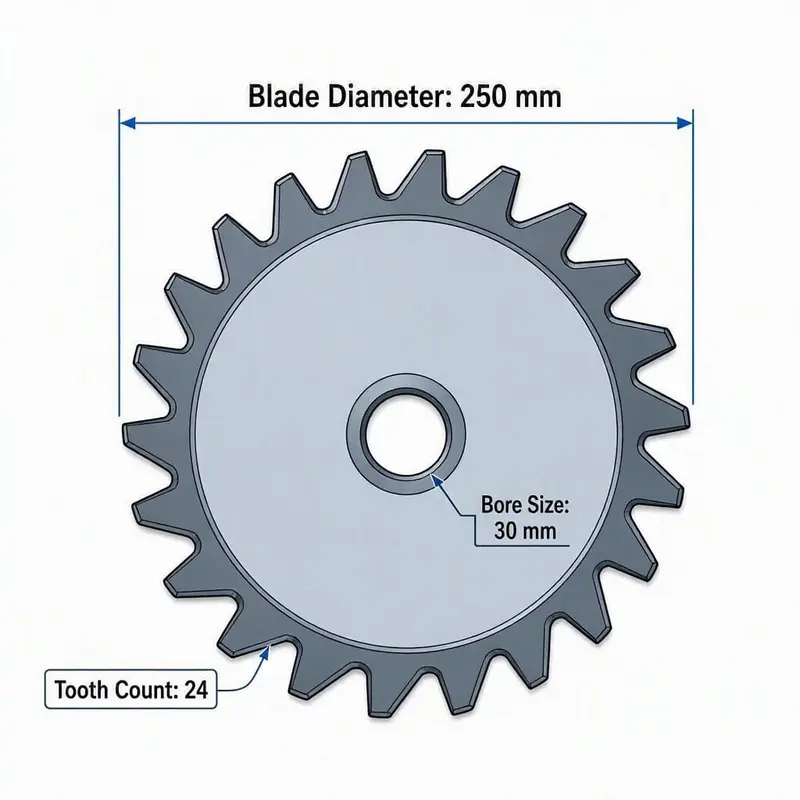
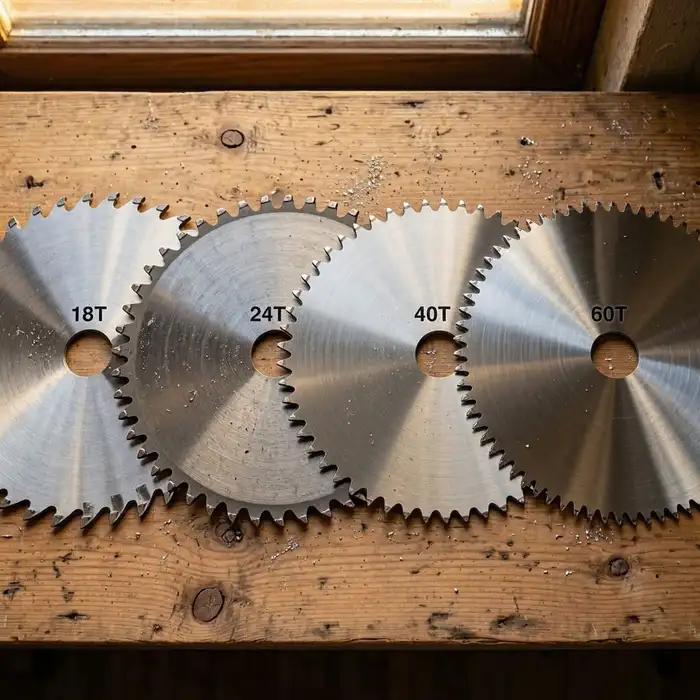
Circular saw blades generally fall into four distinct tooth count categories (based on standard 165mm to 184mm blades commonly used in UK DIY saws):
1. 12 to 24 Teeth (Coarse / Framing)
- Best For: Construction timber, fence posts, garden sleepers, framing, and rip cuts (cutting along the grain).
- Characteristics: Fast cutting speed, excellent waste removal (large gullets), but leaves a rough, splintered edge.
- When to use: Any job where structural strength or speed matters more than appearance. (See our guides on cutting timber and fence posts).
2. 24 to 40 Teeth (General Purpose)
- Best For: Everyday DIY, general timber crosscutting, and mixed workshop tasks.
- Characteristics: The ultimate compromise. It cuts fast enough for general timber while leaving a respectable enough edge for basic sheet materials.
- When to use: If you only want to keep one blade on your saw for general odd jobs around the house and garden.
3. 40 to 60 Teeth (Fine Finish)
- Best For: Plywood, MDF, chipboard, and visible crosscuts.
- Characteristics: Slower feed rate required, but produces a smooth, chip-free edge on veneered and laminated boards.
- When to use: Cabinetry, shelving, fitted wardrobes, and any project where the cut edge will be visible.
4. 60+ Teeth (Ultra-Fine / Specialist)
- Best For: Laminated kitchen worktops, fine trim work, plastics, and non-ferrous metals (like aluminium profiles).
- Characteristics: Extremely clean edge with minimal risk of breakout, though prone to burning if fed through thick timber too slowly.
Rip Cuts vs. Crosscuts: Understanding Grain Direction
Tooth count is only part of the equation; the direction you cut relative to the wood grain changes how the blade behaves:
- Rip Cuts (With the Grain): Cutting lengthwise down a board runs parallel to the wood fibers. A coarse 24-tooth blade excels here because the gullets can scoop out long strings of wood without choking.
- Crosscuts (Across the Grain): Cutting across the grain severs the wood fibers. A higher tooth count (40T+) is required to shear the fibres cleanly without fraying the edges.
(For a complete breakdown of dimensions, bore sizes, and blade compatibility, see our guide on Circular Saw Blade Sizes UK).
4 Rules for Choosing the Right Blade
- Match the blade to your primary material: Don’t use a rough framing blade for fine sheet work. Keep a 24T blade for timber and a 40T+ blade for plywood and MDF.
- Don’t force a high-tooth blade through thick timber: Forcing a 60-tooth blade through a 4×2 thick timber batten causes friction, excessive heat, and premature blunting.
- Inspect your blades regularly: Even a great blade will tear out timber if it’s gummed up with resin or has blunt, chipped carbide tips. Clean your blades with a wire brush and oven cleaner or resin remover periodically.
- Remember that blades are consumables: Treat saw blades like drill bits or sandpaper—they wear out over time and replacement is a normal part of DIY maintenance.
The Bottom Line
You don’t need a drawer full of ten different blades to get great results. For most UK DIY beginners, owning just two blades—a 24-tooth general timber blade and a 48-tooth fine-finish blade—will cover 95% of home workshop projects.
Ready to see how blade selection fits into your wider tool setup? Head back to our comprehensive Circular Saw Buying Guide for UK DIYers to explore power options, sizes, and top beginner recommendations.

About the Author: Enda McLarnon
I’m an experienced UK DIYer tackling renovation life inside a 1958 red brick home.
I built this blog to help beginners conquer home maintenance anxiety and save a fortune on expensive trade calls.