Can You Cut MDF With a Circular Saw?
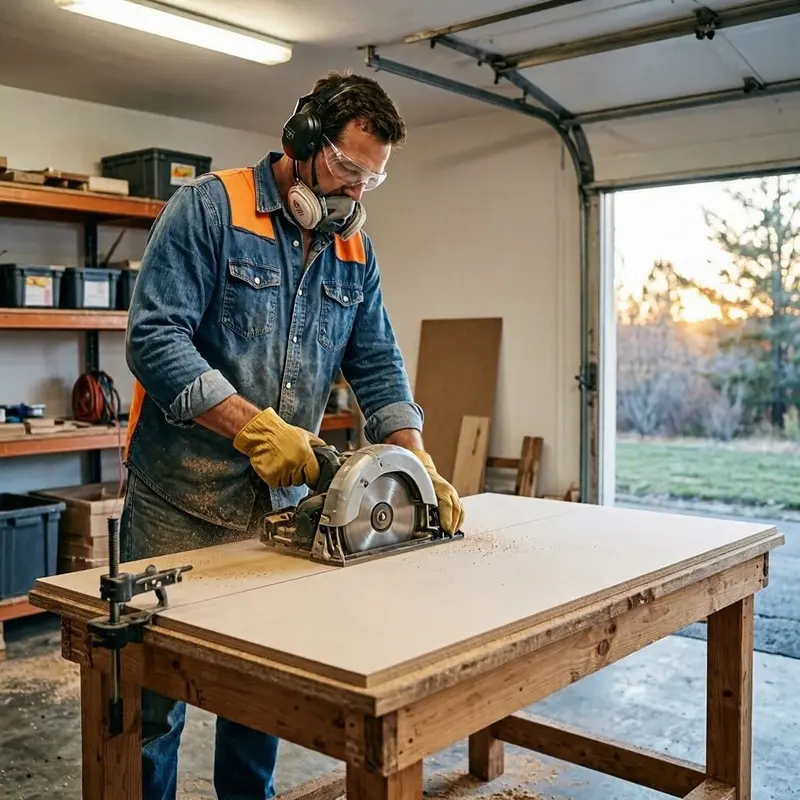
Yes, you can cut MDF with a circular saw, and for many DIY projects it is one of the easiest ways to make long, straight cuts through MDF sheets.
MDF is commonly used for shelving, cabinets, furniture, workbenches and other indoor DIY projects. Because it is available in large sheets, a circular saw can be particularly useful when you need to make long cuts that would be difficult to do accurately with a hand saw.
The main challenge when cutting MDF is getting a clean edge without excessive chipping or tearing. MDF is made from compressed wood fibres, so the cut can produce a lot of fine dust and the edge can become rough if you use the wrong blade or cutting technique.
For the best results, use a suitable fine-tooth circular saw blade, support the MDF properly and guide the saw steadily through the material. A straightedge or guide rail can also make it much easier to achieve an accurate cut, especially if you’re new to using a circular saw.
Quick Answer
If you’re wondering can you cut MDF with a circular saw, the answer is yes. A circular saw is well suited to cutting MDF when you:
- Use a suitable blade designed for MDF or other sheet materials
- Choose the correct blade size and make sure it is compatible with your saw
- Support the MDF securely before cutting
- Set the cutting depth correctly
- Use a straightedge or guide for accurate long cuts
- Keep the saw moving steadily rather than forcing it through the material
- Take steps to control the fine dust produced when cutting MDF
MDF Dust Safety
Cutting MDF can produce a large amount of fine dust, so dust control should be taken seriously. Avoid deliberately breathing the dust and keep other people away from the immediate cutting area where practical.
When cutting MDF:
- Use suitable respiratory protection where appropriate for the conditions and follow the manufacturer’s guidance.
- Use the saw’s dust extraction facility if available, ideally connected to a suitable dust extractor.
- Work in a well-ventilated area where possible.
- Avoid sweeping fine MDF dust into the air after cutting; suitable vacuum extraction is preferable.
- Clean up dust regularly rather than allowing it to build up around the work area.
- Follow the MDF manufacturer’s safety information as different products can have different recommendations.
If you’re cutting MDF regularly, effective dust extraction and suitable respiratory protection are particularly important.
Before starting, always check the manufacturer’s instructions for your circular saw and blade, and make sure your work area is suitable for the amount of dust produced when cutting MDF.
What You Need Before Cutting MDF
Before you start cutting MDF, it is worth getting everything ready first. Having the right blade, a stable work surface and a way to guide the saw will make the job easier and can help you achieve cleaner, more accurate cuts.
You don’t need a large collection of specialist equipment for most DIY MDF projects.
Basic Equipment
For a typical MDF cutting job, you’ll need:
- A suitable circular saw
- A circular saw blade suitable for MDF or sheet materials
- A tape measure
- A pencil or suitable marking tool
- A straightedge, guide rail or other suitable cutting guide
- Stable supports for the MDF
- Suitable clamps where needed
- Appropriate eye and hearing protection
- Suitable respiratory protection and dust control
Before cutting, check that the blade is suitable for your saw and MDF. Make sure the blade diameter, bore size and maximum RPM are compatible with the saw and that the blade is in good condition.
You should also check the saw’s cutting depth and adjust it to suit the thickness of the MDF. There’s no need to have the blade extending much further than necessary below the material.
For more information about choosing a suitable blade, see our guide to the best circular saw blades for DIY UK.
If you’re unsure how much cutting capacity you need, our guide to how deep a circular saw can cut explains how blade size and cutting depth affect different materials.
Prepare Your Work Area
MDF sheets can be large and awkward to handle, so make sure you have enough space to position the material safely before switching on the saw.
Check that:
- The MDF is properly supported
- The material cannot move unexpectedly
- The cutting path is clear
- There is enough room to guide the saw through the complete cut
- The area is suitable for controlling the fine dust produced
- There are no cables, pipes or other hazards beneath the cutting area
Taking a few minutes to prepare everything before cutting can make a significant difference to both the accuracy of the cut and how safely you can complete the job.
What Circular Saw Blade Is Best for MDF?
For most DIY MDF projects, a fine-tooth blade designed for MDF, wood or sheet materials is a good choice. The right blade can make a noticeable difference to the quality of the finished edge and how much chipping occurs.
As a general guide:
- 24-tooth blade — faster cuts, but usually a rougher finish
- 30–40 tooth blade — good balance for general DIY MDF cutting
- 50–60+ tooth blade — slower cutting but potentially cleaner edges
For a beginner, a 40-tooth blade is a sensible all-round option if you’re making reasonably clean cuts in MDF. If you’re cutting visible edges for furniture or shelving, a higher-tooth-count blade may be worth considering.
However, tooth count isn’t the only thing that matters. Check that the blade is suitable for your particular circular saw and MDF, including the blade diameter, bore size and maximum RPM.
A sharp blade is also important. A worn or damaged blade can produce a rougher cut, increase resistance and make the saw harder to control.
For a more detailed explanation of tooth counts and blade choices, see my guide to the best circular saw blades for DIY UK.
How to Mark MDF for Cutting
Accurate marking is the first step towards getting a straight, clean MDF cut. Even the best circular saw and blade cannot compensate for a cutting line that has been measured incorrectly.
Start by measuring the MDF carefully and mark the required measurement at both ends of the sheet. Use a straightedge or long ruler to join the two marks with a clear, straight cutting line.
Before cutting, check the measurement one more time. It is also worth marking the waste side of the MDF with an X so you know which side of the line you intend to remove.
Allow for the Blade Kerf
Remember that the circular saw blade removes a small amount of material as it cuts. This is called the kerf.
If the finished piece needs to be a precise size, make sure you account for the blade kerf rather than assuming the blade will cut exactly along the pencil line.
When using a straightedge or guide rail, you also need to account for the distance between the edge of the guide and the saw blade. The exact distance depends on the saw or guide system you are using.
Before switching on the saw, check:
- Your measurements
- The cutting line
- Which side is the waste
- The blade’s cutting path
- The position of your guide
- The support underneath the MDF
Taking a few extra seconds to check these details can prevent an otherwise good sheet of MDF from being cut to the wrong size.
How to Support MDF Before Cutting
Properly supporting the MDF is one of the most important parts of making a safe, accurate cut.
Large MDF sheets can be heavy and flexible, so they can sag or move if they are not supported properly. If the sheet moves while you’re cutting, it can affect the accuracy of the cut and make the saw more difficult to control.
Support the MDF Across the Cutting Area
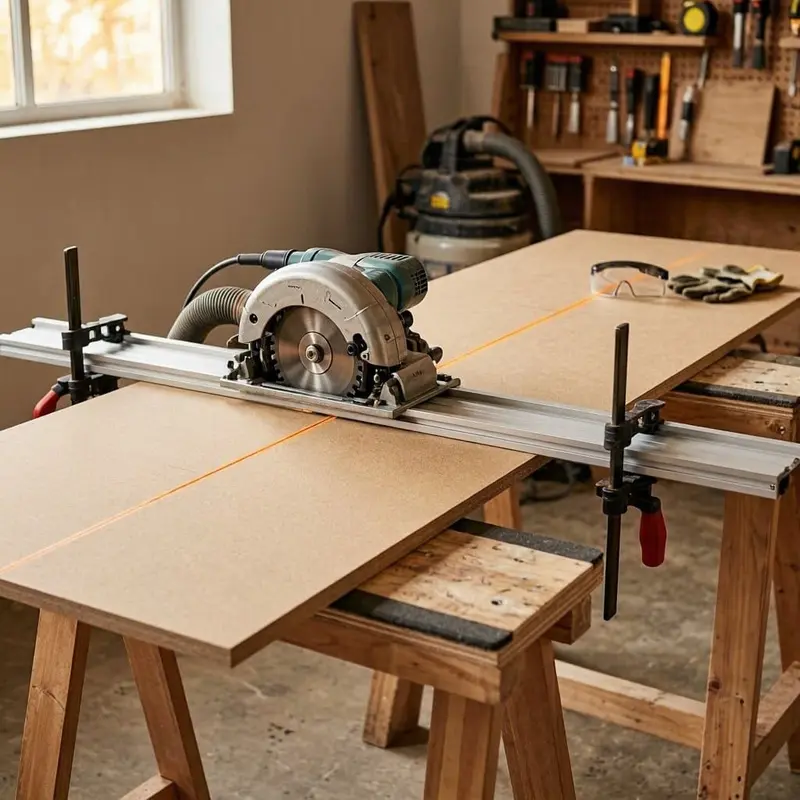
Place the MDF on a stable work surface or suitable supports so that it is properly supported on both sides of the intended cut.
The aim is to support the sheet without placing a support directly in the path of the blade.
For large sheets, you may need several supports spread across the material. This helps prevent the MDF from sagging as you move the saw along the cut.
Prevent the MDF From Moving
The MDF should remain stable throughout the cut. Where appropriate, use suitable clamps to secure the material and prevent it from shifting.
Make sure any clamps or supports are positioned well away from the saw’s cutting path.
Also think about what will happen to the offcut. You don’t want a large section of MDF to suddenly drop, twist or pinch the blade as the cut is completed.
Check Underneath Before Cutting
Before starting the saw, check the area underneath the MDF.
Make sure there are no:
- Electrical cables
- Pipes
- Screws or nails
- Tools or other objects
- Supports directly in the blade path
If you’re cutting a large sheet, make sure you have enough room to move the saw through the entire cut without having to stop or reposition yourself unnecessarily.
Good support makes the cut easier to control and reduces the chance of the MDF moving unexpectedly while you’re working.
How to Set the Correct Cutting Depth
Before cutting MDF, adjust the circular saw’s cutting depth to suit the thickness of the material.
You don’t normally need the blade to extend a long way below the MDF. Setting the depth appropriately gives the saw enough cutting capacity while avoiding unnecessary blade exposure underneath the sheet.
Measure the MDF Thickness
First, check the actual thickness of your MDF. Common DIY sheet thicknesses include:
- 6mm — thin panels and some backing materials
- 9mm — lighter panels and furniture components
- 12mm — general DIY and shelving
- 18mm — common for shelving, cabinets and furniture
- 25mm — thicker worktops, shelving and other projects
The exact thickness can vary, so measure the sheet rather than relying only on the labelled size.
Adjust the saw according to the manufacturer’s instructions and set the cutting depth to suit the material.
Check the Blade Path
Before switching on the saw, check what is underneath the MDF. The blade will extend below the sheet, so make sure there is sufficient clearance and that the blade cannot contact your supports, workbench or anything else beneath the cutting line.
If you’re making a bevel cut rather than a standard 90-degree cut, remember that the saw’s maximum cutting depth will be reduced.
Once the depth is set correctly, check the rest of your setup before starting the cut. The MDF should be securely supported, the blade should be suitable and the cutting path should be clear.
How to Cut MDF Straight With a Circular Saw
A straight cut through MDF is much easier when the material is properly supported and you use a suitable guide. Trying to follow a pencil line by eye over a long sheet can make it difficult to maintain accuracy.
For most beginners, a straightedge or guide rail is the simplest way to improve the result.

Set Up Your Guide
Position your straightedge or guide so that the saw will follow the required cutting line. Remember to account for the distance between the edge of the guide and the saw blade.
Before starting, measure the position of the guide carefully and check that it will produce the finished size you need.
Secure the guide so it cannot move during the cut.
Make the Cut
Once everything is checked:
- Position the saw correctly against the guide.
- Make sure the MDF is securely supported.
- Check that the blade path is clear.
- Start the saw according to the manufacturer’s instructions.
- Guide the saw steadily along the cut.
- Avoid forcing the saw through the MDF.
- Keep the saw under control until the blade has completely cleared the material.
Let the saw and blade do the cutting rather than trying to push through the MDF as quickly as possible.
A consistent, controlled movement will generally give you a better result than rushing the cut.
For a more detailed guide to making accurate straight cuts, see how to cut straight with a circular saw.
How to Prevent MDF From Chipping
One of the biggest challenges when cutting MDF is getting a clean edge without chipping or breaking away the surface.
MDF can produce a relatively clean cut, but the result depends on the blade, the condition of the material, the way the sheet is supported and how steadily you make the cut.
Use the Right Blade
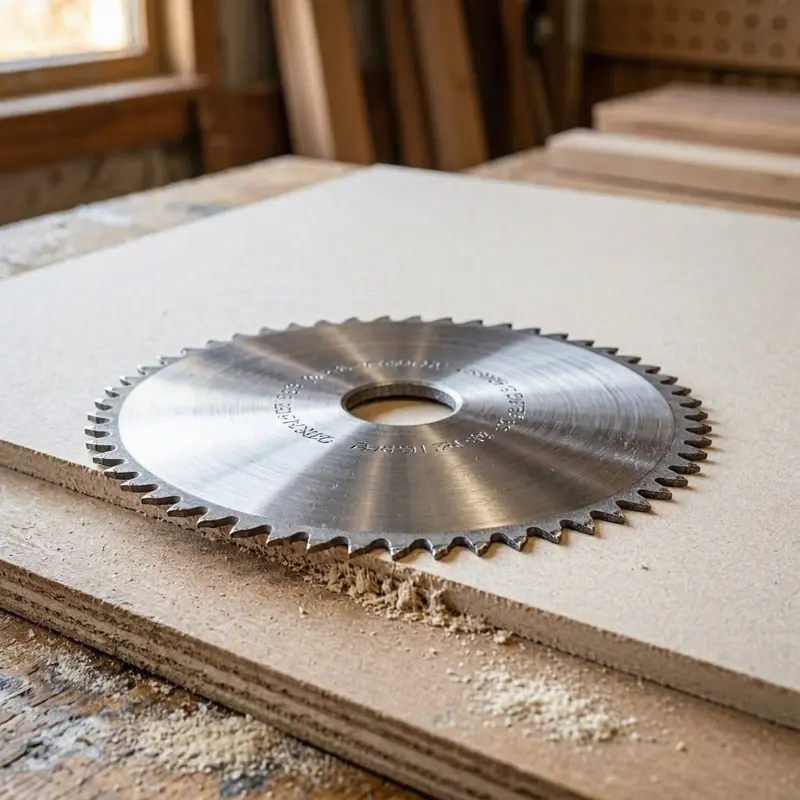
A suitable fine-tooth blade designed for MDF, wood or sheet materials can help produce a cleaner edge.
For visible edges, a higher-tooth-count blade may be preferable because it generally produces a finer cut. However, always make sure the blade is compatible with your particular saw.
For more information, see our guide to the best circular saw blades for DIY UK.
Keep the Blade Sharp
A worn or damaged blade can make the cut rougher and increase the amount of chipping.
If the blade is struggling to cut smoothly, don’t simply push the saw harder. Stop and check whether the blade is suitable and in good condition.
Keep the MDF Properly Supported
MDF should remain stable throughout the cut. Movement or vibration can affect the quality of the finished edge, particularly towards the end of a cut.
Make sure the sheet is adequately supported and that the offcut cannot interfere with the blade.
Use a Steady Cutting Speed
Avoid rushing through the MDF or forcing the saw. A controlled, consistent movement gives the blade a better chance of producing an even cut.
If you’re cutting an unfamiliar type or thickness of MDF, consider making a test cut on a piece of scrap first. This lets you check the blade and cutting technique before working on the piece you actually need.
Protect the Finished Edge
If the cut edge will be highly visible, take extra care with your blade selection, support and cutting technique. Some MDF products and finishes may also respond differently to cutting, so testing on a spare piece can be worthwhile.
The goal isn’t simply to cut through the MDF as quickly as possible. A suitable blade, good support and controlled cutting technique are usually more important for achieving a clean result.
How to Cut Large MDF Sheets
Large MDF sheets can be awkward to handle, particularly if you’re working alone. Taking time to plan the cut and support the sheet properly will make the job much easier.
The same basic principles apply whether you’re cutting a full sheet or a smaller panel: measure carefully, support the material, use a suitable blade and guide the saw steadily.
Support the Sheet Properly
Large sheets need enough support to prevent them from sagging or moving during the cut.
Spread your supports across the sheet rather than relying on one or two points. Make sure the supports do not sit directly underneath the cutting line where the saw blade could contact them.
As the cut progresses, consider what will happen to both sides of the MDF. The offcut should be supported well enough that it doesn’t suddenly drop, twist or interfere with the blade.
Use a Long Guide
A long straightedge or suitable guide rail can make cutting a large MDF sheet much easier.
Measure the position of the guide carefully, taking into account the distance between the guide and the saw blade. Secure the guide so it cannot move during the cut.
For long cuts, a guide is generally much easier to follow accurately than trying to keep the saw aligned with a pencil line by eye.
Plan Before You Start
Before switching on the saw, check:
- The measurements are correct
- The cutting line is clearly marked
- The waste side is identified
- The guide is correctly positioned
- The MDF is securely supported
- The blade path is clear
- There is enough room to move the saw through the entire cut
- The offcut has somewhere safe to go
If the sheet is particularly large or awkward, consider getting another person to help position or support it before you begin cutting.
Don’t try to rush a large-sheet cut. Good preparation and a controlled cutting movement are more important than cutting quickly.
How to Cut Thick MDF
You can cut relatively thick MDF with a circular saw, but the important thing is to check that your particular saw has enough cutting capacity for the material.
MDF is commonly available in thicknesses such as 18mm and 25mm, which are well within the cutting capacity of most standard circular saws. Thicker specialist MDF products may require more careful consideration.
Check Your Saw’s Cutting Capacity
The blade size gives you a general indication of how deeply a circular saw can cut, but the actual cutting depth varies between models.
As a general guide:
| Circular saw size | Typical cutting depth at 90° |
|---|---|
| 165mm | Around 55–57mm |
| 184mm | Around 60–65mm |
| 185mm | Around 60–65mm |
These are typical ranges rather than guaranteed figures. Always check the manufacturer’s specification for your particular saw.
For example, an 18mm or 25mm MDF sheet is comfortably within the typical cutting capacity of these saw sizes. If you’re working with much thicker material, check the actual maximum cutting depth before starting.
Use a Suitable Blade
Thicker MDF puts more demand on the blade, so make sure you’re using a suitable blade that is sharp and compatible with your saw.
Don’t try to compensate for an unsuitable blade by forcing the saw through the material. If the saw begins to struggle, stop and check the blade, cutting depth and overall setup.
Support the MDF Properly
Thicker MDF can be heavy, so good support is particularly important.
Make sure the sheet is stable and cannot move during the cut. For large or heavy pieces, take extra care when positioning and supporting the material before switching on the saw.
If you’re unsure whether your circular saw has enough capacity for a particular thickness of MDF, check the manufacturer’s cutting-depth specification rather than relying on the blade diameter alone.
How to Make Repeated MDF Cuts
If you’re cutting several pieces of MDF to the same size, a little extra preparation can make the job much quicker and more accurate.
Repeated cuts are common when making shelving, cabinets, furniture, storage units or multiple panels. Rather than measuring every piece completely from scratch, use a consistent reference point or guide wherever practical.
Make the First Measurement Carefully
The first piece should be measured and marked carefully. Check the finished dimensions before making the cut.
If the first piece is wrong, repeating the same setup can mean producing several pieces with the same mistake.
Use a Consistent Guide
A straightedge, guide rail or suitable stop can help you position each piece consistently.
Make sure the guide is secure and that the distance between the guide and blade remains the same for each cut.
For repeated cuts, check the first few pieces rather than assuming every cut will automatically be identical.
Keep the Setup Consistent
Try to keep the same:
- Measurement reference
- Guide position
- Cutting direction
- Blade
- Saw settings
- Material support
If you’re cutting several pieces from a larger MDF sheet, plan the cuts beforehand. This can help reduce waste and make it easier to keep track of the finished pieces.
Check Your First Cuts
After making the first cut, measure the finished piece to confirm it is the correct size.
This simple check can save a lot of wasted MDF if your guide or measurement needs adjusting.
Once you’re happy with the setup, you can continue with the remaining cuts while still checking the dimensions periodically.
For beginners, accuracy is more important than speed. Taking a little extra time to establish a reliable setup can make repeated MDF cuts much easier.
Common Mistakes When Cutting MDF
Cutting MDF with a circular saw is relatively straightforward, but a few common mistakes can lead to poor-quality cuts, damaged material or an unnecessarily difficult job.
Knowing what to avoid can make a big difference, especially if you’re new to using a circular saw.
Using the Wrong Blade
A blade designed for rough construction work may not give you the cleanest MDF edge.
For better results, choose a blade suitable for MDF or sheet materials and select the tooth count according to the finish you need.
Poorly Supporting the MDF
If the MDF moves, bends or sags while you’re cutting, it can affect the accuracy of the cut and the quality of the finished edge.
Make sure the sheet is properly supported and stable before starting.
Trying to Cut Without a Guide
Short cuts can sometimes be made by following a marked line, but long cuts are much easier to keep straight with a suitable guide.
If you’re a beginner, using a straightedge or guide rail can make accurate cuts considerably easier.
Setting the Cutting Depth Incorrectly
Setting the blade unnecessarily deep can expose more of the blade underneath the material than needed.
Set the cutting depth according to the MDF thickness and your saw manufacturer’s instructions, and check what is underneath the cutting path.
Cutting Too Quickly
Trying to rush through MDF can make it harder to maintain control and may affect the quality of the cut.
Let the blade do the work and maintain a steady, controlled movement.
Ignoring Dust
MDF can produce a significant amount of fine dust when cut.
Use suitable dust extraction where available, work in an appropriate area and follow the manufacturer’s safety guidance for the MDF you’re using.
Forgetting the Blade Kerf
Remember that the blade removes a small amount of material as it cuts.
If you’re working to precise dimensions, allow for the blade kerf when marking and planning your cuts.
Not Checking the First Cut
If you’re making several identical pieces, don’t assume the setup is correct just because the measurements look right.
Check the first finished piece before continuing with the rest. A quick measurement can prevent several pieces from being cut incorrectly.
Taking your time with the setup is usually far more effective than trying to correct mistakes after the MDF has been cut.
For general guidance on using work equipment safely, see the HSE guidance on using work equipment safely.
Tips for Getting Cleaner MDF Cuts
If you’re aiming for a clean, professional-looking MDF edge, a few simple techniques can make a noticeable difference.
You don’t necessarily need expensive equipment. Getting the basics right — particularly the blade, support and cutting technique — is often more important.
Choose the Right Blade
Use a sharp blade that is suitable for MDF or sheet materials.
A higher tooth count can generally produce a cleaner finish, although the best choice depends on the type of MDF and the finish you’re trying to achieve.
Make a Test Cut
If you’re using a new blade or an unfamiliar type of MDF, make a test cut on a piece of scrap first.
This lets you check the quality of the edge before cutting the material you actually need.
Use a Straight Guide
For long cuts, a suitable straightedge or guide rail can help keep the saw moving accurately.
This is particularly useful when cutting MDF for shelving, cabinets or furniture where straight, consistent edges are important.
Support the Material Properly
Make sure the MDF is well supported and cannot move while you’re cutting.
Good support helps reduce movement and vibration, which can contribute to rough or uneven cuts.
Keep a Consistent Cutting Speed
Avoid pushing the saw too quickly or forcing it through the MDF.
A smooth, controlled movement allows the blade to cut at a consistent rate and can help produce a more even edge.
Mark the Finished Face
If one side of the MDF will be more visible than the other, think about which face needs the best possible finish before you begin.
The way a particular blade and saw cut can affect the quality of each side, so making a test cut first is useful when the finished appearance is important.
Take Your Time
The biggest improvement for many beginners is simply slowing down and checking the setup before starting.
Measure carefully, support the MDF, use a suitable blade and guide the saw steadily. These simple steps will usually give you a much better result than trying to cut as quickly as possible.
Frequently Asked Questions
Can you cut MDF with a circular saw?
Yes. A circular saw is well suited to cutting MDF, particularly when making long, straight cuts through sheets. Use a suitable blade, support the MDF properly and control the fine dust produced during cutting.
What is the best circular saw blade for MDF?
For general DIY work, a 30–40 tooth blade is a sensible starting point. A higher-tooth-count blade can be useful when you want a cleaner finished edge, while a lower-tooth-count blade can make faster but potentially rougher cuts.
Always check that the blade is compatible with your particular saw.
How do you stop MDF from chipping when cutting?
Use a suitable sharp blade, support the MDF properly and keep the saw moving at a steady, controlled speed. Making a test cut on scrap material can also help you find the best blade and technique for the MDF you’re using.
Should you cut MDF face up or face down?
The best orientation can depend on the particular circular saw, blade and type of cut. Rather than assuming one side will always be cleaner, make a test cut with your setup and check which face gives you the result you want.
Can a 165mm circular saw cut MDF?
Yes. A typical 165mm circular saw has more than enough cutting capacity for common MDF thicknesses such as 12mm, 18mm and 25mm. Always check the actual cutting depth of your particular saw.
Can you cut a full sheet of MDF with a circular saw?
Yes, but full MDF sheets are large and heavy, so they need careful support and planning. Use enough supports to prevent the sheet from sagging, provide a suitable guide for long cuts and make sure you have enough space to move the saw safely.
Why does MDF produce so much dust when cutting?
MDF is made from fine wood fibres and resin-based materials, so cutting it can produce a significant amount of fine dust. Use suitable dust extraction where available, work in an appropriate area and follow the manufacturer’s safety guidance.
Can you cut thick MDF with a circular saw?
Yes, provided the MDF is within the saw’s cutting capacity. Check the actual maximum cutting depth of your particular circular saw rather than relying only on the blade diameter.
Is a circular saw better than a jigsaw for cutting MDF?
It depends on the type of cut. A circular saw is generally well suited to long, straight cuts, while a jigsaw can be more useful for curves, cut-outs and smaller detailed shapes.
Do you need a guide rail to cut MDF straight?
You don’t always need one, but a straightedge or guide rail can make long, accurate cuts much easier, particularly for beginners. It can help keep the saw consistently aligned throughout the cut.
Final Verdict
Yes, a circular saw is an excellent tool for cutting MDF, particularly when you need to make long, straight cuts through MDF sheets.
For the best results, focus on getting the basics right rather than relying on expensive equipment. Use a suitable blade, measure carefully, support the MDF properly and use a straightedge or guide when making longer cuts.
Remember to:
- Choose a suitable MDF or sheet-material blade
- Check the blade is compatible with your circular saw
- Support the MDF securely before cutting
- Set the cutting depth correctly
- Use a guide for accurate long cuts
- Keep the saw moving steadily without forcing it
- Take steps to control the fine dust produced
- Make a test cut if you’re unsure about the blade or material
- Follow the manufacturer’s safety instructions
For most DIY beginners, a standard 165mm circular saw will have plenty of cutting capacity for common MDF thicknesses such as 12mm, 18mm and 25mm.
The key is preparation. A well-supported sheet, suitable blade and controlled cutting technique will usually make a bigger difference to the finished result than simply buying a larger or more powerful saw.
If you’re planning to cut MDF for shelving, cabinets or furniture, taking a little extra time to set up the cut properly can help you achieve cleaner, more accurate results.
Looking for a New Circular Saw or Upgrading Your Setup?
For our full breakdown of top-rated corded and cordless tools, check out my Circular Saw Buying Guide UK for Beginners