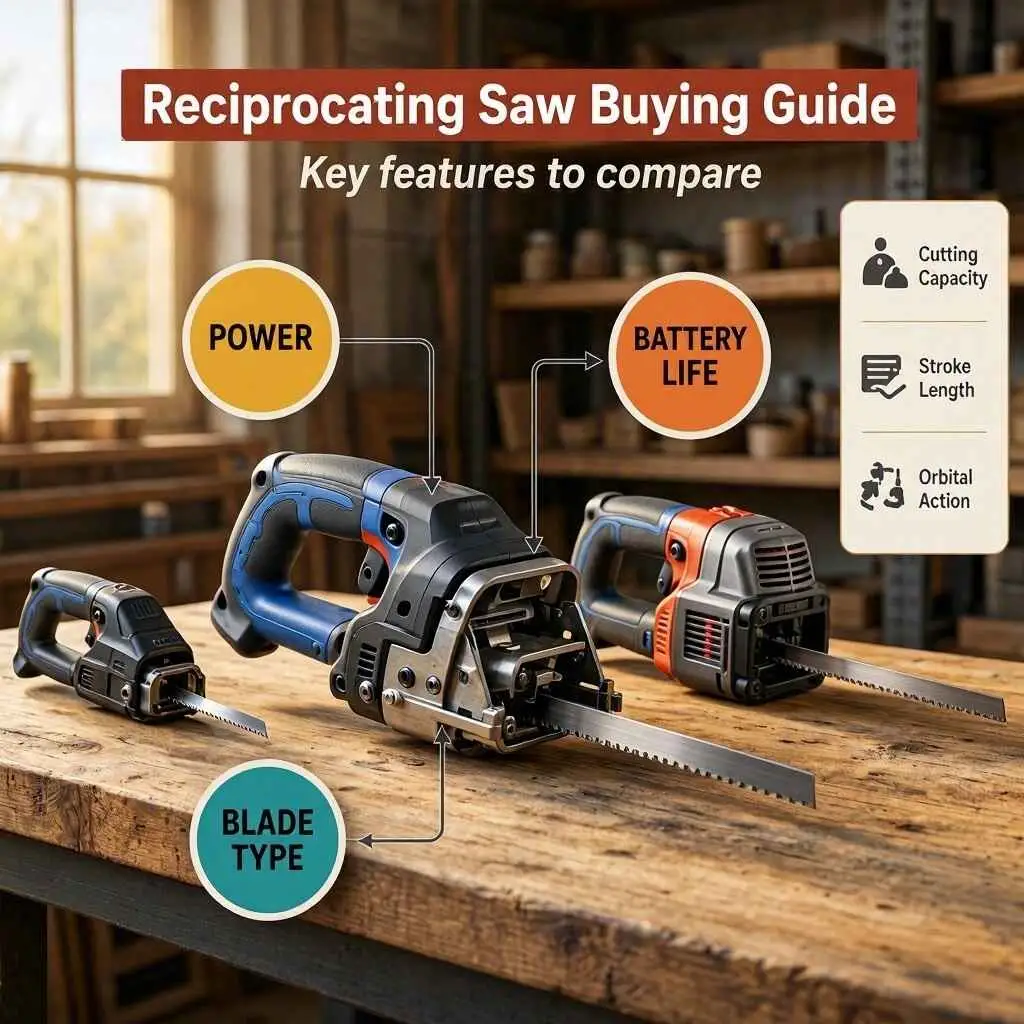
This is my detailed reciprocating saw buying guide. If you’ve ever tackled a DIY job and found yourself wrestling with awkward angles, stubborn nails, or thick branches in the garden, a reciprocating saw might just be the power tool you didn’t know you needed.
Reciprocating saws, often nicknamed “recip saws” or “sabre saws,” are a go-to choice for many UK DIYers because of their ability to cut through just about anything. Whether you’re tearing out old kitchen units, cutting through pipes, or trimming tree limbs, these saws are all about fast, rough cutting with minimal fuss.
But if you’re new to DIY or just starting to build your tool kit, the wide range of options can be a bit overwhelming. Should you go corded or cordless? What kind of blade do you need? And how much do you really need to spend for occasional home projects?
In this guide, I will walk you through everything you need to know before buying a reciprocating saw in the UK, from key features and power options to beginner-friendly tips and where to find the best deals. By the end, you’ll know exactly what to look for and feel confident picking the right saw for your DIY projects.
What is a Reciprocating Saw?
A reciprocating saw is a type of power saw that uses a push-and-pull (or “reciprocating”) motion to cut through materials. Think of it like an electric-powered handsaw that does all the hard work for you — fast, aggressive, and great for rough cutting.
It’s often described as a demolition or all-purpose saw because it’s designed to cut through wood, metal, plastic, plasterboard, nails, and even tree branches with ease. Instead of making precise or neat cuts, reciprocating saws shine when you just need to get the job done quickly.
Common Names:
You might hear people refer to them as:
- Recip saws
- Sabre saws (especially in the UK)
- Sometimes even demolition saws
How It Works:
- It has a straight blade that sticks out the front.
- When you pull the trigger, the blade rapidly moves back and forth.
- The motion does the cutting, and you simply guide the tool along the material.
Typical DIY Uses:
Reciprocating saws are incredibly versatile. Here are a few examples of how DIYers use them:
- Cutting through nails or screws when dismantling furniture or old fixtures.
- Trimming tree branches in the garden (with a pruning blade).
- Removing old windows or doors during renovation.
- Cutting pipes (copper, plastic, or even steel) during plumbing work.
- Slicing through plasterboard or timber when remodelling walls.
They’re especially useful in tight spaces where other saws won’t fit, making them a handy tool for home renovations and garden projects alike.
Real-World Lesson: The Reason I Bought One
I have a lot of hedges in my back garden. Over the years they had grown high and wide even though I cut them a few times a year. I decided to cut them heavily back and started by using a normal hedge trimmer. Those didn’t work on the thicker branches and I didn’t want to wreck them. I tried loppers which worked but hard work and took a lot of time. Finally bough a Bosch reciprocating saw, the ideal tool for the job.
Is a Reciprocating Saw Right for You?
If you’re wondering whether a reciprocating saw belongs in your DIY toolkit, the answer depends on the kind of work you do, or plan to do, around the house and garden.
✅ When a Reciprocating Saw Makes Sense
A recip saw is perfect if you:
- Do general home repairs or renovations (like removing old fittings or tearing down stud walls).
- Tackle garden jobs like trimming overgrown branches or clearing shrubs.
- Need to cut materials in awkward spaces, like behind radiators, under floorboards, or close to walls.
- Want one tool that can handle multiple materials — wood, metal, PVC, plasterboard, nails, and more.
It’s a great time-saver for messy, rough jobs where precision isn’t your top priority. For beginners, it’s one of the most forgiving power tools to use — just match the blade to the material, and let the saw do the work.
❌ When It Might Not Be the Best Choice
On the other hand, a reciprocating saw might not be ideal if you:
- Need to make clean, straight, or decorative cuts (a circular saw or jigsaw would be better).
- Do a lot of fine woodworking, furniture making, or carpentry.
- Are cutting sheet materials (like MDF or plywood) where edge quality matters.
It’s more of a “tear it down and sort it out later” kind of tool — excellent for demolition, cutting through obstacles, and speeding up the rough part of a job.
You may also want to read my Reciprocating Saw vs Jigsaw information or my Reciprocating Saw vs Circular saw information for best uses.
Verdict for DIYers
If you’re into weekend DIY projects, home repairs, or garden maintenance, then a reciprocating saw is a smart investment. It’s especially handy as a second saw alongside a jigsaw or circular saw, giving you more flexibility.
I would recommend also reading my How to Use a Reciprocating Saw information.
Key Features to Look For
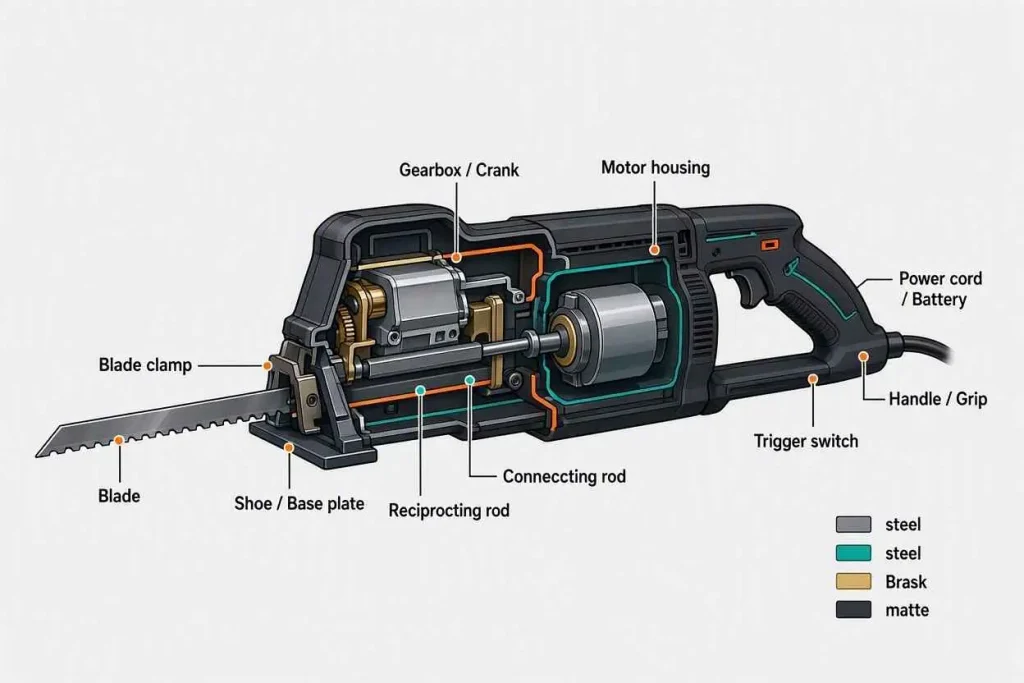
Reciprocating saws come in all shapes and sizes, so it’s important to know what to look for — especially if you’re a beginner. Below are the main features to consider before buying, along with easy explanations of what they mean and why they matter for your typical DIY jobs.
Power Source: Corded vs Cordless
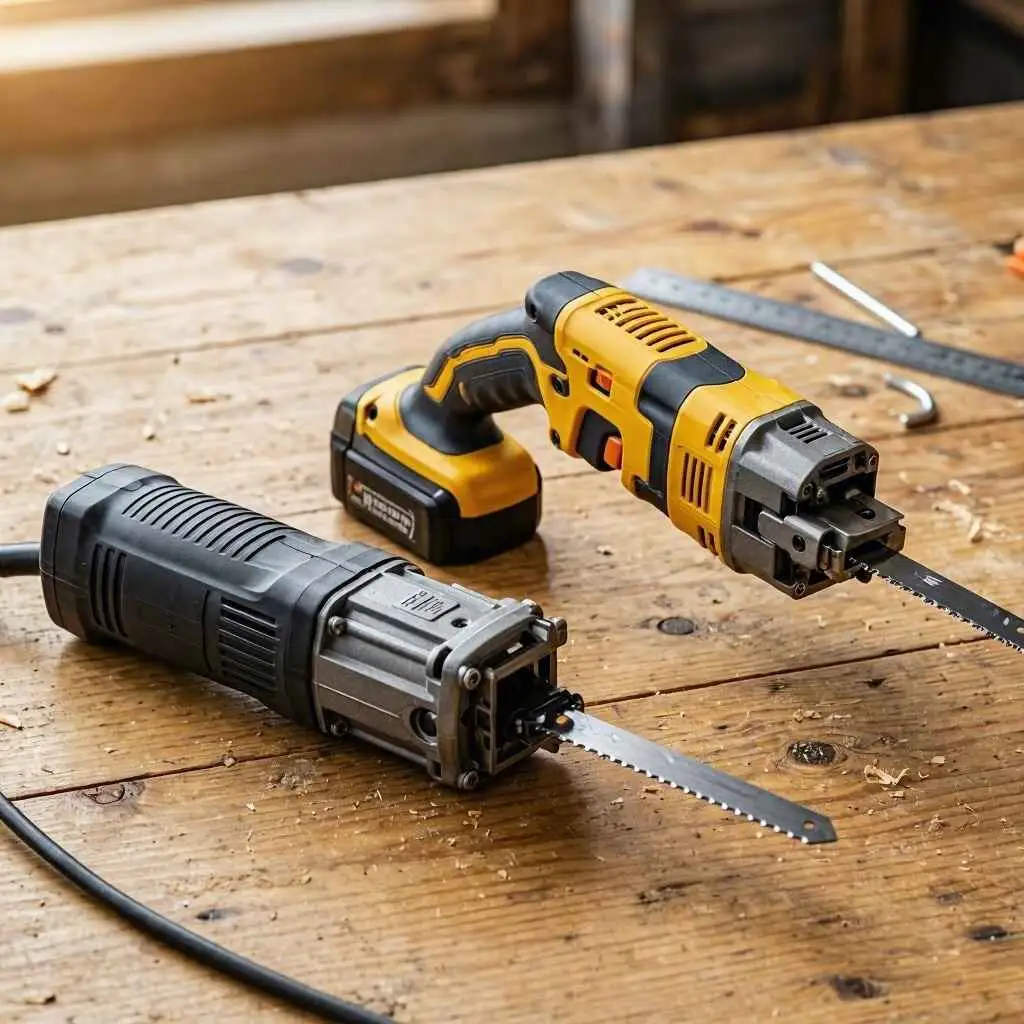
- Corded:
- Plug into a UK mains socket (230V).
- Generally more powerful and ideal for longer sessions.
- No need to worry about battery life, but you’re limited by the cord length.
- Cordless (Battery-powered):
- More flexible and portable – perfect for garden use or awkward spaces.
- Look for 18V or 20V max batteries (common across DIY brands in the UK).
- Great if you already have tools from a system (e.g. DeWalt XR, Ryobi ONE+).
DIY Tip: If you’re just doing occasional jobs around the house, a cordless model is usually more convenient.
Stroke Length & Stroke Speed
- Stroke Length:
- This is how far the blade moves back and forth.
- Longer strokes (typically 20–30mm) mean faster cutting.
- Stroke Speed (SPM – Strokes Per Minute):
- Higher speeds = quicker cuts, especially in softer materials.
- Look for saws with variable speed control so you can slow it down for metal or delicate cuts.
Tool-Free Blade Change
- Allows you to swap blades quickly without using a spanner or screwdriver.
- Super handy for beginners who don’t want to fiddle with tools mid-job.
- Most good models include this now — but double-check before buying.
Blade Type & Compatibility
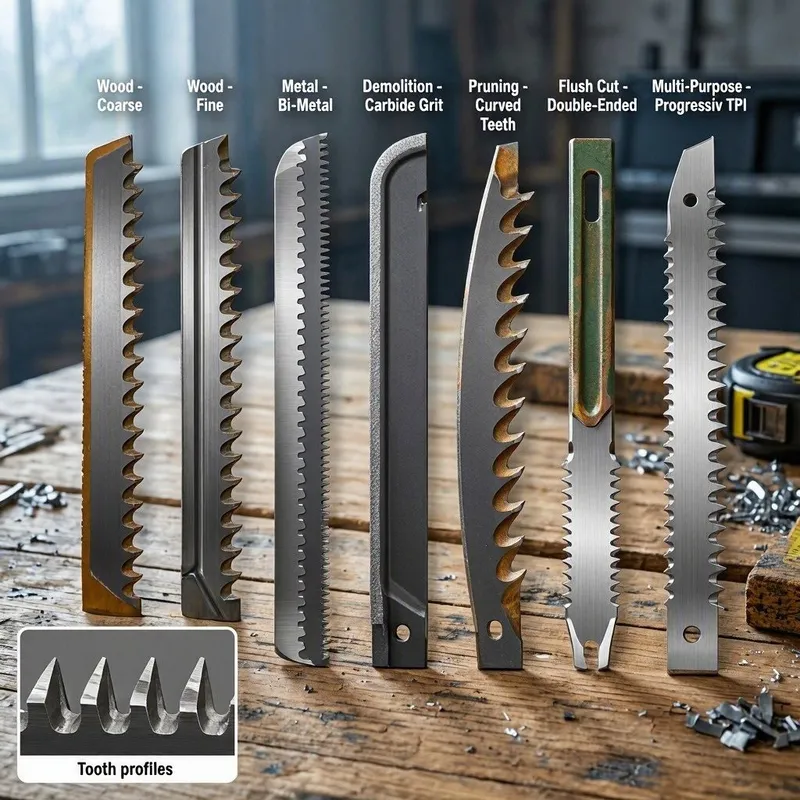
- Most reciprocating saws accept universal blades (T-shank or similar).
- Choose blades based on material:
- Wood cutting
- Metal cutting
- Pruning
- Demolition/multi-material
- Multi-pack blade sets are widely available and affordable in the UK.
DIY Tip: Always use the right blade for the job — using a wood blade on metal will wear it out fast!
Ergonomics & Build Quality
- Look for a saw with a comfortable, rubberised grip.
- Check the weight – lighter models (2.5–3.5kg) are easier for beginners to control.
- Some models include anti-vibration features for comfort during longer use.
Variable Speed Trigger & Orbital Action
- Variable speed trigger: Lets you control cutting speed with finger pressure — great for starting cuts carefully.
- Orbital action (in some models): Adds a slightly circular motion to the blade for faster, more aggressive cuts in wood.
Safety Features
- Lock-off switch: Prevents accidental starting.
- Blade guard: Helps keep fingers away from the blade area.
- Battery overheat/overload protection: Found on better cordless models.
By keeping these features in mind, you’ll have a much better idea of which reciprocating saw will suit your needs, without overspending or buying something too advanced for DIY use.
Corded vs Cordless – Which is Best for You?
One of the first decisions you’ll need to make is whether to go corded or cordless. Both have their pros and cons, and the right choice depends on where and how you’ll be using the saw.
Corded Reciprocating Saws
These plug directly into the mains (standard UK 230V socket), giving you constant, reliable power.
✅ Pros:
- Generally more powerful – great for tough jobs like cutting thick wood or metal.
- No downtime – no batteries to charge.
- Usually cheaper than cordless models for the same performance level.
❌ Cons:
- Limited by the cord – may need an extension lead.
- Less convenient for outdoor or awkward spaces.
- Slightly bulkier/heavier in some cases.
Cordless Reciprocating Saws
These run on rechargeable batteries (commonly 18V or 20V max), offering total freedom of movement. Battery run times are also important.
✅ Pros:
- Portable and flexible – great for outdoor use or jobs in tight spots.
- Ideal if you’re already invested in a battery platform (e.g. Makita LXT, DeWalt XR).
- No cords to trip over – safer for garden or ladder work.
❌ Cons:
- Limited run time – batteries drain fast under heavy use.
- May be slightly less powerful than corded for sustained work.
- More expensive if you don’t already own compatible batteries.
Corded vs Cordless Comparison Table
| Feature | Corded | Cordless |
|---|---|---|
| Power Supply | Mains (230V UK plug) | Rechargeable battery (18V/20V) |
| Cutting Power | Strong, consistent | Good (varies by model) |
| Portability | Limited by cable | Excellent |
| Best For | Indoor DIY, longer sessions | Garden jobs, flexible access |
| Setup Cost | Lower (no battery needed) | Higher (unless you own batteries) |
| Run Time | Unlimited | Limited by battery life |
| Beginner Friendly? | Yes, but check cable length | Yes, especially for general use |
So Which One Should You Choose?
- Go Corded if:
You’re working mostly indoors, want maximum power, and don’t want to worry about batteries. - Go Cordless if:
You value mobility, will use it outside or in awkward spaces, or already own tools from the same brand battery system.
Top Brands to Consider in the UK
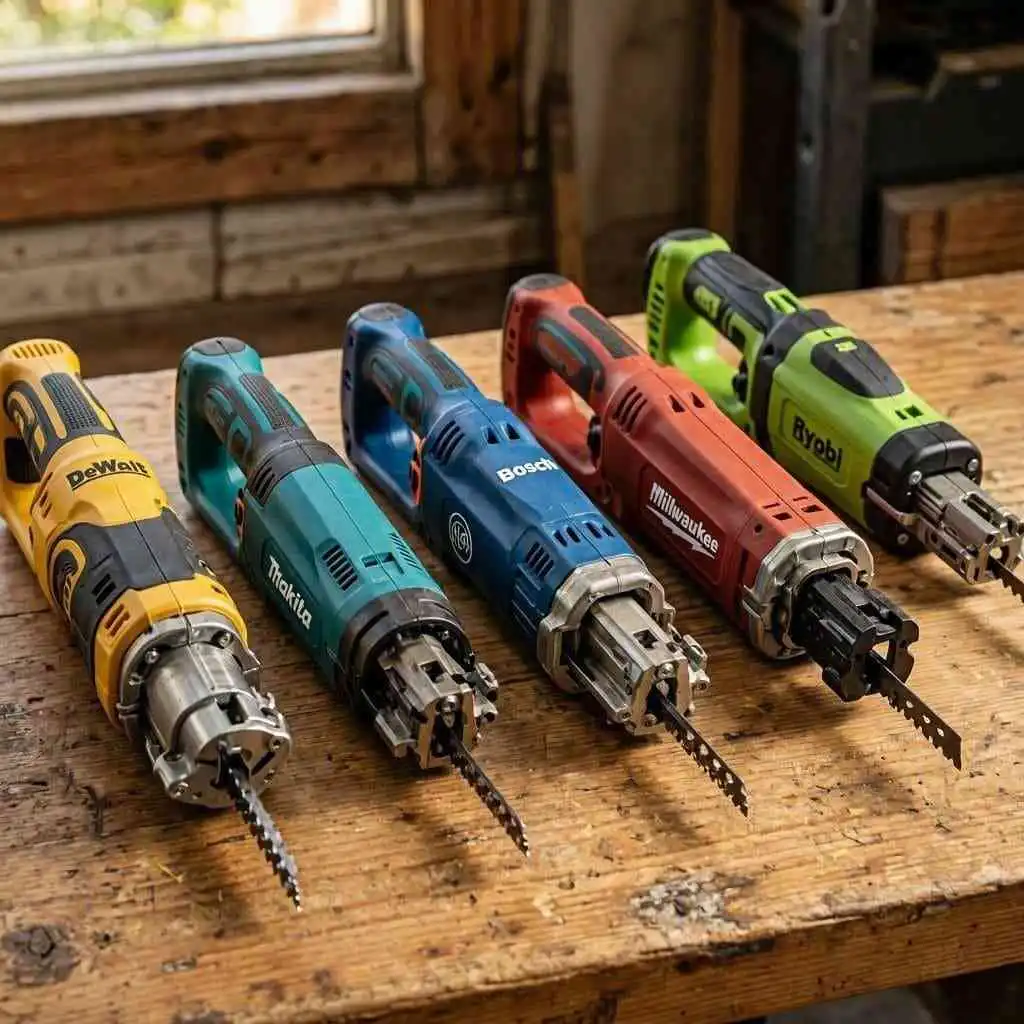
With so many options on the market, it’s easy to get overwhelmed when choosing a reciprocating saw. Luckily, several well-known brands are widely available in the UK and offer great options for DIYers and beginners, whether you’re shopping at Screwfix, B&Q, Toolstation, or online.
Below are some trusted brands worth considering, along with what they’re known for and why they might suit your needs.
🔵 Makita
- Best for: Reliable, well-built tools with solid performance.
- Makita’s cordless LXT 18V range is popular among both pros and DIYers.
- Known for smooth operation, durability, and battery efficiency.
- Prices are mid to high range, but you get what you pay for.
👉 Good choice if you’re investing in a long-term tool collection.
🟡 DeWalt
- Best for: Power, rugged build, and professional-level features.
- The DeWalt XR range (especially 18V) is a great cordless option with loads of compatible tools.
- Excellent for heavy-duty DIY and occasional trade-level tasks.
- Often has brushed and brushless options — brushless = more efficiency and longer life.
👉 A tough, reliable brand if you plan to tackle big jobs or want top performance.
🔵 Bosch
- Green tools = DIY range, Blue tools = Trade/pro range.
- The Bosch Green line is perfect for beginners and light home use.
- Compact, easy to handle, and usually more affordable.
- Bosch tools often come with safety features and good ergonomics.
👉 Great for beginners who want quality and simplicity.
🟢 Ryobi
- Best for: DIYers on a budget who want flexibility.
- The Ryobi ONE+ system lets you power dozens of tools with the same 18V battery.
- Ryobi saws are lightweight, user-friendly, and often include extras like LED lights.
- Mid-range pricing, with good value kits available.
👉 Ideal if you want to build your DIY collection gradually.
⚫ Black+Decker
- Best for: Casual DIYers and first-time buyers.
- Affordable, basic tools for light jobs — especially useful for occasional use.
- Often available in bundle deals with other tools or batteries.
- Less power and durability than premium brands, but plenty for most household tasks.
👉 Good pick for someone who just wants to “have one just in case.”
🔴 Einhell
- Best for: Budget-conscious users who still want cordless freedom.
- A rising brand in the UK with a decent selection of cordless tools under the Power X-Change battery system.
- Often found at Toolstation and online retailers.
- Surprisingly capable for the price — ideal for light to medium DIY use.
👉 A strong choice if you’re watching your budget but want modern features.
It’s also worth knowing about 12V vs 18V reciprocating saws.
Where to Buy in the UK:
- Screwfix, Toolstation, B&Q, Amazon UK, Argos, and Direct from brand websites.
- Look out for bundle deals (e.g. tool + battery + charger).
- Be sure to check for UK plug compatibility and UK-based warranty support.
You can also read my article on the best reciprocating saw for DIY.
Budgeting – How Much Should You Spend?
When it comes to buying a reciprocating saw, the good news is you don’t have to break the bank — especially for occasional DIY and beginner use. But spending too little can also mean you end up with a tool that struggles to do the job or doesn’t last.
Here’s how to set a smart budget based on your needs:
Entry-Level (£40–£70)
Perfect for: Light DIY, garden trimming, occasional jobs
- Basic corded or compact cordless models.
- May include a few starter blades.
- Ideal for beginners or those who want “just-in-case” tools.
- Less powerful motors and limited features — but great for learning.
Popular picks: Black+Decker, Einhell, entry-level Bosch (Green range)
Mid-Range (£70–£150)
Perfect for: Regular DIYers, small renovations, garden projects
- More powerful motors, often cordless with decent battery life.
- Features like variable speed, tool-free blade change, and better ergonomics.
- Often part of a battery ecosystem (e.g. Ryobi ONE+, Makita LXT).
- Good long-term value without going pro-level.
Popular picks: Ryobi, Makita, DeWalt (brushed), Bosch Green/Blue
High-End (£150–£250+)
Perfect for: Serious DIYers, renovation projects, long-term tool investment
- High-powered brushless motors, longer stroke lengths, better vibration control.
- Longer battery life, more efficient cutting, pro-grade durability.
- Includes extras like orbital action, LED lights, and enhanced safety features.
- Great if you already own a compatible battery system.
Popular picks: DeWalt XR (Brushless), Makita LXT Brushless, Bosch Professional (Blue), Milwaukee
DIY Budget Tip:
If you already own cordless tools from a specific brand, you can save money by buying a “bare unit” — the tool without battery or charger. Just make sure it’s compatible with your existing batteries.
What to Avoid:
- Ultra-cheap, no-name brands with poor reviews (under £30) — often underpowered, poorly built, and lacking support.
- Buying a cordless saw without checking if the battery and charger are included. Some “bare tools” are listed at great prices — until you realise you need to buy £60–£100 worth of extras.
Final Advice:
- Casual DIYer? A £60–£90 tool will do the job nicely.
- Regular weekend projects? Aim for £100–£150 for better quality and reliability.
- Going big on home renovations or garden work? Spending over £150 on a well-known brand will give you serious performance and longevity.
Choosing the Right Blade for the Job
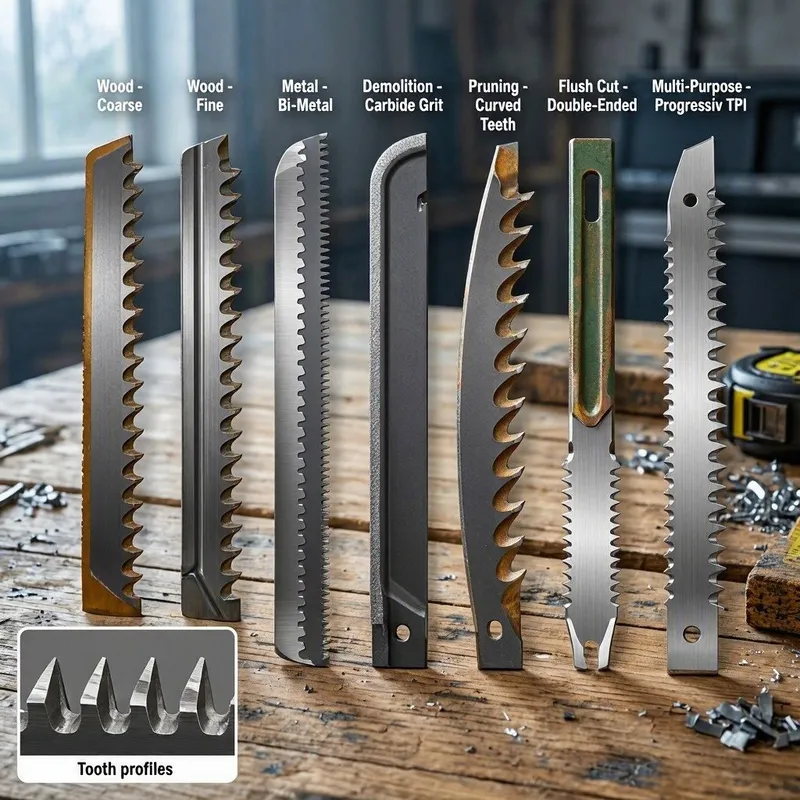
A reciprocating saw is only as good as the blade you put in it. One of the best things about these saws is that you can swap out the blade to suit whatever you’re cutting — whether it’s wood, metal, or garden waste.
Here’s a straightforward guide to help you choose the right blade for your project.
Blade Basics – What You Need to Know
- Length:
- Most blades range from 100mm to 300mm.
- Longer blades are better for thicker materials and pruning.
- Shorter blades give more control for precision or tighter spaces.
- TPI (Teeth Per Inch):
- Low TPI (5–8): Fast cuts in wood and pruning (rougher finish).
- Medium TPI (10–14): Good for general-purpose use, especially mixed materials.
- High TPI (18+): Slower but smoother cuts in metal or plastics.
- Material:
- HCS (High Carbon Steel): Flexible and great for wood.
- Bi-Metal: Stronger and longer-lasting — good for wood with nails or light metal.
- Carbide-Tipped: Best for cutting through tough materials like steel or cast iron.
Blade Types by Job
| Task | Recommended Blade | TPI Range | Tip |
|---|---|---|---|
| Cutting wood | Wood blade (HCS or Bi-Metal) | 6–10 TPI | Use a longer blade for thick timber |
| Demolition (wood + nails) | Demolition blade (Bi-Metal) | 10–14 TPI | Choose a heavy-duty blade |
| Cutting metal | Metal blade (Bi-Metal or Carbide) | 14–24+ TPI | Go slow to avoid overheating |
| PVC/plastic pipe | General-purpose or metal blade | 10–14 TPI | Support pipe while cutting |
| Pruning branches | Pruning blade (HCS, coarse teeth) | 4–6 TPI | Longer blade gives smoother cuts |
| Plasterboard | Multi-material or coarse wood blade | 6–8 TPI | Avoid fine-tooth blades – they clog easily |
How to Change a Blade
Most modern reciprocating saws have a tool-free blade change system:
- Twist or flick the blade lock mechanism (usually near the chuck).
- Pull out the old blade.
- Slide the new blade in until it clicks securely into place.
- Always unplug the saw or remove the battery before swapping blades.
Blade Care Tips
- Let the saw do the work – don’t force the blade.
- Clean blades after use to prevent build-up, especially when cutting resinous wood.
- Store blades in a dry place — some kits include a handy storage case.
- Replace blades once they become dull, bent, or burnt.
Where to Buy Blades in the UK
- Multi-packs and blade sets are available at Screwfix, Toolstation, B&Q, Amazon UK, and most tool shops.
- Brands like Bosch, DeWalt, Makita, Milwaukee, Erbauer, and Saxton all offer good quality DIY blades.
The right blade makes all the difference. It makes your cuts cleaner, your work faster, and your tool safer. Match the blade to the material and you’ll get the best out of your reciprocating saw every time.
Safety Tips for Beginners
Reciprocating saws are powerful tools, but when used properly, they’re very safe — even for beginners. That said, they can be aggressive and noisy, so it’s important to follow some basic safety rules before you start cutting.
Here’s everything you need to know to stay safe while using your saw.
Essential Safety Gear

Before you switch the saw on, make sure you’re wearing:
- Safety glasses or goggles – protects your eyes from flying bits of wood, metal, or dust.
- Work gloves – improves grip and keeps your hands safe from vibration and debris.
- Hearing protection – reciprocating saws can be loud, especially when cutting hard materials.
- Dust mask (if cutting plasterboard, MDF, or treated wood) – stops you breathing in fine particles.
Tip: If you’re cutting overhead or on a ladder, wear a helmet or bump cap just in case.
Before You Start
- Read the manual – even if you think you know what you’re doing, every model is a little different.
- Check your blade – make sure it’s suitable for the material and is securely locked in.
- Inspect your material – look for hidden nails, screws, or wires that could damage the blade or cause kickback.
- Secure your workpiece – use a clamp or a vice so it doesn’t move during the cut.
🚫 What NOT to Do
- ❌ Don’t use a blade that’s bent, dull, or rusty.
- ❌ Don’t force the saw — let the blade do the work.
- ❌ Don’t cut into walls, ceilings, or floors unless you’re sure there are no hidden pipes or cables.
- ❌ Don’t operate the saw one-handed unless it’s designed for it and you’re in full control.
✅ While You’re Cutting
- Hold the saw firmly with both hands.
- Keep your body balanced, especially if you’re on a ladder or in a tight space.
- Start slow, then increase speed as the blade bites into the material.
- Watch for kickback – this can happen if the blade binds or hits something solid suddenly.
- Be aware of the blade movement after you finish the cut — it takes a second or two to stop.
After the Job
- Turn off the saw and remove the battery or unplug it before setting it down or changing blades.
- Let the blade cool down — they can get very hot after use.
- Wipe the saw down and store it safely out of reach of children or pets.
Bonus Tip for Beginners
Do a few practice cuts on scrap wood or pipe before tackling the main job. It helps you get a feel for the saw’s vibration and speed without the pressure of getting it perfect first time.
Used properly, a reciprocating saw is one of the safest cutting tools for beginners — no exposed spinning discs or high-speed kickback risks like with circular saws. Just treat it with respect, follow these tips, and you’ll be cutting confidently in no time.
Final Tips & Recommended Beginner Models (UK-Friendly)
Now that you understand how reciprocating saws work, how to choose one, and how to use it safely, let’s wrap up with a few final tips — and some recommended beginner models available in the UK.
Final Tips for First-Time Buyers
- ✅ Match the tool to the job – If you’re mainly cutting wood or doing garden work, don’t overspend on heavy-duty metal-cutting features you might not need.
- ✅ Stay within your battery system – If you already own cordless tools, stick with the same brand to save money and avoid buying extra chargers.
- ✅ Practice makes perfect – Grab some scrap wood or pipe and get used to the tool’s weight, vibration, and speed before starting your real project.
- ✅ Start slow – Use lower speeds to get more control, especially when learning.
- ✅ Buy quality blades – A cheap saw with a good blade often performs better than an expensive one with a bad blade!
Recommended Beginner Models (UK)
Here are some beginner-friendly reciprocating saws you can easily find in the UK from trusted retailers:
Cordless Models:
🟢 Ryobi RRS1801M ONE+ 18V
- Great value and part of Ryobi’s ONE+ system.
- Tool-only: ideal if you already have batteries.
- Lightweight, easy to handle, and perfect for wood and garden work.
- ~£70 (tool only)
✅ Ideal for general DIY and garden cutting.
🟡 DeWalt DCS380N 18V XR
- More robust and powerful.
- Tool-only, so best if you’re in the DeWalt XR ecosystem.
- Built for tougher jobs like timber with nails or light metal.
✅ For DIYers looking to step up without going fully pro.
🔵 Makita DJR186Z 18V LXT
- Reliable and smooth with a good cutting speed.
- Great battery efficiency.
- Often bundled with a battery + charger set for under £200.
✅ Trusted Makita quality in a very beginner-approachable form.
Corded Models:
⚫ Black+Decker RS890K Scorpion Saw
- Budget-friendly multitool that converts to a jigsaw.
- Compact and ideal for light home jobs or pruning.
- Comes with multiple blades.
✅ Great starter saw for light use around the home and garden.
🔴 Bosch PSA 700E 710W Corded Saw
- Lightweight, ergonomic, and easy to use.
- Ideal for wood, plastic, and light metal.
- Quick blade change system.
✅ Well-priced and perfect for occasional DIYers.
Where to Buy in the UK:
You’ll find these models at:
- Screwfix
- Toolstation
- Amazon UK
- B&Q
- Machine Mart
- Direct from manufacturer websites
Look for bundle deals, especially if you need a battery and charger — many starter kits include everything you need to get going.
Final Word
A reciprocating saw is a must-have for any DIYer. It’s versatile, beginner-friendly, and once you get used to it, you’ll wonder how you managed without one. Whether you’re trimming branches, dismantling pallets, or cutting pipes, this tool is a real workhorse.
Take your time choosing, stay safe, and don’t be afraid to practice — you’ll be tackling jobs like a pro in no time!
Further Reading
Reciprocating Saw Options
- Best Reciprocating Saw for DIY UK – this is my list of top choices based on my own research and use.
- Brushless vs Brushed Reciprocating Saw – this guide explains whether it is worthwhile investing in a brushless model.
- 12V vs 18V Reciprocating Saw – helps you decide between a 12V and an 18V option
- Battery Run Times for Reciprocating Saws UK – If you decide on cordless then important to understand Ah battery run times.
Cutting & Blade Information
- Reciprocating Saw Blade TPI Guide – this guide explains the importance of understanding teeth per inch when picking the right blade
- Reciprocating Saw Blades Guide for Beginners UK – this guide explains what types of blades are available in the UK for reciprocating saws.
- Best Reciprocating Saw Blades for Metal UK – a guide to the various blade types available in the UK for this type of saw.
- Best Reciprocating Saw Blades for Wood – looks in particular at blades for cutting wood.
- Can You Cut Wood With a Reciprocating Saw – Examines the types of wood you can cut with this saw.
- Can You Cut Metal With a Reciprocating Saw – Examines the types of metal you can cut with this saw.
- What Can You Cut With a Reciprocating Saw? – looks generally at all the materials in detail that you can cut with this versatile saw.
- What Is a Reciprocating Saw Used For – Examines the full uses of this saw type.
Comparisons
How to Use a Reciprocating Saw – This includes understanding how to use the features and important safety information.