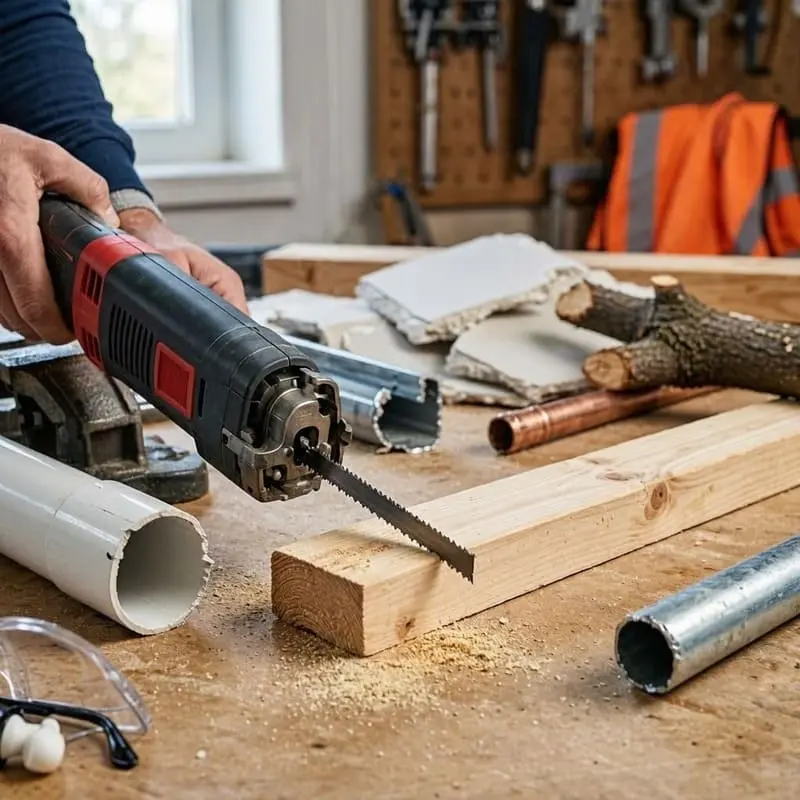
A reciprocating saw can cut a surprisingly wide range of materials, but the blade you use is extremely important.
With the correct blade, a reciprocating saw can be used for cutting wood, metal, plastic, pipes, timber containing nails and some garden materials.
UK retailers commonly sell reciprocating blades specifically for wood, metal, multi-material and other applications, with different TPI and blade lengths available.
The important thing for a beginner is not simply asking, “Can my reciprocating saw cut this?”
Instead, ask:
“Do I have the right blade for this material?”
Can You Cut Wood With a Reciprocating Saw?
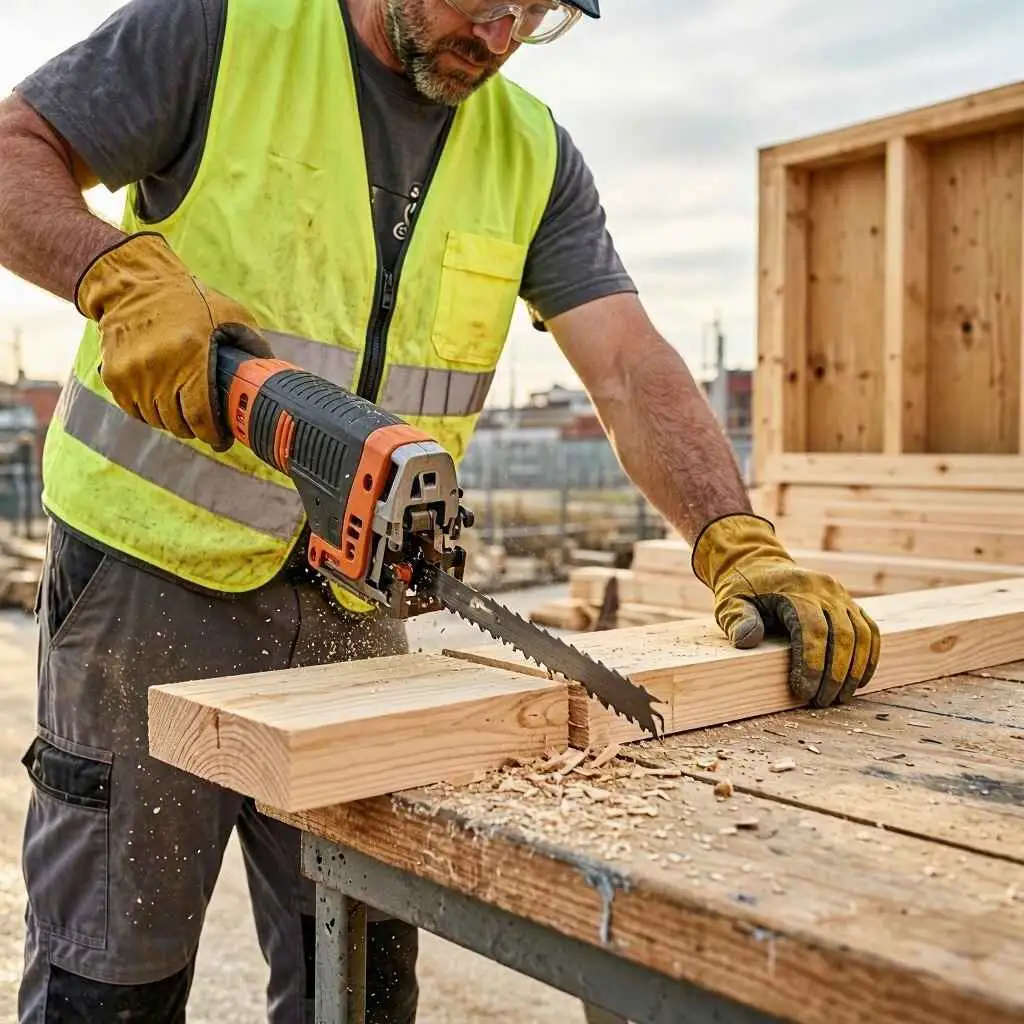
Yes. Wood is one of the most common materials cut with a reciprocating saw.
You can use one for:
- Timber
- Softwood
- Hardwood
- Plywood
- Chipboard
- Pallets
- Wooden frames
- Demolition timber
For ordinary wood cutting, a coarse blade can provide fast cutting.
For example, DEWALT lists a 4/5 TPI reciprocating blade specifically for soft wood, wood materials and plastics.
Can You Cut Wood With Nails?
Yes, with the correct blade. This is one of the reasons reciprocating saws are so useful for demolition.
A suitable bi-metal blade can cut through wood containing nails and other mixed materials.
This is particularly useful when dismantling old timber because you don’t have to remove every nail before cutting.
Sealey, for example, offers a bi-metal blade specifically designed for wood and nails.
Can You Cut Metal?

Yes. You can use a reciprocating saw to cut certain types of metal, provided you fit an appropriate metal-cutting blade.
Depending on the blade, applications can include:
- Steel
- Stainless steel
- Aluminium
- Metal pipe
- Metal profiles
- Sheet metal
Metal-cutting blades generally use a higher TPI than coarse wood blades.
For example, Bosch lists a 24 TPI blade for thin metal applications.
Can You Cut PVC Pipe?
Yes. A reciprocating saw can be useful for cutting plastic pipe and other plastic profiles.
This can be particularly handy during renovation or plumbing work.
Use a blade appropriate for plastic or a suitable multi-material blade and avoid forcing the saw through the material.
Can You Cut Copper Pipe?
Yes, provided you use a blade suitable for cutting metal.
Copper is relatively soft compared with steel, but it still needs an appropriate cutting blade.
Before cutting any pipe, make absolutely certain that the pipe is not carrying water, gas or another service.
If you are unsure, stop and get appropriate professional advice.
Can You Cut Aluminium?
Yes. Aluminium can be cut with suitable reciprocating saw blades designed for metal and non-ferrous materials.
The exact blade specification should always be checked before cutting.
Can You Cut Branches?
A reciprocating saw can be useful for cutting branches, particularly when fitted with a suitable pruning blade.
It can be useful for:
- Dead branches
- Small to medium branches
- Cutting up garden waste
- Rough garden clearance
However, a reciprocating saw isn’t necessarily the best choice for every tree or pruning job.
For larger branches or work at height, use the correct equipment and consider whether professional tree work is more appropriate.
Can You Cut Plastic?
Yes. Plastic pipe, profiles and some other plastic materials can be cut using an appropriate blade.
Some multi-material blades are specifically designed to handle combinations of wood, plastic and metal. Festool, for example, lists universal blades for wood with nails, non-ferrous metal, plastic tubes and profiles.
What About Plasterboard?
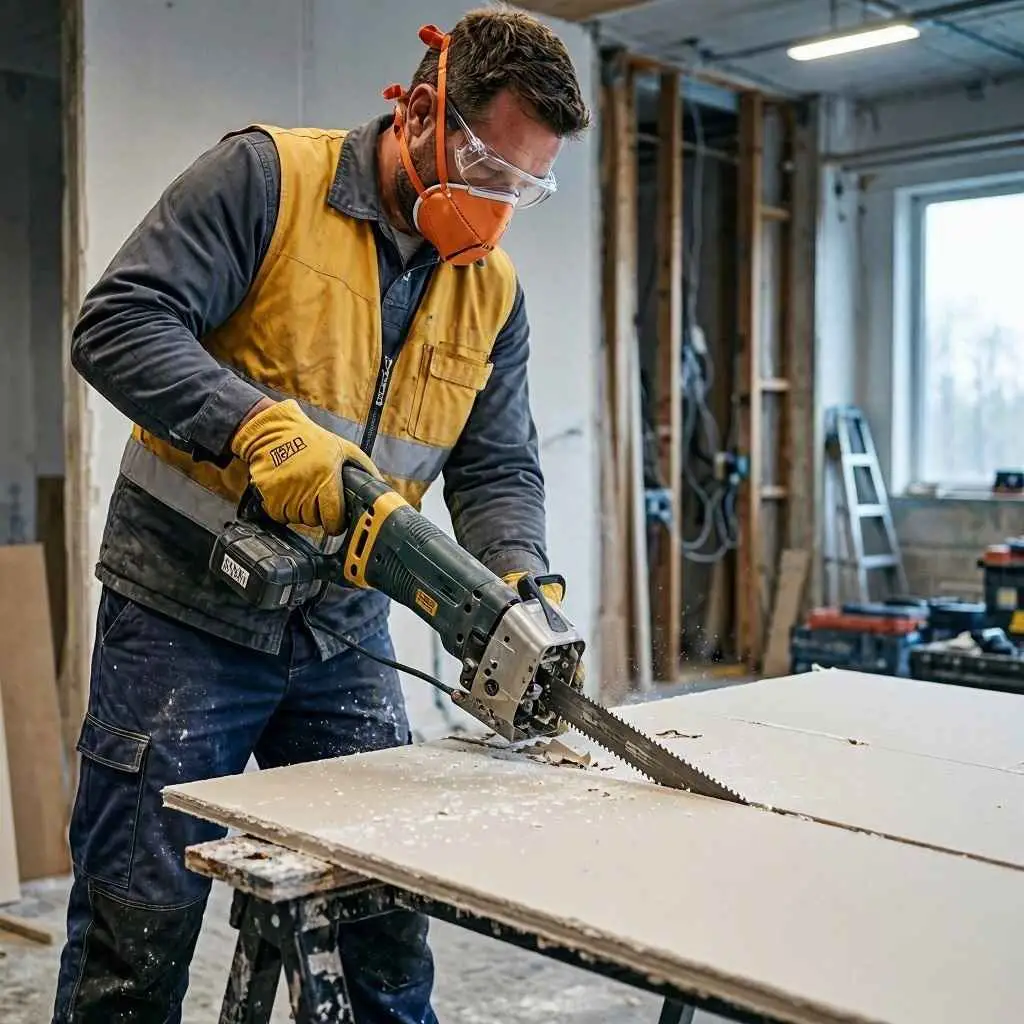
A reciprocating saw can cut plasterboard, but it isn’t always the best tool for the job.
A specialist plasterboard tool or hand saw may provide better control for small, precise cuts.
If you do use a reciprocating saw, be particularly careful about what’s behind the board.
This is one of the most important rules when using a reciprocating saw indoors:
Never cut into a wall, floor or ceiling until you have considered the possibility of hidden cables and pipes.
Can You Cut Plywood and Chipboard?
Yes. A suitable wood-cutting blade can cut plywood, chipboard and similar sheet materials.
However, a reciprocating saw isn’t normally the first choice when you need a perfectly straight edge.
For accurate sheet-material cuts, a circular saw or track saw will usually be easier to control.
Can You Cut Fibreglass?
Some reciprocating blades are designed for reinforced plastics and fibreglass-type materials.
Always check the blade manufacturer’s specifications before attempting the cut.
Do not assume that a standard wood or metal blade is suitable.
What Materials Should You Not Cut?
There isn’t a single list covering every reciprocating saw because limitations vary between machines and blades.
Never cut a material simply because the blade physically fits the saw.
Check:
- The saw manufacturer’s instructions.
- The blade manufacturer’s specifications.
- The maximum material thickness.
- The recommended cutting application.
Some specialist blades have very specific limits. For example, manufacturers specify different blade types and TPI ranges for different metal thicknesses.
Reciprocating Saw Material Guide
| Material | Can You Cut It? | Typical Blade |
|---|---|---|
| Softwood | Yes | Wood blade |
| Hardwood | Yes | Wood blade |
| Plywood | Yes | Wood blade |
| Chipboard | Yes | Wood blade |
| Wood with nails | Yes | Bi-metal/demolition |
| Pallets | Yes | Demolition/multi-material |
| PVC | Yes | Plastic/multi-material |
| Copper pipe | Yes | Metal blade |
| Aluminium | Yes | Metal blade |
| Steel | Yes | Metal blade |
| Stainless steel | Yes | Suitable metal blade |
| Branches | Yes | Pruning/wood blade |
| Plasterboard | Possible | Suitable fine/coarse blade depending on job |
Why Blade Choice Matters
The wrong blade can make a simple job frustrating. Choosing the right type of blade is important.
A blade that’s too coarse for thin metal may cut poorly, while a fine metal blade used on thick timber can be unnecessarily slow.
TPI is one of the specifications to pay attention to.
As a general rule, lower TPI is associated with faster, rougher cuts, while higher TPI is generally used for finer cutting and harder/thinner materials.
Final Thoughts
A reciprocating saw is a remarkably versatile tool. It would be worth reading my guide on using a reciprocating saw.
For a DIY beginner, it can handle many common jobs involving:
- Wood
- Timber
- Nails
- Plastic
- PVC
- Metal
- Pipes
- Branches
- Demolition materials
But don’t make the mistake of thinking that one blade will do everything.
The right blade is what turns a reciprocating saw into the right tool for the job.