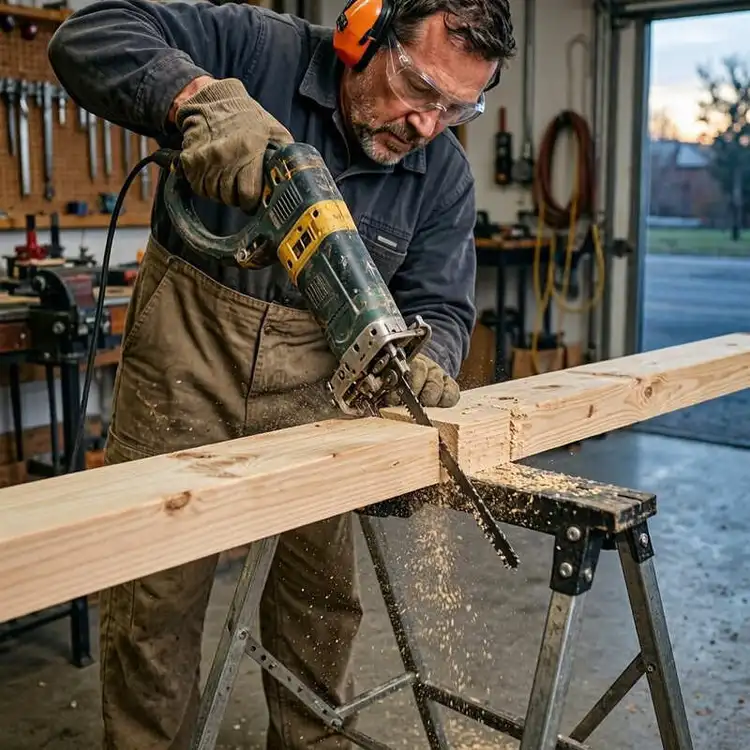
Yes, you can cut wood with a reciprocating saw. In fact, wood is one of the most common materials that a reciprocating saw is used to cut.
A reciprocating saw can cut timber, softwood, hardwood, plywood, chipboard, pallets and other wood-based materials when fitted with a suitable blade.
It’s particularly useful for demolition, renovation and rough cutting, where speed and access are often more important than producing a perfectly straight or smooth edge.
For a DIY beginner, however, it’s important to understand that a reciprocating saw isn’t necessarily the best saw for every type of wood-cutting job.
If you need a perfectly straight cut across a piece of timber, for example, a circular saw or mitre saw may be a better choice.
In this guide, we’ll explain when a reciprocating saw is a good choice for cutting wood, which wood cutting blade you need and how to get the best results.
What Type of Wood Can a Reciprocating Saw Cut?
With the correct blade, a reciprocating saw can cut a wide range of wood materials.
These include:
- Softwood
- Hardwood
- Timber
- Plywood
- Chipboard
- MDF
- Pallets
- Wooden framing
- Floorboards
- Roof timbers
- Garden timber
- Wood containing nails
The important thing is to choose a blade designed for the material and application. A reciprocating saw blade intended for wood will normally have a different tooth configuration from one designed for cutting metal.
What Is the Best Reciprocating Saw Blade for Wood?
For ordinary wood cutting, choose a blade specifically designed for wood. Wood-cutting blades are available in different tooth sizes and lengths, allowing you to choose one suited to the material you’re cutting.
As a general rule:
Coarser teeth = faster, rougher cutting
Finer teeth = slower, potentially cleaner cutting
For thick timber and demolition work, a coarse blade can be particularly useful. For thinner wood where you want more control, a finer blade may be preferable. Always check the blade manufacturer’s specifications rather than choosing solely on TPI.
What TPI Is Best for Cutting Wood?
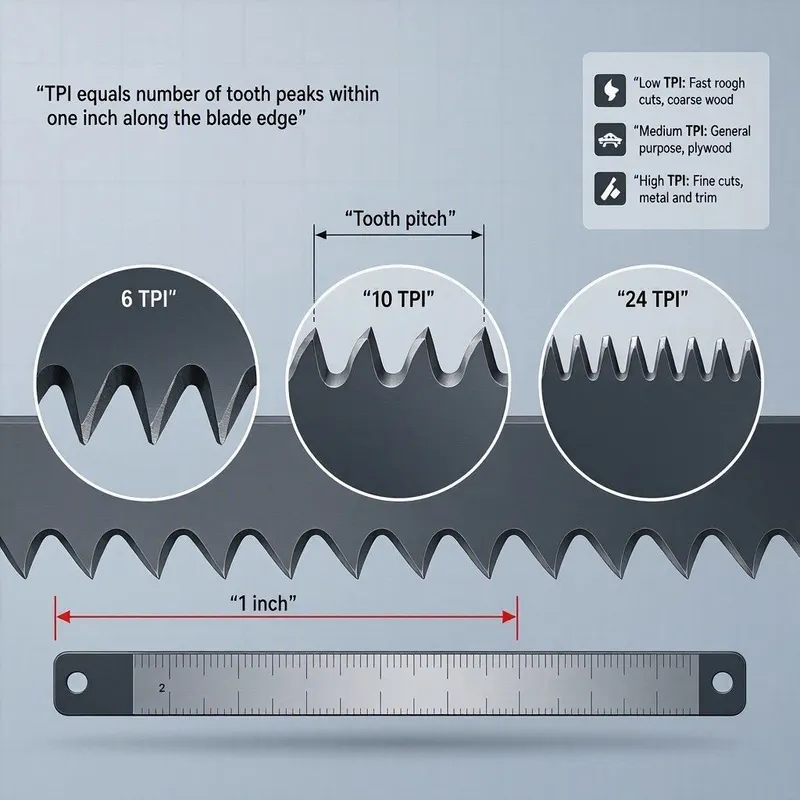
TPI means teeth per inch. For many wood-cutting applications, a relatively low TPI is suitable because the larger teeth remove material quickly.
As a general starting point:
| TPI | Typical Wood Application |
|---|---|
| 3–5 TPI | Thick timber and very fast cutting |
| 5–8 TPI | General wood and demolition |
| 8–12 TPI | Finer wood cutting |
| 12+ TPI | Specialist/finer applications |
These are general guidelines. The ideal TPI depends on the type and thickness of wood and the blade’s design. If you’re unfamiliar with TPI, see our Reciprocating Saw Blade TPI Guide for a more detailed explanation.
Can You Cut Softwood With a Reciprocating Saw?
Yes.
Softwood is one of the easiest types of timber to cut with a reciprocating saw.
Examples include:
- Pine
- Spruce
- Fir
- Other commonly used construction softwoods
A coarse wood-cutting blade can make quick work of many softwood cutting jobs. This makes a reciprocating saw particularly useful for DIY projects involving construction timber.
Can You Cut Hardwood With a Reciprocating Saw?
Yes, but hardwood can require more effort than softwood. If you’re cutting hardwood, use a blade designed for the material and avoid forcing the saw through the cut.
A sharp, appropriate blade will generally make the job considerably easier.
Hardwood can also produce more resistance, so make sure the workpiece is securely supported. If the job requires a highly accurate or clean finish, another type of saw may be more suitable.
Can You Cut Plywood With a Reciprocating Saw?
Yes. A reciprocating saw can cut plywood, but it isn’t usually the first choice if you need a perfectly straight edge.
The freehand nature of a reciprocating saw makes it much easier for the blade to wander compared with a circular saw or track saw.
For rough cutting plywood to remove sections or make an opening, however, it can be very useful.
Can You Cut Chipboard With a Reciprocating Saw?
Yes. A suitable wood-cutting blade can cut chipboard and similar sheet materials.
This can be useful during renovation work, especially when you’re removing sections of old flooring, cabinets or other construction materials.
Again, if you need an accurate finished edge, another saw is likely to be better.
Can You Cut MDF With a Reciprocating Saw?
A suitable blade can cut MDF, but there are some considerations. MDF creates a significant amount of fine dust when cut.
If you’re cutting MDF, make sure you use appropriate dust control and PPE and follow the manufacturer’s safety guidance.
For repeated, accurate MDF cutting, a circular saw, track saw or other suitable cutting system may provide better results.
Can You Cut Pallets With a Reciprocating Saw?
Yes, and this is one of the jobs where a reciprocating saw can be particularly useful. However, pallets often contain nails.
Instead of using an ordinary wood blade, consider a demolition or bi-metal blade designed for wood containing nails.
This allows the blade to deal with the combination of timber and metal fixings. Some specialist blades are specifically designed for cutting wood containing nails and other demanding demolition applications.
Before cutting a pallet, inspect it carefully for nails, screws and other metal objects.
Can You Cut Wood With Nails?
Yes. This is actually one of the biggest advantages of a reciprocating saw for demolition. A suitable bi-metal or demolition blade can cut through wood containing nails.
For example, instead of dismantling an old timber frame and removing every nail individually, you can often cut through the timber and fixings together. This can save a considerable amount of time.
However, cutting metal is demanding on blades, so don’t expect a cheap general-purpose wood blade to perform the same job.
Can You Cut Floorboards With a Reciprocating Saw?
Yes. A reciprocating saw can be useful for removing old floorboards, particularly during renovation.
One major advantage is that the blade can reach into relatively awkward areas. However, this is also a situation where you need to be extremely careful.
Before cutting into flooring, consider what might be underneath.
There could be:
- Electrical cables
- Water pipes
- Heating pipes
- Structural components
Never assume that the space beneath a floorboard is clear. If you don’t know what’s underneath, stop and investigate before cutting.
Can You Cut Timber Framing?
Yes. A reciprocating saw is particularly useful for cutting timber framing during construction, renovation and demolition.
It can be used to:
- Cut studs
- Remove sections of timber
- Cut old framing
- Cut awkward sections
- Trim timber in restricted spaces
Because the blade is relatively narrow, it can sometimes access areas where a larger saw cannot.
Can You Cut Tree Branches With a Reciprocating Saw?
Yes, provided you use an appropriate pruning or wood-cutting blade. A cordless reciprocating saw can be particularly convenient for occasional garden work because you don’t need to run an extension lead into the garden.
It can be useful for cutting:
- Dead branches
- Smaller branches
- Garden timber
- Branches that need breaking down for disposal
For larger trees or work at height, however, don’t assume a reciprocating saw is appropriate simply because it can physically cut the wood.
Tree work can be dangerous and may require specialist equipment and skills.
How to Cut Wood With a Reciprocating Saw
If you’re new to reciprocating saws, start with a simple piece of timber.
Step 1: Choose the right blade
Fit a blade designed for wood.
For thick timber or demolition, a coarse blade is usually a sensible starting point.
Step 2: Check the blade
Make sure the blade isn’t bent, damaged or excessively worn.
Step 3: Secure the timber
Don’t try to hold a loose piece of timber in your hand while cutting.
Secure the workpiece properly so it cannot move unexpectedly.
Step 4: Position the saw
Place the saw’s shoe against the workpiece where appropriate.
The shoe helps support the tool and can improve control.
Step 5: Start slowly
If your saw has variable speed control, start at a controlled speed and allow yourself to get used to the tool.
Step 6: Let the blade do the work
Don’t force the saw.
Apply enough pressure to maintain contact with the material, but allow the blade to do the cutting.
Step 7: Complete the cut
Keep the saw stable and maintain control until the blade has completely passed through the material.
You can read more here on how to use a reciprocating saw.
How to Make a Cleaner Cut in Wood
One of the biggest complaints beginners have about reciprocating saws is that the cuts aren’t always particularly neat. That’s largely because the tool is designed for versatility and speed rather than precision.
However, there are things you can do to improve the result.
Use a suitable blade
A blade designed for faster demolition cutting won’t necessarily produce the cleanest result.
If appearance matters, choose a blade intended for finer wood cutting.
Mark your cut clearly
Use a pencil, square or marking tool to create a clear cutting line.
Don’t simply guess where to cut.
Support the material
Secure the workpiece properly.
Movement can make the blade wander and produce a poor cut.
Don’t force the saw
Too much pressure can make the saw harder to control.
Let the blade work at its intended speed.
Use a shorter blade where appropriate
A blade that’s unnecessarily long can flex more during cutting.
Choose a blade length suitable for the material and the saw.
Why Does My Reciprocating Saw Keep Jumping When Cutting Wood?
If your reciprocating saw is jumping or jerking during a cut, several things could be responsible.
Possible causes include:
- Using too much pressure
- Starting the cut too aggressively
- A blunt blade
- An unsuitable blade
- Poor support of the workpiece
- The blade catching in the material
- The saw not being held securely
Try reducing pressure and allowing the blade to work.
Also check that the blade is suitable for the material.
If the problem continues, stop cutting and check the saw, blade and workpiece.
Why Does My Reciprocating Saw Cut Slowly Through Wood?
If your saw is taking much longer than expected to cut timber, check the blade first.
A worn blade is one of the most common reasons for poor cutting performance.
Also check:
- Is the blade designed for wood?
- Is the TPI appropriate?
- Is the timber particularly hard?
- Is the blade too short?
- Is the battery sufficiently charged?
- Are you applying too much pressure?
A new, suitable blade can make a surprisingly large difference.
What Is the Best Reciprocating Saw for Cutting Wood?
You don’t necessarily need the most powerful reciprocating saw for ordinary DIY wood cutting.
For a beginner, consider:
- Battery platform
- Battery capacity
- Saw weight
- Stroke length
- Stroke rate
- Variable speed
- Vibration control
- Brushless motor
- Blade changing system
If you’re already using a cordless tool platform, staying with the same battery system can make sense.
For example, if you already own compatible 18V batteries, buying a body-only reciprocating saw from the same platform may be more economical.
Reciprocating Saw vs Circular Saw for Wood
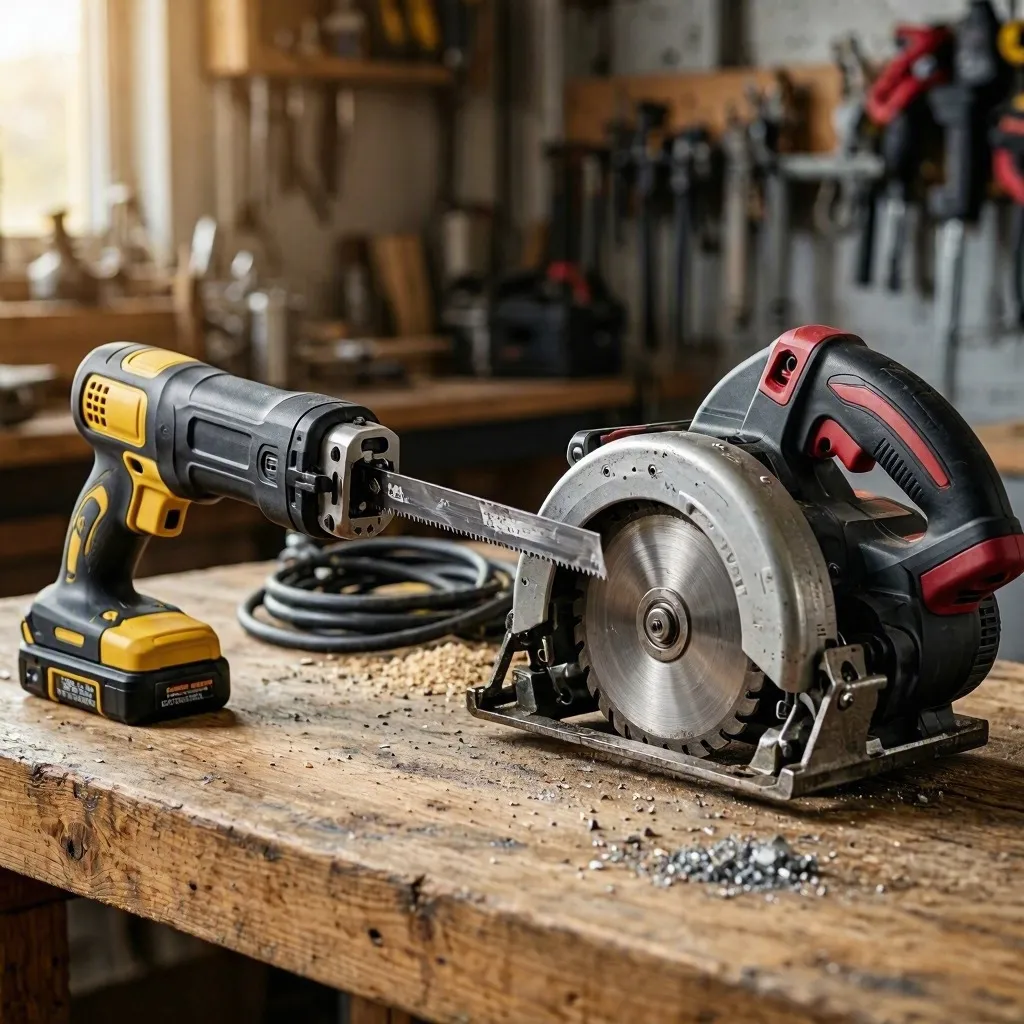
Both tools can cut wood, but they’re designed for different jobs.
| Feature | Reciprocating Saw | Circular Saw |
| Demolition | Excellent | Less suitable |
| Rough cutting | Excellent | Excellent |
| Straight cuts | Fair | Excellent |
| Precision | Limited | Better |
| Awkward access | Excellent | Limited |
| Timber containing nails | Excellent with correct blade | Generally unsuitable |
| Sheet material | Possible | Excellent |
| Garden work | Possible | No |
| Portability | Excellent | Good |
If your main goal is demolition and rough cutting, a reciprocating saw makes sense.
If your main goal is straight, accurate cuts in timber and sheet material, a circular saw is usually the better choice.
Reciprocating Saw vs Jigsaw for Wood
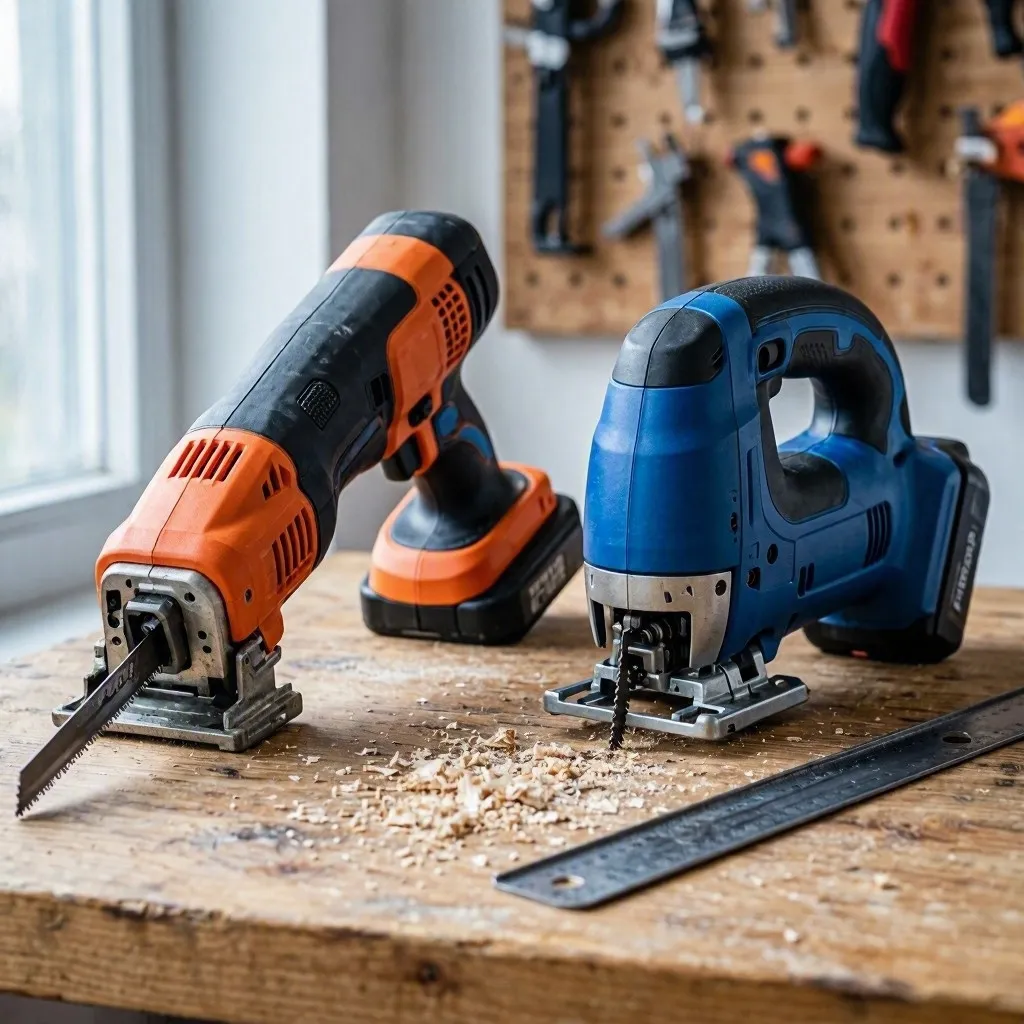
A jigsaw is generally better suited to controlled curved cuts and more detailed woodworking.
A reciprocating saw is better suited to:
- Demolition
- Rough cutting
- Awkward access
- Cutting old timber
- Cutting timber with nails
If you’re making furniture or decorative woodworking projects, a jigsaw will usually be the better choice.
If you’re removing an old timber frame, the reciprocating saw is likely to be much more useful.
Is a Reciprocating Saw Good for DIY Woodworking?
It can be, but it depends on what you mean by woodworking. For rough construction work, renovation and demolition, it’s extremely useful.
For precision woodworking, it’s generally not the first tool you’d choose.
Think of it as a problem-solving saw rather than a precision woodworking saw.
It can get into awkward spaces and remove material quickly, but it isn’t designed to produce perfectly straight, furniture-quality cuts.
Reciprocating Saw Wood-Cutting Blade Guide
| Job | Recommended Blade Type |
| Softwood | Coarse wood blade |
| General timber | Wood-cutting blade |
| Hardwood | Suitable wood blade |
| Plywood | Wood blade |
| MDF | Suitable wood blade |
| Chipboard | Wood blade |
| Pallets | Demolition/bi-metal blade |
| Timber with nails | Bi-metal demolition blade |
| Floorboards | Wood/demolition blade |
| Timber framing | Wood/demolition blade |
| Branches | Pruning blade |
Always check the manufacturer’s recommendations before using a blade. You can rad more about blade types here.
Safety When Cutting Wood
A reciprocating saw can remove material very quickly, so don’t underestimate it simply because it uses a relatively small blade.
Before cutting:
- Wear suitable eye protection.
- Secure the material.
- Check the blade is correctly fitted.
- Make sure the battery or power supply is secure.
- Keep both hands under control of the tool as appropriate.
- Keep other people away from the cutting area.
- Check for hidden cables, pipes and other hazards.
- Follow the manufacturer’s instructions.
If you’re cutting old timber, be particularly careful about nails and screws.
If you’re cutting flooring, walls or ceilings, make sure you know what is behind the material before starting.
Frequently Asked Questions
Can a reciprocating saw cut 2×4 timber?
Yes. A suitable wood-cutting blade can cut construction timber such as a 2×4, provided the saw and blade are suitable for the material dimensions.
Can you cut a 4×4 with a reciprocating saw?
Yes, with a sufficiently long blade and a suitable saw. The cut may take longer than cutting thinner timber, and you need to make sure the blade is long enough to cut through the material safely.
Can you cut hardwood with a reciprocating saw?
Yes. Use a suitable wood-cutting blade and avoid forcing the saw through the material.
Can you cut pallets with a reciprocating saw?
Yes. A reciprocating saw is particularly useful for dismantling pallets, especially when fitted with a demolition or bi-metal blade designed for wood containing nails.
Can you cut timber with nails in it?
Yes. Use a blade specifically designed for cutting wood containing nails or other metal fixings.
Will a reciprocating saw make a straight cut?
It can, but achieving a perfectly straight cut can be difficult because the blade is relatively flexible and the tool is designed primarily for rough cutting and demolition.
For accurate straight cuts, a circular saw, track saw or mitre saw may be more appropriate.
Can you use a reciprocating saw to cut firewood?
A reciprocating saw can cut suitable pieces of wood, but it isn’t normally the most practical tool for processing large quantities of firewood.
A chainsaw, handsaw or other purpose-designed tool may be more appropriate depending on the job.
Final Thoughts
A reciprocating saw can be an excellent tool for cutting wood, particularly if you’re doing DIY renovation, demolition or general repair work.
It’s capable of cutting everything from ordinary construction timber to pallets, floorboards and wood containing nails.
The key is choosing the correct blade.
For ordinary timber, start with a suitable wood-cutting blade. For demolition, choose a more robust blade designed for the job, particularly if you’re likely to encounter nails.
And remember that a reciprocating saw isn’t designed to replace every other type of saw.
If you need fast, rough cuts and excellent access, it’s a great choice.
If you need precise, straight or decorative cuts, another saw will usually be better.
For beginners, understanding this difference is one of the best ways to get useful results from a reciprocating saw.
What to Read Next?
If you’re cutting wood containing nails, renovating an old property or dismantling timber, choosing the right blade becomes particularly important.