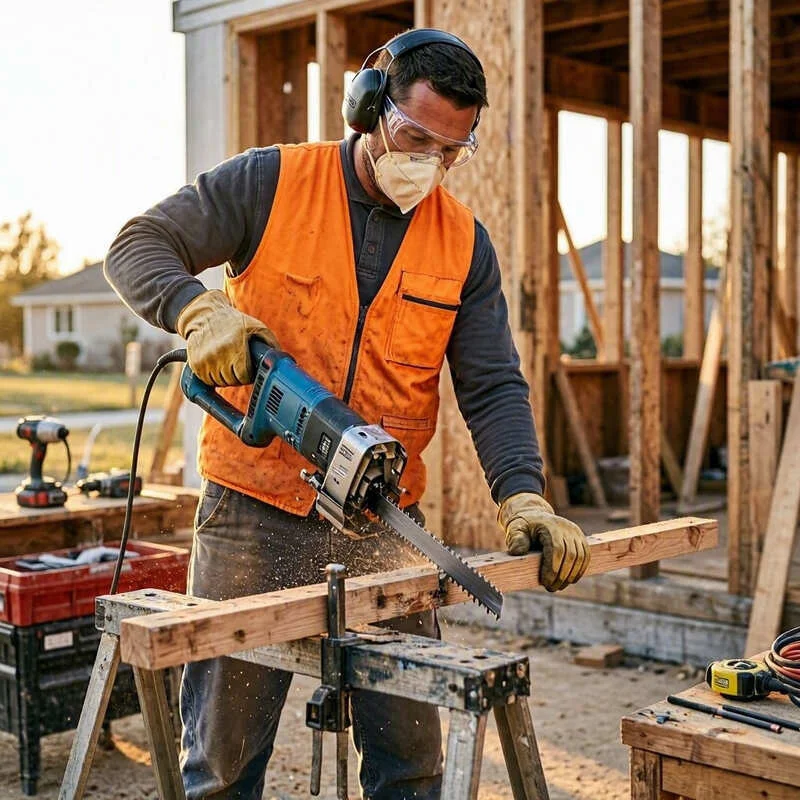
A reciprocating saw is one of the most useful power tools for DIY, particularly when you’re doing renovation, demolition or cutting materials in awkward places.
Unlike a circular saw or jigsaw, a reciprocating saw isn’t primarily designed for making perfectly straight or highly accurate cuts. Instead, it’s a fast, versatile cutting tool that’s particularly good at getting into places where other saws struggle.
You can use the right reciprocating saw blade to cut materials such as:
- Timber
- Timber containing nails
- Metal
- Plastic
- Pipe
- Plasterboard
- Branches
But if you’ve never used one before, the tool can look a little intimidating. The exposed blade moves backwards and forwards very quickly, and it’s easy to assume that more pressure means faster cutting. It doesn’t.
The key to using a reciprocating saw effectively is choosing the right blade, supporting the tool properly and allowing the saw to do the work.
This guide explains how to use one safely and effectively, even if you’re a complete beginner.
What Is a Reciprocating Saw?
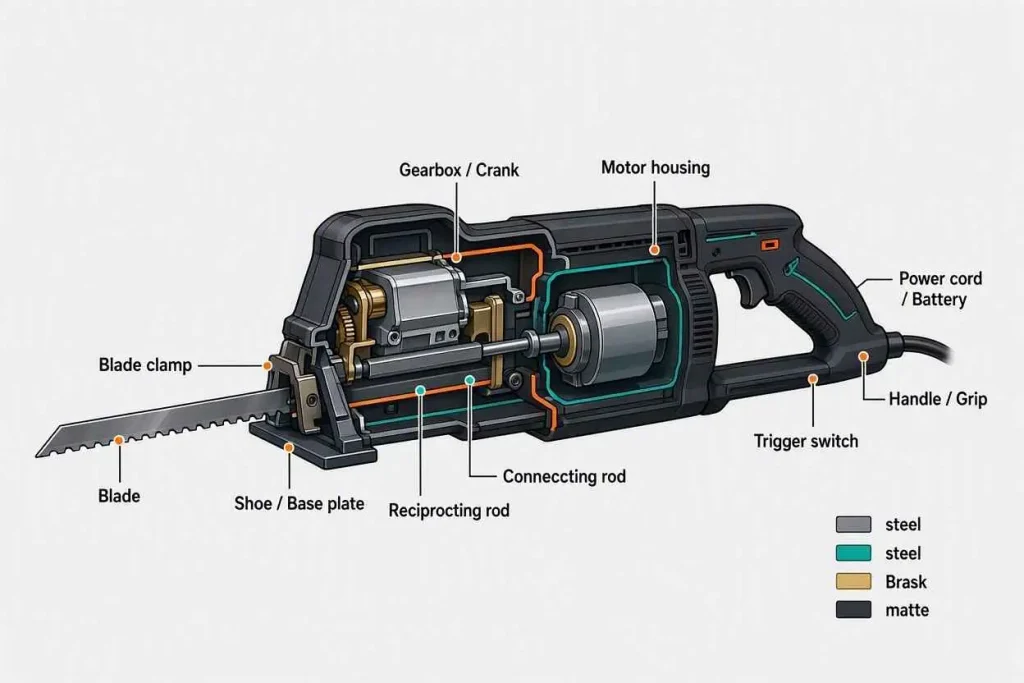
A reciprocating saw uses a narrow blade that moves rapidly backwards and forwards.
The blade is held at the front of the tool and is usually replaceable, allowing you to select a blade designed for the material you’re cutting.
Depending on the blade, a reciprocating saw can cut:
- Wood
- Metal
- Plastic
- Pipe
- Nails
- Demolition materials
- Tree branches
This makes it one of the most versatile saws for renovation and demolition work. However, versatility comes with a trade-off. A reciprocating saw isn’t usually the best choice when you need a perfectly straight or particularly clean cut.
For those jobs, a circular saw or jigsaw may be more appropriate.
What Is a Reciprocating Saw Used For?
Reciprocating saws are particularly useful for jobs where speed and access are more important than precision. Common DIY uses include:
Demolishing old timber
Useful for dismantling sheds, stud walls, decking and other timber structures.
Cutting timber containing nails
Special demolition blades can cut through wood and embedded nails.
Cutting pipe
Suitable blades can be used for various types of pipe.
Removing flooring
A reciprocating saw can help cut through old flooring materials and timber.
Cutting branches
A suitable pruning blade can make the tool useful for some garden work.
Cutting awkward materials
The narrow blade can reach into spaces that are difficult to access with larger saws.
Before You Start: Read the Instructions
Before using any power tool for the first time, read the manufacturer’s instructions. This is especially important with a reciprocating saw.
Different models can have different:
- Blade-fitting systems
- Controls
- Safety features
- Operating procedures
- Battery requirements
- Cutting capacities
Don’t assume that every reciprocating saw operates in exactly the same way.
Step 1: Choose the Right Blade
This is probably the most important step. A reciprocating saw isn’t simply a tool where you use one blade for everything. Different blades are designed for different materials.
You can find blades specifically designed for:
- Wood cutting blade
- Hardwood
- Demolition
- Wood with nails
- Metal cutting blades
- Stainless steel
- Plastic
- Pruning
Choosing the right blade can make a dramatic difference.
Reciprocating Saw Blade Teeth
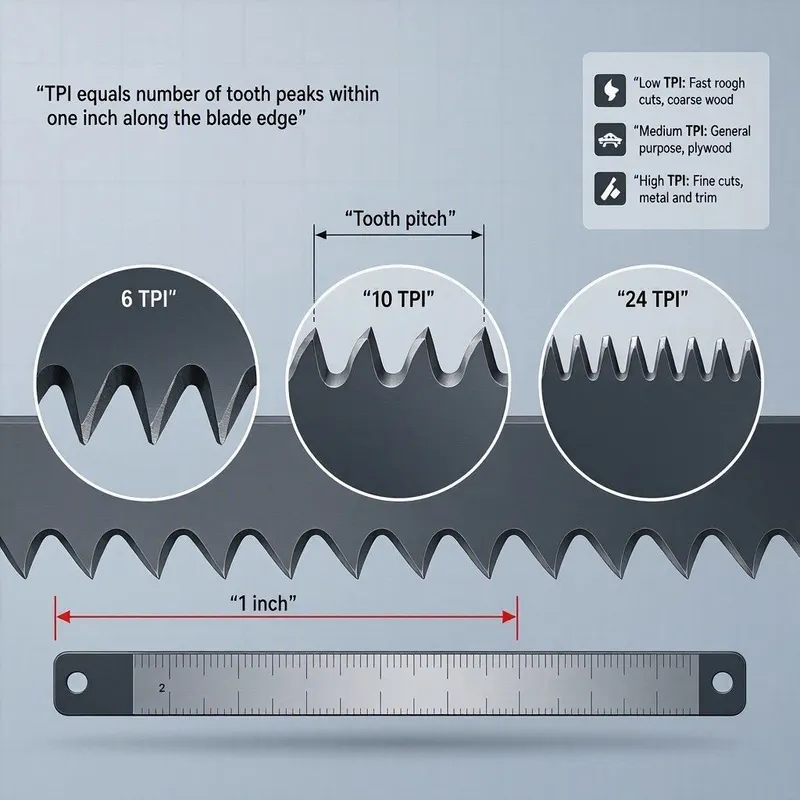
You’ll often see reciprocating saw blades described by their TPI, or teeth per inch.
Generally:
Lower TPI
Fewer, larger teeth.
Often useful for:
- Faster cutting
- Wood
- Demolition
Higher TPI
More, smaller teeth.
Often useful for:
- Metal
- Finer cutting
- Thinner materials
However, TPI isn’t the only factor.
Blade thickness, tooth design, material and intended application also matter.
Don’t choose a blade based solely on the TPI number.
Step 2: Inspect the Blade
Before fitting a blade, check it carefully.
Don’t use a blade that is:
- Cracked
- Bent
- Damaged
- Excessively worn
- Missing teeth
A damaged blade can behave unpredictably.
Make sure you select a blade appropriate for both the material and the saw manufacturer’s recommendations.
Step 3: Disconnect the Power Before Changing the Blade
This is a simple but important safety habit. If you’re using a cordless reciprocating saw, remove the battery before changing the blade whenever the manufacturer’s instructions call for it.
For a corded model, disconnect the plug. Never rely solely on the trigger being released.
You don’t want the saw starting accidentally while your hands are near the blade.
Step 4: Fit the Blade Correctly
Most modern reciprocating saws have a tool-free blade-change mechanism. The exact method varies between manufacturers.
Generally, you open or operate the blade clamp, insert the blade fully and secure it according to the manufacturer’s instructions. After fitting the blade, make sure it is properly locked in place.
Don’t simply assume that because the blade appears to be inserted, it’s secure.
Step 5: Check the Work Area
Before switching the saw on, inspect the material you’re about to cut.
Look for:
- Nails
- Screws
- Electrical cables
- Pipes
- Structural components
- Hidden fixings
This is particularly important when cutting into existing walls, floors or structures.
Never assume that because you can’t see something, it isn’t there.
Be Extremely Careful Around Cables and Pipes
If you’re cutting into a wall, ceiling, floor or other concealed area, you need to know what is behind the surface. A reciprocating saw can cut through hidden services extremely quickly.
Before cutting, identify the location of:
- Electrical cables
- Water pipes
- Heating pipes
- Gas pipes
If you aren’t sure what’s behind the material, don’t cut until you’ve established what’s there.
Step 6: Secure the Material
Whenever possible, secure the material you’re cutting. For example, you can use suitable clamps or supports.
The material shouldn’t be free to move around while you’re cutting.
This is especially important with:
- Timber
- Pipe
- Sheet material
- Small pieces of material
Trying to hold a loose workpiece while operating a reciprocating saw is a poor technique and can make the cut much harder to control.
Step 7: Put on Your Safety Equipment
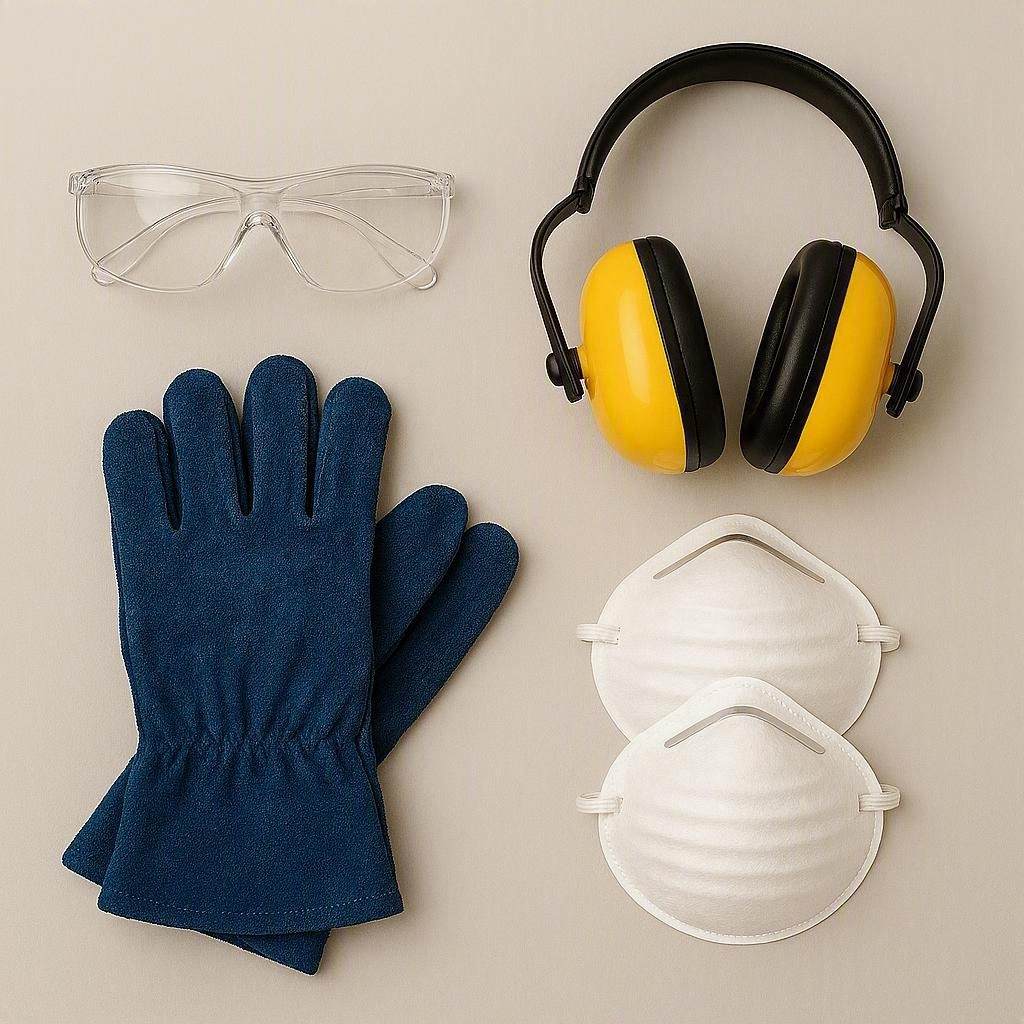
At a minimum, consider suitable:
- Eye protection
- Hearing protection
- Work gloves where appropriate
- Suitable footwear
Depending on the material you’re cutting, additional protection may be necessary. For example, cutting metal can produce sharp fragments and cutting some materials can create dust or other airborne particles.
Your protection should be appropriate to the specific job and the manufacturer’s instructions.
Step 8: Hold the Saw Correctly
Hold the reciprocating saw firmly with both hands where the tool’s design provides for a two-handed grip.
Keep a comfortable stance and maintain good balance. Don’t stretch excessively to reach the material.
If you can’t comfortably control the tool from your position, stop and reposition yourself.
The aim is to have:
You → stable stance → controlled saw → secure workpiece
rather than trying to wrestle with the tool while reaching awkwardly.
Step 9: Position the Shoe Against the Material
The shoe is the part of the saw that sits against the material during cutting. Where the saw’s design allows, position the shoe firmly against the workpiece. This gives you a more stable cutting position.
Don’t simply hold the blade against the material while allowing the whole saw to float around.
The shoe helps you control the tool.
Step 10: Start the Saw Before Cutting
Position yourself correctly and start the saw according to the manufacturer’s instructions.
If the saw has a variable-speed trigger, begin at a controlled speed rather than immediately squeezing it fully.
This gives you greater control as the blade enters the material.
Step 11: Let the Blade Do the Work
This is one of the biggest lessons for beginners.
Don’t force the saw.
It’s tempting to push hard because you want the cut to happen faster.
But excessive pressure can:
- Increase vibration
- Cause the blade to bend
- Reduce control
- Increase blade wear
- Cause the blade to bind
- Make the cut less effective
Instead, maintain firm control and let the blade do the cutting.
How Much Pressure Should You Use?
Use enough pressure to keep the shoe engaged with the workpiece and maintain a controlled cut.
You shouldn’t need to aggressively force the saw through the material. If the saw is struggling, stop and ask why.
The problem may be:
- Wrong blade
- Blunt blade
- Incorrect blade type
- Material too thick
- Insufficient battery
- Poor cutting position
More pressure isn’t necessarily the solution. You can find out much more in my reciprocating saw full guide.
Cutting Wood With a Reciprocating Saw
Wood is one of the most common materials you’ll cut. For ordinary timber, use a suitable wood-cutting blade.
For demolition, use a suitable demolition blade.
If the timber contains nails, choose a blade specifically designed for that application.
How to Cut Timber
- Start by marking where you want the cut.
- Position the material securely.
- Place the shoe against the timber.
- Start the saw at a controlled speed.
- Allow the blade to enter the material.
- Keep the shoe supported.
- Maintain a steady movement through the cut.
- Don’t force the saw.
- Once you’ve completed the cut, allow the blade to stop before moving the tool away.
Cutting Timber With Nails
This is one of the reciprocating saw’s biggest strengths. If you’re dismantling old timber, you may encounter nails or screws.
Instead of spending ages trying to remove every fixing, a suitable demolition blade can often cut through the timber and fixings.
This is particularly useful when dismantling:
- Sheds
- Fences
- Stud walls
- Decking
- Pallets
- Old flooring
However, you still need to know what you’re cutting.
Don’t assume every hidden object is simply a nail.
Cutting Metal With a Reciprocating Saw
You can use a reciprocating saw to cut metal when:
- The saw is suitable for the application.
- You use an appropriate metal-cutting blade.
- You follow the manufacturer’s instructions.
Metal-cutting blades generally have finer teeth than typical wood blades. The cutting technique is also different. Don’t expect the saw to behave exactly as it does when cutting timber.
How to Cut Metal
- Secure the material.
- Fit the correct metal-cutting blade.
- Position the shoe appropriately.
- Start the saw at a controlled speed.
- Allow the blade to establish the cut.
- Maintain steady pressure.
- Avoid forcing the blade.
- Watch for hot or sharp material and metal fragments.
- Allow the blade to stop before removing the saw.
Cutting Pipe
Reciprocating saws are particularly useful for pipework. They can cut various types of pipe with the appropriate blade. Before cutting any installed pipe, however, make absolutely sure you know what it is.
You need to consider whether it contains:
- Water
- Heating fluid
- Gas
- Pressurised material
And you need to identify nearby electrical services.
If you’re unsure, stop and get appropriate professional advice.
Cutting Plastic Pipe
Plastic pipe can be relatively easy to cut with a reciprocating saw. A suitable fine-tooth blade can produce a cleaner result than an aggressive demolition blade.
For small plumbing jobs, however, a dedicated pipe cutter may sometimes give you a cleaner and more controlled result.
The best tool depends on the job.
Cutting Branches With a Reciprocating Saw
Some reciprocating saws can be used with specialist pruning blades.
This can make them useful for:
- Small branches
- Garden maintenance
- Cutting fallen timber
However, don’t assume that any reciprocating saw is suitable for tree work. Check the manufacturer’s instructions and use a blade specifically designed for the application.
For larger branches or trees, a dedicated pruning saw or chainsaw may be more appropriate.
Making a Plunge Cut
One of the useful capabilities of some reciprocating saws is making a plunge cut. This involves starting a cut within the material rather than beginning at an exposed edge.
However, this technique requires additional care.
Before attempting one, make sure:
- The blade is suitable.
- You know what’s behind the material.
- The saw supports the technique.
- You can maintain control.
- The material is secure.
Plunge cutting can be particularly useful during renovation and demolition.
But it’s not a technique I’d recommend experimenting with on an unknown wall or surface.
How to Make a Straight Cut
A reciprocating saw isn’t a precision cutting tool. However, you can improve your results.
Mark the cut
Use a pencil, marker or suitable marking tool.
Support the material
Prevent movement.
Use the shoe
Keep it engaged with the workpiece.
Use the correct blade
A blade suited to the material will generally be easier to control.
Don’t rush
Let the saw cut steadily.
Even with good technique, a reciprocating saw isn’t the best choice when you need a perfectly straight, clean cut.
How to Make a Curved Cut
A reciprocating saw can be used for rough curved cuts, although a jigsaw is usually the better choice for accurate curved work.
If you need to make a curved cut:
- Mark the curve.
- Use a suitable blade.
- Make sure the material is secure.
- Don’t force the blade sideways.
- Allow the blade to follow the curve naturally.
Trying to force a straight blade around a tight curve can cause it to bind or bend.
What Happens If the Blade Bends?
Blade bending is usually a sign that something needs attention.
Possible causes include:
- Too much pressure
- Wrong blade
- Blade too long for the application
- Blade catching
- Poor cutting position
- Insufficient support
- Trying to turn too sharply
Stop and reassess rather than simply pushing harder.
What If the Saw Vibrates a Lot?
Some vibration is normal. A reciprocating saw is an inherently aggressive tool.
However, excessive or unusual vibration shouldn’t be ignored.
Check:
- Blade condition
- Blade installation
- Workpiece stability
- Cutting technique
- Whether the blade is appropriate
- Whether the tool has developed a fault
If something feels or sounds abnormal, stop using the tool and consult the manufacturer’s instructions.
What If the Saw Won’t Cut?
Don’t immediately assume the saw isn’t powerful enough. Check the basics first.
- Is the blade sharp? – A worn blade can dramatically reduce cutting performance.
- Is it the correct blade? – A wood blade won’t necessarily work well on metal.
- Is the material too thick? – Check the manufacturer’s cutting specifications.
- Are you forcing the tool? – Excessive pressure can make cutting less effective.
- Is the battery charged? – Cordless tools obviously depend on adequate battery power.
- Is the blade installed correctly? – Check the blade clamp.
Choosing the Right Blade
Here’s a simple starting point.
| Material | Typical Blade Type |
|---|---|
| Softwood | Wood blade |
| Hardwood | Suitable wood blade |
| Timber with nails | Demolition blade |
| Metal | Metal-cutting blade |
| Plastic | Suitable fine-tooth blade |
| Pipe | Material-specific blade |
| Branches | Pruning blade |
| Mixed demolition | Demolition blade |
Always check the blade manufacturer’s recommendations.
Does Blade Length Matter?
Yes.
You’ll find reciprocating saw blades in different lengths. A longer blade can provide greater cutting depth, but longer isn’t automatically better.
A blade that’s excessively long can:
- Flex more
- Vibrate more
- Be harder to control
- Be less efficient for certain jobs
Choose a blade appropriate to the material and depth of cut.
What Is TPI?
TPI stands for teeth per inch.
It’s one of the specifications you’ll see when shopping for reciprocating saw blades.
Generally:
Lower TPI = larger teeth and more aggressive cutting
Higher TPI = smaller teeth and finer cutting
But remember that blade design involves more than TPI.
Always use a blade intended for the material you’re cutting.
How to Change a Reciprocating Saw Blade
The exact procedure depends on your model.
For many modern cordless saws:
- Remove the battery.
- Allow the tool and blade to cool if necessary.
- Operate the blade-release mechanism.
- Remove the old blade.
- Insert the new blade correctly.
- Secure the blade.
- Check that it is properly locked.
- Refit the battery.
- Test the tool safely.
Always follow your particular manufacturer’s instructions.
Should You Use Gloves?
This depends on the job and the manufacturer’s guidance. Gloves can protect your hands from sharp material, but you shouldn’t use them as a substitute for safe tool handling.
Make sure gloves don’t interfere with your grip or controls.
The most important protections are appropriate:
- Eye protection
- Hearing protection where necessary
- Footwear
- Clothing appropriate to the work
And always keep your hands away from the moving blade.
Eye Protection Is Important
A reciprocating saw can produce:
- Wood chips
- Metal fragments
- Dust
- Debris
Suitable eye protection helps protect against these hazards.
This is particularly important during demolition.
You may not know what will break away when you start cutting old materials.
Hearing Protection
Reciprocating saws can be noisy. If you’re using the tool for an extended period or in a noisy environment, appropriate hearing protection is sensible.
Don’t underestimate the amount of noise generated when cutting metal or during demolition.
Dust and Respiratory Protection
Some cutting operations can create airborne dust. The appropriate controls depend on the material. For example, cutting certain building materials can create hazardous dust.
Don’t assume that because you’re using a saw rather than sanding, dust isn’t a concern.
Use appropriate dust control and respiratory protection where required, and follow the manufacturer’s and material-specific safety guidance.
Common Reciprocating Saw Mistakes
1. Using the wrong blade
Probably the most common mistake.
2. Pushing too hard
Let the blade do the work.
3. Using a damaged blade
Replace damaged or excessively worn blades.
4. Cutting without securing the material
Movement makes cutting harder and less safe.
5. Ignoring hidden services
Always check what’s behind the material.
6. Trying to make precision cuts
Use a circular saw or jigsaw when accuracy matters.
7. Using the wrong tool for the material
Check the manufacturer’s recommendations.
8. Holding the workpiece by hand
Secure it properly instead.
9. Ignoring excessive vibration
Stop and investigate.
10. Forgetting the battery
Remove the battery before changing blades or carrying out maintenance as required by the manufacturer.
How to Get Cleaner Cuts
If you want a cleaner result from a reciprocating saw:
- Use a suitable blade.
- Choose the appropriate tooth pattern.
- Use a shorter blade where practical.
- Secure the workpiece.
- Keep the shoe supported.
- Don’t force the saw.
- Maintain a steady speed.
- Let the blade do the work.
But remember:
A reciprocating saw is primarily a rough-cutting and demolition tool.
If you need a furniture-quality edge, choose a more appropriate saw.
How to Get Faster Cuts
Speed isn’t simply about pushing harder. For faster cutting:
Use the correct blade
This is often the biggest improvement.
Use an appropriate tooth pattern
Match the blade to the material.
Keep the blade sharp
A worn blade slows everything down.
Support the workpiece
Movement wastes energy.
Maintain the correct shoe position
Good contact improves control.
Use the appropriate saw setting
If your saw has variable speed or orbital action, use it appropriately for the material.
Cordless vs Corded Reciprocating Saws
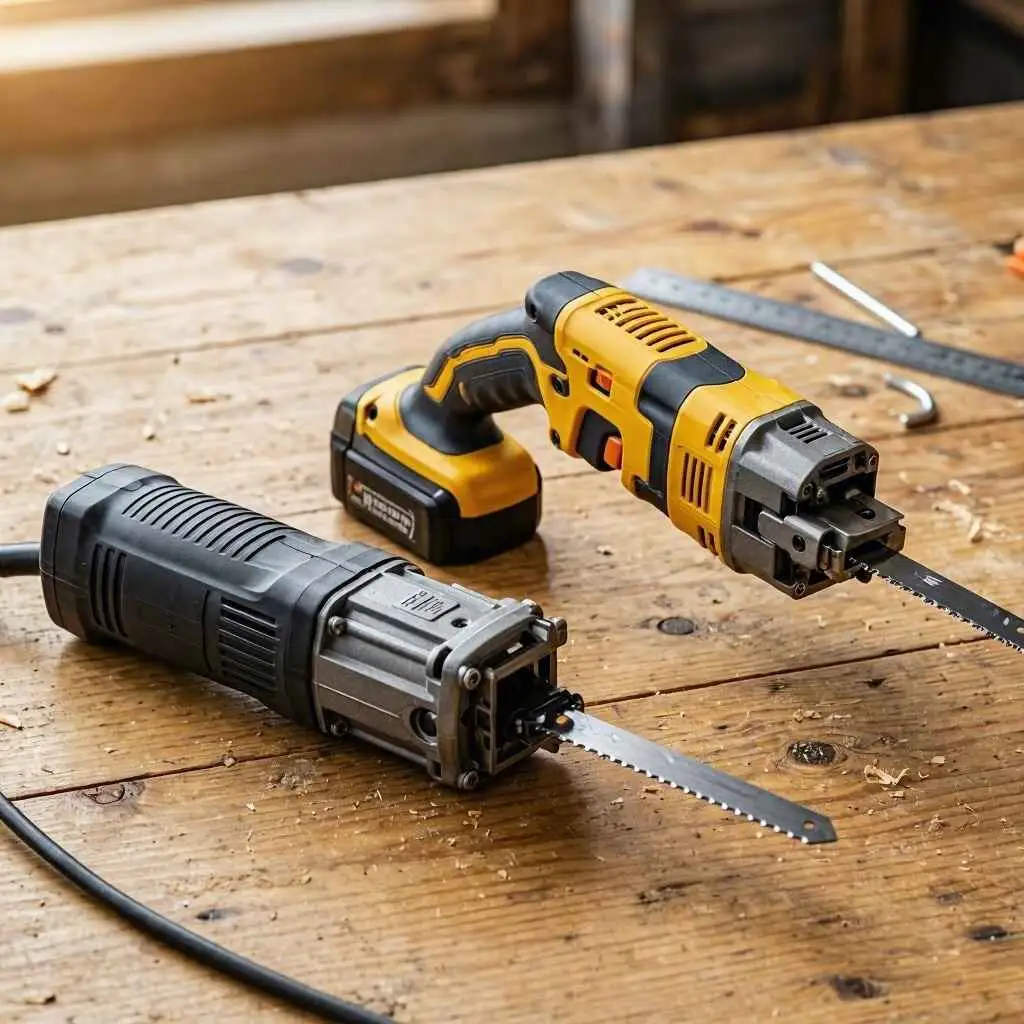
You can buy both.
Cordless
Advantages include:
- Portability
- No cable
- Easy access
- Excellent for demolition
- Convenient outdoors
Corded
Advantages include:
- Continuous power
- No battery charging
- Useful for long cutting sessions
For most modern DIY users, cordless is particularly convenient.
If you already own a compatible battery platform, it can be even more attractive.
What Voltage Should a Beginner Choose?
For most general DIY work, an 18V reciprocating saw is a sensible choice. 12V models can be excellent for lighter work and confined spaces.
Higher-voltage systems are available for more demanding applications.
But don’t choose a saw based solely on voltage.
Consider:
- Your projects
- Battery platform
- Weight
- Cutting performance
- Blade availability
- Price
- Ergonomics
For more information, see our guide on 12V vs 18V Reciprocating Saw
Should You Buy Brushless?
If you’re buying a new cordless reciprocating saw, brushless is worth considering.
Benefits can include:
- Improved efficiency
- Better battery utilisation
- Reduced brush wear
- Good performance under load
- Potentially longer motor life
However, a good brushed saw can still be an excellent DIY tool.
For more information, see:
Brushless vs Brushed Reciprocating Saw
How to Maintain a Reciprocating Saw
Basic maintenance is straightforward.
After use:
Clean the tool
Remove dust and debris.
Inspect the blade
Replace damaged or excessively worn blades.
Check the blade clamp
Make sure it operates correctly.
Inspect the housing
Look for damage.
Check the battery
Store and charge it according to the manufacturer’s instructions.
Keep the tool dry
Don’t leave it exposed to rain or damp conditions unless specifically designed for it.
When Should You Replace the Blade?
Replace the blade when it becomes:
- Blunt
- Damaged
- Bent
- Missing teeth
- Ineffective
A blunt blade can make you push harder, which is exactly what you don’t want.
A fresh, appropriate blade can make an old saw feel like a completely different tool.
How Long Should a Reciprocating Saw Blade Last?
There isn’t a simple number.
Blade life depends on:
- Material
- Thickness
- Blade quality
- Cutting technique
- Amount of use
- Presence of nails
- Heat
- Pressure
A demolition blade cutting old timber containing nails may wear much faster than a blade cutting clean softwood.
Think of blades as consumables.
Can a Reciprocating Saw Cut Through Nails?
Yes. That’s one of its most useful applications. But use a blade specifically designed for cutting wood containing nails or demolition work.
Don’t deliberately attack nails with an ordinary wood blade unless the blade manufacturer specifically says it is suitable.
Can a Reciprocating Saw Cut Through Screws?
Some demolition blades are designed to handle wood containing nails and other fixings. However, don’t assume every blade can safely cut every type of screw or fixing.
Check the blade specification.
Can a Reciprocating Saw Cut Through a Wall?
Potentially, but this requires extreme caution. The problem isn’t whether the saw can cut the material.
The problem is what is behind it.
Walls can contain:
- Electrical cables
- Water pipes
- Heating pipes
- Gas pipes
- Structural components
Never cut into a wall simply because the material appears to be plasterboard.
Know what’s behind the surface before you start.
Is a Reciprocating Saw Safe for Beginners?
A beginner can learn to use one safely, but it shouldn’t be treated as a harmless tool. The blade moves rapidly and the saw can react suddenly if it binds.
Start with simple, visible materials.
For example:
A secured piece of scrap timber
is a much better place to learn than:
A wall containing unknown services.
Get used to:
- Starting and stopping the saw
- Controlling the trigger
- Maintaining your grip
- Using the shoe
- Understanding blade behaviour
before attempting complicated work.
Beginner Practice Exercise
If you’ve just bought your first reciprocating saw, try this.
Step 1
Take a suitable piece of scrap timber.
Step 2
Secure it firmly.
Step 3
Fit an appropriate wood blade.
Step 4
Put on your safety equipment.
Step 5
Practise starting and stopping the saw.
Step 6
Make several straight cuts.
Step 7
Try different amounts of pressure.
Step 8
Pay attention to how the blade behaves.
This simple practice will teach you much more than immediately starting a major demolition project.
Reciprocating Saw Safety Checklist
Before every job, ask:
✔ Is the blade suitable?
✔ Is the blade in good condition?
✔ Is the blade properly secured?
✔ Is the material securely supported?
✔ Do I know what’s behind the material?
✔ Are there cables or pipes nearby?
✔ Am I wearing appropriate eye protection?
✔ Do I need hearing protection?
✔ Can I comfortably control the saw?
✔ Is there enough room for the saw and blade?
✔ Is the battery charged?
✔ Am I using the correct cutting technique?
If the answer to any important safety question is no, stop before you start cutting.
Frequently Asked Questions
What is the best way to use a reciprocating saw?
Use the correct blade, secure the workpiece, keep the shoe against the material, maintain a firm grip and let the blade do the work rather than forcing it.
Can a beginner use a reciprocating saw?
Yes, provided they understand the tool, follow the manufacturer’s instructions and start with simple, controlled jobs.
Should you push a reciprocating saw hard?
No. Excessive pressure can reduce control, increase vibration and cause the blade to bind or wear more quickly.
Which blade should I use for wood?
Use a blade specifically designed for wood. For demolition or timber containing nails, use a suitable demolition blade.
Which blade should I use for metal?
Use a reciprocating saw blade specifically designed for the type and thickness of metal you’re cutting.
Can a reciprocating saw cut through nails?
Yes, with a suitable demolition or nail-embedded-wood blade.
Can I use a reciprocating saw to cut branches?
Some models can be used with suitable pruning blades. Check the manufacturer’s recommendations and use an appropriate tool for the size of branch.
Why does my reciprocating saw keep stopping?
Possible causes include a blunt or incorrect blade, excessive pressure, insufficient battery power, material that is too demanding, or a tool fault.
Why is my reciprocating saw vibrating so much?
Some vibration is normal, but excessive vibration can indicate an unsuitable or damaged blade, poor technique, inadequate support or a tool problem.
How do I make a straight cut with a reciprocating saw?
Mark the cut, secure the material, keep the shoe supported and use a controlled cutting motion. For highly accurate straight cuts, a circular saw is usually a better choice.
Is a reciprocating saw good for demolition?
Yes. Demolition is one of its strongest applications, particularly when using suitable demolition blades.
Final Thoughts
A reciprocating saw is one of those tools that becomes much more useful once you understand what it is designed to do. Don’t expect it to replace every other saw in your toolbox.
Instead, think of it as your rough-cutting, demolition and awkward-access specialist.
- Use a circular saw when you need long, straight cuts.
- Use a jigsaw when you need controlled curves.
- Use a reciprocating saw when you need to cut, dismantle or get into awkward places quickly.
For beginners, the biggest improvements usually come from three things:
Choose the right blade.
Secure the material.
Let the saw do the work.
Get those three things right and you’ll find a reciprocating saw much easier to control.