An impact driver is supposed to make driving screws effortless. But if you keep chewing up screw heads, snapping bit tips, or leaving mangled, half-driven fixings stuck in your timber, it can feel like your new power tool is doing more damage than good.
When a bit slips out of a screw head under rotational force, it’s known as cam-out. Because an impact driver delivers thousands of high-torque radial blows per minute, even a tiny amount of bit slippage will instantly round off the recess of a soft steel screw, turning it into a smooth, useless cone.
If your impact driver keeps stripping screws, you don’t need a new tool. More often than not, it comes down to correcting a few simple setup and technique errors.
As someone who uses a DeWalt 18V XR impact driver daily on my workbench, I have made every single one of these mistakes starting out. Here is exactly why your driver is chewing through fasteners and how to stop it today.
Looking for a tool with better power control? Read my hands-on guide to the 5 Best Impact Drivers for DIY UK to see models featuring dedicated precision modes that prevent over-torque.
1. Using a Phillips (PH) Bit in a Pozi (PZ) Screw
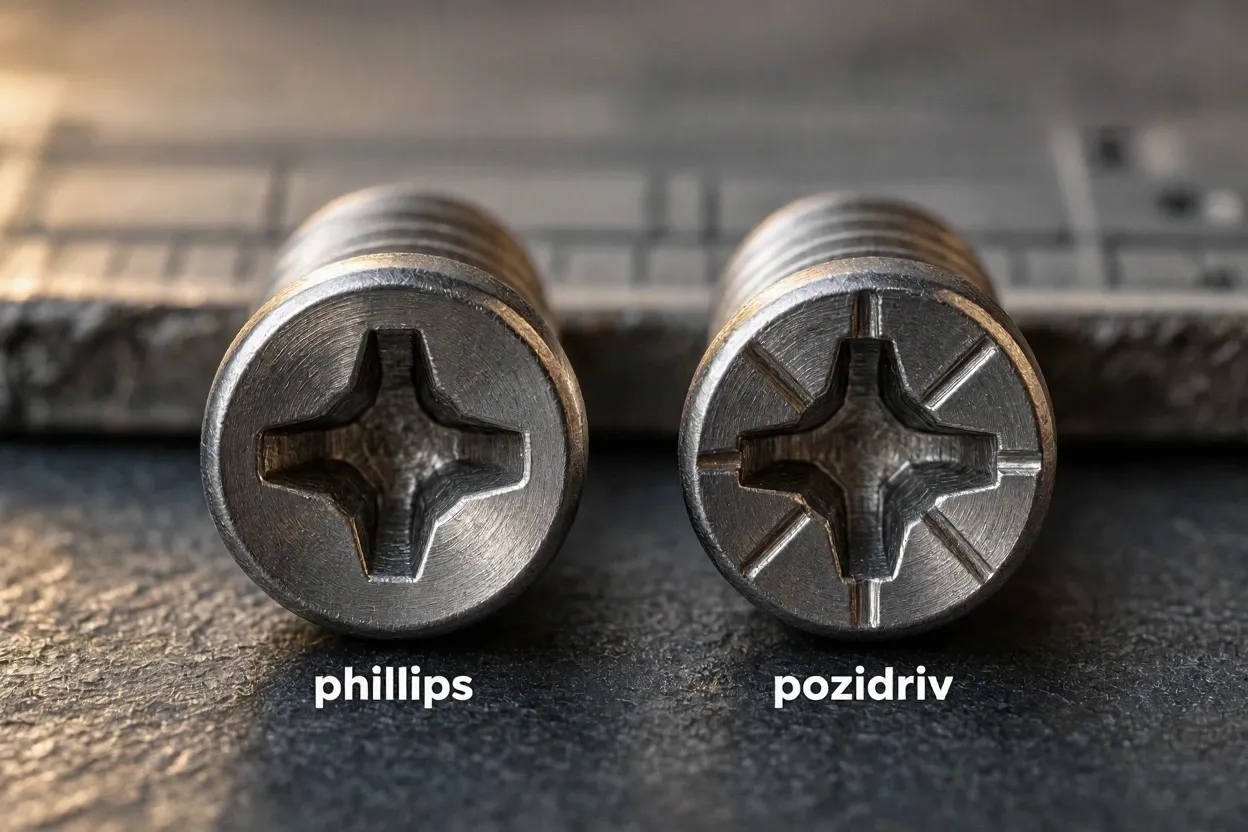
This is the single most common reason UK DIYers strip screws. While Phillips (PH) and Pozidriv (PZ) screw heads look almost identical at a glance, they use completely different geometries.
PHILLIPS (PH) vs POZIDRIV (PZ)
| Phillips (PH) | 4 simple cross slots. Designed to cam-out under high torque to prevent over-tightening. |
| Pozidriv (PZ) | 4 main slots PLUS 4 tiny tick marks between them. Parallel flanks designed NOT to slip. |
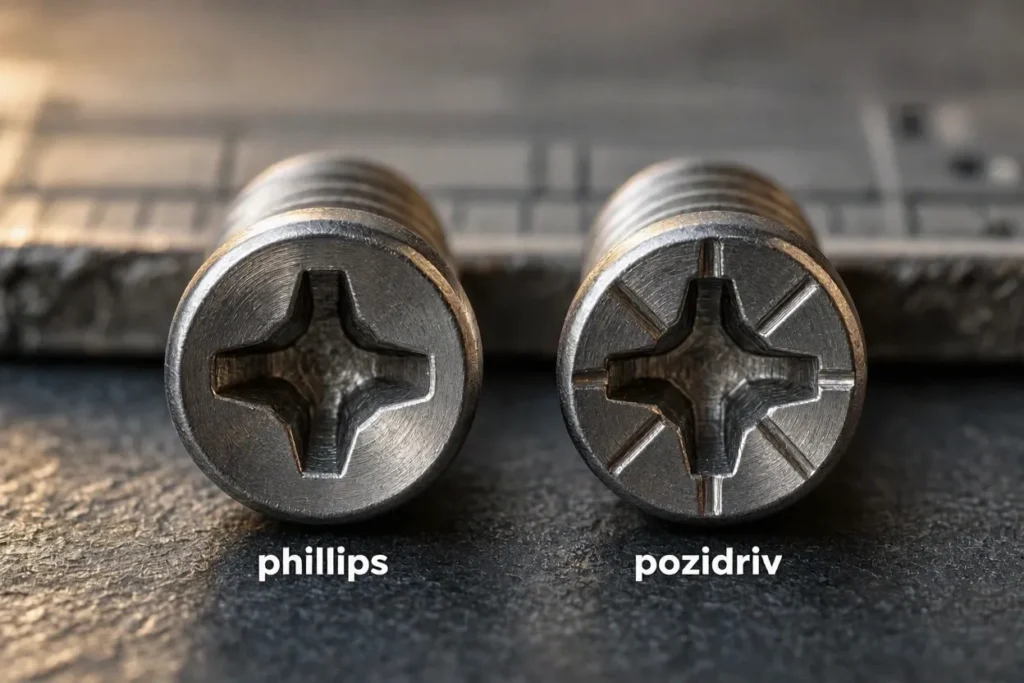
- Why it strips: In the UK, almost all standard trade screws (like GoldScrew, ForgeFast, or Spax) use PZ2 heads. If you insert a PH2 bit into a PZ2 screw, the bit seats loosely on the upper edges rather than gripping the full recess depth. When the impact mechanism kicks in, the bit slips and spins freely, instantly stripping the metal cross.
- My Rule of Thumb: Always match the bit profile exactly to the screw head. Look closely at the screw head recess: if you see four small diagonal tick marks forming an ‘X’ between the main cross arms, it is a PZ screw and requires a PZ bit. I keep a close-up photo of the two side-by-side pinned above my workbench just to remind myself when I’m grabbing bits in a hurry.
2. Using Cheap “Standard” Screwdriver Bits Instead of Impact-Rated Bits

If you are using cheap carbon steel bits from a £5 mixed drill set, the rotational impact mechanism will quickly flex, deform, or snap the bit tips.
- Why it strips: Standard screwdriver bits are rigid and brittle. Under high rotational shock, the soft bit tip deforms inside the screw recess. Once the bit loses its sharp square edges, it stops gripping and begins grinding the screw head into a smooth cone.
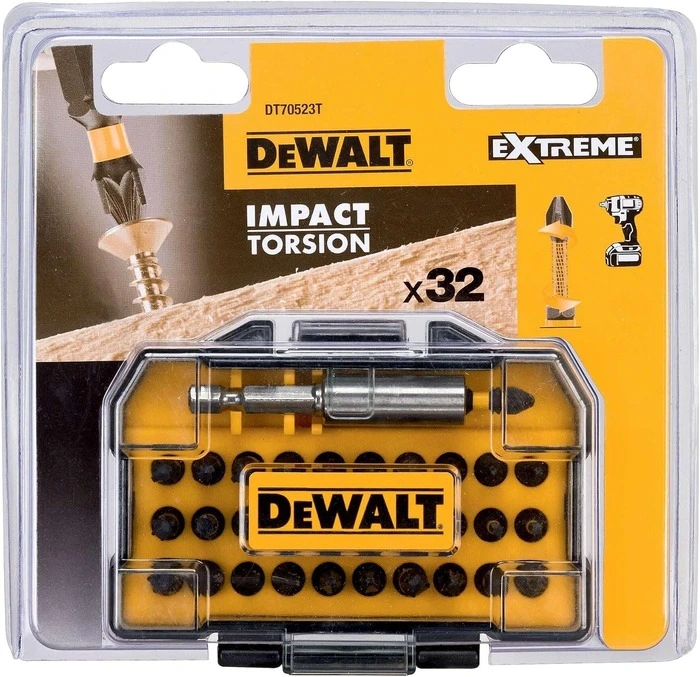
- The Fix: Invest in Impact-Rated Torsion Bits (such as DeWalt FlexTorq, Makita Impact XPS, or Milwaukee Shockwave). Impact bits feature a narrowed “torsion zone” waist that flexes slightly under peak torque spikes, preserving the sharp geometry of the bit tip so it stays locked inside the screw.
- What I Use: I exclusively run DeWalt Extreme Impact Bits or Makita Impact XPS Bits. They cost a little more than standard bits, but they easily last ten times longer on the job site without rounding out.
3. Not Applying Enough Downward Body Thrust
Many users assume that because an impact driver hammers sideways (rotationally), they don’t need to push forward into the screw.
- Why it strips: Radial hammer impacts generate violent high-frequency vibration. If you do not apply firm, steady downward pressure along the exact centre line of the fastener, the vibration causes the bit tip to bounce out of the screw recess mid-impact.
- The Fix: Align your body weight directly behind the back of the tool housing. Use a firm, two-handed posture: push forward with your shoulder weight while squeezing the trigger. Let the tool do the rotating, but let your arm provide the downward clamping force.
4. Driving at Full Throttle on High Speed Settings
Most modern cordless impact drivers generate over 180 Nm to 200 Nm of torque. Pulling the trigger at full speed on delicate softwood or drywall fixings creates a violent startup spike that instantly strips soft fasteners before the bit can seat properly.
- Why it strips: High rotational speed combined with instant impact force doesn’t give the screw threads time to cut into the timber fiber cleanly.
- The Fix:
- Feather the Variable Trigger: Start every screw slowly at low OPM until the first 10mm of thread bites into the wood, then gradually increase trigger pressure.
- Use Speed Mode 1: If your tool has a digital speed mode selector (like the DeWalt DCF850N or Milwaukee M12 FID2), switch it down to Mode 1 or “Precision Mode” when working with delicate screws or soft timber.
5. Driving Screws Out of Alignment (Off-Angle)
Holding the impact driver at an angle relative to the screw axis reduces the contact surface between the bit teeth and the screw recess.
- Why it strips: When driven at an angle, only one or two teeth of the bit make contact with the screw head instead of all four points. The full impact force is concentrated on a fraction of the metal surface, shearing off the screw recess walls immediately.
- The Fix: Always hold the tool body perfectly perpendicular (90 degrees) to the timber face and inline with the screw shaft. If you are working in a cramped corner where you cannot get a straight angle. Instead, grab an Impact-Rated Right-Angle Attachment. It lets you get clean, 90-degree pressure even between tight joists or inside kitchen cabinets.
Quick Reference Fix Checklist
Before driving your next batch of screws:
- Check the Screw Head: Verify if it requires a PZ, PH, Torx (TX), or Square bit.
- Use Impact Torsion Bits: Throw away worn or rounded standard bits.
- Lean Into the Tool: Put firm downward shoulder pressure behind the back of the driver.
- Feather the Trigger: Start slowly until the screw threads take hold.
- Keep It Straight: Maintain a 90-degree alignment with the wood surface.
Related Articles:
- Compare top models for your kit: 5 Best Impact Drivers for DIY UK
- Having mechanical issues? Read our guide on Why Is My Impact Driver Bit Stuck & How to Release It