By Enda McLarnon — Experienced UK DIYer sharing practical fixes from my 1958 red brick home.
Disclosure: As an Amazon Associate, I earn from qualifying purchases made through links on this page. If you buy a tool through my links, it costs you nothing extra, but the small commission helps me keep this site running.
Assembling flat-pack furniture (from IKEA, Argos, Wayfair, or Next) is a British DIY rite of passage.
Boxes of flat-pack furniture almost always come with an Allen key and a tiny instruction booklet telling you to use hand tools. Typically all you need is the supplied Allen key, a screwdriver and a small hammer. (And a boat load of patience – not provided.)
If you are only doing one of these, then stick to the basic tools is my advice. However, if you have to build a few of these, then read on.
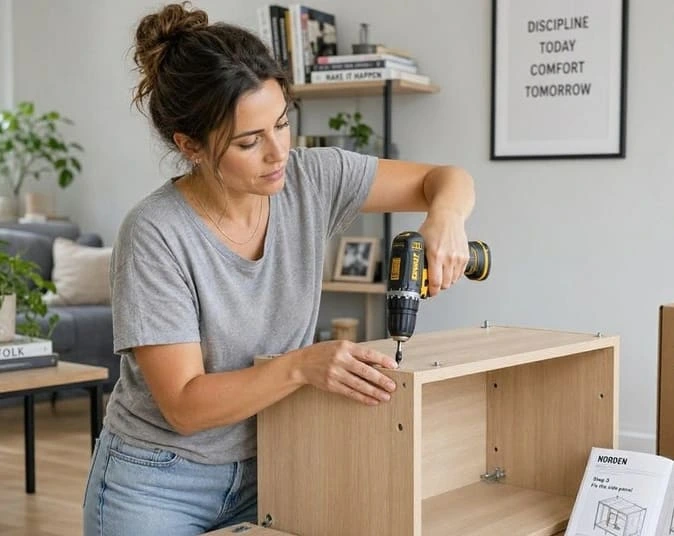
Some beginners may consider using their more powerful 18V combi drill and think: “I can build this wardrobe in 10 minutes if I use my drill as a driver.” Ten minutes later, they’ve spun a screw straight through the soft particleboard, stripped a cam-lock, or cracked a side panel in half.
You can use a combi drill for flat-pack furniture, in fact, it saves your wrists from agonising strain. However you can only do that if you set it up correctly. This guide explains how to use your combi drill on flat-pack furniture without destroying it.
The 3 Golden Rules of Flat-Pack Power Tools
Before you pull the trigger on any flat-pack build, memorise these three golden rules:
- Rule 1: Low Torque (1-3) – this stops blowing out the chipboard
- Rule 2: Gear 1 – Slow Speed – Gives you much better trigger control
- Rule 3: Stop by Hand – Tighten the final turns by hand
- Never use high torque: Flat-pack furniture is made of MDF, particleboard, or chipboard and not solid oak. It offers no forgiveness if over tightened.
- Never use hammer mode: This should go without saying, but hammer action on flat-pack will shatter particleboard instantly.
- Finish by hand: Use your drill to run the screw 95% of the way home, then finish the final quarter-turn manually with a hand screwdriver to avoid stripping the threads.
“Very gently on the trigger is the important thing to remember.“
How to Dial in Your Combi Drill for Flat-Pack
If you are using an 18V combi drill (like a DeWalt, Makita, or Ryobi), you must de-tune it so it acts like a gentle electric screwdriver rather than a construction tool.
Step-by-Step Setup:
- Mode: Set your collar to Screwdriver Mode (or select a low number on your torque ring like 1 to 3).
- Gears: Slide your top gear switch to Gear 1 (Low speed, high control). Never build flat-pack in Gear 2!
- Bits: Match your bits perfectly. Most flat-pack hardware uses PZ2 wood screws or 4mm / 5mm Hex (Allen) bits.
Deep Dive Guide: Unsure about torque numbers or clutch settings? Read my master breakdown: [Combi Drill Settings Demystified: Torque, Gears, and Modes].
Top Tools to Speed Up Flat-Pack Assembly
If you want to make flat-pack assembly lightning fast without risking damage to the furniture, invest in a couple of inexpensive accessories for your combi drill:
- Hex (Allen) Driver Bits: Ditch the painful L-shaped hand key supplied in the box. Buy a metric hex bit set for your drill. Inserting furniture bolts with a low-torque drill saves your fingers from blisters.
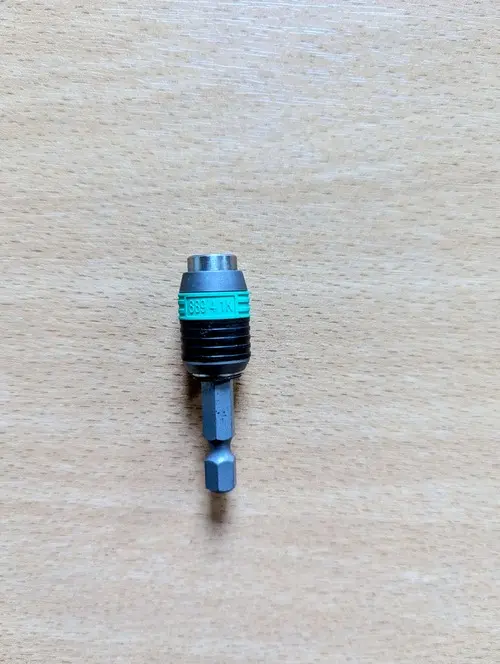
- Magnetic Bit Holder: Flat-pack kits include dozens of tiny screws and cam-bolts. A magnetic bit holder keeps your bits locked securely in place.
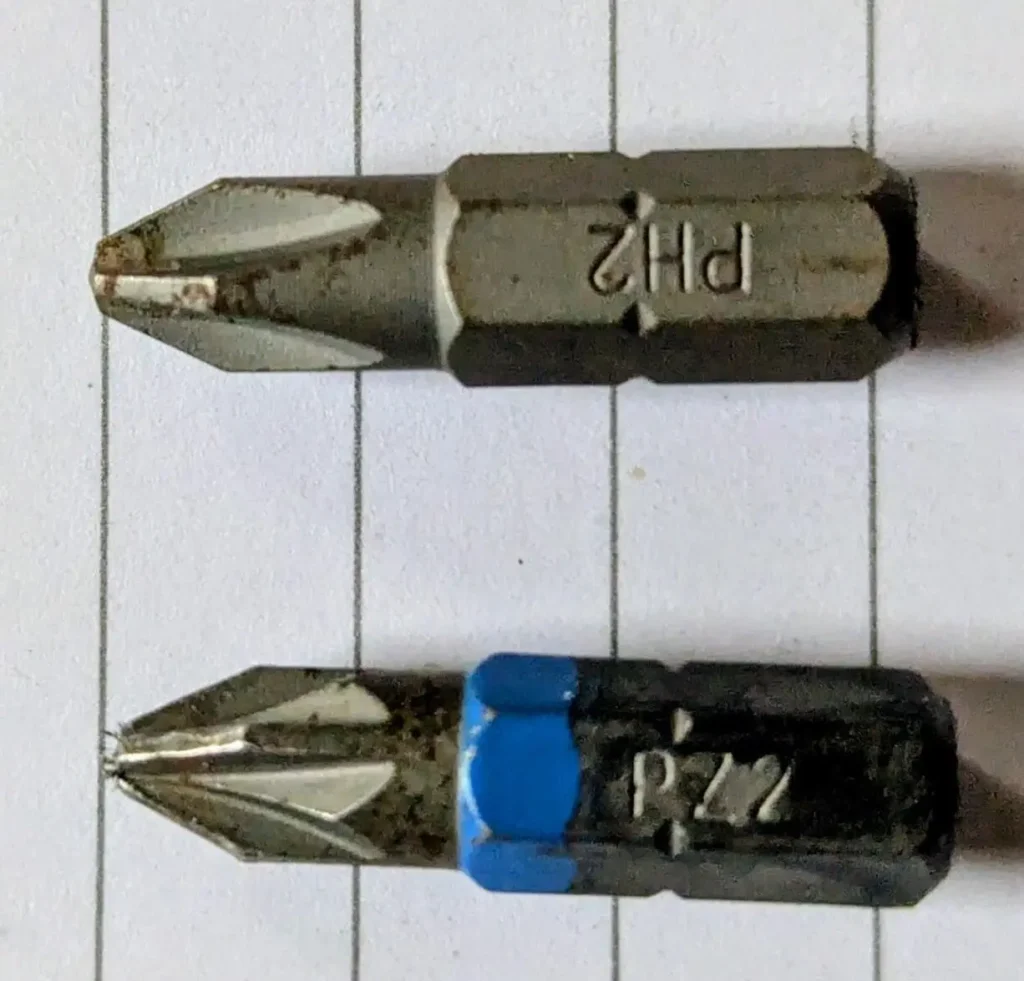
- PZ2 Driver Bit: Flat pack furniture uses PZ2 screws. To drive these in you will need a PZ2 driver bit. (it’s important not to mix that up with a PH2 bit, as they look very similar. (See the image below and always check that PZ2 is written on the bit)
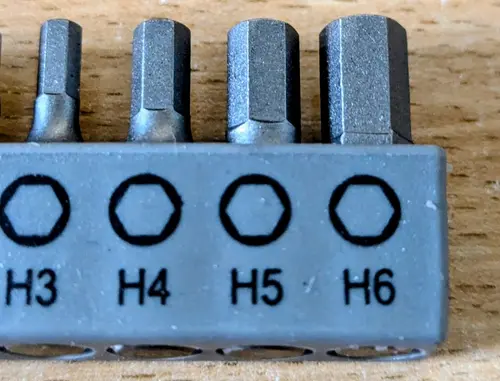
For IKEA furniture in the UK, the common hex bit sizes required are:
- 4mm: The most common size used for most IKEA products, including shelving units, desks, and TV units.
- 3mm: Frequently used for smaller screws in various IKEA products.
- 5mm: Used for heavier-duty screws or bolts.
- 6mm: Less common but may be found in certain furniture pieces.
It’s important to check the assembly instructions for your specific IKEA product, as they may require different sizes.
Personally I own the Bosch X70 Ti which includes the most popular sizes of all types of screwdriver bits including Hex suitable for flat packs.
Bosch also have a cheaper set called the Bosch 32x Extra Hard Mixed Screwdriver Bit Set which includes Hex H 3/4/5/6 sizes, along with other driver bits and a magnetic bit holder. Check Price on Amazon UK
Real-World Lesson: The Oversized Wardrobe Disaster
When I first bought a large multi-drawer chest of drawers from IKEA, I decided to speed things up by using my 18V combi drill straight out of the box without adjusting the settings. It was set on a high torque number from a previous job.
On the very first screw driving into the side panel chipboard, the drill didn’t stop. With a sharp crunch, the screw head punched straight through the laminated outer veneer, bulging the side panel outward and completely ruining the finish. I had to face the embarrassment of turning the unit around so the ugly damaged side faced the bedroom wall.
That was an expensive lesson: Chipboard has zero structural resilience once the outer laminate is breached. Now, I always drop my combi drill down to Torque Setting 1 and let the clutch do the thinking for me.
Frequently Asked Questions
Can I use an impact driver on flat-pack furniture?
No, absolutely not. Impact drivers have no adjustable clutch and deliver violent rotational shocks. Using an impact driver on IKEA furniture will strip cam-locks, crack melamine veneers, and destroy particleboard within seconds. Stick strictly to a combi drill on low torque.
Why do cam-locks keep snapping or spinning loose?
Cam-locks (those circular metal cams used to lock flat-pack panels together) are notoriously fragile. If they feel loose, do not force them with a power tool. Tighten them gently by hand using a standard screwdriver until you feel firm resistance.
Is a 12V drill better for flat-pack than an 18V drill?
Both work brilliantly, but a compact 12V combi drill is exceptionally comfortable for flat-pack assembly because it is lighter and easier to manoeuvre inside cramped wardrobe interiors or confined spaces on the floor. However, an 18V drill set to low torque works just as well.
Next Steps & Related Guides
This article is part of our [Ultimate Beginner’s Guide to Combi Drills]. Explore more of our hands-on guides below:
- [Combi Drill Settings Demystified: Torque, Gears, and Modes]
- [Screwdriver Bits Explained: PZ vs PH vs Torx]
- [12V vs 18V Combi Drills: Which One Do DIY Beginners Need?]
About the Author: Enda McLarnon
I’m an experienced UK DIYer tackling renovation life inside a 1958 red brick home.
I built this blog to help beginners conquer home maintenance anxiety and save a fortune on expensive trade calls.