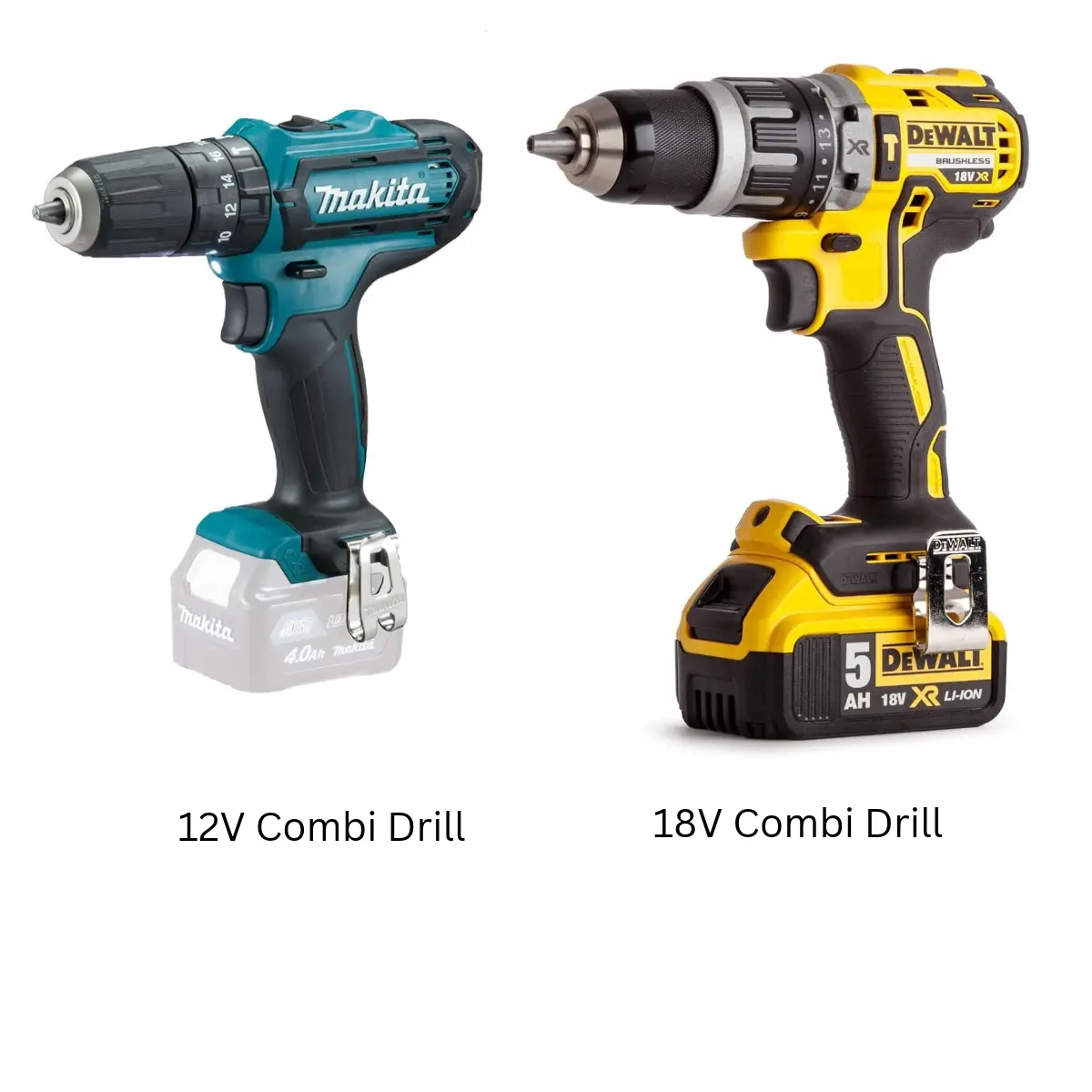
When you start browsing online or walk into a tool shop like Screwfix or B&Q, you will notice that almost every cordless combi drill falls into one of two voltage categories: 12V or 18V.
For a UK DIY beginner, choosing between them can feel confusing. Do you need the heavy-duty power of an 18V tool, or is a lighter 12V drill more than enough for around the house?
This guide breaks down the real-world differences in power, weight, and battery life so you can choose the right tool for your home.
The Short Answer for UK Homes
- Choose an 18V Combi Drill (Like the DeWalt DCD776) if: You own or rent a typical UK home with solid brick, stone, or blockwork walls. It is the ultimate all-rounder that ensures you can drill into masonry anywhere.
- Choose a 12V Combi Drill if: You live in a modern timber-frame flat, only plan to assemble flat-pack furniture, or suffer from wrist fatigue and need something ultra-lightweight.
1. 12V Combi Drills: The Lightweight Specialists
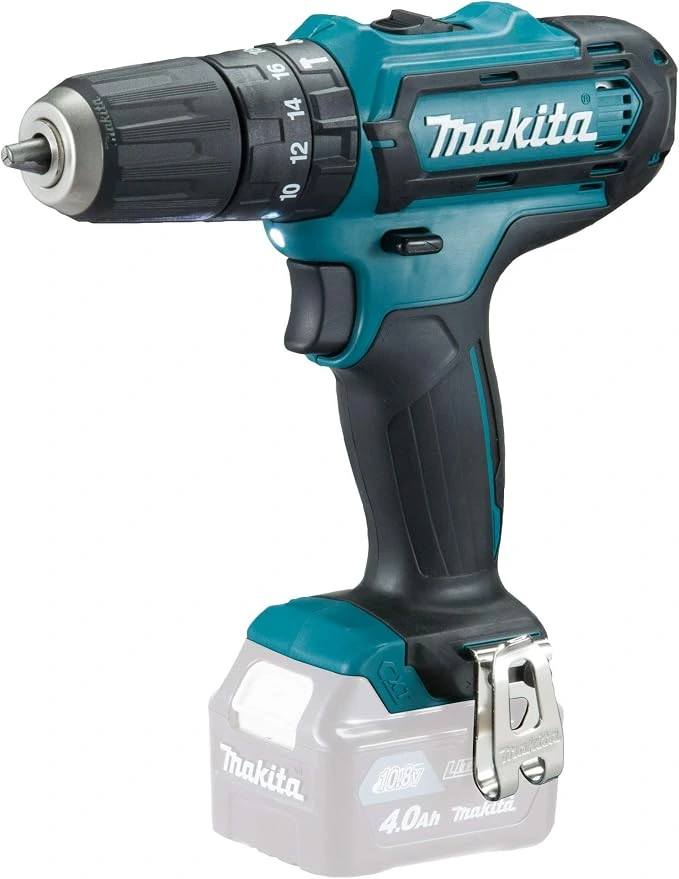
Don’t let the smaller voltage fool you. Modern 12V lithium-ion drills (often branded as 12V Max or CXT) are remarkably capable power tools. All the leading tool brand make 12V combi drills.
Because the battery slides inside the handle rather than clipping onto the bottom, the overall tool is shorter, lighter, and more balanced.
- Average Weight: Around 1.0kg to 1.2kg (with battery).
- The Pros:
- Exceptionally light and comfortable to use overhead or in tight spaces (like inside kitchen cabinets or narrow stairwells).
- Less likely to over-tighten and snap small screws into soft woods.
- The Cons:
- Has a lower maximum torque output (usually around 30Nm to 40Nm).
- While 12V can handle light masonry work, drilling multiple 6mm or 8mm holes into tough UK engineering bricks will push the motor to its absolute limit.
Best For: Flat-pack furniture assembly, kitchen fitting, hanging lightweight pictures, curtain poles on stud walls, and DIYers with smaller hands or wrist strain.
2. 18V Combi Drills: The UK Home Workhorses
An 18V combi drill (such as the DeWalt DCD776) is the undisputed king of UK residential DIY. It is the platform that most tradespeople and homeowners rely on for everyday property maintenance.
- Average Weight: Around 1.5kg to 1.8kg (with a 2.0Ah battery).
- The Pros:
- High torque output (often 40Nm to 70Nm+) to drive long screws and bore wide holes effortlessly.
- Robust internal hammer mechanisms designed to smash through external brickwork and concrete lintels without breaking a sweat.
- Uses larger battery platforms (like DeWalt XR, Makita LXT, or Ryobi ONE+) that can be shared across hundreds of other garden and power tools.
- The Cons:
- Noticeably heavier and bulkier, which can lead to arm fatigue if you are holding it above your head for extended periods.
Best For: General home improvement, hanging heavy mirrors and TV brackets on solid brick walls, garden decking, and fencing.
Side-by-Side Comparison
| Feature | 12V Combi Drill | 18V Combi Drill |
| Typical Weight | Ultra-light (1.0 – 1.2kg) | Heavier duty (1.5 – 1.8kg) |
| Battery Design | Slides inside the handle | Clips onto the base |
| Drilling Wood & Metal | ✅ Excellent | ✅ Excellent |
| Assembling Flat-Pack | ✅ Outstanding (Great control) | ✅ Great (Use low torque) |
| Drilling into UK Brick | ⚠️ Possible in soft brick, struggles in hard masonry | ✅ Effortless masonry performance |
| Tool Ecosystem | Growing, but smaller | Massive range of shared skin tools |
The Hidden Cost: Battery Prices and Ecosystem Availability
When comparing 12V and 18V tools, looking at the price tag of the drill kit is only half the battle. You also need to look at the long-term cost of the batteries.
1. 12V vs 18V Battery Pricing in the UK
- 12V Batteries: Because they are physically smaller and use fewer lithium-ion cells, replacement 12V batteries (like DeWalt 12V or Makita CXT) are generally cheaper—often ranging from £30 to £50 each. However, some 12V platforms (such as Bosch Professional 12V) can still command premium trade prices.
- 18V Batteries: Standard 18V batteries are pricier. A replacement genuine 18V battery (like a 2.0Ah or 4.0Ah XR/LXT battery) will often set you back £50 to £90+ if bought individually.
The Twin-Pack Secret: This is why buying a Combi Drill Kit that comes bundled with two batteries and a charger is almost always significantly cheaper than buying a “bare unit” and purchasing batteries separately later.
2. Battery Availability on the UK High Street
If you run out of juice in the middle of a weekend DIY project, availability matters:
- Major 18V Platforms (DeWalt, Makita, Ryobi): You can walk into almost any Screwfix, Toolstation, B&Q, or Wickes across the UK and find compatible 18V batteries, chargers, and replacement skins sitting on the shelf.
- 12V and Niche Brands: While 12V batteries are widely available online, local high street stock can be hit-or-miss depending on the brand, sometimes forcing you to wait for an online delivery if a battery dies.
Real-World Lesson: Why I Stick With 18V
When I first started helping friends and family with small DIY jobs, I thought a compact 12V drill would be ideal because it’s easier to carry around.
While it was brilliant for putting together a chest of drawers, the limitation became obvious the moment we tried to mount a heavy mirror onto an external solid brick wall. The 12V drill struggled to maintain hammer impact, the motor got hot quickly, and it felt like it was straining to clear the masonry dust.
Switching to an 18V platform changed everything. Having that extra reserve of power meant drilling 6mm holes for Rawlplugs took seconds rather than minutes. Even with a lightweight 2.0Ah battery attached, the 18V grunt makes light work of British brickwork.
3 Things to Consider Before You Buy
- Check Your Walls: Take a close look at your home. If your interior and exterior walls are solid brick, breeze block, or stone, go straight for an 18V tool. If your home is a modern plasterboard and stud-partition build, a 12V tool will easily handle 90% of your tasks.
- Consider Arm Fatigue: If you struggle with grip strength or wrist fatigue, an 18V drill paired with a heavy 5.0Ah battery can feel punishing during long overhead projects. Pairing an 18V drill with a lighter 2.0Ah or 3.0Ah battery gives you the best balance of power and reduced weight.
- Think About Future Tools: Cordless power tools run on shared battery platforms. If you buy an 18V drill today, those same batteries will later power your future grass trimmer, leaf blower, or circular saw.
Frequently Asked Questions
Can a 12V drill drill into brick?
Yes, but only occasionally and with patience. Most quality 12V combi drills feature a hammer mode and can handle soft mortar or light brickwork. However, if you are doing heavy masonry drilling, an 18V tool is much faster and less likely to burn out.
Is an 18V drill too powerful for flat-pack furniture?
Not if you use the settings correctly! By turning your torque collar down to a low setting (1–3) and switching to Gear 1, an 18V drill has plenty of delicate control for assembling flat-pack wardrobes without stripping the chipboard.
Next Steps & Related Guides
This article is part of my [Ultimate Beginner’s Guide to Combi Drills]. Explore more of my hands-on guides below:
- [Combi Drill vs Drill Driver vs Impact Driver: What’s the Difference?]
- [Combi Drill Settings Demystified: Torque, Gears, and Modes]
- [Kit vs Bare Unit: How to Buy Your First Power Tool System]