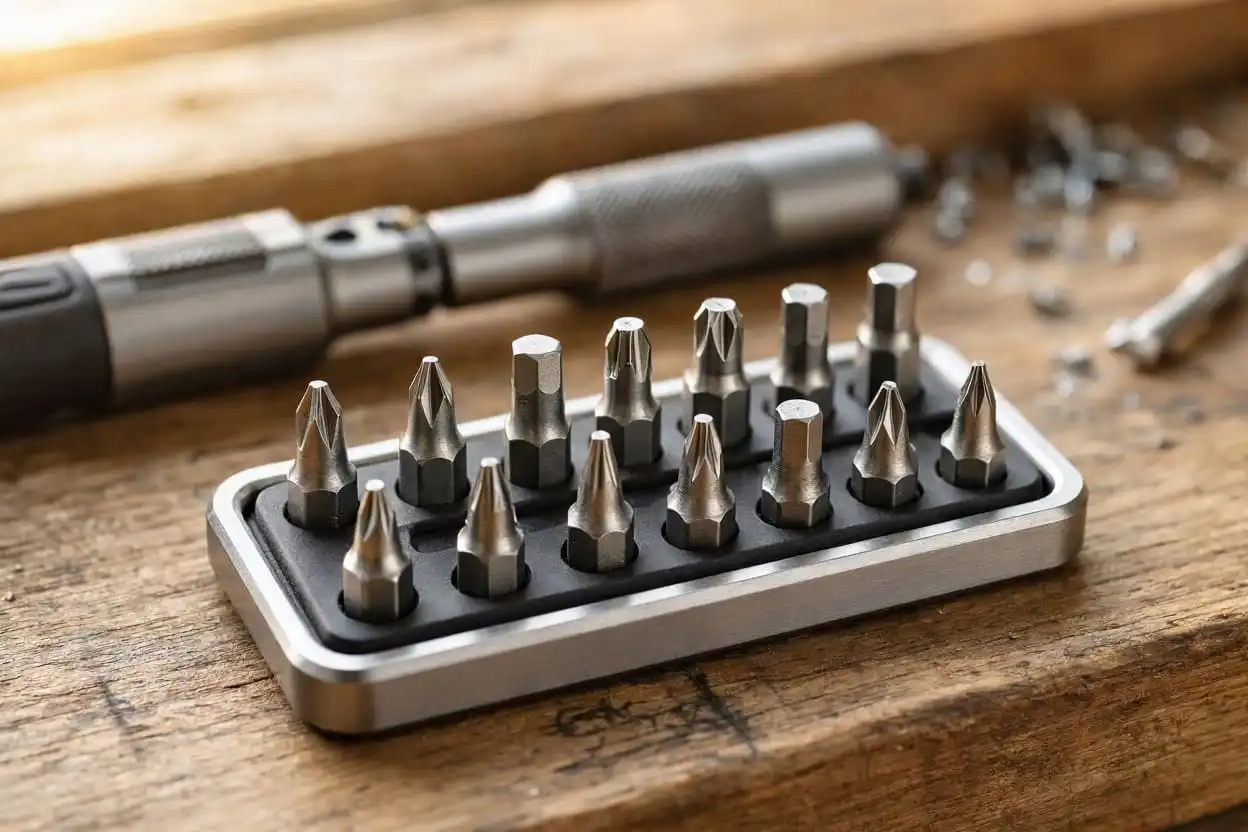
Screwdriver bits are useful for everything from assembling flat-pack furniture to fitting hinges, building shelves and driving screws into timber. Instead of using a separate screwdriver for every job, you can fit interchangeable bits into a bit holder, cordless drill or impact driver designed to accept them.
However, choosing the right screwdriver bit isn’t always straightforward. You’ll come across markings such as PH2, PZ2, T20 and TX25, along with different bit lengths, materials and designs. Using the wrong bit can cause it to slip, damage the screw head or make fastening more difficult.
The good news is that choosing the right bit becomes much easier once you understand the different types and sizes.
In this guide, I will explain the most common screwdriver bits used in UK DIY, how to identify them, which tools they fit and what to look for when buying a bit set. I will also cover the differences between standard bits and impact-rated bits, helping you choose the right option for your projects.
The Different Types of Screwdriver Bits
Screwdriver bits come in several shapes, each designed to fit a particular type of screw head. Choosing the correct bit helps it grip the screw securely, reduces slipping and makes fastening jobs easier.
These are the main screwdriver bit types you’re likely to use for UK DIY.
Phillips (PH) Bits
Phillips bits have a cross-shaped tip and are marked with sizes such as PH1, PH2 and PH3.
They are used with Phillips-head screws found in various household products, fittings and equipment. PH2 is a useful size to have, but the correct size depends on the screw.
Pozidriv (PZ) Bits
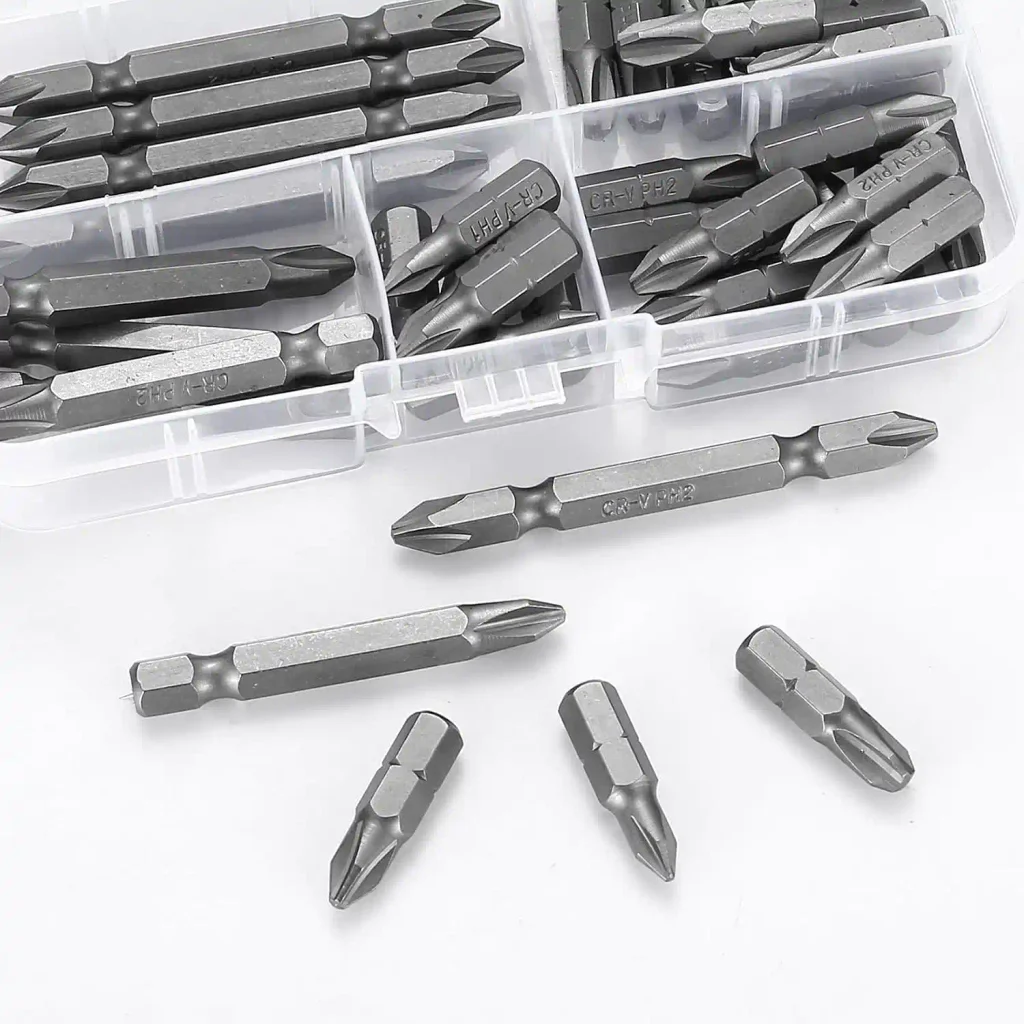
Pozidriv bits also have a cross-shaped tip, but they include additional smaller ribs between the main arms of the cross. They are marked PZ1, PZ2 and PZ3, among other sizes.
Pozidriv screws are common in UK woodworking, furniture assembly and general fixing tasks. PZ2 is particularly useful for many everyday DIY jobs.
Important: Phillips and Pozidriv bits are not interchangeable. Although they look similar, using the wrong type can cause slipping and damage the screw head. See our guide to Phillips vs Pozidriv for a closer comparison.
Torx (T or TX) Bits
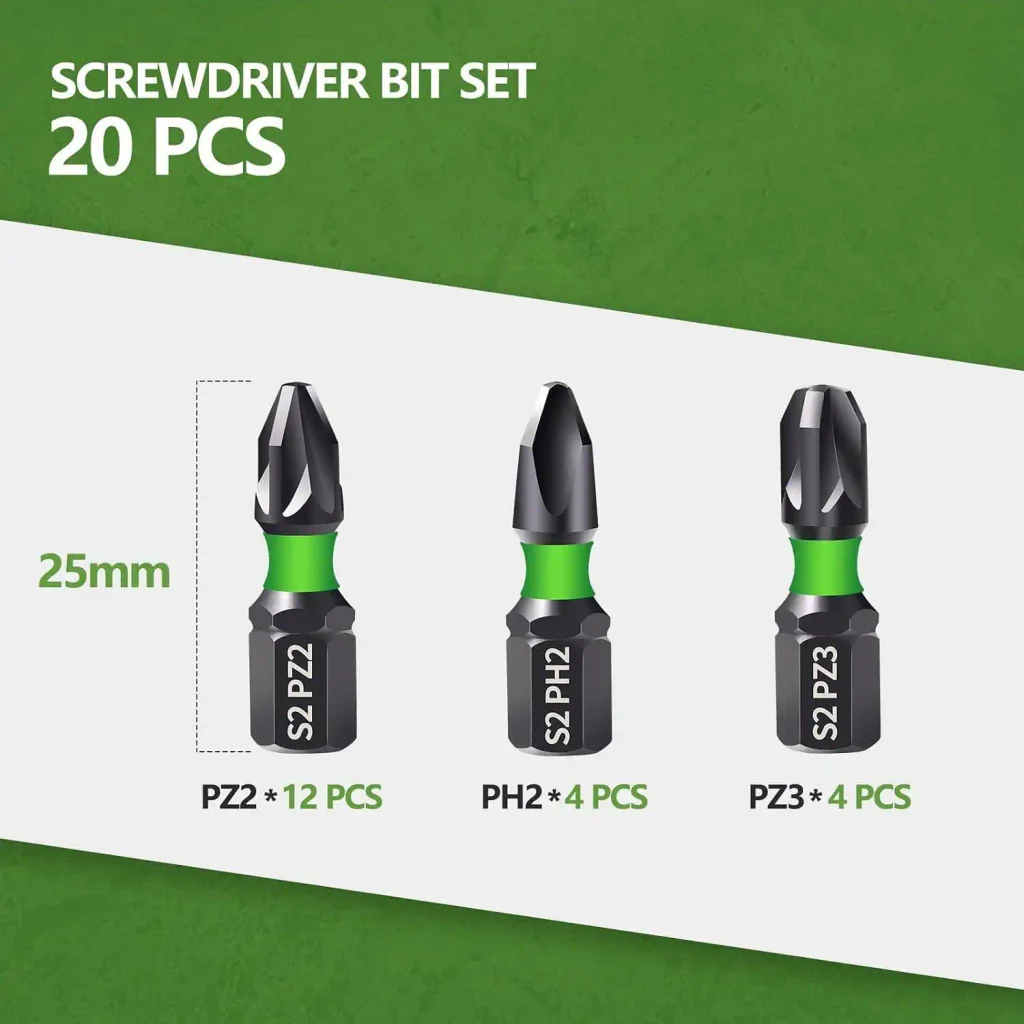
Torx bits have a six-pointed star-shaped tip. Depending on the manufacturer, you may see them marked T10, T15, T20, T25 and so on, or TX10, TX15 and similar markings.
They are used in furniture, woodworking, machinery and many construction fixings. Torx screws can provide good engagement when the correct bit size is used.
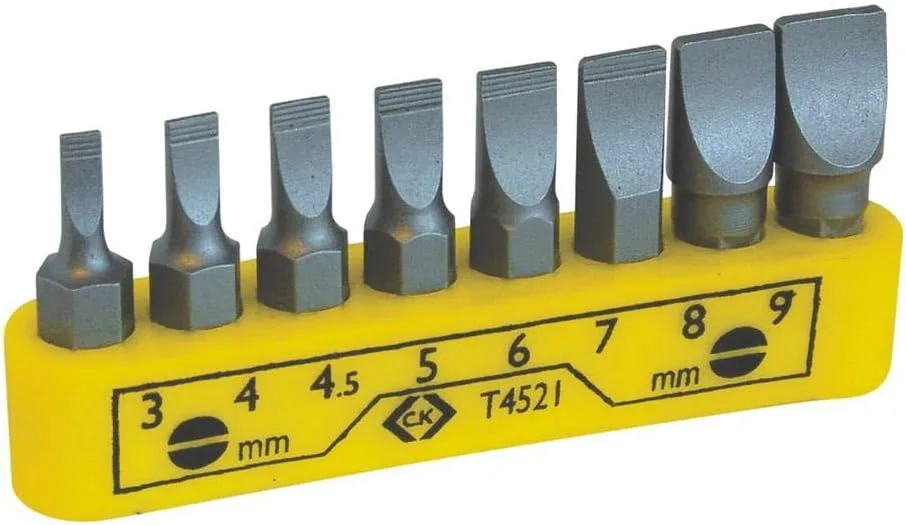
Slotted (Flat) Bits
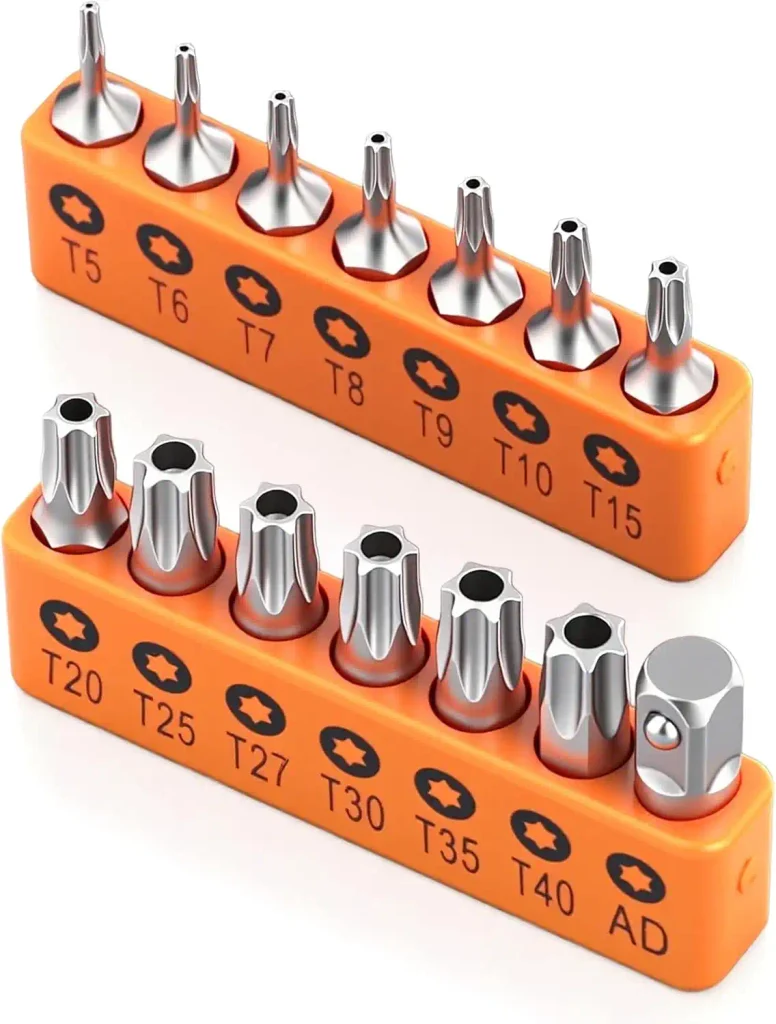
Slotted bits have a flat, straight tip designed for screws with a single slot across the head.
They are still found in some household fittings, older fixings and general maintenance jobs. The bit must match the width and depth of the slot to avoid slipping.
Hex Bits
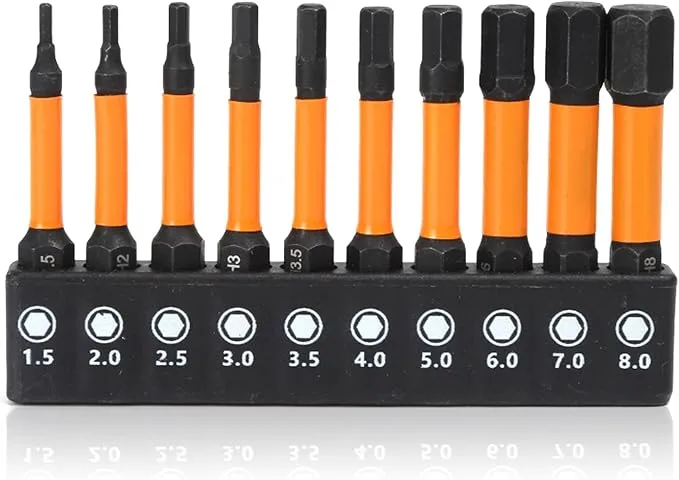
Hex bits have a six-sided tip designed for screws with a matching hexagonal recess. They may be marked with sizes such as H3, H4, H5 or H6.
Hex bits are useful for certain furniture fittings, machinery and other fixings. They should not be confused with external hex nut drivers, which fit over the outside of a hexagonal head.
Square (Robertson) Bits
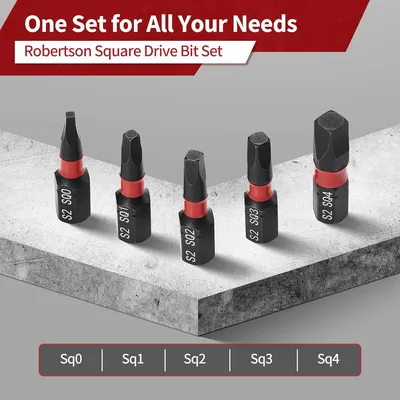
Square bits have a square-shaped tip and are commonly associated with Robertson screws. They are used in some woodworking, construction and imported products, although they are less common in everyday UK DIY than Pozidriv or Torx.
Security Bits
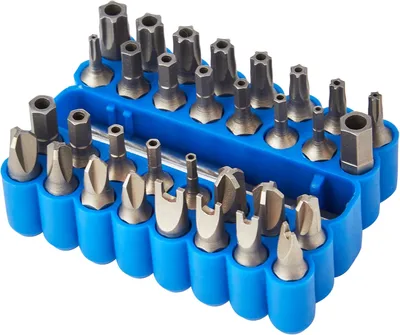
Some screws have specially shaped recesses designed to make removal more difficult. Examples include security Torx bits with a central hole and other tamper-resistant designs.
If you encounter one of these screws, identify its exact head type before choosing a bit. A standard bit may not fit securely, and forcing it can damage the recess.
Quick Comparison of Screwdriver Bit Types
| Bit type | Marking examples | Typical applications |
|---|---|---|
| Phillips | PH1, PH2, PH3 | Household products and general fastening |
| Pozidriv | PZ1, PZ2, PZ3 | Wood screws, furniture and general DIY |
| Torx | T20, T25, TX30 | Construction fixings, furniture and machinery |
| Slotted | SL or flat | Slotted screws and older fittings |
| Hex | H3, H4, H5 | Hex-socket screws and furniture fittings |
| Square | SQ1, SQ2, SQ3 | Robertson screws and some woodworking |
| Security | Varies by design | Tamper-resistant and specialist screws |
These markings are common examples; exact labels and sizes can vary between manufacturers. Always match the bit to the screw head rather than relying on the marking alone.
Screwdriver Bit Sizes and Markings Explained
Screwdriver bits are marked with letters and numbers that identify their type and size. Understanding these markings helps you choose a bit that fits the screw head correctly and reduces the risk of slipping or damaging the fixing.
For example, PZ2, PH2 and T20 are different bit types, even though their markings may look similar.
What Do the Letters and Numbers Mean?
The letters identify the bit design, while the numbers indicate its size within that design.
| Marking | Bit type | What it means |
|---|---|---|
| PH1 | Phillips | Smaller Phillips bit |
| PH2 | Phillips | Common Phillips bit size |
| PH3 | Phillips | Larger Phillips bit |
| PZ1 | Pozidriv | Smaller Pozidriv bit |
| PZ2 | Pozidriv | Common Pozidriv bit size |
| PZ3 | Pozidriv | Larger Pozidriv bit |
| T10 or TX10 | Torx | Smaller Torx bit |
| T20 or TX20 | Torx | Medium-sized Torx bit |
| T25 or TX25 | Torx | Larger than T20 |
| H4 | Hex | Four-millimetre hex bit |
These are examples rather than a complete size chart. The range available depends on the bit type and manufacturer.
Is a PH2 Bit the Same as a PZ2 Bit?
No. A PH2 bit is designed for a Phillips screw, while a PZ2 bit is designed for a Pozidriv screw.
The number identifies the size within each type, not a universal size shared by all bits. A PH2 and PZ2 therefore cannot be assumed to fit the same screw correctly.
How Do You Choose the Correct Bit Size?
Use these simple checks before driving a screw:
- Identify the screw head. Check whether it is Phillips, Pozidriv, Torx, hex or another type.
- Select a matching bit. Start with the size marking that corresponds to the screw.
- Check the fit. The bit should engage securely, with little movement in the recess.
- Stop if it slips. Check the bit size, type and condition instead of applying more force.
The bit should fit the recess properly without being forced into it. If it wobbles or only engages at the edges, try another size or type.
For more detail on choosing the correct driver for a screw, see our guide to screwdriver sizes explained.
Standard Screwdriver Bits vs Impact-Rated Bits
Not all screwdriver bits are designed to handle the same amount of force. If you’re using a cordless drill or impact driver, it’s important to understand the difference between standard screwdriver bits and impact-rated bits.
Choosing the right type can help reduce premature wear and make your DIY work easier.
What Are Standard Screwdriver Bits?
Standard screwdriver bits are designed for general screwdriving tasks using hand screwdrivers, bit holders and suitable cordless drills or drill drivers.
They are useful for everyday jobs such as assembling furniture, fitting cupboard handles, building shelves and driving screws into timber.
Standard bits are often a sensible choice for occasional DIY, provided they are compatible with the tool and used within the manufacturer’s recommendations.
What Are Impact-Rated Screwdriver Bits?
Impact-rated bits are specifically designed to withstand the repeated twisting forces produced by an impact driver.
They are commonly made from specially selected or heat-treated steel, with designs intended to accommodate the stresses generated during impact driving. Some feature a torsion zone that helps absorb part of the twisting load.
Impact-rated bits are useful for tasks involving larger screws, repeated fastening or demanding woodworking and construction jobs. However, they can still wear out or break if overloaded or used incorrectly.
Key Differences
| Feature | Standard bits | Impact-rated bits |
|---|---|---|
| Intended use | General screwdriving | Repeated impact-driver use |
| Suitable tools | Hand screwdrivers and compatible drill drivers | Impact drivers and compatible screwdriving tools |
| Construction | Varies by manufacturer and quality | Designed to withstand impact forces |
| Typical applications | Furniture assembly and occasional DIY | Decking, timber construction and frequent fastening |
| Cost | Often cheaper | Can cost more, depending on the set |
| Best suited to | Everyday, lighter-duty work | More demanding or repetitive screwdriving |
These are general differences; individual products vary, so check the manufacturer’s specifications.
Can You Use Standard Bits in an Impact Driver?
You should use bits specifically rated for impact-driver use when operating an impact driver. Standard bits may not withstand the repeated impacts and can wear or break more readily.
A cordless drill driver generally applies a smoother turning force, so standard bits are often suitable for that type of tool when used correctly.
Before fitting any bit, check that its shank and holder are compatible with your tool. Many impact drivers use a 1/4-inch hex quick-change holder, but you should confirm the specification for your model.
DIY tip: If you regularly drive long screws into timber or carry out decking and construction projects, an impact-rated bit set is worth considering. For occasional furniture assembly, a good-quality standard set may be sufficient.
You might also be interested in the the HSE woodworking guidance if you have any safety concerns.
Screwdriver Bit Lengths and Shank Types
Screwdriver bits are available in different lengths and shank designs. Choosing the right combination helps you reach awkward screws, work in confined spaces and make sure the bit fits your tool securely.
Standard-Length Bits
Standard screwdriver bits are commonly around 25mm long, although other lengths are available.
They are useful for everyday DIY tasks such as assembling furniture, fitting hinges and driving screws into timber. They can be used with a compatible bit holder or directly in a suitable drill or impact driver.
Longer Screwdriver Bits
Longer bits, often around 50mm or 75mm, can help when a screw is recessed or positioned where a short bit cannot reach easily.
They are useful for certain furniture fittings, joinery and other jobs where extra reach is needed. However, a longer bit may be less convenient in tight spaces, so choose the length that suits the task.
What Is a 1/4-Inch Hex Shank?
Many interchangeable screwdriver bits have a 1/4-inch hex shank. This is the six-sided section that fits into a compatible bit holder, drill chuck or impact driver.
Although 1/4-inch hex shanks are common, always check your tool’s instructions to confirm compatibility. Not every screwdriver bit or holder uses the same fitting.
Magnetic Bit Holders
A magnetic bit holder holds a compatible bit in place and can help keep screws attached to the tip while you position them.
Some holders are short and compact, while others have longer shafts to provide extra reach. Magnetic holders can be particularly useful when working with screws in awkward positions, although the strength of the magnet varies between products.
Quick-Change Bit Holders
Quick-change holders allow you to swap compatible bits without removing the holder from the tool. They can save time when a job involves several screw types or sizes.
Check that the holder is suitable for your tool and intended use. If you’re using an impact driver, choose a holder rated for impact applications where required.
Choosing the Right Length
| Bit length | Typical advantage |
|---|---|
| Around 25mm | Compact and suitable for many everyday tasks |
| Around 50mm | Extra reach for recessed screws |
| Around 75mm or longer | Useful for deeper or awkwardly positioned fixings |
These are general examples rather than fixed standards. The best length depends on the screw position, available clearance and the tool or holder you’re using.
Tip: Before starting, check that the bit locks securely into the holder and that you can keep the tool aligned with the screw. A good fit and straight approach are just as important as bit length.
What to Look for When Buying a Screwdriver Bit Set
A good screwdriver bit set should contain the types and sizes you actually use, rather than simply offering the largest number of pieces. Choosing a suitable set can save money and make everyday DIY jobs easier.
Here are the main things to consider before buying.
1. A Useful Range of Bit Types
Look for a set containing a practical selection of Phillips, Pozidriv, Torx and slotted bits. Hex bits can also be useful for furniture fittings and other fixings.
For many UK DIY jobs, PZ1, PZ2, PH1 and PH2 are sensible sizes to have available. Torx sizes such as T10, T15, T20 and T25 can extend the range of jobs you can tackle.
The best selection depends on the screws you encounter most often, so check the contents list rather than relying on the advertised piece count.
2. Bit Quality and Durability
Screwdriver bits are commonly made from steel alloys and may undergo heat treatment to improve their performance. However, material descriptions alone don’t guarantee quality.
Look for clear manufacturer information, a well-made tip and a suitable rating for your intended use. If you regularly use an impact driver, choose bits specifically designed for impact applications.
Even good-quality bits can wear or break if they are overloaded or used with the wrong screw type.
3. Standard or Impact-Rated Bits
If you mainly use a hand screwdriver or cordless drill driver for occasional household jobs, standard bits may be sufficient.
If you frequently drive screws with an impact driver, consider an impact-rated set. These bits are designed to withstand the repeated twisting forces associated with impact driving.
Always check the manufacturer’s guidance and use bits compatible with your tool.
4. Bit Lengths and Holders
A set containing standard-length bits will suit many everyday jobs. Longer bits and magnetic holders can be helpful when screws are recessed or difficult to reach.
Quick-change holders can also save time when switching between different bit types. Check that the holder is compatible with your drill driver or impact driver.
5. A Practical Storage Case
A good case keeps bits organised and makes it easier to identify the correct size.
Look for clearly labelled slots, secure bit retention and a case that is easy to carry or store in your toolbox. A compact set may be more useful than a large collection if you only carry out occasional DIY.
6. Avoid Paying for Unnecessary Extras
Some sets contain dozens of pieces, but many may be duplicates or sizes you rarely use. A smaller set with the right bit types and sizes can be better value than a larger set that spends most of its time unused.
Before buying, compare the actual contents, quality, compatibility and intended use rather than choosing by piece count alone.
Buying tip: For a first DIY bit set, prioritise common Phillips and Pozidriv sizes, a useful range of Torx bits, a compatible holder and a case that keeps everything organised.
If you’re buying a collection of screwdriver bits, our guide to the best screwdriver sets in the UK compares options for general DIY and workshop use.
How to Use Screwdriver Bits Correctly
Even a good-quality screwdriver bit can slip, wear out or damage a screw if it is used incorrectly. Taking a few simple precautions will help you get a better result and extend the life of your bits.
1. Match the Bit to the Screw
Check the screw head before choosing a bit. Make sure both the type and size are correct, rather than assuming that a cross-shaped recess always needs a Phillips bit.
The bit should fit securely into the recess with minimal movement. If it wobbles or slips, stop and try a more suitable size or type.
Choosing the correct bit size helps the driver engage securely with the screw. Our guide to screwdriver sizes explained explains common size markings and how to choose the right fit.
Before driving a screw, make sure the bit matches both the screw head type and size. Our guide to how to choose the right screwdriver explains how to select a suitable driver and avoid common mistakes.
2. Keep the Tool Aligned
Hold the screwdriver, drill driver or impact driver in line with the screw. Tilting the tool can cause the bit to slip out of the recess and damage the screw head.
Where possible, position the screw and tool so you can maintain a straight approach throughout the job.
3. Apply Controlled Pressure
Apply enough forward pressure to keep the bit engaged with the screw, but avoid forcing it.
If the bit repeatedly slips, check the fit, the condition of the bit and whether the screw is difficult to turn. More pressure will not correct a mismatch between the bit and screw head.
4. Choose the Correct Tool Setting
When using a cordless drill driver, start with a suitable low-speed setting and adjust the clutch where appropriate. This can help reduce the risk of overtightening or damaging the material.
Impact drivers deliver repeated rotational impacts, so use suitable impact-rated bits and control the trigger carefully. Avoid driving a screw too far into the material.
5. Inspect Bits for Wear
Before use, check that the bit tip is not rounded, chipped or otherwise damaged. Worn bits are more likely to slip, particularly when driving screws that require a secure fit.
Replace bits that no longer engage properly with the screw head. Do not continue using a damaged bit simply because it still turns the screw occasionally.
6. Store Bits Properly
Keep bits clean and dry, and return them to their case or holder after use. This makes it easier to find the right size and helps prevent bits from becoming lost or damaged in a toolbox.
DIY tip: If a screw is difficult to drive, stop and check the bit, screw and tool setup before continuing. Identifying the problem early can prevent damage to both the screw and the workpiece.
Screwdriver Bits Explained – FAQs
Do screwdriver bits fit all drills?
No. Many screwdriver bits have a standard 1/4-inch hex shank, but compatibility depends on the tool and holder. Check your drill or impact driver’s instructions to make sure the bit or holder fits securely.
What is the difference between PH2 and PZ2 bits?
PH2 is a Phillips bit, while PZ2 is a Pozidriv bit. Both are common sizes, but their tip designs differ. Using the wrong type can cause slipping and damage the screw head.
Can I use standard screwdriver bits in an impact driver?
Standard bits are not generally the best choice for impact drivers because they may not withstand repeated impact forces. Use bits specifically rated for impact-driver applications and follow the manufacturer’s guidance.
Are longer screwdriver bits better?
Not necessarily. Longer bits can help reach recessed screws, while shorter bits are often more convenient for everyday fastening and confined spaces. Choose a length that suits the job and allows you to keep the tool aligned.
What screwdriver bits should a DIY beginner buy?
A useful starter selection includes PH1, PH2, PZ1, PZ2 and several common Torx sizes, such as T10, T15, T20 and T25. A set with a suitable bit holder and organised case is also useful.
The best selection depends on the types of screws you expect to use, so check the contents before buying.
How long do screwdriver bits last?
There is no fixed lifespan. Bit life depends on the quality of the bit, how frequently it is used, the materials being fastened and whether the correct bit type and size are chosen.
Replace a bit when it becomes rounded, chipped or unable to grip screw heads securely.
Why does my screwdriver bit keep slipping?
Common causes include using the wrong bit type or size, a worn bit, a damaged screw head or holding the tool at an angle. Stop and check these factors before continuing rather than applying more force.
What are impact-rated screwdriver bits?
Impact-rated bits are designed to withstand the repeated twisting forces produced by impact drivers. They are useful for frequent or demanding screwdriving tasks, but they can still wear or break if overloaded or used incorrectly.
Are expensive screwdriver bit sets worth buying?
Not always. A more expensive set may offer better construction, a useful selection of sizes or a more practical case, but the best value depends on your needs.
For occasional DIY, a modest set with the correct bit types and sizes may be sufficient. If you drive screws regularly, investing in suitable, durable bits may be worthwhile.
Final Thoughts
Choosing the right screwdriver bit makes DIY jobs easier and helps prevent damage to screw heads. The most important thing is to match the bit type and size to the screw, rather than assuming that similar-looking bits will work interchangeably.
For many UK DIY tasks, a selection of Phillips, Pozidriv and Torx bits will cover a wide range of fastening jobs. Standard bits are suitable for many everyday tasks, while impact-rated bits are the better choice when using an impact driver.
Before starting a job, check that the bit fits securely, keep the tool aligned with the screw and replace bits that are worn or damaged.
If you’re building your DIY toolkit, our guides to screwdriver sizes explained and the best screwdriver sets in the UK can help you choose the right sizes and equipment for your needs.
With the correct bit and a little care, you can complete fastening jobs more efficiently and reduce the risk of damaging screws or materials.