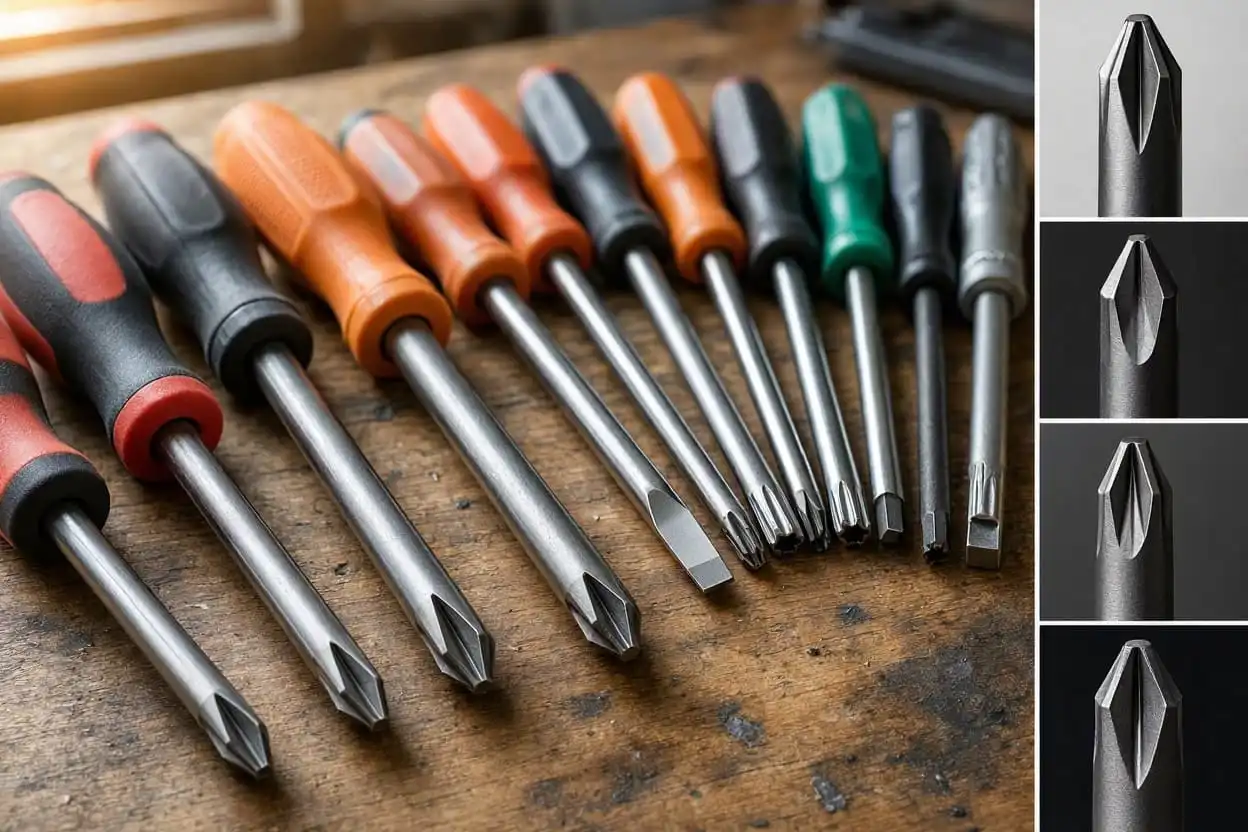
Choosing the right screwdriver size is essential for everyday DIY. This screwdriver sizes explained guide shows you how to understand common markings such as PH1, PH2, PZ1, PZ2 and Torx sizes, so you can choose the correct screwdriver and avoid damaging screw heads.
Screwdrivers come in different sizes to match different screw heads. You’ll commonly see markings such as PH1, PH2, PZ1, PZ2 and T10, but if you’re new to DIY, it isn’t always obvious what these numbers and letters mean.
The good news is that choosing the right screwdriver size is straightforward once you understand the markings and how the tip should fit the screw.
In this guide, I will explain common screwdriver sizes used in UK DIY, including Phillips, Pozidriv, Torx and slotted screwdrivers. I will also cover how to identify the correct size, how to avoid common mistakes and what sizes are useful to keep in a basic home toolkit.
Understanding Screwdriver Size Markings
Screwdriver sizes are usually marked on the handle, shaft or packaging. The letters identify the type of screwdriver, while the number indicates its size within that type.
For example, PH2 and PZ2 are different screwdriver sizes and types, even though both use the number 2. The tip must match both the screw head and its size to get a secure fit.
Here are the markings you’re most likely to come across when choosing screwdrivers for UK DIY.
| Marking | Screwdriver type | Common uses |
|---|---|---|
| SL or flat | Slotted | Screws with a single straight slot |
| PH0, PH1, PH2, PH3 | Phillips | Phillips-head screws in different sizes |
| PZ0, PZ1, PZ2, PZ3 | Pozidriv | Common in furniture, joinery and general DIY |
| T10, T15, T20, T25, T30 | Torx | Star-shaped screw heads used in furniture, fixings and tools |
| H2, H3, H4, H5, H6 | Hex or Allen | Hexagonal socket screws, often found in flat-pack furniture |
These are common examples rather than a complete list. Exact sizes and markings vary between manufacturers and screw types.
What Do the Numbers Mean?
Within a particular screwdriver type, the number identifies the tip size. A larger number generally means a larger tip, but the numbering system is different for each type.
For example, a PH3 is larger than a PH1, and a PZ3 is larger than a PZ1. However, a PH2 and a PZ2 are not interchangeable because their tip shapes differ.
Torx sizes use a different numbering system, with markings such as T10, T15 and T20. These should not be compared directly with Phillips or Pozidriv numbers.
The most important rule is to choose a screwdriver that fits the screw head securely, with minimal movement or wobble.
How to Choose the Correct Screwdriver Size
Choosing the correct screwdriver size is easier when you check how the tip fits into the screw head before applying any force.
Follow these simple steps:
1. Identify the Screw Head
First, look at the shape of the screw head. It might have a cross-shaped recess, a star-shaped recess or a single straight slot.
A Phillips screwdriver is designed for Phillips screws, while a Pozidriv screwdriver is designed for Pozidriv screws. Although the two types look similar, they are not interchangeable.
If you’re unsure which type you have, our guide to choosing the right screwdriver explains how to identify common screw heads.
2. Start With the Correct Size
Choose a screwdriver with a tip that fills the screw recess as closely as possible without being forced into it.
For common Phillips and Pozidriv screws, PH2 and PZ2 are useful sizes to try, but don’t assume they will fit every screw. Smaller screws may need a PH1 or PZ1, while larger screws may require a PH3 or PZ3.
PH and PZ markings refer to different screw head designs, not simply different sizes. Read our guide to Phillips vs Pozidriv to learn how to identify the two types and avoid using the wrong driver.
3. Check the Fit Before Turning
Place the screwdriver tip into the screw head and check that it sits securely.
A correctly sized screwdriver should:
- Fit snugly into the recess.
- Have little or no sideways movement.
- Engage fully without needing excessive pressure.
- Turn the screw without slipping when gentle pressure is applied.
If the tip wobbles, sits too high or slips out easily, stop and try a different size or screwdriver type.
4. Avoid Using Excessive Force
If a screw will not turn, pushing harder is not always the answer. The screwdriver may be the wrong size, the wrong type or worn.
Forcing a poor fit can damage the recess, making the screw more difficult to remove. If the screw head is already damaged, our guide to how to remove a stripped screw explains the methods you can try.
Tip: A screwdriver that fits correctly is usually more effective than one that simply looks close to the right size.
The Most Useful Screwdriver Sizes for DIY
You don’t need every screwdriver size available to tackle everyday DIY jobs. A small selection of commonly used sizes will cover many household repairs, furniture assembly and woodworking tasks.
If you’re using a screwdriver with interchangeable bits, our guide to screwdriver bits explained covers common tip types, size markings and how to choose a suitable bit.
The sizes you need will depend on the screws you use most often, but the following are useful starting points for a basic UK DIY toolkit.
| Screwdriver size | Type | Typical uses |
|---|---|---|
| PH1 | Phillips | Smaller Phillips-head screws |
| PH2 | Phillips | Many medium-sized Phillips screws |
| PH3 | Phillips | Larger Phillips-head screws |
| PZ1 | Pozidriv | Smaller Pozidriv screws |
| PZ2 | Pozidriv | Many common wood screws and general DIY fixings |
| PZ3 | Pozidriv | Larger Pozidriv screws and fixings |
| T10 | Torx | Small star-headed screws |
| T15 | Torx | Small to medium Torx screws |
| T20 | Torx | Common Torx fixings in furniture and woodworking |
| T25 | Torx | Larger Torx screws and some construction fixings |
| T30 | Torx | Larger Torx fixings where the screw head requires this size |
| 3–6mm | Slotted | Various slotted screws, depending on the slot width |
These are general examples, not a guarantee of which size fits a particular screw. Always check the screw head and choose the tip that fits securely.
Which Sizes Should Beginners Buy First?
If you’re putting together your first screwdriver collection, PZ2, PZ1, PH2 and PH1 are sensible sizes to start with. A selection of slotted screwdrivers and a Torx set will cover additional screw types.
For general woodworking and furniture assembly, PZ2 is particularly useful because Pozidriv screws are widely used in many UK applications. However, you should still match the screwdriver to the actual screw head rather than assuming every cross-headed screw is Pozidriv.
A set containing several sizes is often more practical than buying individual screwdrivers as you need them. For more advice on what to look for, see my guide to the best screwdriver sets in the UK.
Work Safely With Hand Tools
Using the correct screwdriver size helps prevent slipping and damage to screw heads. For broader advice on working safely with tools and equipment, see the Health and Safety Executive’s woodworking guidance.
Does Screwdriver Length Affect the Size You Need?
Screwdriver size usually refers to the size of the tip, but the length of the shaft is another important consideration when choosing the right tool.
A screwdriver can have the correct tip size but still be awkward to use if the shaft is too long or too short for the job.
Short Screwdrivers
Short-shaft screwdrivers are useful when working in confined spaces, such as inside cupboards, around furniture fittings or close to walls where a standard screwdriver may not have enough room to turn.
Stubby screwdrivers have particularly short handles and shafts, making them useful when clearance is limited. However, they can be less comfortable when you need to apply sustained turning force.
Standard-Length Screwdrivers
Standard screwdrivers are suitable for many everyday DIY jobs, including assembling furniture, fitting hardware and working with common screws.
For a general home toolkit, a mixture of standard-length screwdrivers and commonly used tip sizes is a practical starting point.
Long-Shaft Screwdrivers
Long-shaft screwdrivers help you reach screws set further back or positioned behind other components. They can also make it easier to keep your hand away from nearby obstructions.
However, a longer shaft does not mean the screwdriver is suitable for a larger screw. The tip must still match the screw head correctly.
Check the Tip Condition
The condition of the screwdriver tip matters just as much as its size. A worn, rounded or damaged tip may slip even when it appears to be the correct size.
Before using a screwdriver, check that the tip is clean and undamaged. If it no longer engages securely with the screw head, replace it rather than trying to compensate by pushing harder.
Remember: Tip size determines how well the screwdriver fits the screw head. Shaft length determines how easily you can reach and work on the screw.
Using the wrong screwdriver size can cause slipping and damage the screw head. If a screw is already stripped, our guide to how to remove a stripped screw explains the practical options for removing it.
Common Screwdriver Sizing Mistakes
Using the wrong screwdriver size is a common DIY mistake, but it is easy to avoid once you know what to check. Choosing the correct tip helps prevent damaged screw heads and makes fastening jobs easier.
Here are some mistakes to watch out for.
1. Using a Screwdriver That Is Too Small
A tip that is too small may move around inside the screw recess instead of gripping it securely. This can damage the screw head, particularly if you apply too much force.
If the screwdriver feels loose, try the next suitable size and check the fit again.
2. Using a Screwdriver That Is Too Large
A tip that is too large may not sit fully inside the screw head. It can make poor contact with the recess and slip when you turn it.
Never force an oversized screwdriver into a screw head. Choose a tip that fits properly.
3. Confusing Phillips and Pozidriv
Phillips and Pozidriv screw heads both have cross-shaped recesses, but their designs are different.
Using a Phillips screwdriver in a Pozidriv screw, or the other way around, can result in a poor fit and may damage the recess.
Look closely at the screw head before choosing your screwdriver. Our guide to Phillips vs Pozidriv explains how to tell them apart.
4. Assuming All Numbered Sizes Are the Same
A PH2, PZ2 and T20 are not equivalent sizes. The letters identify different screw head designs, and each type uses its own sizing system.
Always match the screwdriver markings to the screw type and check the physical fit.
5. Continuing With a Worn Screwdriver
A worn or damaged tip may slip even if it is the correct size. This is particularly likely when the screwdriver has been used frequently or has been used on screws that were difficult to turn.
Inspect the tip regularly and replace damaged tools when necessary.
6. Applying Too Much Force
If a screwdriver slips or the screw will not turn, stop and check the size, type and condition of both the screwdriver and screw.
Applying more force to a poor fit can make the problem worse. If the screw head has already become damaged, follow the appropriate steps in our guide to how to remove a stripped screw.
Taking a moment to check the fit before turning can save time and prevent unnecessary damage.
Screwdriver Sizes Explained: Frequently Asked Questions
What is the most common screwdriver size for DIY?
PZ2 is a useful size to have for general UK DIY because Pozidriv screws are widely used in woodworking and many everyday fixing tasks. PH2 is also useful for Phillips screws. The correct size always depends on the screw head.
What is the difference between PH1 and PH2?
Both are Phillips screwdriver sizes, but PH2 has a larger tip than PH1. PH1 is suited to smaller Phillips screw heads, while PH2 fits many medium-sized Phillips screws.
What is the difference between PZ1 and PZ2?
PZ1 and PZ2 are Pozidriv sizes, with PZ2 being larger. PZ1 is generally used for smaller Pozidriv screw heads, while PZ2 is common for many general DIY fixings.
Are Phillips and Pozidriv screwdrivers interchangeable?
No. Although both have cross-shaped tips, their designs differ. Using the wrong type can cause the screwdriver to slip and damage the screw head.
What do Torx screwdriver sizes such as T10 and T20 mean?
Torx sizes identify the size of the star-shaped tip. T20 is larger than T10, but Torx sizes use a different numbering system from Phillips and Pozidriv screwdrivers.
Do I need a full set of screwdriver sizes?
Not necessarily. A few commonly used sizes, such as PZ1, PZ2, PH1 and PH2, provide a useful starting point for many household jobs. A set that includes several Torx sizes and slotted screwdrivers will cover a wider range of fixings.
How do I know if my screwdriver is the correct size?
The tip should fit securely into the screw recess, with minimal movement. If it wobbles, fails to engage fully or slips when you turn it, stop and check the size and screwdriver type before continuing.
Should I replace a screwdriver if its tip is worn?
Yes, if the tip is rounded, damaged or no longer grips screw heads properly. A worn tip can slip and damage screws, even when you are using the correct size.
Choosing the correct screwdriver size makes everyday DIY jobs easier and helps prevent damage to screw heads. The key is to match the screwdriver tip to both the type and size of the screw, rather than relying on appearance alone.
For a basic UK DIY toolkit, PZ1, PZ2, PH1 and PH2 are useful starting points. Adding a selection of Torx and slotted screwdrivers will help you tackle a wider range of household repairs, furniture assembly and woodworking projects.
Always check that the screwdriver fits securely before turning the screw. If it slips, stop and check the size, type and condition of the tip instead of applying more force.
If you’re building your first toolkit, my guide to the best screwdriver sets in the UK can help you choose a set with the sizes and types you’ll use most often.
With the right screwdriver and a secure fit, even small fastening jobs can be completed more easily and with less risk of damaging the screw.