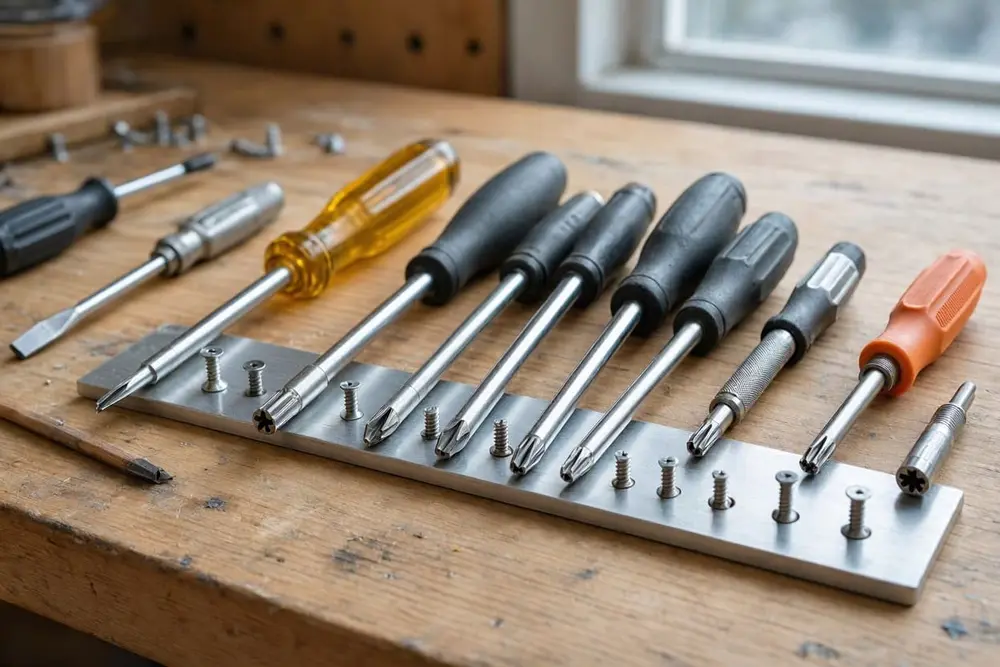
Knowing how to choose the right screwdriver can make everyday DIY jobs much easier. Using the wrong type or size can cause the driver to slip, damage the screw head and turn a straightforward repair into a frustrating job. The key is to match the screwdriver to the screw, choose the correct size and use a tool that suits the task.
The key is to match the screwdriver to the screw head, choose the correct size and use a handle and shaft length suited to the job. Once you understand the differences between common screwdriver types, choosing the right tool becomes much easier.
When deciding how to choose the right screwdriver, start by checking the screw head and selecting a tip that fits it securely. You should also consider the screw size, how much space you have to work in and whether a standard or specialist screwdriver is best for the job.
In this guide, we’ll explain how to select a screwdriver for everyday DIY, furniture assembly, woodworking and general workshop tasks. We’ll also look at handle designs, shaft lengths, magnetic tips and specialist screwdrivers, so you can put together a useful toolkit without buying tools you don’t need.
If you’re building your first DIY toolkit, the aim isn’t to own every screwdriver available. It’s to have a reliable selection that covers the jobs you’re likely to tackle.
1. How to Choose the Right Screwdriver for the Screw Head
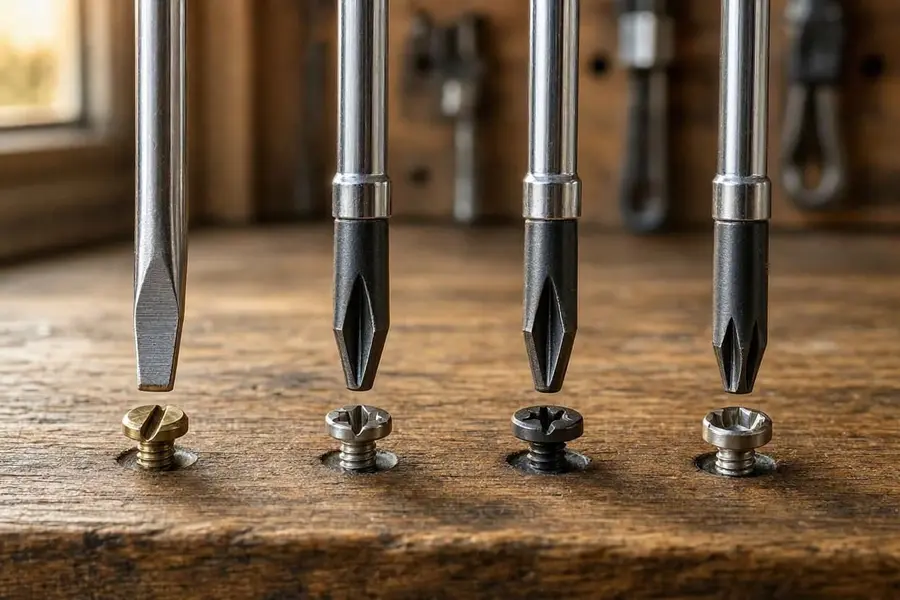
Before choosing a screwdriver, look at the recess or slot in the screw head. The shape tells you which type of screwdriver you need. Using the wrong type is one of the easiest ways to damage a screw. Even if two screw heads look similar, their recesses may be designed for different driver tips.
The following table covers the main types you’re likely to encounter during everyday DIY in the UK.
| Screw head type | How to recognise it | Where you might find it |
|---|---|---|
| Slotted | A single straight slot across the head | Older fittings, hinges and some general repairs |
| Phillips (PH) | A simple cross-shaped recess | Appliances, imported products and some furniture |
| Pozidriv (PZ) | A cross-shaped recess with four additional smaller marks | Many UK wood screws and general DIY fixings |
| Torx (T) | A six-pointed star-shaped recess | Woodworking, furniture, vehicles and modern equipment |
| Hex socket | A six-sided recess | Flat-pack furniture, machinery and various fittings |
| Security screw | A specialised recess, sometimes with a pin or unusual shape | Certain appliances, equipment and tamper-resistant fittings |
How to Check the Fit
Once you’ve identified the screw head, choose a screwdriver or interchangeable bit that matches it. The tip should fit snugly into the recess and engage properly. It shouldn’t rock from side to side or sit loosely in the screw head.
If the tip doesn’t fit correctly, it can slip out when you turn the screw. This is known as cam-out, and it can damage both the screw head and the driver tip.
Don’t assume that every cross-shaped screw takes the same screwdriver. Phillips and Pozidriv are particularly easy to confuse, but using the wrong one can lead to slipping and damaged screw heads.
For the best results, take a moment to identify the screw and check the fit before applying force.
2. Choose the Correct Screwdriver Size
Identifying the screw head is only half the job. You also need a screwdriver tip that fits its size.
Screwdrivers are available in different sizes within the same type. For example, a Pozidriv screwdriver marked PZ1 is smaller than a PZ2, while Torx drivers use sizes such as T10, T15, T20 and T25.
How to Tell if the Screwdriver Is the Right Size
Place the screwdriver tip into the screw head before turning it. A correctly sized tip should engage firmly and sit securely in the recess.
Look out for these signs:
- The tip wobbles: It may be too small or the wrong type.
- The tip only engages at the edges: It may be too large or incompatible with the screw head.
- The screwdriver slips when you apply pressure: Check both the tip size and the screw-head type before continuing.
- The tip fits securely with little movement: You’ve probably found the correct size.
Never rely on force to make an unsuitable screwdriver work. If the tip doesn’t fit properly, stop and try another size or type.
Why the Correct Size Matters
Using the right size gives you better control and helps transfer turning force to the screw. It also reduces the risk of rounding off the recess, damaging the screwdriver tip or making the screw difficult to remove later.
This is especially important when working with smaller screws, where a little slipping can quickly damage the head.
If you’re unsure which size you need, try the driver that fits most securely rather than automatically choosing the largest or smallest option. Keep in mind that a worn screw head may not hold any screwdriver properly, even if you’ve selected the correct size.
For a more detailed breakdown of screwdriver markings and common sizes, see our separate Screwdriver Sizes Explained guide
3. Choose the Right Shaft Length and Handle
Once you’ve identified the screw type and size, consider how much room you have to work in and how much control you need. A screwdriver that works well on an open workbench might be awkward to use inside a cupboard or behind a fitting.
Short, Standard and Long Screwdrivers
Short-shaft screwdrivers are useful when space is restricted. They can be easier to position inside cupboards, drawers and other confined areas, although a very short tool may leave little room for your hand.
Standard-length screwdrivers are a good all-round choice for general DIY. They provide a useful balance between reach, control and ease of use.
Long-shaft screwdrivers help you reach screws set deep inside recesses or behind obstructions. They can also be useful when the handle needs to remain clear of the surrounding material.
The important thing is to choose a length that lets you keep the driver aligned with the screw. If you have to hold the screwdriver at an awkward angle, it becomes harder to maintain control and easier for the tip to slip.
When Is a Stubby Screwdriver Useful?
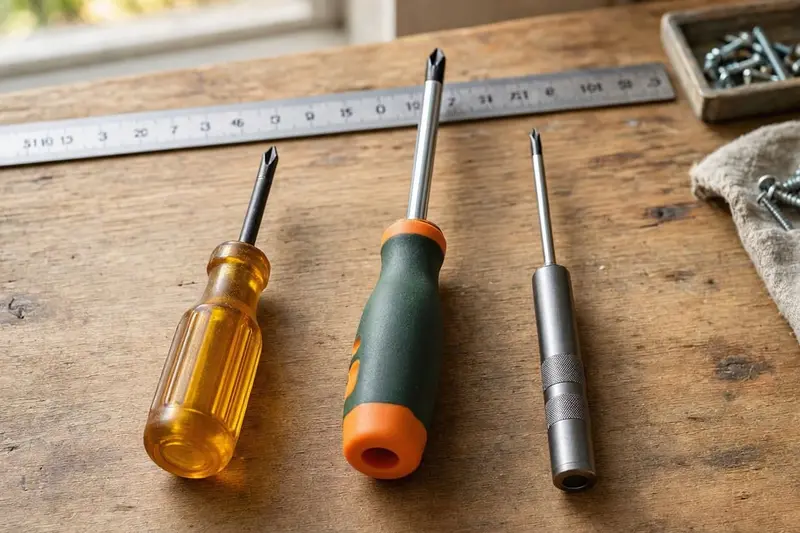
A stubby screwdriver has a short shaft and compact handle. Its main advantage is that it fits into places where a conventional screwdriver is too long.
You might use one when assembling furniture, working inside a cupboard or tightening a screw close to a wall or other obstruction.
A stubby screwdriver isn’t automatically better in confined spaces, however. If there isn’t enough room to turn the handle, even a compact tool can be difficult to use. A ratcheting screwdriver with interchangeable bits may be a better option in some situations.
Choosing a Comfortable Handle
The handle affects how securely you can grip the screwdriver and how comfortably you can apply turning force.
- Standard handle: A straightforward option for occasional household repairs and general DIY.
- Soft-grip or ergonomic handle: Can provide a more comfortable, secure grip during longer jobs.
- Compact handle: Useful where space is limited, provided you can still grip and turn it properly.
- Precision handle: Usually narrow, often with a rotating end cap to help you turn small screws using your fingertips.
When choosing a screwdriver set, look for handles that feel comfortable in your hand and allow you to apply controlled pressure. A larger handle can make turning easier, but it isn’t always practical in a restricted space.
For most beginners, a comfortable standard-length screwdriver is a sensible starting point, with a stubby or precision screwdriver added when a particular job calls for one.
4. Useful Screwdriver Features: Magnetic Tips, Ratchets and Interchangeable Bits
Some screwdrivers have extra features designed to make everyday jobs quicker or more convenient. Whether they’re worth having depends on the work you do and how often you use the tool.
Magnetic Screwdriver Tips
A magnetic tip helps hold a compatible steel screw in place while you position it. This can be particularly useful when starting a screw with one hand, working inside a cupboard or reaching into a restricted space.
However, magnetic tips aren’t essential for every job. They may not hold every screw securely, and some screws or components need to remain free from magnetic influence.
If you regularly assemble furniture or carry out general household repairs, a magnetic screwdriver or a set of magnetic bits can be a useful addition to your toolkit.
Ratcheting Screwdrivers
A ratcheting screwdriver allows you to turn the handle repeatedly in one direction without having to lift the tip out of the screw after every movement. Most models have a selector for tightening, loosening and sometimes a locked position.
This can save time when driving or removing several screws, particularly during furniture assembly and repetitive DIY tasks.
A ratcheting screwdriver can also help when there isn’t enough room to turn a conventional screwdriver through a full rotation. You still need enough space to move the handle back and forth, though, and the mechanism may not suit every heavy-duty job.
Multi-Bit Screwdrivers
A multi-bit screwdriver uses one handle with interchangeable driver bits. Depending on the model, the handle may store several bits or accept bits from a separate set.
The main advantages are convenience and compact storage. Instead of carrying numerous individual screwdrivers, you can keep a selection of common tips together in one tool.
Multi-bit screwdrivers are particularly useful for beginners, household repairs and occasional DIY. Check that the set includes the types and sizes you actually use, rather than choosing one simply because it contains a large number of bits.
For frequent or demanding work, dedicated screwdrivers may offer a more comfortable grip and a simpler setup. The best choice depends on your needs.
Which Features Are Worth Having?
| Feature | Most useful for | Essential for beginners? |
|---|---|---|
| Magnetic tip | Holding screws in position | No, but convenient |
| Ratcheting mechanism | Repetitive screwdriving | No |
| Interchangeable bits | Compact storage and varied screw types | No, but versatile |
| Bit storage in handle | Keeping commonly used bits together | No |
For a first toolkit, prioritise the correct screwdriver types and sizes. Features such as magnetic tips and ratcheting mechanisms are useful extras, but they shouldn’t replace having a driver that fits the screw properly.
5. When Do You Need Specialist Screwdrivers?
Most household jobs can be handled with a suitable selection of standard screwdrivers. However, some tasks require a more specialised tool because the screws are particularly small, the working space is restricted or electrical safety requirements apply.
Precision Screwdrivers
Precision screwdrivers are designed for small screws found in items such as glasses, watches, electronics and some small appliances.
They typically have narrow shafts and small tips, allowing you to work on delicate components that would be difficult to handle with a standard screwdriver.
Precision sets may include small Phillips and slotted drivers, along with Torx and other specialist tips. Before buying a set, check which types and sizes it contains, as the requirements vary between devices.
For general household DIY, a precision set is an optional extra. It’s worth buying one if you regularly repair small items or work with delicate components.
VDE-Insulated Screwdrivers
VDE-insulated screwdrivers are designed for electrical work and have insulation intended to provide protection against electric shock when used correctly within their rated conditions.
Many are marked as suitable for work up to 1,000 V, but that marking does not mean you can safely work on live electrical equipment simply by using an insulated screwdriver.
Electrical work should be carried out with the supply isolated and the absence of voltage verified using appropriate equipment and procedures. In the UK, electrical work should be undertaken only by someone with the necessary competence and knowledge of the relevant safety requirements.
If you’re buying insulated screwdrivers, check that they meet the appropriate standards, are correctly rated and have undamaged insulation. Never use a tool with cracked, cut or worn insulation for electrical work.
For ordinary DIY jobs away from electrical equipment, a VDE-insulated screwdriver is not a substitute for choosing the correct screwdriver type and size.
For further advice on working safely around electricity, see the HSE’s electrical safety guidance. Remember that an insulated screwdriver does not make working on live electrical equipment safe.
Do You Need a Specialist Screwdriver?
For most beginners, standard screwdrivers should cover the majority of routine household jobs. Consider specialist tools when your work calls for them:
- Precision screwdrivers: for small screws and delicate components.
- VDE-insulated screwdrivers: for suitable electrical work carried out with the required safety precautions.
- Security drivers: for screws with specialised or tamper-resistant recesses.
It’s better to buy the right specialist tool when you need it than to buy a large collection of tools that may never be used.
6. Build a Practical Starter Screwdriver Kit
If you’re putting together your first DIY toolkit, you don’t need a huge screwdriver set.
Start with the types and sizes you’re most likely to use, then add specialist tools as your projects require them. For many UK households, a useful starting selection would include the following.
| Screwdriver or driver | Why it’s useful |
|---|---|
| PZ2 screwdriver | A useful choice for many common UK wood screws and general DIY fixings |
| PZ1 screwdriver | Suitable for smaller Pozidriv screw heads |
| PH2 screwdriver | Useful for compatible Phillips screws found in various products |
| PH1 screwdriver | Covers smaller Phillips screws |
| Medium slotted screwdriver | Useful for screws with a suitably sized straight slot |
| Torx driver or bit set | Covers star-shaped screw heads found in furniture, equipment and woodworking |
| Multi-bit screwdriver | Provides several interchangeable tips in one compact tool |
The exact sizes you need will depend on the screws you encounter. A set containing several common sizes is often more practical than buying individual drivers without knowing what your projects require.
What About Precision Screwdrivers?
A small precision set is worth adding if you work with glasses, electronics, watches or other items with small screws. It isn’t essential for everyone, so you can buy one when a job calls for it.
Should You Buy VDE Screwdrivers?
Only add VDE-insulated screwdrivers if they’re appropriate for the work you intend to do. Their insulation is designed for specific electrical safety applications, but it doesn’t make working on live circuits safe. Electrical supplies must be isolated and the absence of voltage verified using the correct procedures and equipment.
Individual Screwdrivers or a Set?
A screwdriver set is often a convenient starting point because it gives you several types and sizes together. However, check the actual contents before buying. Some large sets contain many bits or specialist drivers that you may rarely use.
Individual screwdrivers can make more sense if you already know which types you need or want to replace a particular tool.
My advice: begin with a good-quality selection of common types and sizes, prioritising a secure fit and comfortable handles. You can expand your kit gradually rather than buying everything at once.
You can read more here about the best screwdriver sets UK.
7. Common Screwdriver Mistakes to Avoid
Even a good screwdriver can cause problems if it’s used incorrectly. A few simple checks before you start can help prevent damaged screw heads, worn driver tips and unnecessary frustration.
Using the Wrong Screwdriver Type
Phillips and Pozidriv screw heads can look very similar, but they are not interchangeable. Using the wrong type can cause the tip to slip and damage the screw.
Identify the screw head before choosing your driver. If you’re unsure, compare the recess carefully rather than guessing.
Choosing the Wrong Size
A screwdriver tip that is too small may wobble in the screw head, while an unsuitable larger tip may not engage properly. Either can slip when you apply turning force.
Choose a tip that fits snugly and sits securely in the recess before turning the screw.
Applying Too Much Force
If the screwdriver keeps slipping, don’t simply push harder or turn with more force. Stop and check that the driver type and size are correct, and inspect the screw head for damage.
If the screw is already damaged, a removal method designed for stripped screws may be needed.
Using a Screwdriver for the Wrong Job
A screwdriver is designed to turn compatible screws, not to act as a pry bar, chisel or general-purpose lever. Using it for other tasks can damage the tool and may cause injury if it slips or breaks.
Choose a tool designed for the job instead.
Ignoring Worn or Damaged Tools
Worn tips can struggle to grip screw heads properly. Handles that are loose or cracked can also make a screwdriver less comfortable and harder to control.
Check your tools occasionally and replace any that are damaged or no longer fit screws securely. For electrical work, never use a VDE-insulated screwdriver if its insulation is cracked, cut or worn.
A few moments spent checking the tool, screw head and working position can prevent many common problems.
8. Frequently Asked Questions
Which screwdriver should I buy first?
For many UK DIY beginners, a set containing common Pozidriv and Phillips screwdrivers, a slotted screwdriver and a selection of Torx drivers is a sensible starting point. Choose the types and sizes that suit the jobs you expect to do.
Is Pozidriv or Phillips more common in the UK?
Pozidriv screws are widely used in UK woodworking and general DIY fixings, while Phillips screws also appear in appliances, furniture and many manufactured products. It’s useful to have access to both types rather than assuming every cross-head screw is Pozidriv.
Are magnetic screwdrivers better?
Magnetic tips can help hold compatible steel screws in place, making them useful for furniture assembly and work in awkward positions. They aren’t essential, though, and they may not be suitable for every application.
Do I need a ratcheting screwdriver?
Not necessarily. A ratcheting screwdriver can speed up repetitive work and help in some restricted spaces, but a standard screwdriver is perfectly suitable for many everyday jobs. It’s a useful extra if you regularly drive or remove lots of screws.
Can I use an insulated screwdriver for electrical work?
VDE-insulated screwdrivers are designed for specific electrical safety applications, but using one doesn’t make live electrical work safe. Electrical supplies must be isolated and the absence of voltage verified using appropriate equipment and procedures. If you’re not competent to carry out the work safely, use a qualified electrician.
Final Thoughts
Choosing the right screwdriver comes down to matching the driver type and size to the screw, then selecting a handle and shaft length suited to the job.
You don’t need a huge collection to get started. A practical selection of common screwdriver types and sizes will cover many everyday DIY tasks, while specialist tools can be added when you need them.
Take time to check the fit before turning a screw, avoid forcing a driver that keeps slipping and keep your tools in good condition. These simple habits will help you work more confidently and reduce the risk of damaging screws or tools.
As your DIY projects develop, UKToolGuide’s screwdriver guides will help you learn more about screwdriver types, sizes, bits and specialist tools.
Recommended Guides
- Screwdriver Types and Sizes Explained
- Phillips vs Pozidriv
- Precision Screwdrivers Explained
- How to Use a Screwdriver Properly