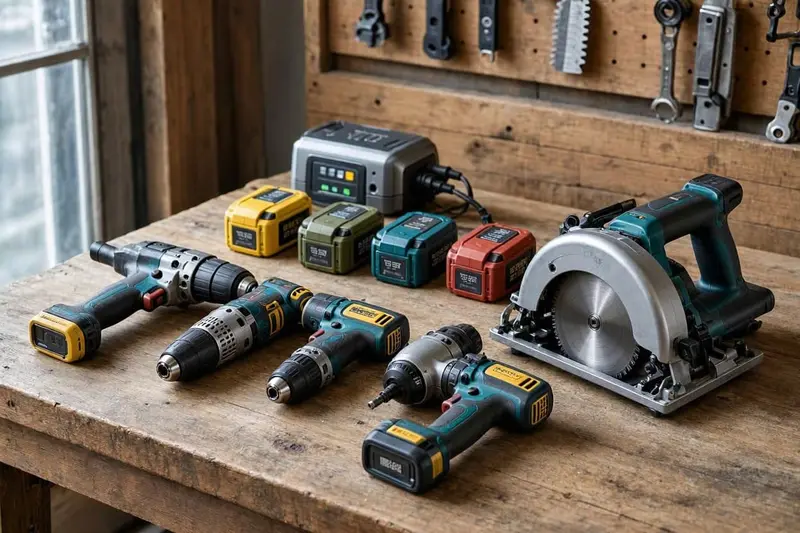
Choosing the best power tool brands UK DIYers can buy isn’t as straightforward as picking the biggest name on the shelf. After 50 years on UK building sites and in my own workshop, I’ve seen established brands change and more affordable alternatives improve. The right choice depends on the tools you need, your budget and how often you’ll use them.
I’m not going to bore you with corporate history or marketing claims. Instead, we’ll look at what really matters to UK DIYers: battery performance, reliability, build quality, ease of use and value for money. We’ll compare the established professional brands with the cheaper alternatives, looking at where spending more makes sense and where a budget tool might be all you need.
The aim is simple: to help you choose tools that suit your projects, your budget and the way you work — without paying extra just for a familiar name.
Why trust my verdict?
- I’ve spent decades on UK building sites and in my own workshop, and I’ve seen plenty of changes in the power tool market. Some long-established brands haven’t always lived up to their reputation, while some cheaper brands have improved enormously and now offer excellent value for money.
- I buy and use tools with my own money, so my aim is simple: to give you honest, practical advice about what is worth buying and what isn’t. I’m not here to repeat manufacturers’ marketing claims or tell you to spend more than you need to.
- My focus is on helping you choose the right tool for the job, not simply the biggest name on the box.
Best Power Tool Brands UK: Which Should You Choose?
| If your priority is… | Brands worth comparing | Why? |
|---|---|---|
| A versatile cordless toolkit | DeWalt, Makita | Extensive ranges for regular DIY |
| Keeping costs down | Ryobi, Einhell | Options for home projects and gardening |
| DIY and workshop tools | Bosch, Makita | A broad choice for different jobs |
| Heavy-duty or specialist work | Milwaukee, DeWalt, Makita | Powerful models for demanding applications |
| Tools for occasional home repairs | Ryobi, Bosch, Black+Decker | Options aimed at home users |
These are starting points rather than strict rankings. Compare the individual tools, battery costs and warranty conditions before deciding.
The Big Three: The “Enda” Verdict
DeWalt, Makita and Milwaukee are three well-known names in the power tool market, particularly among tradespeople and serious DIYers. All three offer extensive cordless ranges, but they aren’t identical in price, design or the way they suit different users.
I’ve used DeWalt and Makita for years, so I can draw on my own experience with those brands. Milwaukee is different: I don’t own any of its tools, so my comments are based on what I’ve seen and heard rather than personal testing.
1.DeWalt – My All-Round Favourite
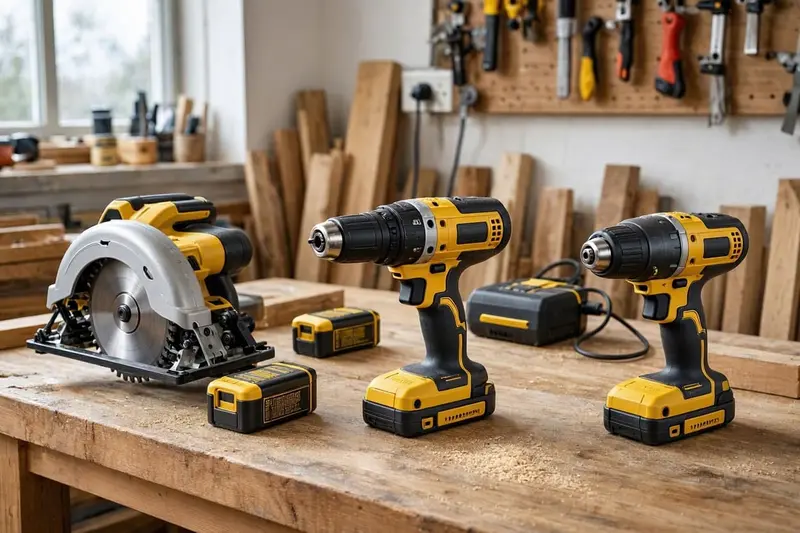
DeWalt is a familiar sight on UK building sites and in home workshops. Its yellow and black tools cover everything from drills and impact drivers to circular saws, grinders and garden equipment. The 18V XR cordless system is particularly appealing if you want to build up a collection of tools that share batteries.
- My Take: If you’re a DIYer who wants one main battery platform for a range of jobs around the home, DeWalt is an excellent place to start. I particularly like the breadth of the range and the ability to add tools over time without buying a new battery system for every machine.
- The Warning: Don’t get sucked into their “Powerstack” batteries unless you really need the compact size, the standard 5.0Ah XR packs are much better value for money.
What I Like About DeWalt
DeWalt tools are built tough. Their XR 18V cordless range is especially popular for drills, impact drivers, and saws.
- A wide choice of 18V XR cordless tools
- Good performance for everyday DIY and heavier projects
- A robust feel and comfortable grips on many models
- Plenty of options, from bare tools to complete kits
- A battery platform that makes expanding your collection straightforward
What to consider: DeWalt tools can be expensive, particularly when buying several tools and batteries. The best-value option is often a kit or promotion, rather than automatically buying every tool separately.
It’s also worth comparing batteries carefully. Standard 5.0Ah XR batteries can be a sensible choice for general DIY, while POWERSTACK batteries offer different advantages, including compact options and higher performance in certain applications. I wouldn’t dismiss POWERSTACK outright, but I’d compare the price and benefits before paying extra.
Best for: DIYers who want a versatile cordless system for regular home projects, timber work, repairs and outdoor builds.
For me, DeWalt remains my first choice. Battery performance, tool quality and the breadth of the range have all been important factors in my decision to stick with the brand. That doesn’t mean it’s automatically the right choice for everyone, but I have been happy with the tools I’ve bought.
If you’re only going to do occasional DIY, you don’t necessarily need a huge collection of expensive power tools. I’d rather see someone invest in a few good tools they’ll use regularly than buy a workshop full of machines they rarely need.
My Personal Verdict: “I bought my first DeWalt tool, the DCD776 drill, in 2010. I immediately noticed the difference compared with my old Black+Decker model. That experience encouraged me to buy more DeWalt tools over the years, and it remains the brand I naturally look at first. “
2. Makita – A Long-Standing Favourite
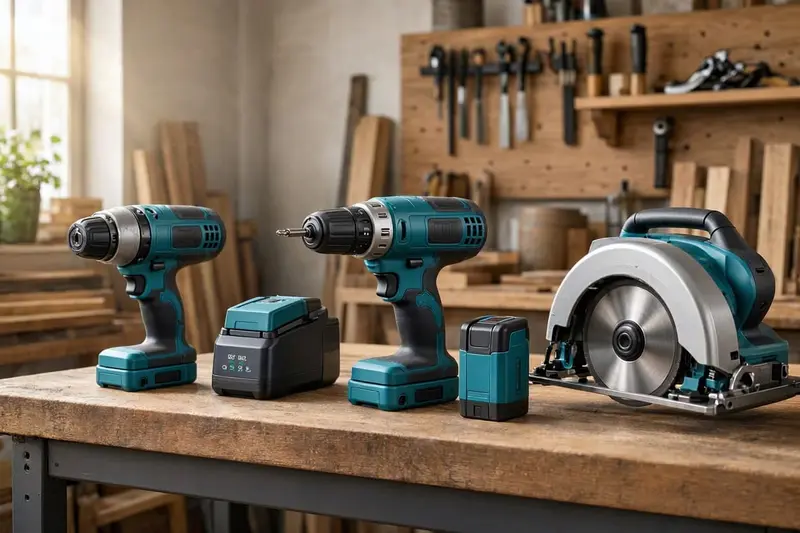
Makita has a strong reputation among professionals and serious DIYers. Its tools cover a huge range of jobs, and the 18V LXT cordless platform is well established. Makita also offers its 40V max XGT range for users who need tools designed for more demanding applications.
- My Take:Makita has always appealed to me because of the way its tools feel in use. Depending on the model, they can feel well balanced and precise, which is useful for jobs such as fitting kitchens, building furniture and carrying out detailed woodwork.
- The Warning: Their range is massive and can be confusing. Stick to the 18V LXT range for now; the new 40V XGT stuff is overkill for most DIYers.
What I like about Makita:
Makita has been a trusted name in the UK since the 1970s. Known for its durability and wide tool range, it’s a favourite among both professionals and serious DIYers.
- A broad selection of cordless and corded tools
- The established 18V LXT battery platform
- Good build quality across many models
- Options for both everyday DIY and demanding work
- A large range of saws, drills, sanders and multi-tools
What to consider: Makita isn’t always the cheapest option, and its extensive range can be confusing when you’re starting out. If you’re building your first cordless collection, compare the tools available in the 18V LXT system before deciding whether you need anything more specialised.
The 40V max XGT range has its place, but most people doing ordinary household repairs and weekend DIY should first consider what they can achieve with a suitable 18V tool. The right choice depends on the work involved, not simply the voltage printed on the battery.
Best for: DIYers who want a well-established cordless system and expect to take on regular projects over several years.
I wouldn’t suggest buying Makita simply because it has a professional reputation. These tools represent a worthwhile investment when you’ll use them regularly, but an occasional DIYer may be perfectly happy with a less expensive alternative.
My Personal Verdict:“I bought my first Makita in the 1980s. I’ve seen the technology and batteries change considerably since then, but the brand has remained part of my tool collection. If I were planning another major home project, Makita would still be one of the brands I’d consider.”
3. Milwaukee – The Heavy-Duty Contender
Milwaukee has built a strong following among tradespeople, particularly those who want powerful cordless tools and a wide range of specialist equipment. Its M18 system includes drills, impact drivers, saws, grinders and many other tools, with M18 FUEL models aimed at demanding applications.
- My Take: Milwaukee is worth considering if your work regularly calls for high performance, specialist features or tools designed for intensive use. For someone carrying out heavy renovation work day after day, the extra capabilities of a particular model may justify the higher purchase price.
- The Warning: For 90% of home maintenance, you are paying for power you will never actually use.
What Milwaukee offers:
- A large M18 cordless tool range
- High-performance brushless tools in its FUEL range
- Batteries designed for different levels of power and runtime
- Specialist tools aimed at professional trades
- Options for users who need more than a basic DIY tool can provide
What to consider: Price is the main reason I haven’t built up a collection of Milwaukee tools myself. Buying into a cordless platform means considering the cost of the tools, batteries and chargers together, not just the price of the bare tool.
It would also be a mistake to assume that every Milwaukee tool is necessary for ordinary home maintenance. A powerful professional tool can be excellent, but if you’re hanging shelves, assembling furniture or carrying out occasional repairs, you may never need its more advanced capabilities.
Best for: Tradespeople and experienced DIYers who can make practical use of the performance and specialist options available in the range.
My Personal Verdict: “I don’t own Milwaukee tools because I’ve never been able to justify the expense for my own needs. However, my plumber uses them and speaks highly of them, and I’ve seen plenty of tradespeople using the brand. That’s a useful indication of its popularity, although it’s not the same as my own hands-on test.
For me, Milwaukee is a brand I’d investigate if a particular tool offered a clear advantage for a job. I wouldn’t buy it just for the name, and I wouldn’t rule it out simply because it costs more.“
The “Sleeper” Brands (Where the Value Is)
You don’t have to spend professional-tool prices to get a capable set of power tools. Some brands offer excellent options for home maintenance, gardening and weekend projects, particularly if you choose a battery system that can grow with you.
The important thing is to compare the tools you actually need, rather than assuming a more expensive brand will always give you better value.
4. Ryobi – A Strong Choice for Homeowners
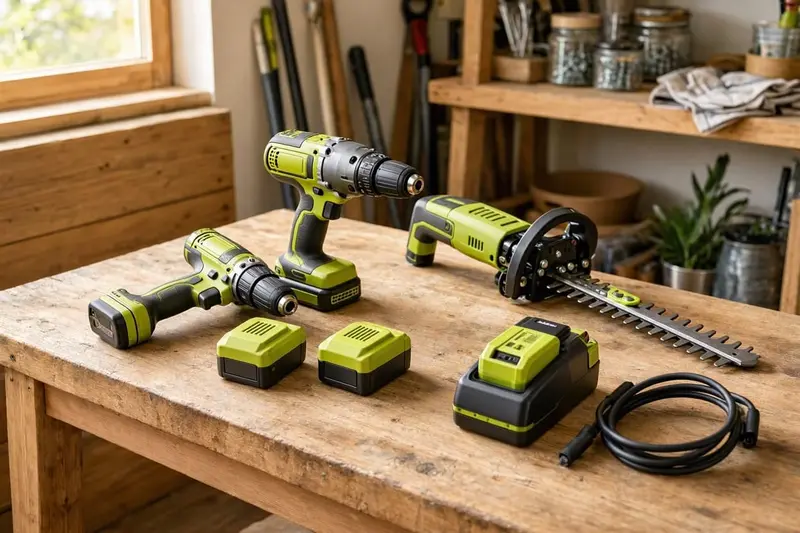
Ryobi’s green cordless tools are easy to recognise, and its ONE+ 18V system is a major attraction. The same battery platform covers a wide range of tools for DIY, workshop jobs and gardening.
Ryobi’s ONE+ system powers over 100 tools with the same 18V battery. It’s a great choice for casual DIYers building a flexible toolkit.
Why consider Ryobi?
- A broad range of compatible 18V tools
- An accessible entry point for homeowners
- Options for indoor DIY and garden maintenance
- The ability to add tools as your needs change
One of the biggest advantages of a long-running battery platform is that you may be able to expand your collection without replacing every tool. Ryobi says its ONE+ batteries are compatible with tools across the system, including older models, although it’s always sensible to check the particular tool and battery before buying second-hand.
Best for: Homeowners who carry out regular DIY and want one battery system for jobs around the house and garden.
My Personal Verdict: “I don’t own Ryobi tools myself, but I’ve used a drill, impact driver and cordless hedge trimmer belonging to my neighbour Geoff. He swears by them, and I can see why they appeal. They worked well for the general DIY and gardening jobs I’ve seen them used for. That’s not the same as testing the full range, but Ryobi is certainly a brand I’d consider for a homeowner’s toolkit.“
5. Bosch – Two Ranges to Understand
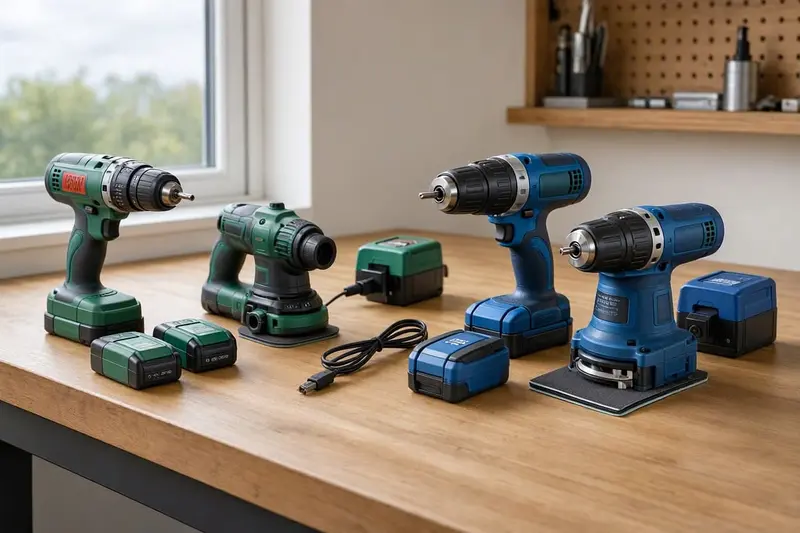
Bosch is worth considering because it offers two main power tool families:
- Bosch Home & Garden (green): aimed primarily at DIYers and home users.
- Bosch Professional (blue): designed for more demanding applications, including professional work.
Both ranges cover tools such as drills, jigsaws, sanders and other workshop essentials. The right choice depends on the job, the particular model and how often you intend to use it.
Why consider Bosch?
- A choice of tools for different budgets and experience levels
- Corded and cordless options across the range
- Useful workshop tools, including jigsaws and sanders
- Established product support and warranty arrangements
Best for: Beginners and regular DIYers who want a recognised brand without automatically buying its most expensive professional equipment.
My Personal Verdict: “I own a Bosch lawnmower and sander, and I’ve been pleased with them. I also buy plenty of Bosch drill bits because I’ve found them useful and good value. Those are the experiences I can speak to directly; I’d still compare individual models before recommending one over another.“
6. Einhell – Worth a Look on a Budget
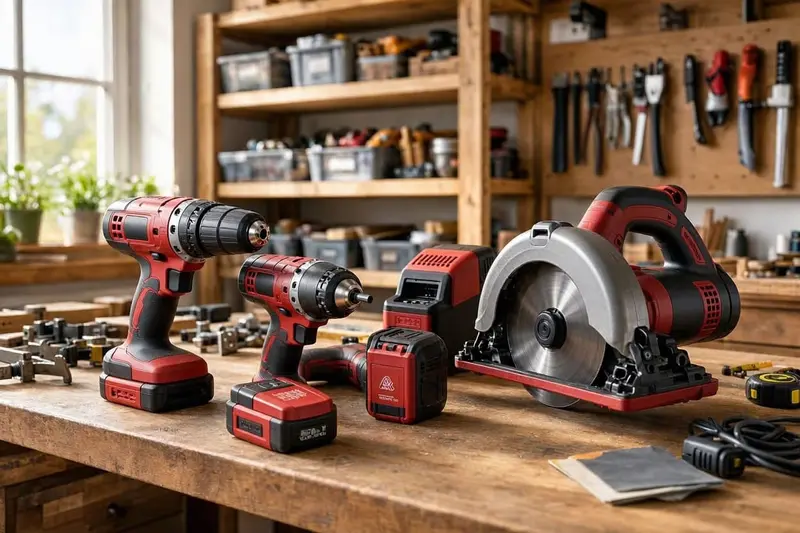
Einhell is another brand worth considering if you’re building a workshop without spending a fortune. Its Power X-Change battery system covers a wide range of tools for DIY, workshop tasks and gardening.
I might not have considered Einhell as readily years ago, but the brand deserves a fresh look rather than being dismissed simply because it is often priced below established professional ranges.
Why consider Einhell?
- A wide range of Power X-Change cordless tools
- Options for workshop and garden use
- A battery system that lets you add compatible tools
- Manufacturer warranty extensions available on eligible products when registered
Best for: DIYers who want to keep initial costs under control while building a useful collection of cordless tools.
My verdict: “Einhell is worth comparing against other budget and mid-range options. I wouldn’t automatically call it better than every competing brand, but I wouldn’t dismiss it either. Check the particular tool’s performance, included accessories, battery costs and warranty terms before deciding.”
Honourable Mentions
Several other brands may suit particular buyers, depending on the tool and the job.
Hi-Spec Tools: worth investigating for basic starter kits and occasional light DIY.
Black+Decker: offers tools aimed at home users and people carrying out everyday repairs.
Draper: a long-established name covering hand tools, workshop equipment and power tools.
Erbauer: Screwfix’s own power tool brand, with options for DIYers and more demanding home projects.
These brands shouldn’t all be judged in the same way. A hand-tool kit, a cordless drill and a heavy-duty circular saw have different requirements, so compare the individual product rather than relying on the name alone.
A Word of Caution About Very Cheap Online Brands
You’ll find unfamiliar tool brands on online marketplaces, sometimes bundled with large accessory kits at tempting prices. A low purchase price isn’t necessarily a bargain if the tool performs poorly or you struggle to obtain replacement batteries, spare parts or customer support.
Before buying an unfamiliar brand, check whether it has a genuine manufacturer website, clear warranty conditions, accessible customer support and compatible replacement batteries. Look for credible reviews of the exact model, not just generic five-star ratings.
I wouldn’t rule out a tool solely because its brand is unfamiliar, but I would be cautious about spending money on one when its specifications, support arrangements and long-term battery availability are unclear.
How to Choose: The 3-Question Test
Before committing to a cordless battery platform, ask yourself three questions.
1. What are my biggest planned projects?
If you’re building a deck, renovating a room or tackling substantial timber work, you may benefit from a more capable tool range. If you’re mainly assembling furniture, putting up shelves and repairing a fence, a more affordable system could be perfectly adequate.
2. How do the tools feel in my hands?
If possible, visit a shop and handle a few models. Check the grip, balance, weight and position of the controls. Hand size and personal preference matter, so don’t assume that one brand will suit everyone.
3. Can I share or borrow batteries?
This is particularly useful if someone in your household or a trusted neighbour already uses the same battery platform. Being able to borrow a compatible battery occasionally can be handy, but don’t choose a whole system on that basis alone.
Also consider the price of replacement batteries and chargers. A cheap bare tool may not be such good value if you have to buy several expensive batteries to use it.
Why Your First Battery System Matters
When buying your first cordless power tool, it’s worth thinking beyond the tool itself. The battery platform you choose today can influence how much it costs to expand your toolkit in the future.
For example, if you buy a cordless drill with two batteries and a charger, you may later want to add a circular saw, impact driver or garden tool. Buying compatible bare tools can sometimes be cheaper than purchasing a separate battery and charger with every machine.
Before choosing a system, consider:
- Battery prices: Check how much replacement and higher-capacity batteries cost.
- Tool availability: Make sure the platform includes the tools you expect to need.
- Your budget: Compare starter kits and promotions, not just bare-tool prices.
- Your future projects: Don’t pay for a large professional range if you only need a few tools for occasional DIY.
- Battery compatibility: Check the exact model and platform. Not every battery from the same manufacturer fits every tool.
My advice is to choose a system that covers the jobs you expect to do over the next few years. You can always expand later. There’s no need to buy a dozen tools simply because they’re available.
Enda’s Power Tool Brand Comparison
The following table is a practical starting point, not a laboratory ranking. Prices, specifications and warranty conditions vary by model and can change over time.
| Brand | Battery platform to consider | Best suited to |
|---|---|---|
| DeWalt | 18V XR; selected tools also use FLEXVOLT | Regular DIY and heavier projects |
| Makita | 18V LXT; 40V max XGT for selected demanding work | Workshop jobs, joinery and regular DIY |
| Milwaukee | M18 | Tradespeople and demanding applications |
| Ryobi | 18V ONE+ | Home maintenance and gardening |
| Bosch | Home & Garden or Professional, depending on the tool | Beginners through to demanding users |
| Einhell | Power X-Change | Budget-conscious DIY and workshop use |
Don’t Choose a Brand on Warranty Length Alone
Warranty terms are not as simple as saying that every tool and battery from a particular brand has the same cover.
For example, DeWalt offers an extension to three years for eligible registered tools, but standard batteries and chargers generally have different cover. Makita’s UK terms distinguish between tools and lithium-ion batteries or chargers. Ryobi and Einhell also have registration requirements and specific conditions for their warranty extensions.
Before buying, check the current terms for the exact product, including the registration deadline and whether batteries and chargers are covered separately.
Useful official information:
- DeWalt UK warranty
- Makita UK warranty terms
- Milwaukee UK warranty and registration
- Ryobi UK warranty information
- Einhell battery warranty
My Overall Recommendation
If you’re starting from scratch, I’d look at DeWalt for a versatile all-round cordless collection or Ryobi if value and the choice of home and garden tools are your priorities. Makita is also a strong option, while Milwaukee deserves consideration when a particular tool’s capabilities justify its price. Bosch and Einhell are worth comparing too.
Don’t buy more tools than you need. Start with a good cordless drill, then add other tools when your projects call for them.
Enda’s Workshop FAQ: The Real Truth
Q: Can I use a DeWalt battery on a Makita tool (or vice versa)?
The Short Answer: don’t assume they’re compatible.
Each manufacturer designs its battery connections and electronic systems for its own tools. Third-party adapters are available, but they may not preserve all the protection, monitoring or communication features of the original system.
I’d stick to the correct manufacturer-approved battery and charger for your tool unless the tool and adapter manufacturers explicitly confirm compatibility and safe operation.
Q: Are brushless tools worth the extra money?
The Verdict: They can be, but it depends on how you use the tool.
Traditional brushed motors use carbon brushes that wear over time. Brushless motors use electronic control instead, which can reduce maintenance and improve efficiency. Depending on the particular tool, they can also provide more performance or longer runtime from the same battery.
However, there isn’t one universal runtime improvement that applies to every brushless tool. If you use a drill occasionally for small jobs, a good brushed model may be sufficient. If you use tools regularly or demand more performance, brushless is worth comparing.
Q: Why does my cordless battery seem to lose power in winter?
Lithium-ion batteries can deliver less power in cold conditions, and cold temperatures can temporarily reduce their performance.
If you work in an unheated UK shed or garage, store batteries according to the manufacturer’s instructions and bring them indoors when appropriate. Allow a cold battery to reach the permitted temperature before charging it; never try to warm it with a heater or other direct heat source.
If a battery repeatedly loses charge unusually quickly, even at a suitable temperature, check its condition and the manufacturer’s advice.
Q: Is it okay to leave my battery on the charger overnight?
Use the manufacturer’s recommended charger and follow the instructions supplied with your battery and tool. Modern chargers commonly manage the charging process, but that doesn’t mean every charging setup should be left unattended or used in unsuitable conditions.
Charge batteries in a dry, well-ventilated place, away from combustible materials, and stop using a battery that is swollen, damaged or unusually hot. For long-term storage, follow the manufacturer’s guidance rather than leaving batteries permanently connected to a charger.
Want help choosing your first tool? Check out:
- Essential Power Tools for DIY Beginners
- Top 5 Cordless Drill Sets for Home Use
- Must-Have Accessories for Your Power Tool Kit