By Enda McLarnon — Experienced UK DIYer sharing practical fixes from my 1958 red brick home.
What Size Screw for a Red Wall Plug?
Red wall plugs are one of the most common fixings used in UK DIY projects, but many beginners to DIY are unsure which screw size they should use. Choose a screw that is too thin and the plug may not expand properly. Choose one that is too thick and the plug can split or become difficult to install.
For most standard UK red wall plugs, a screw between 3.5mm and 5mm in diameter will work well. Red plugs are typically designed for a 6mm drilled hole and are commonly used for light to medium-duty fixings such as shelves, curtain poles, brackets and hooks.
In this guide, I’ll explain which screw sizes work best, what can go wrong, and how to get a strong fixing every time.
What Is a Red Wall Plug?
A red wall plug is one of the standard colour coded wall plugs commonly sold in the UK.
Most red plugs require:
- 6mm drill bit
- 3.5mm to 5mm screw
- Solid masonry or brick fixing
They are often supplied with:
- Shelf brackets
- Curtain pole fixings
- Towel rails
- Light wall-mounted accessories
Typical Screw Sizes for a Red Wall Plug
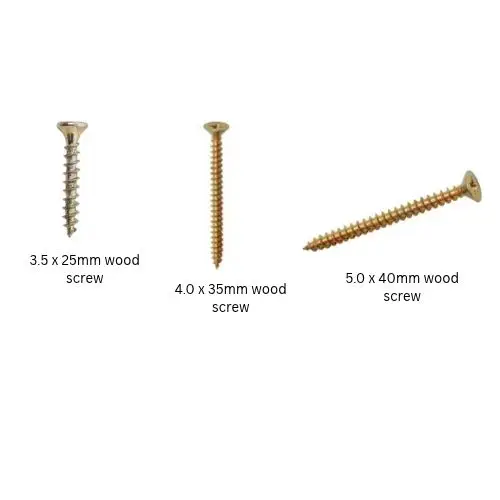
As a general guide:
| Red Wall Plug | Screw Diameter |
|---|---|
| 6mm Plug | 3.5mm |
| 6mm Plug | 4mm |
| 6mm Plug | 4.5mm |
| 6mm Plug | 5mm |
For most DIY jobs I usually reach for a 4mm or 4.5mm screw as it provides good expansion without excessive force.
Are All Red Wall Plugs the Same Size?
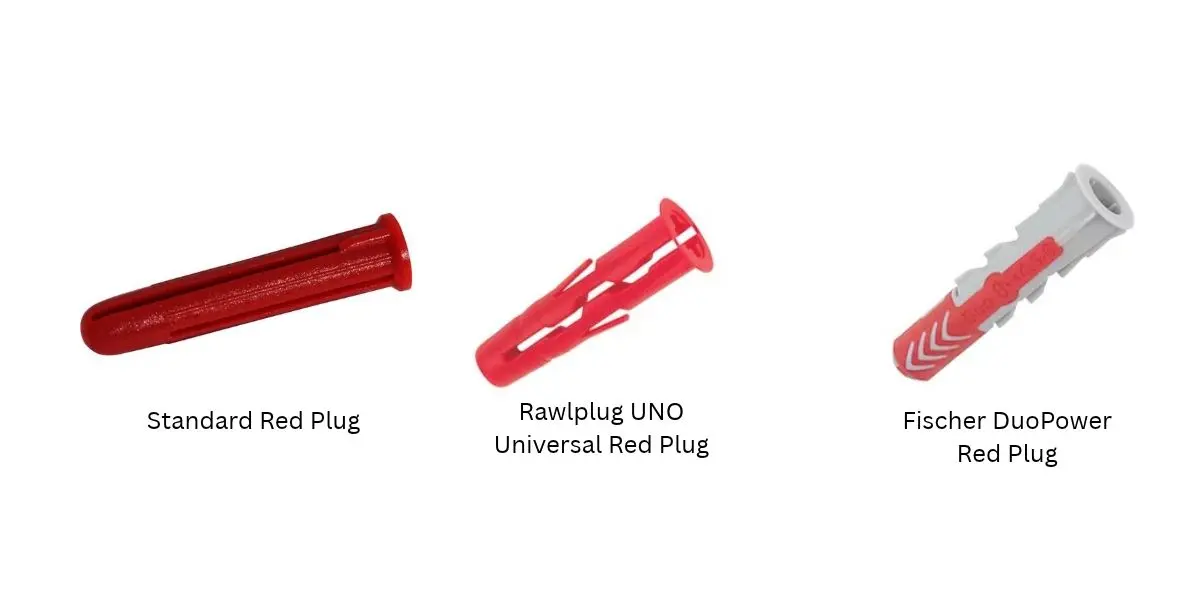
No, not all red wall plugs in the UK are the exact same size and shape. In the UK there is a widely accepted colour coding trade convention where red signifies a medium duty plug.
However, the exact specifications of a red wall plug can vary noticeably depending on the brand and specific product design that you buy:
Variations in Size & Drill Bits
- Diameter (Drill Bit Size): While most standard red plugs require a 6mm drill bit, some budget brands or specific trade designs (such as those supplied on a plastic frame or “sprue”) are slightly thinner at 5.5mm.
- Length: The length of a red plug is not uniform. For example, a standard Rawlplug Red Uno measures 28mm in length, whereas alternative heavy-duty or general plastic variants often measure 30mm, 34mm, or 35mm. (not a huge difference I know)
Variations in Shape & Grip
The geometry of the plug changes a lot between manufacturers to solve different fixing problems:
- The Rim/Lip: Some red plugs have a round flared lip at the top to prevent them from slipping too far into an oversized or loose drill hole. Others are completely flush so they can sit deep behind a piece of plasterboard or timber.
- Anti-Rotation Lugs/Fins: Different brands use distinct shapes of molded side fins or ridges to stop the plug from spinning inside the masonry wall when you drive the screw in.
- Expansion Mechanics: High performance plugs like the Fischer DuoPower or Rawlplug Uno feature multi-axis or split-top geometries that knot or expand into multiple directions to work in both solid brick and hollow cavities. Cheaper traditional plugs are simply hollow plastic sleeves that split symmetrically down two sides.
General Compatibility Rules
Despite these minor variations, if you buy a pack of red wall plugs from a UK retailer like Screwfix or B&Q, you can generally expect them to adhere to the following ranges:
- Required Drill Bit 5.5mm to 6.0mm
- Compatible Screw Gauges No. 6 to No. 10 (3.5mm – 5.0mm diameter)
- Typical Use Cases Medium-weight items (shelves, mirrors, curtain poles)
The 4 Main Length Tiers
A longer plug provides more surface area friction inside the wall, but requires a deeper hole. If you browse any major UK merchant, you will find red plugs separated into four distinct lengths:
- Rawlplug Uno Red – 28mm – These expand instantly at the very top of the neck, so it doesn’t need depth. These are highly favoured by electricians and DIYers working on thin walls or unknown masonry substrates where drilling deep could risk striking cavities or cables.
- Fischer Plastic Plugs – 30mm (Standard Trade): The most common length found in budget bulk tubs, like Fischer Plastic Plugs or Easyfix brands. They split symmetrically along the body and rely on a full 30mm depth to achieve their specified pull-out rating.
- 34mm to 35mm (Deep-Engagement / All-Purpose) – Often manufactured from High-Density Polyethylene (HDPE), these elongated plugs are intended for older, slightly crumbly brickwork. The extra length distributes the expansion forces deeper past the brittle surface plaster and directly into the structural core of the brick.
- Plasplugs Super Grips -38mm (Heavy-Duty Masonry): These are designed strictly for concrete, stone, and solid brick, these require a deep hole but offer maximum pull-out resistance for heavier medium-duty items like large shelving brackets.
Structural Types & Designs
The physical shape of a plug determines exactly how it grips the material when the screw expands it:
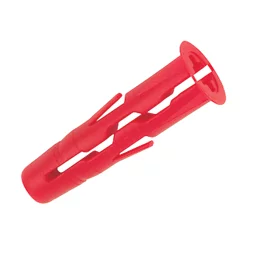
Traditional Split Multi-Axis / Knotting Profiled “Super Grip”
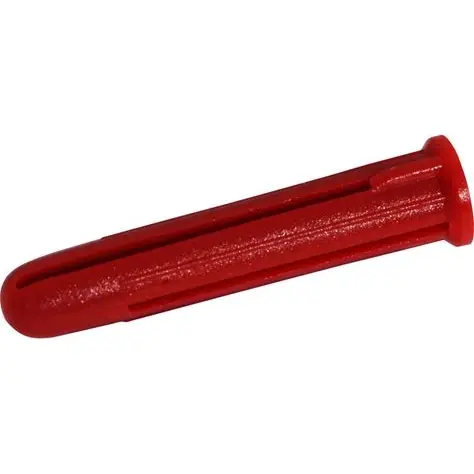
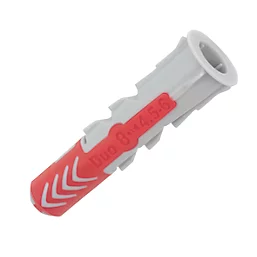
- Traditional Split-Sleeve Plugs: The cheapest, classic option. They feature a solid neck and a body that splits cleanly down two sides. They work flawlessly in completely solid concrete or dense engineering brick but struggle if they hit a void.
- Knotting / Universal Plugs (e.g., Fischer DuoPower / Rawlplug Uno): These are highly engineered. If driven into a solid wall, they expand outwards like a normal plug. However, if they hit a hollow pocket or plasterboard cavity, the plastic is scored to fold, collapse, and tie itself into a knot behind the wall surface, locking it into place.
- Multi-Point Profiled Plugs: Rather than relying on a smooth body, plugs like the Plasplugs Super Grips feature prominent external fins, wings, or “six-grip points”. These profiles physically bite into the raw drilled masonry surface to ensure the plug cannot spin when an impact driver or screwdriver is used.
What Happens if the Screw Is Too Thin?
This is a common mistake.
If the screw is too small:
- The plug may not expand fully
- The fixing may feel loose
- The plug may start spinning
- The screw may pull out under load
A plug only works when it expands tightly against the wall. Without enough expansion, there is very little grip.
What Happens if the Screw Is Too Thick?
Beginners often assume bigger means stronger. Unfortunately that’s not always true.
If the screw is too large:
- The plug can split
- The plug may distort
- Driving the screw becomes difficult
- The plug can be forced deeper into the wall
In some cases the plug may fail completely.
Screw Length Matters Too
Diameter is only half of the equation. The screw should be long enough to pass:
- Through the item being fixed.
- Completely through the wall plug.
- Slightly beyond the end of the plug.
For example: If you’re using:
- 30mm red wall plug
- 5mm bracket
A screw around 40-50mm long is often suitable.
My Rule for Choosing Screw Length
A simple DIY rule I use is:
Wall plug length + thickness of the item being fixed + a little extra.
It’s not a perfect formula but it’s worked well for shelves, brackets, hooks and curtain poles over the years.
Can You Use a Red Plug in Plasterboard?
Not usually. This catches out many beginners.
Red plugs work best in:
- Brick
- Concrete
- Blockwork
- Solid masonry
If the wall is plasterboard, purpose-made plasterboard fixings will usually provide a stronger and more reliable fixing.
Why Does My Red Wall Plug Keep Spinning?
If your plug spins when tightening the screw, common causes include:
- Hole drilled too large
- Screw too small
- Crumbling wall material
- Plug has been reused
- Wrong fixing for the wall type
This is one of the most common wall fixing problems in DIY.
A Fix I’ve Used on Oversized Holes
If a hole has become slightly oversized, one trick I’ve used successfully is placing a smaller wall plug inside a larger wall plug.
This allows me to reuse the existing screw while creating a tighter fit in the wall.
It’s not something you’ll find on the instructions, but it has rescued plenty of fixings where redrilling wasn’t practical.
For crumbling masonry, I’ve also had success coating a new plug with filler before inserting it into the hole.
Once the filler sets, the plug often has a much stronger grip.
Common Mistakes to Avoid
Using the Wrong Drill Bit
Most red wall plugs require a 6mm masonry drill bit.
Always check the packaging.
Leaving Dust in the Hole
Dust can prevent the plug from gripping properly.
Blow or vacuum the hole before inserting the plug.
Reusing Old Wall Plugs
New plugs are inexpensive and usually hold far better than old ones.
Fixing Into Plaster Instead of Brick
Try to ensure the plug sits within the solid masonry rather than just the plaster layer.
Not All Red Wall Plugs Are the Same
One mistake many beginners make is assuming all red wall plugs are identical. In reality, you’ll find several different designs in UK DIY stores.
Some red plugs:
- Have a plain straight body.
- Have a collar or rounded head at the top.
- Have anti-rotation fins.
- Have small side wings designed to stop the plug turning in the hole.
The basic job is the same, but some designs perform better than others depending on the wall material.
I’ve generally found that plugs with anti-rotation features are less likely to spin in older brickwork and crumbling plaster.
Be Careful With Supplied Fixings
Many shelves, curtain poles and bathroom accessories sold in the UK come with “free” plugs and screws.
In my experience, these supplied fixings are often the weakest part of the installation.
The screws are sometimes too soft, the plugs can be poor quality, and the fixing may not suit your particular wall type.
If I’m fitting something important, I will often use the supplied fixing only as a guide and replace it with a quality wall plug and screw that I know works well in the wall I’m fixing into.
UK TIP: If you want to know about the full range of wall plugs in the UK, then read my Wall Plugs & Bit Sizing: How to Match Drill Bit, Plug, and Screw
Frequently Asked Questions
What drill bit should I use for a red wall plug?
Most UK red wall plugs require a 6mm masonry drill bit.
Can I use a 5mm screw in a red wall plug?
Yes. A 5mm screw is generally within the recommended range for a standard red plug.
Can a screw be too long for a wall plug?
Yes. If the hole is not drilled deep enough, an overly long screw can bottom out before the fixing tightens.
Are red wall plugs strong enough for shelves?
For light and medium-duty shelves fixed into solid masonry, red plugs are often suitable. Heavier loads may require larger fixings.
Final Thoughts
If you’re using a standard UK red wall plug, a screw between 3.5mm and 5mm will normally provide the best results.
More importantly, make sure the hole is the correct size, the plug is new, and the screw is both the right diameter and the right length.
Most failed wall fixings aren’t caused by poor-quality plugs. They’re caused by using the wrong combination of plug, screw and drill bit.

About the Author: Enda McLarnon
I’m an experienced UK DIYer tackling renovation life inside a 1958 red brick home.
I built this blog to help beginners conquer home maintenance anxiety and save a fortune on expensive trade calls.
Photos I’d Add
- Red plug beside a 6mm masonry bit.
- Several screw sizes laid beside a red plug.
- Example of a screw that’s too thin.
- Example of a screw that’s too thick.
- Your “small plug inside large plug” repair method.
- Plug dipped in filler before insertion.
- Correctly fitted red plug in brickwork.