By Enda McLarnon — Experienced UK DIYer sharing practical fixes from my 1958 red brick home.
If there is one power tool that rescues UK DIYers from awkward, impossible-to-reach renovation jobs, it is the oscillating multi-tool.
If you need to undercut a wooden door frame for new laminate flooring, trim a protruding nail flush against a skirting board, or rake out crumbling grout in a tight bathroom corner, a multi-tool gets into spaces no circular saw or jigsaw can reach.
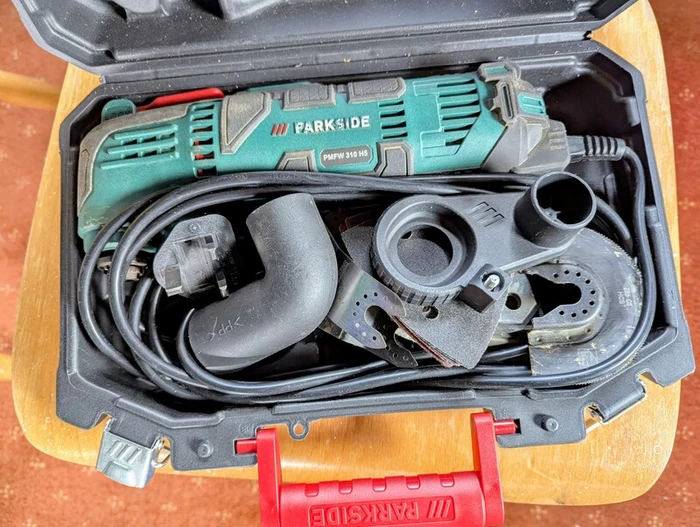
From My Own Garage: Trimming a Garage Door Frame Against Rising Damp You don’t need an expensive trade-grade multi-tool to solve real household problems. I use a well-worn Parkside oscillating multi-tool in my own garage, and one of the best jobs it has ever done was undercutting the bottom of my wooden garage door surround. Because the timber sat directly against damp concrete, moisture was wicking up into the bottom edge and starting to rot.
Trying to trim that gap cleanly in situ with a hand saw or jigsaw would have been impossible without removing the entire frame. With a flush-cut wood blade fitted to the multi-tool, I slid the blade flat along a scrap offcut spacer and neatly trimmed 10mm off the bottom of the timber—creating a clean air gap to stop damp creeping back in.
However, because an oscillating multi-tool cuts by vibrating rapidly rather than spinning, beginners often burn through expensive blades in seconds or buy the wrong shank fitment on the Screwfix aisle.
In this complete UK DIY guide, I break down how oscillating multi-tools work, explain blade compatibility, and point you to our practical workshop guides on uses, troubleshooting, and setup.
Table of Contents
1. How Does an Oscillating Multi-Tool Work?
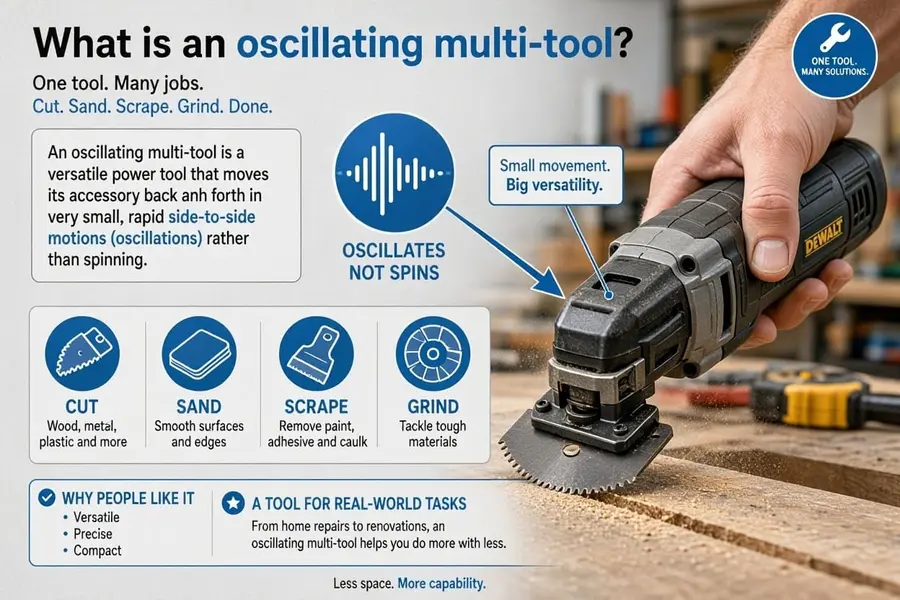
Unlike a circular saw that spins a blade continuously or a jigsaw that strokes up and down, an oscillating multi-tool vibrates its attachment side-to-side through a tiny arc—typically between 2.8° and 4.0°—at speeds of 10,000 to 22,000 oscillations per minute (OPM).
- Ultra-Safe & Controlled: Because the blade moves back and forth by only a couple of millimetres, there is zero rotational kickback. You can make precise plunge cuts directly into the middle of plasterboard, floorboards, or timber architrave.
- Oscillation Angle Matters: A smaller oscillation angle (around 2.8°–3.2°) gives finer control and cleaner plunge cuts, while a wider angle (3.6°–4.0°) removes material faster when cutting thick softwood or sanding.
2. What Can You Actually Do With One?
From lifting floorboards during electrical rewiring to sanding intricate window frames and scraping up old vinyl floor adhesive, a multi-tool replaces half a toolbox of awkward hand tools.
Explore Real-World UK Projects:
- Want to see where a multi-tool shines around the house? Read our full project breakdown: 10 Genius Uses for an Oscillating Multi-Tool (UK DIY Guide) (Insert URL)
3. Blade Fitments: Starlock vs. Universal OIS
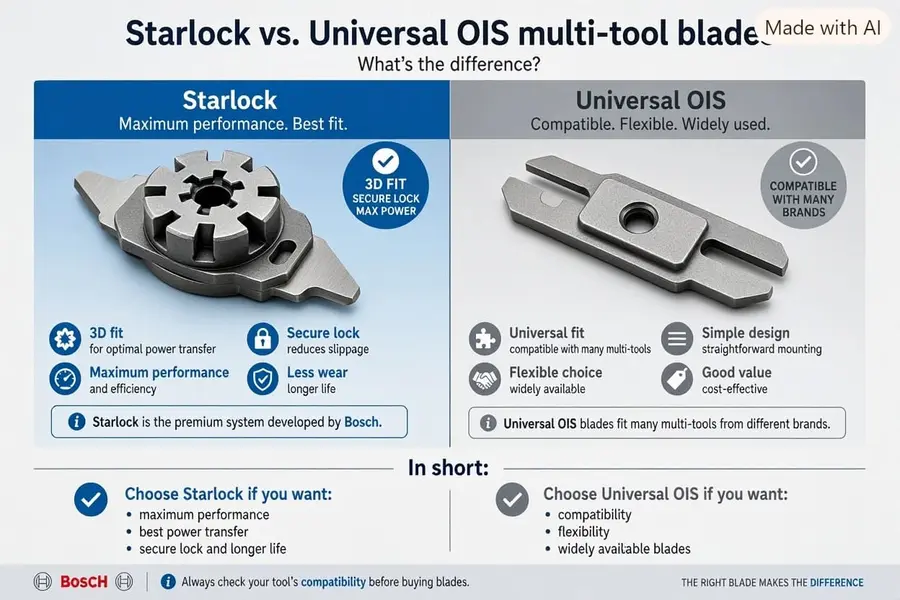
Before buying replacement blades, you need to know which mounting system your tool uses. Buying the wrong fitment is one of the most common mistakes UK DIYers make:
- Universal OIS (Oscillating Interface System): The classic open-backed ring with small pin holes, compatible with most standard multi-tools (DeWalt, Makita, Ryobi, Titan, Erbauer, Einhell) using a clamp or tool-free lever.
- Starlock (Standard, Plus & Max): Bosch and Fein’s 3D cupped “bottle-cap” interface that snaps onto the tool in seconds for maximum torque transfer. While standard Starlock blades fit many OIS machines, OIS blades will not fit Starlock-only tools.
Compatibility & Blade Guides:
- Not sure which blades fit your machine? Check our full fitment guide: Starlock vs Universal OIS Multi-Tool Blades Explained (UK Compatibility) (Insert URL)
- Ready to stock up on bi-metal, carbide, and wood blades? Browse our tested picks: 7 Best Oscillating Multi-Tool Blades UK (2026 Picks) (Insert URL)
4. Essential Technique & Troubleshooting Rules
Because the teeth on a multi-tool blade only travel a few millimetres per stroke, technique makes all the difference between a blade lasting an entire renovation or dulling in 30 seconds:
- Let the Speed Do the Work: Never lean heavily into the cut. Pushing hard stalls the side-to-side oscillation, builds up intense friction heat, and melts the blade teeth.
- Sweep Side-to-Side: When making wide plunge cuts in timber, gently rock or sweep the blade slightly left and right so sawdust clears out of the kerf instead of trapping heat.
- Match Blade Material to the Job: High Carbon Steel (HCS) is strictly for clean wood and plastic—hitting a single hidden nail will strip its teeth instantly. Always switch to Bi-Metal (BiM) or Carbide blades whenever nails, screws, or masonry are present.
Fix Common Multi-Tool Problems Fast:
- Chewing through blades too quickly? Read Why Do Multi-Tool Blades Dull So Fast? (5 Mistakes Burning Your Blades)
- Tool getting uncomfortably hot in your hand? Check Why Is My Multi-Tool Overheating & Burning Out? (How to Fix & Prevent It UK)
5. Corded vs. Cordless: Choosing Your Setup
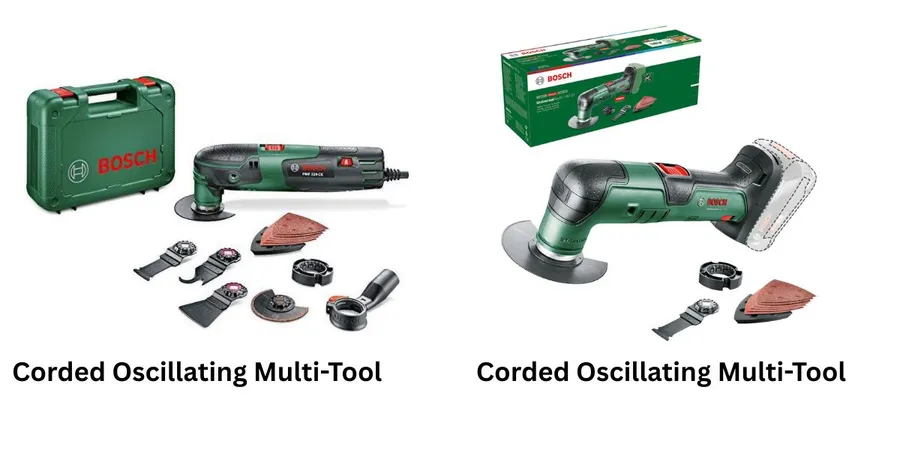
Before comparing individual models, decide how you will power the tool:
- Corded 240V Multi-Tools: Deliver consistent, fade-free power for long sanding sessions, grout removal, or heavy floorboards without draining batteries—usually at a much lower upfront cost.
- Cordless 18V Brushless Multi-Tools: Offer unmatched convenience when working up ladders, under floorboards, or inside tight cupboards without trailing cables, especially if you already own 18V batteries (Makita LXT, DeWalt XR, Bosch Professional, Ryobi ONE+).
Compare Power Options:
- Still undecided? Read our head-to-head breakdown: Corded vs Cordless Oscillating Multi-Tools: Which Do You Need?
Ready to Compare Top Models?
Now that you know how oscillating multi-tools work, which blade fitment to look for, and how to avoid burning out blades, head over to our hands-on product showroom to compare our top corded and cordless picks:
👉 5 Best Oscillating Multi-Tools UK (2026 Corded & Cordless Picks)

About the Author: Enda McLarnon
I’m an experienced UK DIYer tackling renovation life inside a 1958 red brick home.
I built this blog to help beginners conquer home maintenance anxiety and save a fortune on expensive trade calls.