By Enda McLarnon — Experienced UK DIYer sharing practical fixes from my 1958 red brick home.
Part of our Complete UK DIY Guide to Oscillating Multi-Tools.
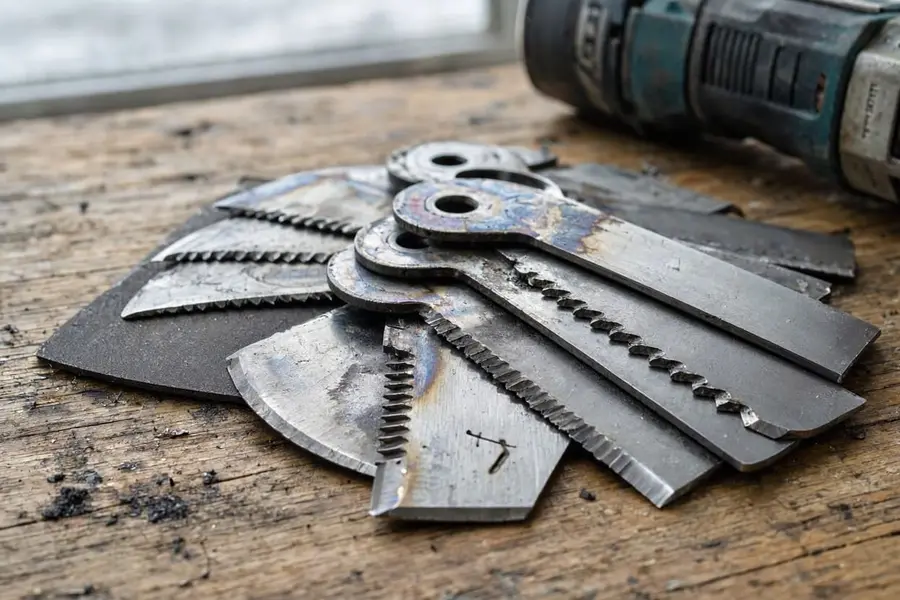
There is nothing more frustrating than fitting a fresh, £8 multi-tool blade, starting a cut into a door frame or floorboard, and watching the teeth strip flat or burn black within thirty seconds.
Because oscillating multi-tools use tight micro-vibrations rather than continuous rotating teeth, they are uniquely prone to extreme heat build-up. When heat builds up at the cutting edge, it destroys the metal’s temper, turning sharp steel teeth into dull, smooth metal in seconds.
If you are burning through blade packs faster than you should, you are likely making one of five common operator mistakes. Here is why your multi-tool blades are dulling so quickly—and how to fix your technique to make every blade last up to ten times longer.
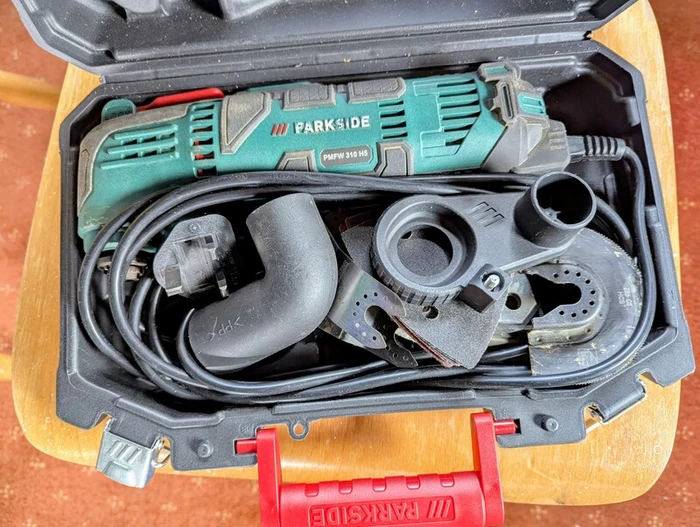
From My Own Garage: Trimming a Garage Door Frame Against Rising Damp You don’t need an expensive trade-grade multi-tool to solve real household problems. I use a well-worn Parkside oscillating multi-tool in my own garage, and one of the best jobs it has ever done was undercutting the bottom of my wooden garage door surround. Because the timber sat directly against damp concrete, moisture was wicking up into the bottom edge and starting to rot.
Trying to trim that gap cleanly in situ with a hand saw or jigsaw would have been impossible without removing the entire frame. With a flush-cut wood blade fitted to the multi-tool, I slid the blade flat along a scrap offcut spacer and neatly trimmed 10mm off the bottom of the timber—creating a clean air gap to stop damp creeping back in.
1. Excessive Downward Pressure (The #1 Blade Killer)
When a cut slows down, the natural reaction is to press harder on the tool. With an oscillating tool, pressing hard is the single worst thing you can do.
- Why it destroys blades: Pushing hard forces the blade teeth against wood or metal without giving them room to clear sawdust. Instead of slicing, the teeth rub against the material, generating immense friction heat (over 300°C) that instantly softens carbon steel teeth.
- The Fix: Let the speed of the tool do the work. Apply only light, steady pressure—just enough to keep the blade in contact with the cut line.
2. Holding the Blade Stationary During the Cut
When using a jigsaw or circular saw, the blade moves forward continuously. Because an oscillating blade vibrates back and forth by only 2 to 3 degrees, cutting in one static position traps sawdust and friction heat directly inside the cut kerf.
- Why it destroys blades: Trapped dust acts like insulation, rapidly heating the teeth and scorching surrounding timber.
- The Fix: Use a sawing/rocking motion. Slowly sweep the tool head left and right or tilt it gently back and forth while plunge-cutting. This ejects sawdust from the cut channel, lets fresh air cool the teeth, and distributes tooth wear across the full width of the blade.
3. Running Heavy Cuts on Maximum Speed (10/10 OPM)
Most multi-tools feature variable speed dials ranging from 1 to 6 (or 5,000 to 20,000 OPM). Running at full throttle for every task causes rapid overheating on delicate materials.
SPEED DIAL GUIDE FOR LONGEVITY
| Speed 5–6 (Max OPM) | Softwood plunge cuts, fast timber demolition |
| Speed 3–4 (Med OPM) | Hardwood, copper pipes, detail sanding, plastics |
| Speed 1–2 (Low OPM) | Tile grout, masonry, acrylics, metal scraping |
The Fix: Lower your variable speed dial to medium when cutting hardwood, copper pipes, or plastics. A slightly lower oscillation speed dramatically reduces heat build-up while maintaining clean cutting control.
4. Using Carbon Steel (HCS) Blades on Metal or Hardened Screws
Not all timber cuts are clean. Renovating old UK properties often means running blades into buried wire nails, drywall screws, or hardened floorboard fixings.
- Why it destroys blades: High Carbon Steel (HCS) blades are designed exclusively for softwoods and plastics. Hitting a single hardened screw with an HCS blade will instantly shear every tooth off the blade face.
- The Fix:
- For wood containing unknown nails: Use a Bi-Metal (BiM) or Titanium Bi-Metal blade.
- For hardened drywall screws, stainless steel, or copper: Upgrade to a Tungsten Carbide tipped plunge blade.
Unsure which blade type you need? Read my complete buyer’s guide to 5 Best Oscillating Multi-Tool Blades UK for detailed recommendations on wood, bi-metal, and carbide options.
5. Cheap “Bulk Pack” Steel Quality
Amazon and eBay are filled with 20-piece multi-tool blade packs for £12. While these cheap unbranded blades are fine for rough demolition work where you expect to wreck a blade on plasterboard, their steel quality and tooth hardening are often minimal.
- The Fix: Save budget bulk packs for dirty demolition or plasterboard cutouts. For precision joinery, floor trimming, or metal cutting, invest in quality blades from established brands like SMART, Saxton, Fein, or Bosch.
Summary Checklist: How to Make Multi-Tool Blades Last 10x Longer
Before starting your next cut:
- Light Pressure Only: Never force the tool—let the oscillation cut.
- Keep It Moving: Rock the tool back and forth to clear sawdust and reduce friction.
- Adjust the Speed: Drop your speed dial to medium when cutting dense materials or metal.
- Match Blade to Material: Never use standard wood blades on metal or screws.
- Check Fitment: Ensure your blade is clamped tightly without slip. Read our guide on Starlock vs Universal OIS Multi-Tool Blades to verify your tool arbor compatibility.
Buying a New Oscillating Multi-Tool or Upgrading Your Existing Setup?
If you are thinking about that then I would highly recommend reading my 5 Best Oscillating Multi-Tools UK information

About the Author: Enda McLarnon
I’m an experienced UK DIYer tackling renovation life inside a 1958 red brick home.
I built this blog to help beginners conquer home maintenance anxiety and save a fortune on expensive trade calls.