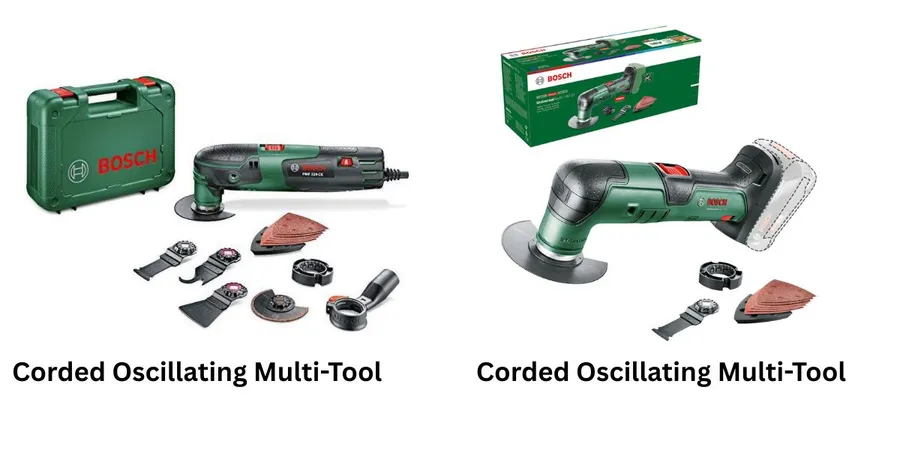
Choosing between a corded (230V/110V) or cordless (18V) oscillating multi-tool used to be a simple decision. If you wanted real cutting power, you bought a corded machine; if you wanted convenience, you accepted a weaker battery tool that ran down in 15 minutes.
Thanks to modern brushless motors and high-capacity Lithium-Ion batteries, that gap has closed dramatically. Today’s top 18V cordless multi-tools cut just as fast as mains-powered equivalents. That leaves UK tradespeople and DIYers to weigh up mobility against continuous runtime.
In this guide, I break down the key differences in cutting performance, vibration control, battery runtime, and long-term costs to help you decide whether a corded or cordless multi-tool belongs in your kit bag.
Ready to compare top models? Read our hands-on reviews of the 5 Best Oscillating Multi-Tools UK to see leading corded picks (like Fein) side-by-side with 18V cordless favorites from DeWalt and Makita.
Quick Comparison: Corded vs Cordless
| Feature / Attribute | Corded Multi-Tools (230V / 110V) | Cordless Multi-Tools (18V) |
| Runtime | Unlimited (continuous power) | 20–45 mins per 5.0Ah battery |
| Cutting Power | Constant, high power output | Matches corded (brushless models) |
| Weight & Balance | Lighter in hand (no heavy battery) | Slightly heavier at the tail end |
| Setup Speed | Requires extension lead & socket | Instant power (plug in battery & cut) |
| Best For | Tile regrouting, floor sanding, bench work | Site work, loft cuts, plumbing, fast DIY tasks |
1. Cutting Power & Performance
Historically, mains-powered tools delivered far higher oscillations per minute (OPM) under load without bogging down.
- Corded (230V): Premium corded machines (like the 350W Fein Multimaster) maintain maximum oscillation speed even when plunging deep into dense hardwoods or oak joists.
- Cordless (18V): Modern brushless cordless tools (such as the DeWalt DCS356N or Bosch GOP 18V-28) feature electronics that draw extra current under heavy load, matching corded cutting speeds in almost all timber, plastic, and soft metal applications.
Verdict: For general site work and renovation, high-end 18V cordless tools match corded power. Only continuous heavy demolition or thick masonry grinding still gives corded tools a slight edge.
2. Runtime & Convenience
This is where the choice usually comes down to how and where you work:
- Cordless Convenience: Multi-tools are problem-solvers often brought out to make quick 30-second cuts. These are jobs like undercutting an architrave, trimming a copper pipe, or cutting a plasterboard socket. Unrolling a 15-meter extension lead for a 1-minute job wastes time. With a cordless tool, you snap in a battery and finish the job immediately.
- Corded Endurance: If you are spending three hours grinding grout out of a fully tiled bathroom or detail-sanding stair spindles, a cordless tool will chew through multiple 5.0Ah batteries. A corded tool gives you uninterrupted power all day long.
Real-World Lesson: for DIY users
If you just can’t make up your mind, I advise really thinking about what jobs you will be doing around the home and garden. From my own experience cordless is better as almost every job is a short one, like a bit of trimming or light cutting. Put a battery in and away you go, no plugs or extension leads to worry about.
Weight, Balance & Ergonomics
Because multi-tools are frequently used overhead, inside tight vanity units, or at awkward angles between floor joists, tool ergonomics matter.
- Corded Tools: Lighter in the hand (typically around 1.2kg to 1.4kg) because they don’t carry a heavy battery block. However, trailing power leads can catch on door frames or drag across freshly painted surfaces.
- Cordless Tools: Adding an 18V 5.0Ah battery pack adds around 600g of weight to the base of the handle. While this makes the tool heavier (often 1.8kg to 2.2kg total), the battery acts as a counterweight that can actually balance the head during horizontal cuts.
Cost Considerations
- If you already own 18V batteries: Buying a “bare unit” (body only) cordless multi-tool from DeWalt, Makita, or Bosch is extremely cost-effective—often costing between £80 and £130.
- If you are starting from scratch: Buying a complete cordless kit (tool + 2x batteries + charger) can cost £200–£300+. In this case, a high-quality corded multi-tool offers far superior raw performance per pound spent.
Summary: Which Should You Buy?
Buy a Cordless 18V Multi-Tool If:
- You already own 18V batteries and chargers from DeWalt, Makita, Bosch, or Milwaukee.
- You do second-fix carpentry, plumbing, or general property maintenance where rapid setup is vital.
- You work in lofts, gardens, or sites where mains power outlets aren’t easily accessible.
Buy a Corded 230V Multi-Tool If:
- You plan to carry out long sessions of detail sanding, tile grout removal, or floor preparation.
- You do not own any 18V cordless battery platforms yet and want the highest power for the lowest price.
- You work primarily in a dedicated workshop or garage setting.
Frequently Asked Questions (FAQ)
Is an 18V multi-tool powerful enough for heavy site work?
Yes. Modern brushless 18V multi-tools deliver up to 20,000 OPM and handle deep timber plunge cuts, copper pipes, and framing nails easily.
Can I use 110V corded multi-tools on UK building sites?
Yes. If you work on commercial UK construction sites where 230V domestic tools are banned for safety reasons, brands like Fein and Bosch produce dedicated 110V yellow-plug corded multi-tools for use with transformer boxes.
Related Guides:
- Check out our core roundup: 5 Best Oscillating Multi-Tools UK
- Confused about blade fitments? Read our guide on Starlock vs Universal OIS Multi-Tool Blades