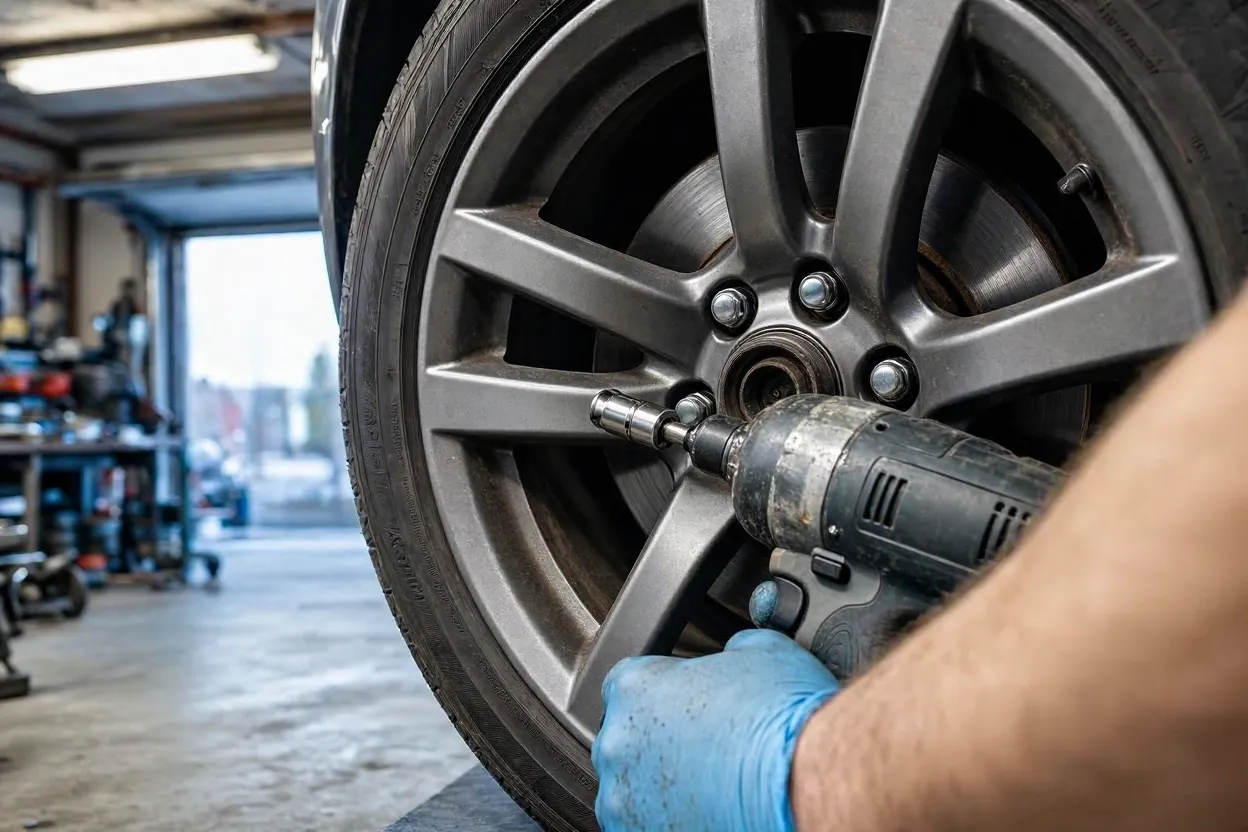
If you need to change a flat tyre, swap over wheels, or replace brake pads on your car, using a power tool to spin off wheel lug nuts saves immense time and arm strain.
Because 18V impact drivers are now staple tools in almost every UK garage, a common question asked on trade and car forums is: Can I use my cordless impact driver to undo car wheel lug nuts?
The short answer is sometimes—but it is generally not recommended as your primary method.
While a high-torque 18V impact driver can crack loose correctly torqued wheel bolts on light passenger cars, trying to force over-torqued or rusted lug nuts with an impact driver frequently results in snapped 1/4-inch hex adapters, overheating tool motors, and damaged wheel nut seats.
I tested this exact scenario on my own Mazda 3 car using my trusty DeWalt 18V XR impact driver to see where the tool succeeds and where it hits a hard mechanical wall. Here is the real-world torque math, the structural limits of 1/4″ adapters, and a safe hybrid workflow you can use today.
🔗 Looking for maximum torque output in a compact tool? Read my hands-on reviews of the 5 Best Impact Drivers for DIY UK to see top 18V models with up to 226 Nm of power.
The Real-World Torque Math (Why Impact Drivers Struggle)
To understand why impact drivers often fail on car wheel bolts, you need to compare required breakaway torque against actual output:
TORQUE COMPARISON (Nm)
| Average UK Car Spec Torque | 110 Nm – 140 Nm (Factory spec) |
| Over-Torqued Tyre Shop Bolt | 220 Nm – 300+ Nm (Impact gun tightened) |
| High-End 18V Impact Driver | 180 Nm – 205 Nm (Peak theoretical) |
| Mid-Torque 1/2″ Impact Wrench | 400 Nm – 800+ Nm (Nut-busting capacity) |
- Factory Tightening Torque: Most UK family hatchbacks and SUVs (like a Ford Focus, VW Golf, or Nissan Qashqai) require wheel lug bolts torqued to 110 Nm – 140 Nm. On paper, an 18V impact driver rated at 180 Nm to 205 Nm should undo this easily.
- The Real-World Reality: Wheel bolts rarely stay at factory specification. Environmental rust, road salt corrosion, heat cycles from braking, and tyre shops tightening bolts with high-powered 1,000 Nm pneumatic air guns mean actual breakaway torque often exceeds 250 Nm to 300 Nm.
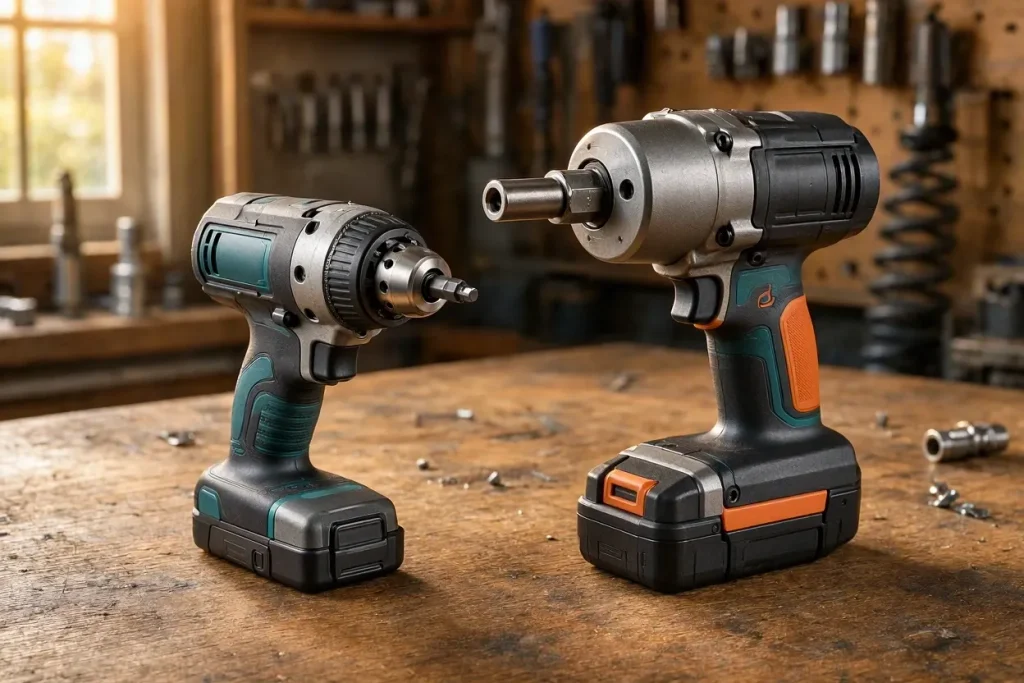
When I tried using my DeWalt impact driver on a wheel that had been serviced at a local tyre shop, the tool just rattled its heart out for 30 seconds without moving the nut a single millimetre. The factory torque spec had been completely obliterated by the shop’s air gun.
The Weak Link: The 1/4″ Hex Adapter
Even if your impact driver motor is strong enough to generate 200 Nm of torque, the main obstacle is the tool holder.
An impact driver transfers all of its rotational hammering power through a tiny 1/4-inch (6.35mm) female quick-release hex collet. To attach a 17mm, 19mm, or 21mm wheel nut socket, you must insert a 1/4″ hex to 1/2″ square drive adapter.
THE 1/4″ ADAPTER SHEAR RISK
[ Impact Driver Anvil ] ──> [ 1/4″ Hex Neck ] ──> [ 1/2″ Wheel Socket ]
                                                      ▲
                        WEAK POINT: Shears off at ~150 Nm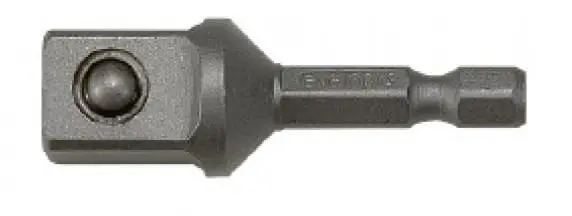
- Shear Failure: Under sustained, high-torque pounding against a stuck wheel bolt, the narrow 1/4″ metal neck of the adapter absorbs immense torsional shock. Cheap chrome adapters will snap in seconds, often leaving a broken steel shank trapped inside your tool collet.
Already snapped an adapter inside your tool? Read my step-by-step extraction guide: Why Is My Impact Driver Bit Stuck & How to Release It Safely.
The Safe “Hybrid Method” for Changing Car Wheels
If you do not want to spend £150+ on a dedicated 1/2-inch cordless impact wrench, you can still use your impact driver to speed up wheel changes safely using the Hybrid Method:
THE SAFE HYBRID WORKFLOW
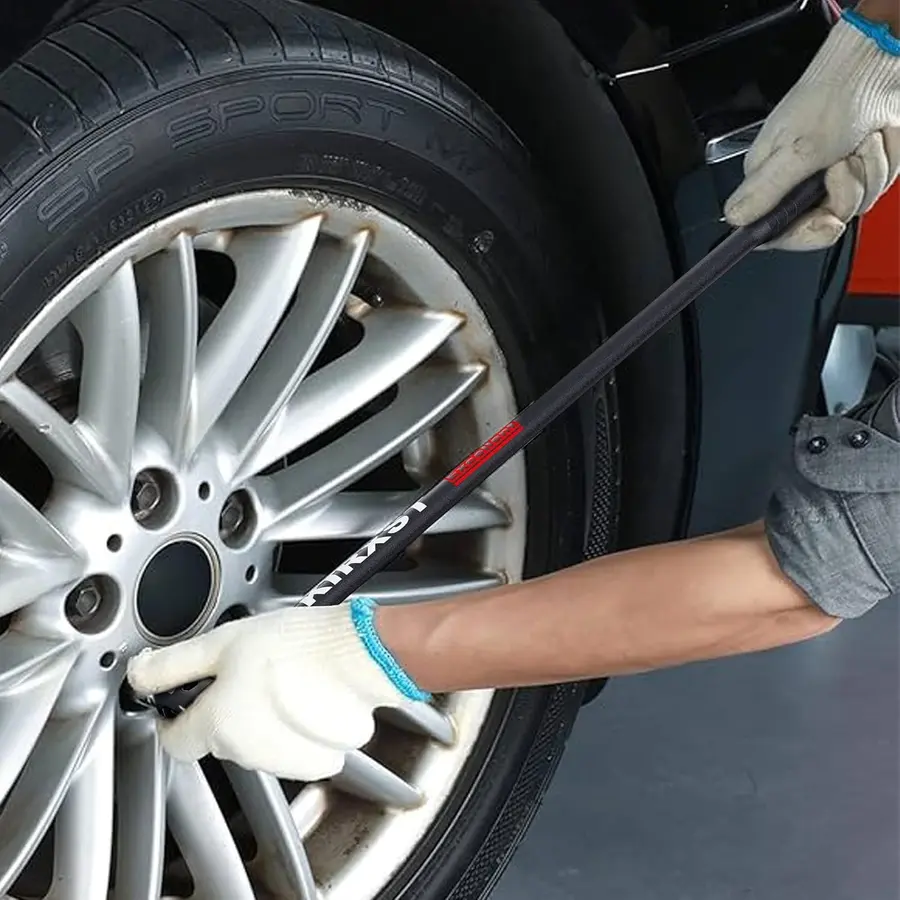
- Step 1: Use a manual breaker bar (or wheel brace) to break the initial friction bond by 1/4 turn while on floor
- Step 2: Jack up the vehicle safely on axle stands
- Step 3: Attach impact driver with a black impact socket to spin off all loose lug bolts in seconds
- Step 4: Spin bolts back on by hand/driver until snug
- Step 5: Lower car and finish with a manual Torque Wrench
Why This Method Works:
- Saves Your Driver & Adapters: The high breakaway torque is handled by a long, heavy-duty steel breaker bar—preventing your 1/4″ hex adapter from shearing.
- Saves Time & Effort: Spinning off 20 long, dirty wheel bolts manually with a hand ratchet is slow work. The impact driver zips them off in under 2 seconds per bolt once they are cracked loose.
- Guarantees Road Safety: You should never use a power tool to final-tighten wheel nuts anyway! Always use a calibrated manual torque wrench to set bolts to exact manufacturer spec.
Safety Rules When Working Around Wheels
If you choose to use your impact driver around cars, always follow these three safety rules:
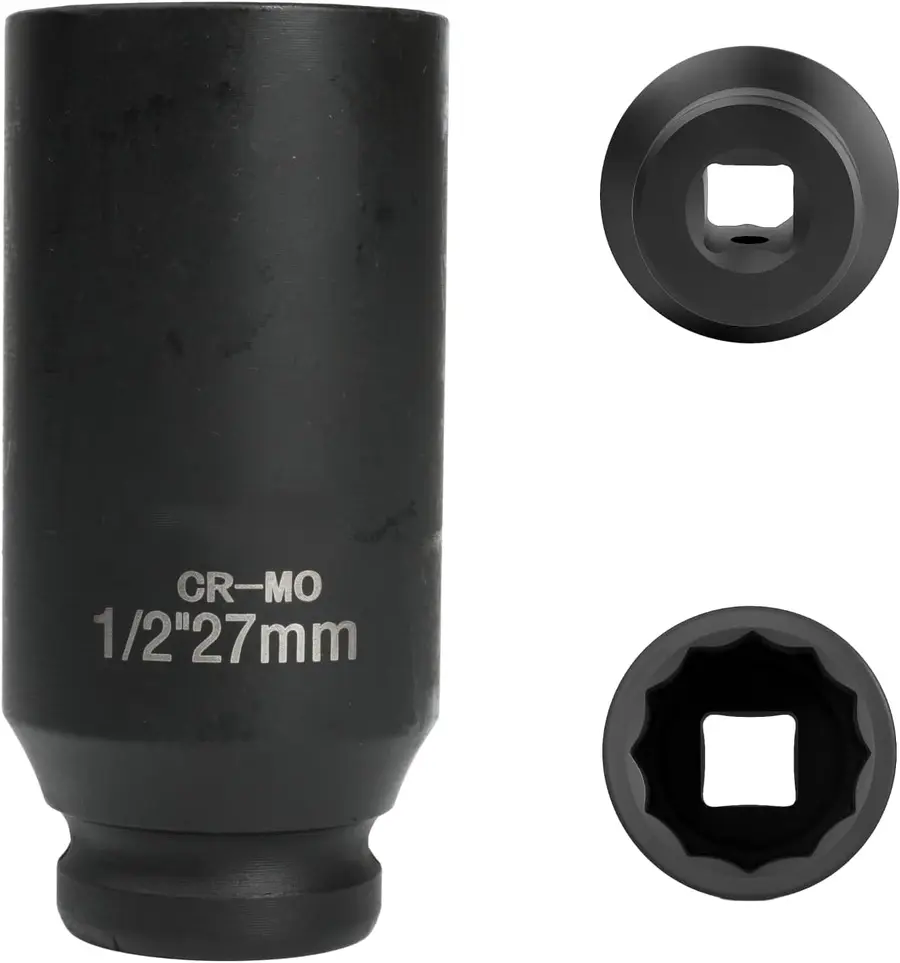
- Never Use Chrome Hand Sockets: Standard chrome hand sockets are brittle and can fracture under impact vibration. Always use thick-walled, black Chrome-Molybdenum (CR-MO) impact sockets.
- Never Cross-Thread Wheel Bolts: Always start wheel bolts by hand for the first 2–3 full turns before using an impact driver. Running an impact driver into a misaligned wheel hub thread will strip the soft iron threads instantly.
- Wear Eye Protection: Always wear BS EN166 safety goggles when using power tools on rusted automotive fixings.
Frequently Asked Questions (FAQ)
Will a DeWalt DCF850 or Makita DTD152 undo car wheel nuts?
A premium 18V driver like the DeWalt DCF850 (205 Nm) or Makita DTD153 (175 Nm) can crack loose correctly torqued passenger car wheel bolts (110 Nm–120 Nm) if high-quality impact adapters are used. However, older brushed drivers like the Makita DTD152 (165 Nm) will usually stall on over-torqued or rusted bolts.
What is the difference between an impact driver and an impact wrench for car wheels?
An impact wrench features a solid, heavy-duty 1/2-inch square metal anvil built directly onto the motor shaft, producing between 400 Nm and 1,500 Nm of torque without needing fragile 1/4″ hex adapters.
Final Verdict
- Can an impact driver remove wheel lug nuts? Yes, but only on correctly torqued bolts, and at the risk of shearing 1/4″ hex adapters.
- The Best Solution: Use the Hybrid Method—crack bolts loose with a manual breaker bar first, then use your impact driver to zip them off quickly.
- For Serious Car DIYers: If you regularly work on car suspensions or change wheels multiple times a year, invest in a dedicated 1/2″ Cordless Impact Wrench.
Related Articles:
- Learn socket compatibility rules:Impact Driver vs Impact Wrench: Can You Use Sockets on an Impact Driver?
- Prevent bit and screw damage: Why Does My Impact Driver Keep Stripping Screws? (5 Easy Fixes)
- Compare top models: 5 Best Impact Drivers for DIY UK