By Enda McLarnon — Experienced UK DIYer sharing practical fixes from my 1958 red brick home.
If you are thinking about buying your first drill or screwdriver, or you are staring down the aisle at your local Screwfix or B&Q trying to figure out what you actually need to assemble flat-pack furniture, hang curtain poles, or put up a shelf, this guide is for written for you.
When you are starting out, the volume of jargon can be annoying and really frustrating. Let’s cut straight through the marketing noise. A drill/driver can be the absolute workhorse of light-to-medium UK DIY.
It is precision engineered for driving screws and drilling cleanly into wood, plasterboard, and light metal and knowing what it cannot do is just as important as knowing what it can.
Looking to drill into exterior brick, blockwork, or stone? A standard drill/driver lacks the internal mechanical hammer action required for masonry. If you plan on drilling holes into masonry walls, skip this guide, as a drill/driver is not what you need. Instead, head over to my Combi Drill Hub instead.
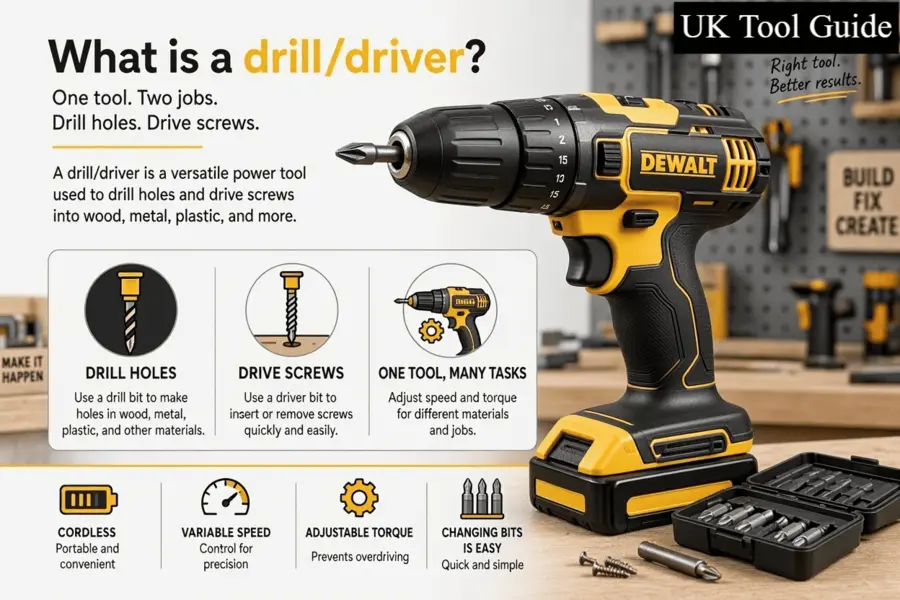
Confusion. The naming of these products confused me a lot when I was starting out. Cordless drills, combi drills, drill/drivers, hammer drills, SDS drills etc. It isn’t your fault and much of the confusion comes from tool manufacturers who call their products different names. In this article I am talking about the drill/driver which is an entry level drill, suitable for drilling wood, plastic and metal and driving in and removing screws. It can’t drill masonry as it has no hammer action.
1. Anatomy of a Drill/Driver (What Every Control Does)
Before you pull the trigger, it helps to understand the physical layout of the tool in your hand. Most standard drill/drivers feature a few core mechanical controls:
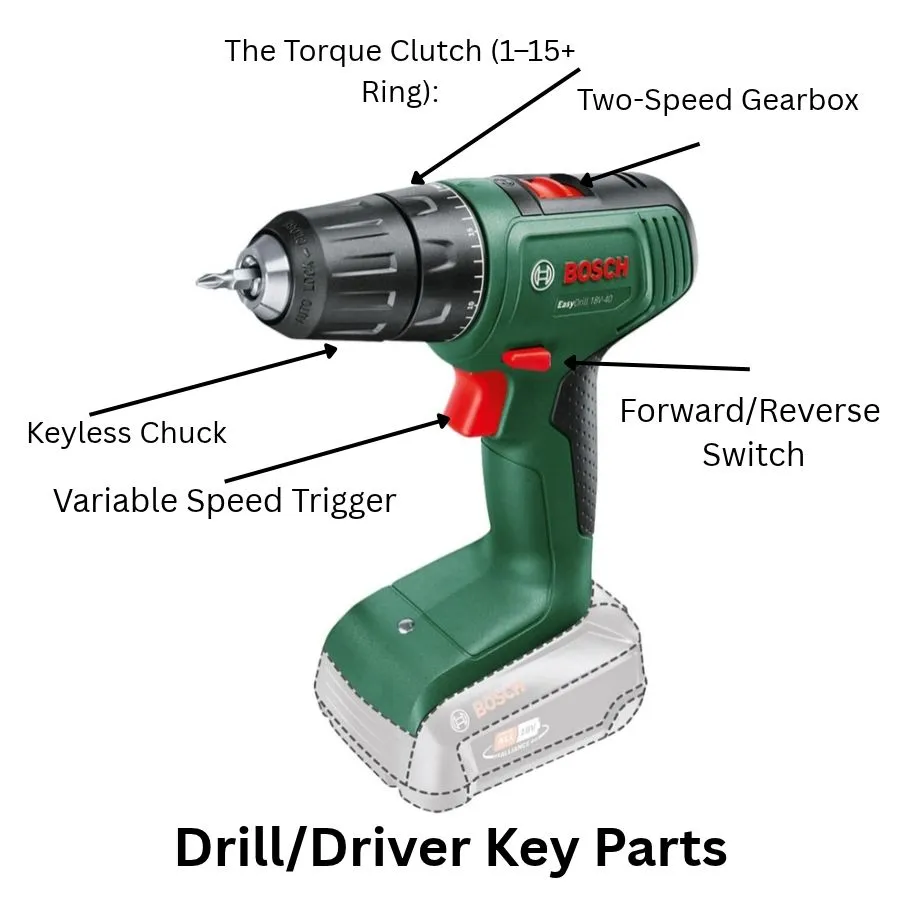
- The Keyless Chuck: This is the spinning collar at the front that holds your drill or screwdriver bit. You twist it by hand to open and close the jaws. Make sure your bit is seated dead centre before tightening.
- The Torque Clutch (1–15+ Ring): This is the numbered dial right behind the chuck. It controls when the drill slips rather than over-driving a screw.
- Low numbers (1–5) are for delicate tasks like sinking small screws into soft pine or MDF furniture.
- High numbers (10–15) provide maximum twisting force for long screws or dense timber.
- The Drill Icon locks the clutch completely, giving you unyielding rotational power for drilling holes.
- The Two-Speed Gearbox: Usually sitting on top of the housing:
- Gear 1 (Low Speed, High Torque): Use this for driving heavy screws or large-diameter spade bits.
- Gear 2 (High Speed, Low Torque): Use this for fast, clean drilling into wood or metal with twist bits.
- The Forward/Reverse Switch: Situated right above the trigger. Pushing it all the way through locks the trigger completely—always click it into this centre safe position before changing bits or tossing the tool into your bag.
- Variable Speed Trigger: This is the trigger that you squeeze to make it work. Pressing softy will turn the chuck slowly, ideal when starting, and then you squeeze the trigger more to speed it up.
2. Drill/Driver vs. Combi Drill: Quick Clarity Check
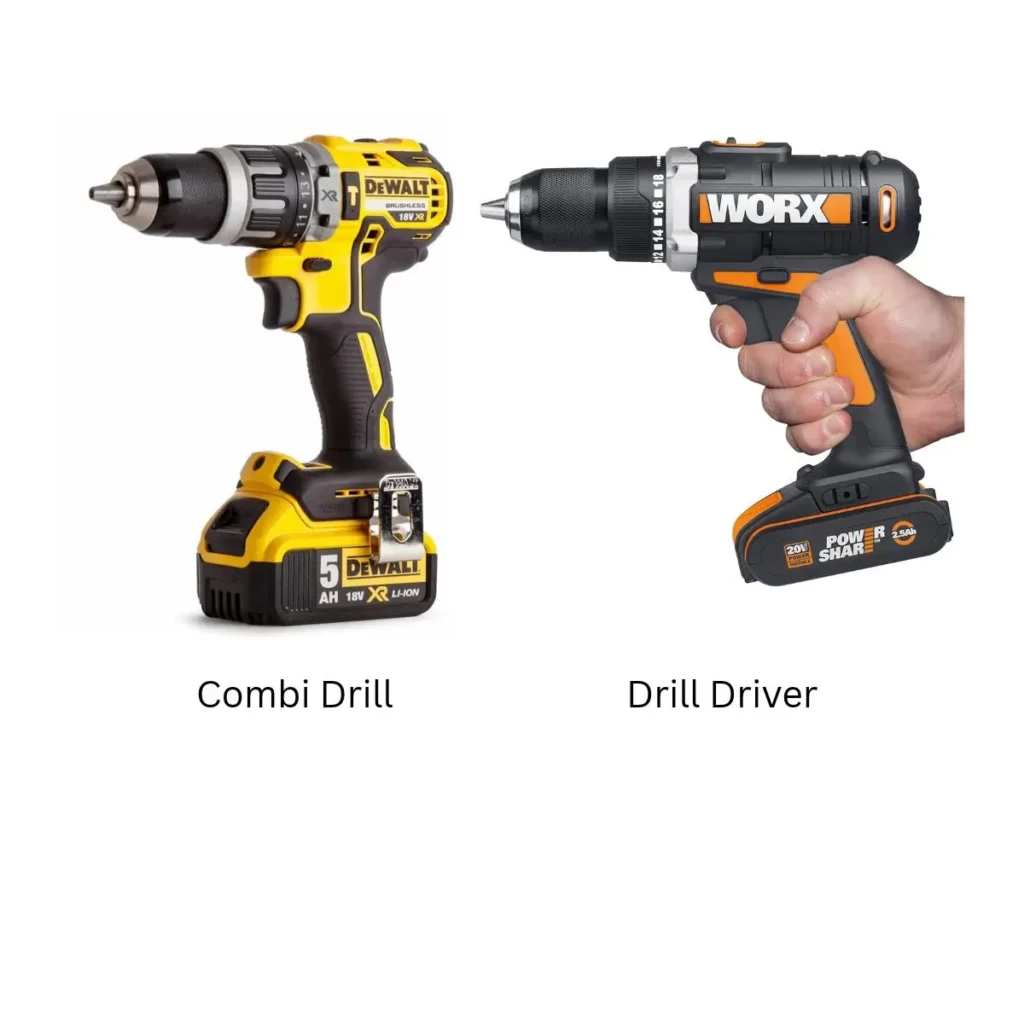
A common beginner trap is buying a heavy-duty hammer combi drill when all you really need is a nimble drill/driver.
- Drill/Drivers are lighter, more compact, and often slightly cheaper because they omit the complex hammer mechanism. They excel in tight spaces (like inside kitchen cabinets or awkward wardrobe frames) and won’t tire out your wrist during a long weekend of flat-pack assembly.
- Combi Drills add a masonry hammer setting. They are heavier and bulkier, built to handle brickwork alongside wood and metal.
If your weekend projects rarely involve exterior masonry, a dedicated drill/driver is a much more comfortable tool to live with.
3. Key Specs to Look For (UK Buying Criteria)
When trying to evaluate a drill/driver for UK home maintenance, ignore the flashy marketing and focus on three practical specifications:
- Voltage (12V vs. 18V): For around-the-house DIY, a compact 12V tool (such as Bosch 12V or Milwaukee M12) is an absolute joy to use, as they are lightweight, balanced, and surprisingly punchy. 18V tools offer heavier performance and let you share batteries with larger garden or workshop gear.
- Battery Amp-Hours (Ah): This measures runtime. A 1.5Ah or 2.0Ah battery keeps the tool light and agile for small jobs. If you are tackling larger projects, a 4.0Ah battery gives you all day staying power.
- Brushless vs. Brushed Motors: Modern brushless motors run cooler, use less battery, and last significantly longer because they lack physical carbon brushes. However, a traditional brushed motor is still entirely adequate for occasional weekend use.
4. Essential Starter Accessories (Beyond the Bare Tool)
Never rely on cheap multi-bit bargain bins. Soft metal bits strip screw heads instantly, turning a five-minute job into a frustrating hour of extracting snapped screws.
- Screwdriver Bits: Invest in individual, hardened Pozidriv (PZ2) bits—the absolute standard for UK flat-pack furniture and wood screws.
- Twist Bits: Grab a solid set of High-Speed Steel (HSS) bits for drilling into timber, plastics, and light sheet metal.
Ready to pick up your first kit? Check out our tested commercial roundups for the Best Drill/Drivers Under £50 UK and Best Drill/Drivers Under £100 UK.
5. Basic Maintenance & Troubleshooting FAQ
- Why is my keyless chuck slipping on round-shank bits? Usually, the jaws aren’t tightened evenly or debris has jammed the internal threads. Clean it out and ensure you hand-tighten until you hear a solid click.
- How do I store my batteries over winter? Never leave lithium-ion batteries sitting flat in a freezing UK uninsulated garage or shed. Store them indoors at room temperature around a 50% to 80% charge to preserve cell health.
My Conclusion
- You can buy cordless screwdrivers, but their only function is to drive in or remove screws. That is a single purpose tool.
- Next in line is the drill/driver which can drive in and remove screws. It can also drill into wood, plastic and metal with the right type of drill bit.
- Next in line is the combi drill, which can do all of the above plus it has a hammer action which means it can also drill into masonry such as brick and mortar.
Making the right choice really comes down to the type of jobs you plan on doing in your DIY.

About the Author: Enda McLarnon
I’m an experienced UK DIYer tackling renovation life inside a 1958 red brick home.
I built this blog to help beginners conquer home maintenance anxiety and save a fortune on expensive trade calls.