Disclosure: As an Amazon Associate, I earn from qualifying purchases made through links on this page. If you buy a tool through my links, it costs you nothing extra, but the small commission helps me keep this site running.
By Enda McLarnon — Experienced UK DIYer sharing practical fixes from my 1958 red brick home.
When you open a brand new combi drill box, it usually comes with the drill body, a charger and a battery. However, they rarely have a full selection of quality drill bits. Standing in the aisle at Screwfix, B&Q, or Toolstation looking at rows of silver, black, and gold drill bits can feel a little bit daunting.
The golden rule of drilling is simple: Using the wrong drill bit for the material will ruin the bit, damage your workpiece, and stall your combi drill. You cannot drill wood with a masonry bit, and you cannot drill brick with a wood bit.
My guide breaks down the three essential types of drill bits every UK DIY beginner needs in their toolbox.
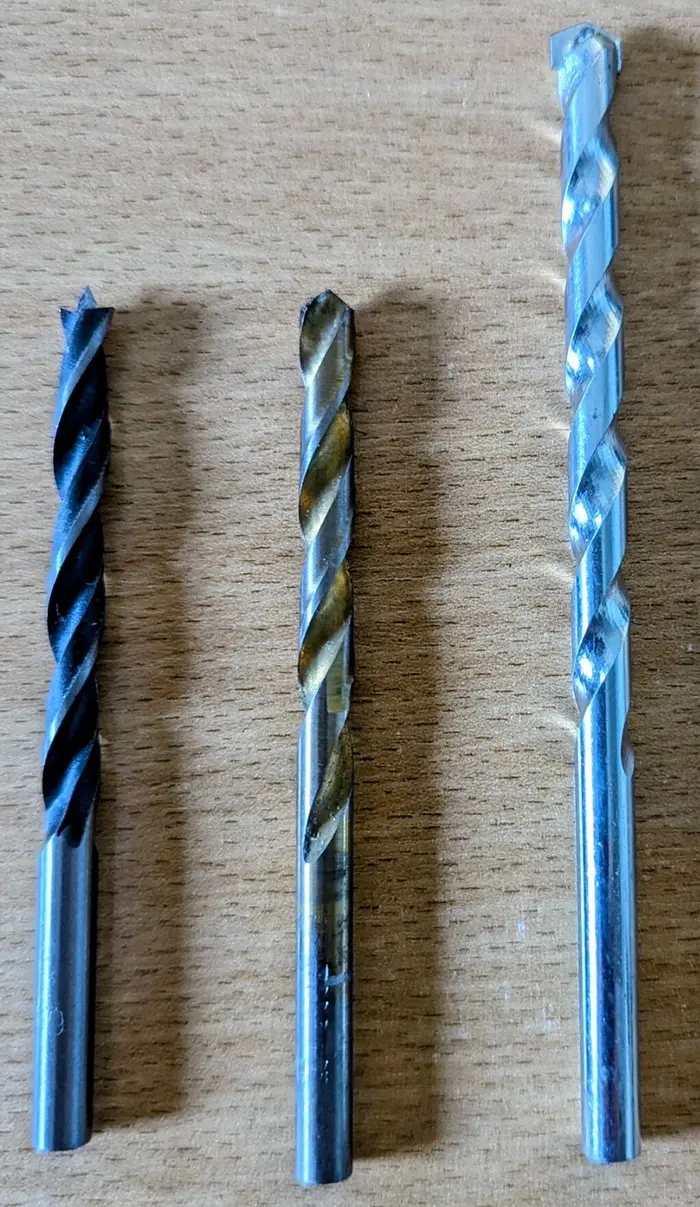
The Big 3: How to Tell Drill Bits Apart at a Glance
Before buying or reaching into your toolbox, look closely at the tip of the drill bit. The tip tells you instantly what material it was engineered to cut:
- Wood Drill Bit: Has a sharp centre brad pint with scoring spurs
- Metal Drill Bit: Made from High Speed Steel (HSS) with a 118° or 135° spiral point
- Masonry Drill Bit: These have a flattened, silver arrowhead carbide tip
My Real World Experience – What I use
I have been doing DIY around the home and garden for about 45 years. I have drilled many holes almost always in wood or masonry. Only a few times have I ever had to drill metal. I have drilled into plastic and find a brad point or HSS do the job really well.
1. What Wood Drill Bits Look Like? (For Timber, MDF & Plywood)
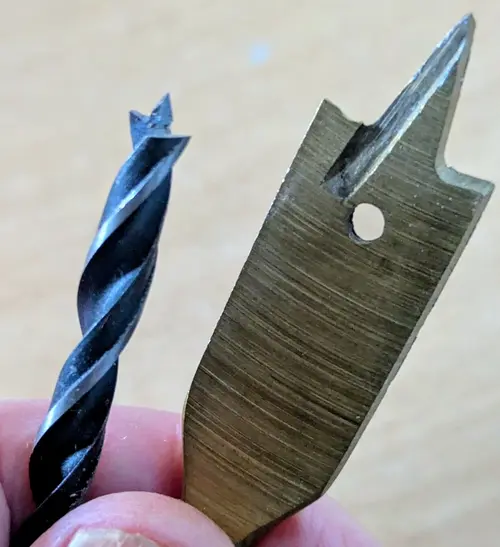
Wood bits are designed to drill cleanly through timber without tearing the grain or splintering the edges.
- Appearance: These are usually shiny silver or black, and have a sharp centre point (brad-point) and two raised sharp spurs on the outer edges.
- How They Work: The sharp point acts as an anchor so the bit doesn’t skate across the wood when you start. The outer spurs score a clean circle around the hole before the main flutes shave away the wood.
- Common Types:
- Brad-Point Bits: The absolute best choice for general DIY wood drilling and clean pilot holes.
- Spade Bits (Paddle Bits): Flat, wide paddle shaped bits used to bore large diameter holes (e.g., 20mm+) for cabling or pipes through timber joists.
Drill Setting: Use standard Drill Mode on Gear 2 (high speed). Never use hammer mode on wood!
2. What Masonry Drill Bits Look Like? (For Brick, Concrete & Stone)
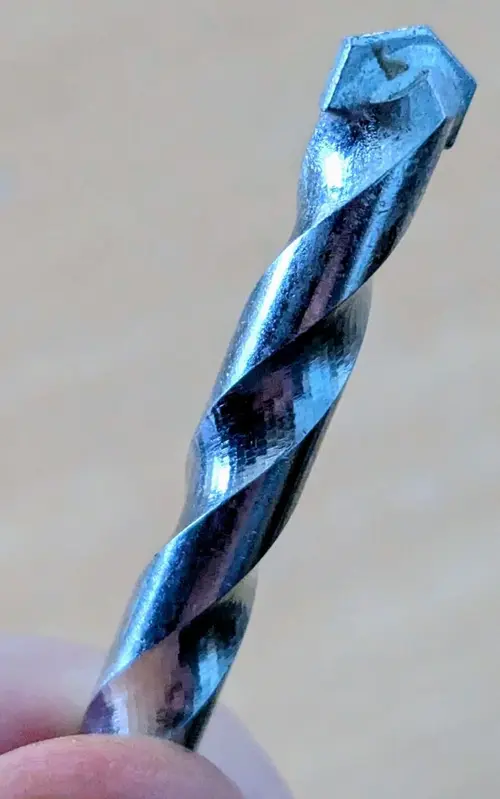
Masonry bits are built to withstand the brutal percussive impact of hammer drilling against hard stone.
- Appearance: Usually dark grey or steel coloured, featuring a blunt, flattened, arrow shaped tip made of tungsten carbide welded onto the end.
- How They Work: Unlike wood or metal bits that slice or shear, a masonry bit relies on your drill’s Hammer Mode to chisel and crush the brickwork while the spiral flutes pull the dust out of the hole.
- Common Sizes: In UK homes, you will reach for a 5mm bit (Yellow plugs), a 6mm bit (Red plugs – your most used bit!), and a 7mm bit (Brown plugs) 95% of the time.
Drill Setting: Must be used on Hammer Mode with Gear 2.
3. What Metal/HSS Drill Bits Look Like (For Steel, Aluminium & Plastics)
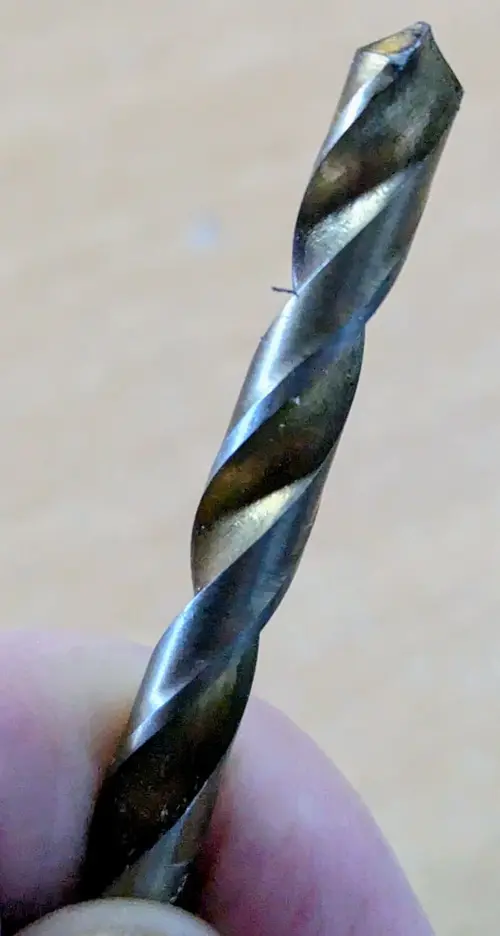
HSS stands for High-Speed Steel. These are your general purpose workhorse bits used for drilling through metal, plastic, and even thin timber in a pinch.
- Appearance: Sleek, completely smooth from tip to shank, often golden-coated (Titanium nitride) or jet-black (Cobalt or Black Oxide).
- How They Work: The sharp 118-degree or 135-degree angled tip shears through hard sheet metal, copper pipes, and steel brackets.
- Beginner Tip: Metal bits are prone to skating. Always use a centre punch (or tap a small indent with a nail and hammer) to create a starting dimple before drilling metal.
Drill Setting: Use standard Drill Mode but switch your combi drill down to Gear 1 (low speed). Drilling metal too fast generates intense friction heat that melts or ruins the bit tip instantly!
Real-World Lesson: The Melted Wood Bit
When I was first starting out with DIY, I had a stubborn project where I needed to screw through a thick timber board mounted against an internal brick wall. In my haste, I grabbed a standard wood drill bit, left the drill in Hammer Mode, and started drilling straight into the wall.
Within three seconds, a horrible burning smell filled the room. When I pulled the drill back, the sharp brad-point tip of my wood bit had completely melted and deformed from the friction against the brick, turning the steel blue-black.
Lesson learned: Match your bit to the material first, and check your drill mode second.
Summary
For anyone in the UK who has just bought a combi drill, my recommendation would be is to buy a small set of drill bits and screwdriver bits as that is always going to be the best value.
The set that I bought and use regularly is the Bosch X70 Ti . This has 70-Pieces and includes 6 masonry drill bits, 6 brad point drill bits, 11 HSS metal drill bits and 3 spade drill bits in the most popular sizes. It also has all the common driver bits including PH, PZ, Hex, Torx and also sockets and a few other useful accessories.
I think this is excellent value and I use something every week and they certainly last a long time. Check Price at Amazon UK.
Frequently Asked Questions
Can HSS (Metal) bits drill into brick?
No. While HSS bits are tough, they do not have a carbide tip or a hammer-resistant profile. Trying to drill brick with a metal bit will blunt and ruin the cutting edge in seconds.
Why do some drill bits look gold?
The gold coating is usually Titanium Nitride (TiN). It reduces friction and helps the bit stay cooler and sharper longer, though standard silver bits work just as well for occasional DIY tasks.
Should I buy a massive 100-piece drill bit set?
Usually, no. Large cheap multi-sets look impressive, but they are packed with dozens of tiny duplicate bits you will never use, while only giving you one or two of the common sizes (like 6mm masonry bits) that you actually need. Buying a quality starter set of dedicated wood, metal, and masonry bits is much better value.
Next Steps & Related Guides
This article is part of our [Ultimate Beginner’s Guide to Combi Drills]. Explore more of our hands-on guides below:
- [How to Drill into UK Brick and Mortar Walls Safely]
- [Wall Plugs & Bit Sizing: How to Match Drill Bit, Plug, and Screw]
- [How to Use a Keyless Chuck on a Combi Drill]
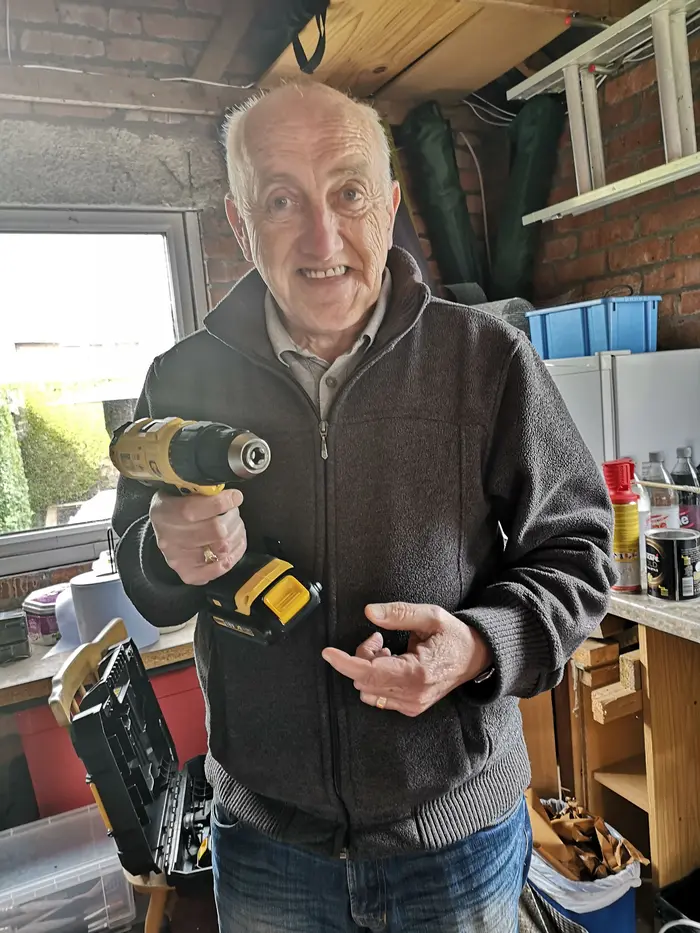
About the Author: Enda McLarnon
I’m an experienced UK DIYer tackling renovation life inside a 1958 red brick home.
I built this blog to help beginners conquer home maintenance anxiety and save a fortune on expensive trade calls.