By Enda McLarnon — Experienced UK DIYer sharing practical fixes from my 1958 red brick home.
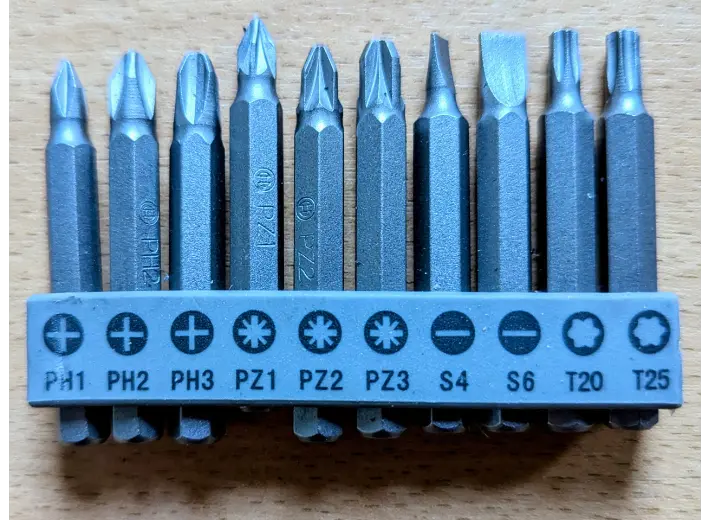
If you’ve ever used a combi drill to drive screws, you may have noticed that screwdriver bits come in several different shapes. The most common types I have come across for UK DIY work are Pozidriv (PZ), Phillips (PH) and Torx (TX).
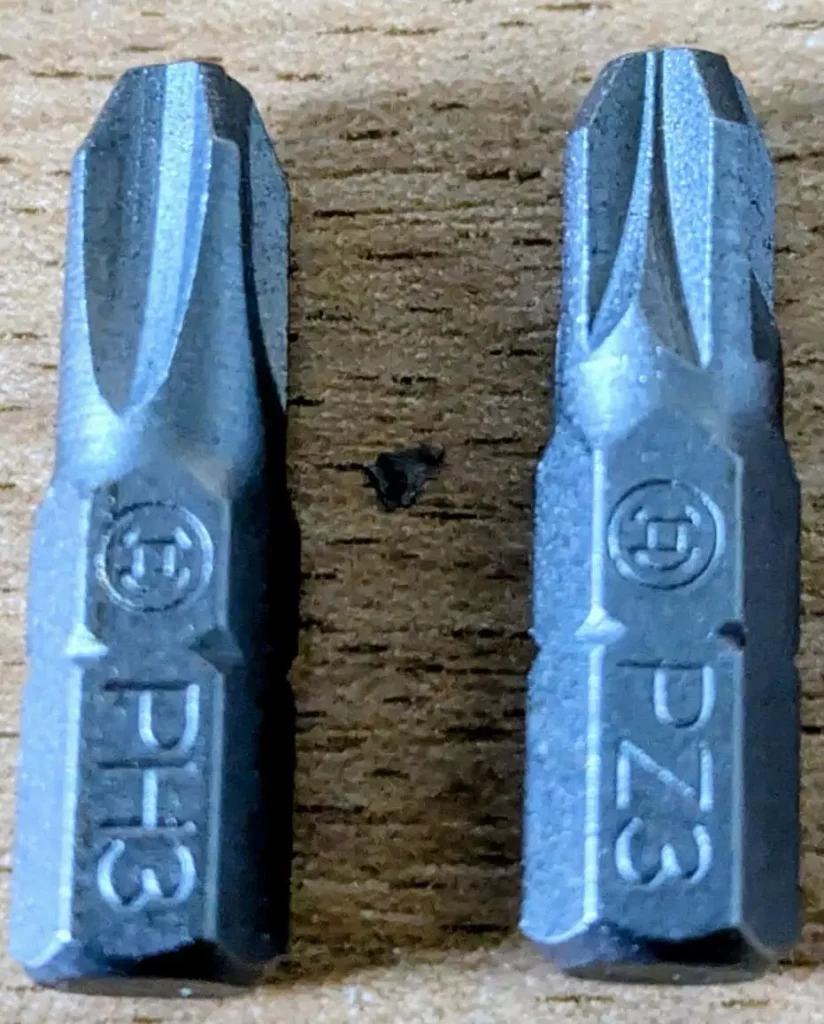
Although PZ and PH bits look similar, they are not interchangeable. Using the wrong bit can cause it to slip, damage the screw head and make the screw difficult to remove. Torx bits have a different, star-shaped design that provides a good fit when the correct size is used.
Quick Answer: What’s the Difference Between PZ, PH and Torx?
- PZ (Pozidriv): A cross shaped recess with additional smaller markings. Common on wood screws and general purpose screws in the UK.
- PH (Phillips): A simpler cross-shaped recess. Used on various fixings, including many plasterboard screws.
- Torx (TX): A six-pointed star shaped recess. Common on decking screws, construction screws and other applications where a secure bit fit is useful.
For general UK DIY, PZ2 is a useful starting point, but the correct bit always depends on the screw. Keep a selection of sizes rather than assuming one bit will fit everything.
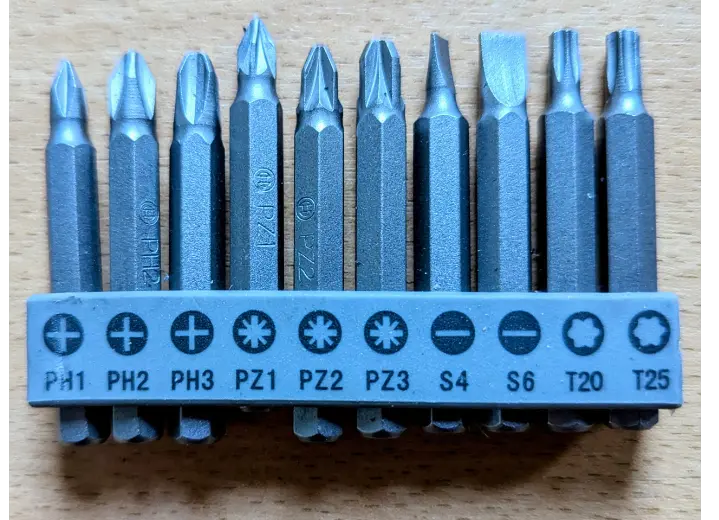
In this guide, I will explain how to recognise each type, which screwdriver bits you need for common DIY jobs, and how to get the best results from your combi drill.
Working with screws seems obvious, but it took me some time to realise that it isn’t that obvious. If you want to get it right matching the right bit to the right screw will simply make your DIY experience a great deal simpler and much better.
1. What Is a PZ Screwdriver Bit?
PZ stands for Pozidriv. It is a common screw head design in the UK, particularly on wood screws, chipboard screws and many general purpose fixings. A Pozidriv screw has a cross shaped recess, with four additional smaller markings between the main arms. These extra markings help distinguish it from a Phillips screw.
Common PZ screwdriver bit sizes
- PZ1: Often used for smaller screws.
- PZ2: A common size for general purpose wood and chipboard screws.
- PZ3: Used for some larger screws with a matching recess.
The size you need depends on the screw head, not just the length or thickness of the screw.
When using a combi drill, make sure the bit sits fully in the recess without excessive movement. If it rocks from side to side or only engages at the edges, check that you have the correct size.
2. What Is a PH Screwdriver Bit?
PH stands for Phillips. Like Pozidriv, it has a cross-shaped recess, but it does not have the additional markings found on a Pozidriv screw. The two types are really easy to confuse, especially when you are starting out with power tools. However, a Phillips bit is not a direct substitute for a Pozidriv bit.
Common PH screwdriver bit sizes
PH1, PH2 and PH3 are common sizes, with PH2 used on many screws that have a matching Phillips recess.
Phillips screws are found in a range of applications, including some plasterboard fixings, electrical fittings and household products. Always check the screw head rather than assuming that a particular job uses Phillips screws.
Can you use a PH bit in a PZ screw?
It may engage to some extent, but it is not the right choice. The bit may wobble or slip under load, particularly when driving a screw with a combi drill.
The same applies in reverse. A PZ bit should not be treated as a universal replacement for a PH bit.
If the bit keeps slipping, stop and check the screw head and bit size before continuing.
3. What Is a Torx Screwdriver Bit?
Torx bits have a six-pointed star-shaped profile. They are often marked TX or T, followed by a size number.
Torx screws are common on decking, construction fixings, furniture and other products. Many users find that a correctly matched Torx bit provides a secure fit and helps reduce slipping during screwdriving.
Common Torx sizes
You may encounter sizes such as TX10, TX15, TX20, TX25 and TX30. The required size depends on the screw. For example, TX25 is used by many decking screws, but this is not a universal rule.
My advice is always to check the screw packaging or manufacturer’s instructions.
Why are Torx bits useful with a combi drill?
When the bit matches the screw, the star shaped recess provides several contact surfaces to transfer turning force. This can make driving screws easier and reduce damage caused by a poorly fitting bit.
However, Torx is not automatically the right choice for every job. Use the screw type specified for the fixing, and make sure the bit is in good condition.
4. PZ vs PH vs Torx: Comparison Table
| Feature | Pozidriv (PZ) | Phillips (PH) | Torx (TX) |
|---|---|---|---|
| Appearance | Cross with extra markings | Plain cross | Six-pointed star |
| Common UK DIY use | Wood and chipboard screws | Various Phillips fixings | Decking and construction screws |
| Example sizes | PZ1, PZ2, PZ3 | PH1, PH2, PH3 | TX10, TX20, TX25 |
| Can you substitute another type? | Not recommended | Not recommended | No; match the star profile and size |
| Main check | Additional markings and a snug fit | Plain cross and a snug fit | Correct star size and full engagement |
The most important point is that the bit must match both the screw-head type and its size.
5. How to Choose the Correct Bit for Your Combi Drill
Before driving a screw, I would recommend that you follow these simple steps.
- Look at the screw head. Identify whether it has a Pozidriv cross, Phillips cross or Torx star.
- Check the size. Try the appropriate bit and make sure it engages fully.
- Check for movement. The bit should not wobble excessively or sit loosely in the recess.
- Set the drill appropriately. Start at a controlled speed, especially when working with small screws or soft materials.
- Keep the drill aligned. Hold it straight in line with the screw so that the bit remains seated as you drive.
If the bit slips, stop rather than continuing to apply more pressure. A damaged screw head can make the job considerably harder and just give you more work to do.
6. Which Screwdriver Bits Should a Beginner Buy?
If you’re buying your first set of bits for a combi drill, a small, good quality selection is usually more useful than a large assortment of sizes you rarely use.
A sensible starting selection is:
- PZ1 and PZ2 for many general-purpose screws.
- PZ3 for larger compatible Pozidriv screws.
- PH1 and PH2 for screws with matching Phillips heads.
- TX20 and TX25 for compatible Torx fixings.
- A magnetic bit holder if you find it helpful for changing bits quickly and holding the bit in the drill.
You can add other sizes as particular jobs require them. If you regularly build decking or assemble furniture, check which screw types those projects use before buying additional bits.
Remember that a magnetic bit holder does not make an incorrectly sized bit fit the screw.
7. How to Stop Screwdriver Bits Slipping
If your combi drill keeps slipping out of a screw head, there are several possible causes.
- The bit is the wrong type. A PZ bit in a PH screw, or the reverse, may not engage properly.
- The bit is the wrong size. Even the correct type will fit poorly if it is too small or too large.
- The bit is worn. Rounded or damaged edges can prevent the bit from gripping the recess.
- The drill is not aligned. Holding the drill at an angle makes it harder to keep the bit engaged.
- The speed or pressure is unsuitable. Start slowly and maintain firm, controlled contact. Excessive force can damage the screw or cause the bit to slip.
For beginners, the best approach is to stop when slipping starts, inspect the screw and bit, and correct the problem before continuing.What Happens When You Mix Them Up?
What Other Common Screw Drive Types Will You Encounter
Hex / Allen Key (H)
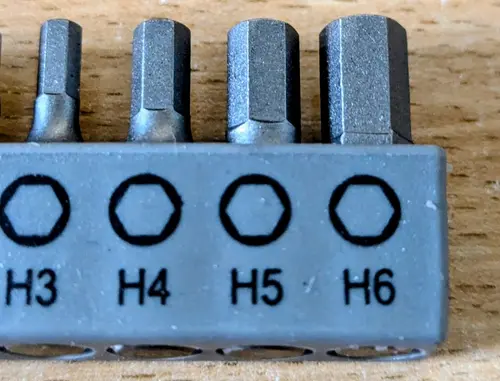
- What it looks like: A 6-sided solid hexagon.
- Best used for: IKEA and flat-pack furniture assembly, bike maintenance, and mechanical machinery.
- Pro Tip: Instead of using the painful L-shaped hand key supplied with flat-pack furniture, buy a set of hex driver bits for your combi drill. Set your torque collar low (1–3), and you can build a wardrobe in a quarter of the time!
Slotted / Flathead (SL)
- What it looks like: A single straight line slot across the head.
- Best used for: Traditional brass screws, decorative period fittings, light switch faceplates, and electrical terminals.
- How to drive them: Use Gear 1 on low torque and hold the drill perfectly straight. Power drills slip off flathead screws easily, which can scratch delicate surrounding decor.
Bit Holder & Bit Types: Impact vs. Standard
When buying screwdriver bits, you will find there are two distinct types:
- Standard Driver Bits (1-inch / 25mm): Short bits designed to insert into a magnetic bit holder. Excellent for everyday combi drill screwdriving.
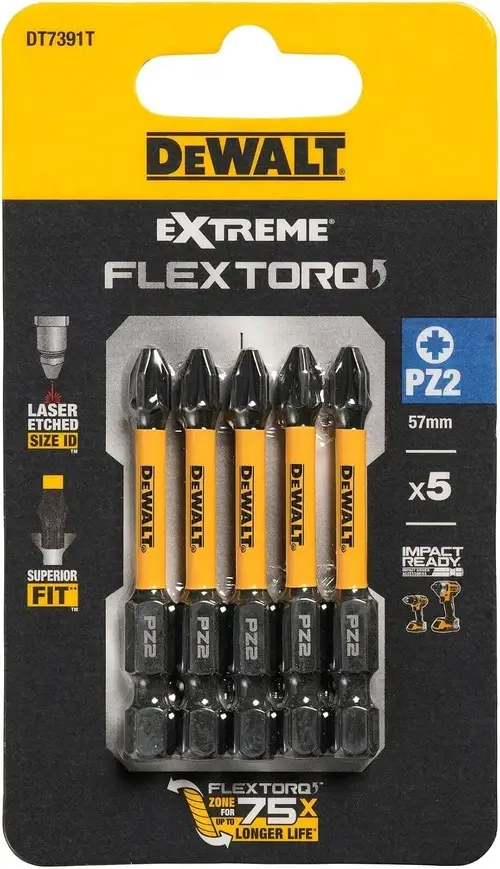
- Impact-Rated Torsion Bits: Usually finished in black oxide with a thin, flexible “neck”. Designed specifically to withstand the brutal rotational hammers of an impact driver without snapping. You can safely use impact bits in a combi drill, but you shouldn’t use cheap standard bits in a heavy impact driver as it will ruin them.
Real-World Lesson: The Curtain Rail Screw Meltdown
A few weeks ago, I was fitting a curtain pole in my friend’s bedroom. The curtain rail kit came in a box with a set of white wall plugs and four zinc plated screws.
I grabbed my drill, which already had my trusty PZ2 bit inserted from a previous woodworking job, lined up the screw, and squeezed the trigger. Instantly, the drill bit screeched, jumped out of the head, and milled the cross inside the screw into a smooth, round crater. The screw was stuck half in and half out of the wall.
When I closely inspected the remaining loose screws in the box, the problem was obvious: the manufacturer had supplied imported Phillips (PH2) screws, not standard British Pozidriv screws.
My PZ2 bit couldn’t seat properly inside the shallow PH2 head. I had to grip the ruined screw shank with vice-grip pliers, back it out by hand, swap my drill bit over to a PH2 bit, and replace the damaged screw.
Lesson learned: Always check the screw head before pulling the trigger, especially when using fixings supplied inside product boxes!
4 Rules to Never Strip a Screw Again
- Check for Diagonal Tick Marks: If the screw head has 4 tiny extra diagonal ticks, lock a PZ bit into your chuck. If it’s a simple 4-arm cross, use a PH bit.
- Match the Size (PZ1 vs PZ2 vs PZ3): Using a PZ1 bit on a PZ2 screw leaves sloppy play that leads to slippage. The bit should fit snug with zero wobble.
- Use the Torque Collar: Always set your combi drill to Screwdriver Mode with a low torque setting (1–5 for soft wood/flat-pack). Let the clutch disengage before the motor forces the bit to slip.
- Push Hard Against the Screw: Maintain firm, direct pressure along the shaft of the drill. Your forward pushing force keeps the bit teeth locked deep inside the screw head.
Frequently Asked Questions
Which screwdriver bit is best for wood screws?
Many general-purpose wood screws sold in the UK use Pozidriv heads, making PZ2 a useful bit to have. However, some wood screws use Torx or other head types, so check the screw first.
What size screwdriver bit is used for flat-pack furniture?
Most flat-pack furniture (like IKEA, Argos, or Wayfair) uses PZ2 bits for standard timber/chipboard screws and 4mm or 5mm Hex (Allen) bits for main structural bolts.
Why do impact driver bits look different?
Impact bits are coated in black oxide and feature a narrowed torsion zone in the shaft. This allows the bit to flex slightly under high shock loads rather than snapping like harder, more brittle standard steel bits.
Why does my combi drill keep stripping screw heads?
Common causes include using the wrong bit type, choosing the wrong size, using a worn bit, holding the drill at an angle or applying excessive force. Check the fit before driving the screw.
How do I get a stripped screw out of a wall or wood?
Place a wide rubber band flat over the ruined screw head, press your screwdriver bit firmly down into the rubber, set your drill to low speed in reverse, and apply maximum forward body pressure as you back it out. The rubber fills the stripped gaps and provides grip!
Final Thoughts
Understanding the difference between PZ, PH and Torx bits will make using your combi drill easier and help prevent damaged screw heads.
For many UK DIY jobs, PZ2 is a useful starting point, but it is worth keeping Phillips and Torx bits available too. Match the bit to the screw, keep it in good condition and work at a controlled speed.
Once you get into the habit of checking the screw head before starting, you’ll spend less time dealing with slipping bits and damaged fixings.
Next Steps & Related Guides
This article is part of my [Ultimate Beginner’s Guide to Combi Drills]. Explore more of my hands-on guides below:
- [Combi Drill vs Drill Driver vs Impact Driver: What’s the Difference?]
- [Wall Plugs & Bit Sizing: How to Match Drill Bit, Plug, and Screw]
- [How to Drive Screws and Assemble Flat-Pack Furniture with Control]
About the Author: Enda McLarnon
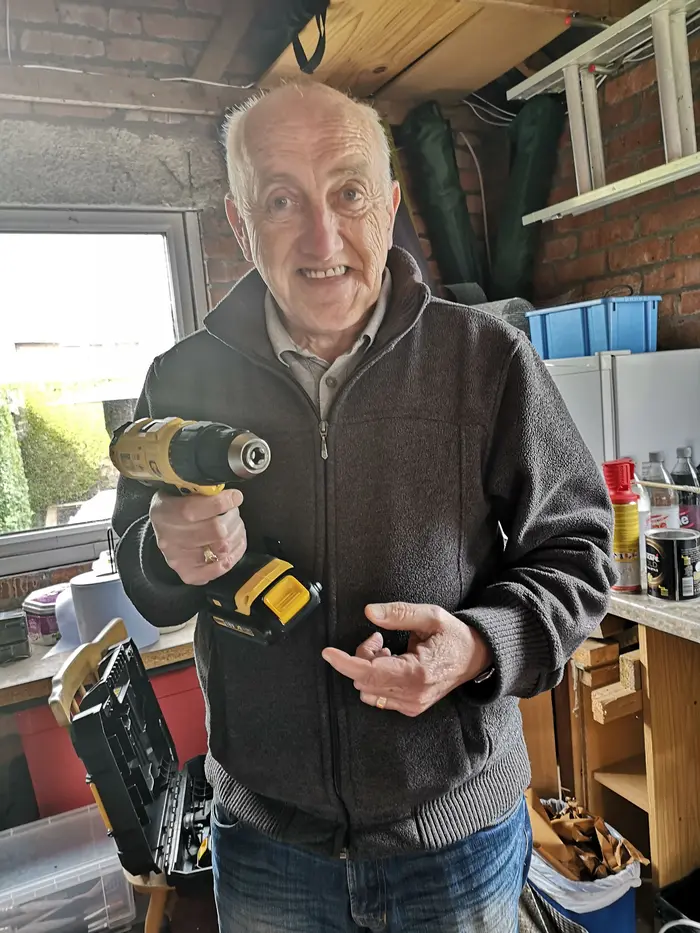
I’m an experienced UK DIYer tackling renovation life inside a 1958 red brick home.
I built this blog to help beginners conquer home maintenance anxiety and save a fortune on expensive trade calls.