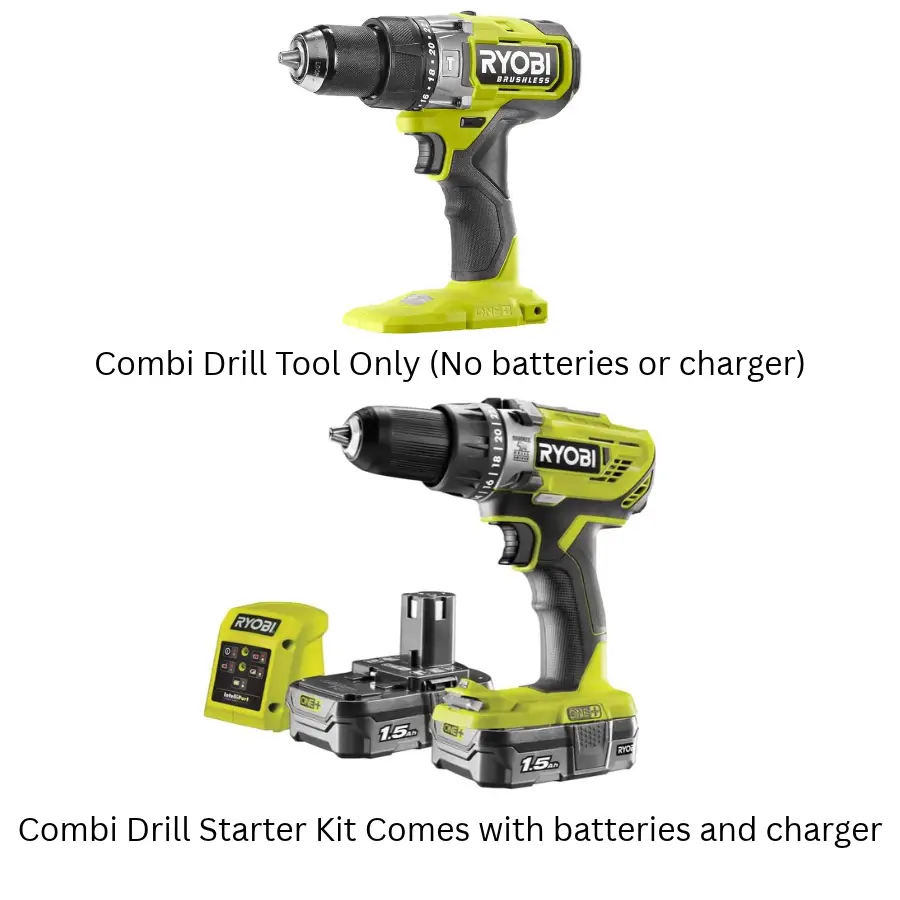
When you start shopping for your first combi drill, or any power tool, you will quickly notice two distinct ways tools are sold: as a Complete Kit or as a “Bare Unit” (Tool Only).
At first glance, buying a bare unit looks like an incredible bargain. You might see a professional grade Makita or DeWalt combi drill body listed online for £70, while the full kit sits at £150. It is very easy to think, “I’ll just buy the cheap bare drill and figure out the battery later.”
Unfortunately, that choice usually leads straight into the “Bare Tool Trap.” This guide breaks down the true economics of power tool systems and explains what UK beginners should actually buy.
Real-World Lesson: Take Your Time
I bought my first power tool many years ago. I was on a limited budget and back then cordless tools used NiCad batteries. When the manufacturers eventually moved to Li-ion batteries, I wanted come new power tools.
Based on my experience as a telephone engineer who had to drill through walls regularly, I needed something built to last. We were supplied then by DeWalt and I liked them a lot. That’s what I bought for my own house use and have no regrets. You do need to think about it more today as There are other alternatives, but do give it a lot of thought.
Table of Contents
1. What Do “Kit” and “Bare Unit” Actually Mean?
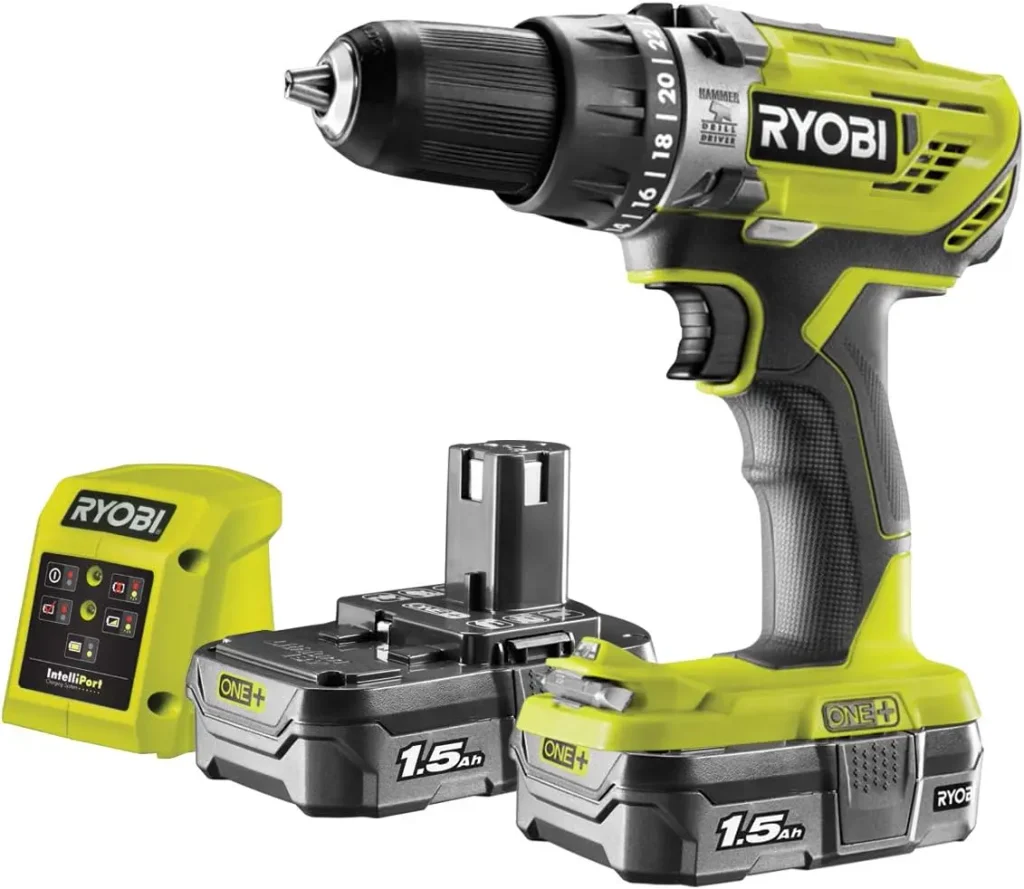
- Complete Kit (Retail Bundle from a manufacturer): These come in a box or hard case containing the drill, one or two rechargeable batteries, a dedicated battery charger, and occasionally a starter set of drill bits. (Some kits can also come with a couple of tools, battery and charger)
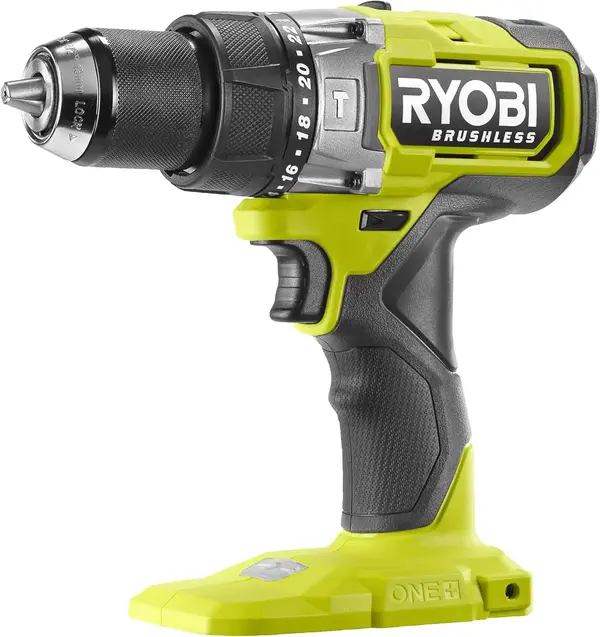
- Bare Unit (Body Only or Tool Only): Means you are buying just the drill. It comes with no batteries, no charger, and no case. If you don’t already own compatible batteries from that brand, a bare drill is completely useless out of the box.
2. What is the “Bare Tool Trap?” (A Real UK Cost Breakdown)
Let’s look at why buying a bare unit can accidentally cost you more money if you are starting from scratch:
- The Bare Drill Body: £70
- A Genuine Brand Battery (e.g., 2.0Ah or 4.0Ah): £50 – £70
- A Compatible Battery Charger: £35 – £50
- Total Usable Setup Cost: £155 to £190+
Compare that to buying a standard starter kit (like a DeWalt, Ryobi, or Einhell kit) which bundles the drill, two batteries, a charger, and a case together for around £130 to £150.
My Golden Rule: If this is your very first cordless tool, buy a complete kit. You get all the essential charging hardware bundled together at a massive discount compared to buying components separately.
3. How to Choose Your UK Battery Ecosystem?
When you buy your first cordless combi drill, you aren’t just buying a drill. You are essentially buying into a battery ecosystem.
Major power tool brands use proprietary battery slots. A DeWalt 18V battery will not fit a Makita drill, and a Ryobi battery won’t slide into a Bosch.
Choosing your first platform wisely sets you up for future DIY projects, because those exact same batteries will later power your future garden tools, sanders, and circular saws:
What Are the Popular UK DIY Platforms?
- Ryobi ONE+ (Green): Widely considered the best consumer focused ecosystem for homeowners. One single battery design fits over 150+ tools, from combi drills to lawnmowers and pressure washers.
- DeWalt XR 18V (Yellow/Black): The benchmark trade and heavy DIY platform. Tough, reliable, and sold in almost every Screwfix and tool shop in the UK.
- Makita LXT 18V (Teal): Renowned for ergonomic comfort and an enormous industrial tool range, making it a favorite for long-term home renovators.
The G-Series Warning (Makita): Be careful when buying budget Makita kits online. If a Makita drill model is part of their “G-Series” range, it uses a cheaper, non-compatible battery that will not work with Makita’s professional LXT tools. Always look for the XR (DeWalt) or LXT (Makita) logos if you want a future proof platform.
Note: There are other brands available in the UK such as Bosch, Einhell, Mac Allister (sold at Screwfix and B&Q), Parkside (Lidl) and Ferrex (Aldi)
Real-World Lesson: Avoid Cheaper Brands
Search around sites like Amazon and you will find much cheaper brands that sell combi drills. In my opinion, they do suffer from poor masonry performance, weak batteries, lower durability, missing features, and limited long term tool ecosystems. Trying to find parts such as replacement batteries or chargers is a nightmare.
4. When Should You Buy a Bare Unit?
Buying a bare unit is a smart financial move under only one condition: You already own healthy, compatible batteries from that exact same brand.
For example, if you already own a Ryobi ONE+ drill and a couple of 2.0Ah batteries, buying a bare Ryobi jigsaw or sander body later on saves you money because you can reuse the power sources you already have.
Real-World Lesson: My First Battery Strategy
When I picked up my first 18V DeWalt combi drill setup, I specifically looked for a kit that included two 2.0Ah batteries rather than just one.
People often ask why you need two batteries. The answer hits you the first time you spend a Saturday afternoon putting up shelves or building garden decking. If you drain Battery #1 while driving 100 screws, you can pop it straight onto the fast charger while you keep working with Battery #2. By the time Battery #2 runs low, your first battery is fully charged and cooled down. Zero project downtime!
What Budget do you Need for Power Tools?
I think this budget question is the most popular question that most beginners will ask. It is a difficult one to answer. Below I have created a buying guide table that looks at beginner needs and popular brands. I think this will help beginners decide what they should be looking at.
To keep it simple I am going to assume that a beginner is looking for a starter kit, that will include a tool such as a combi drill, at least one battery and one charger. (I would still recommend 2 batteries and a charger.)
| Budget Available | Brands |
|---|---|
| £50-£100 | Ryobi, Bosch Home (Green), Black & Decker, Parkside, Ferrex |
| £100 – £200 | DeWalt, Makita, Einhell, JCB Pro |
| £200+ | Milwaukee, Bosch Professional (Blue) |
My Advice: If you can wait, leave it until Black Friday or keep an eye on promotional offers to get the best deal. Stick with a recognised brand as you can get accessories, parts, batteries and chargers easily. They also have good warranties and local UK customer service.
A new beginner to DIY will find Ryobi, Bosch Home to be very good choice affordable options. If like me, you are fortunate to have some extra budget and use my combi drill a few times a week, then consider DeWalt or Makita.
What Are the Pros and Cons of Supermarket Tools in the UK?
I talk to many different tool buyers in the UK, and this divides opinion. Lidl and Aldi often have hand and power tools in special buy promotions and they can sell out quickly.
Lidl Parkside
Pros: They have a broad range and a more established cordless tool ecosystem; easier to build out a collection around a compatible battery platform. Often very good value.
Cons: Special buy stock can be unpredictable, and accessories or replacement batteries may not always be readily available. Models and battery compatibility need checking.
Best for: Someone who wants to buy several cordless tools over time. Be sure to check they use the same battery platform.
Aldi Ferrex
Pros: Low prices and some individual tools perform well in tests; can be a good buy if the tool suits your needs and you catch it in stock.
Cons: Range and availability appear less consistent, and there may be fewer options for expanding a cordless collection or replacing batteries.
Best for: Someone looking for a particular inexpensive tool for occasional use.
For either brand: I would advise you to check the exact model’s warranty terms, battery compatibility, included accessories and replacement parts availability before buying. Don’t assume Parkside and Ferrex batteries, or even every battery within one brand, are interchangeable. Comparisons are model specific, and user reports on warranty service vary.
My Bottom line: If you’re starting a cordless collection, Parkside may be the more practical ecosystem choice. If you need just one tool, compare the exact Ferrex and Parkside models, including batteries and warranty, and buy whichever is better value.
Frequently Asked Questions
Can I use third-party “knock-off” batteries from Amazon?
It’s tempting because they are cheap, but strongly avoid them. Cheap unbranded lithium-ion batteries lack proper thermal safety chips. They are a well-documented fire hazard in power tools and can fry your drill’s motor. Stick to genuine manufacturer batteries.
Do bare units come with a belt clip or bit holder?
Sometimes, but you should never assume. Bare units usually contain just the tool body in a cardboard box. Check the retailer’s product description carefully to see if a side handle, belt hook, or case is included.
Next Steps & Related Guides
This article is part of our [Ultimate Beginner’s Guide to Combi Drills]. Explore more of our hands-on guides below:
- [12V vs 18V Combi Drills: Which One Do DIY Beginners Need?]
- [Brushless vs Brushed Combi Drills: Is Brushless Worth the Extra Money?]
- [How to Look After Your Combi Drill Batteries for Long Life]