When choosing your first combi drill, you will quickly notice a price difference between models that look almost identical. For example, a brushed drill might cost £90, while a brushless model from the same brand could cost £150.
For a UK DIY beginner, it is easy to wonder: Is “brushless” just clever marketing jargon, or is it actually worth paying extra?
This guide explains the difference between brushed and brushless motors in plain English, looks at the practical benefits when drilling and driving screws, and helps you decide whether a brushless combi drill is worth the extra money for your DIY projects.
The Short Answer for UK Beginners
- Choose a brushed drill if: You are on a budget and mainly tackle occasional DIY jobs around the house, such as hanging pictures, assembling flat-pack furniture or fitting curtain rails. A good-quality brushed drill can be perfectly adequate for this type of work.
- Choose a brushless drill if: You use your drill regularly, have bigger projects planned, or want to get more work from each battery charge. Brushless models are generally more efficient and have fewer motor-wear parts, which can make the extra cost worthwhile if you expect to use the tool frequently.
1. How Do Combi Drill Motors Work?
When you look at two combi drills side by side, you may not see any obvious difference. The real distinction is inside the motor, where electrical energy from the battery is converted into the rotation that drives the drill chuck.
The key difference is how electricity is delivered to the motor’s rotating parts.
What is a Brushed Motor (Traditional Technology)
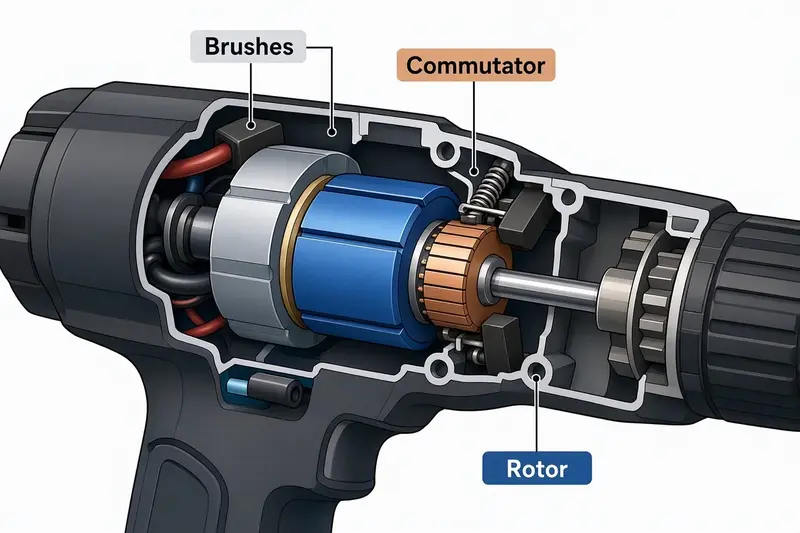
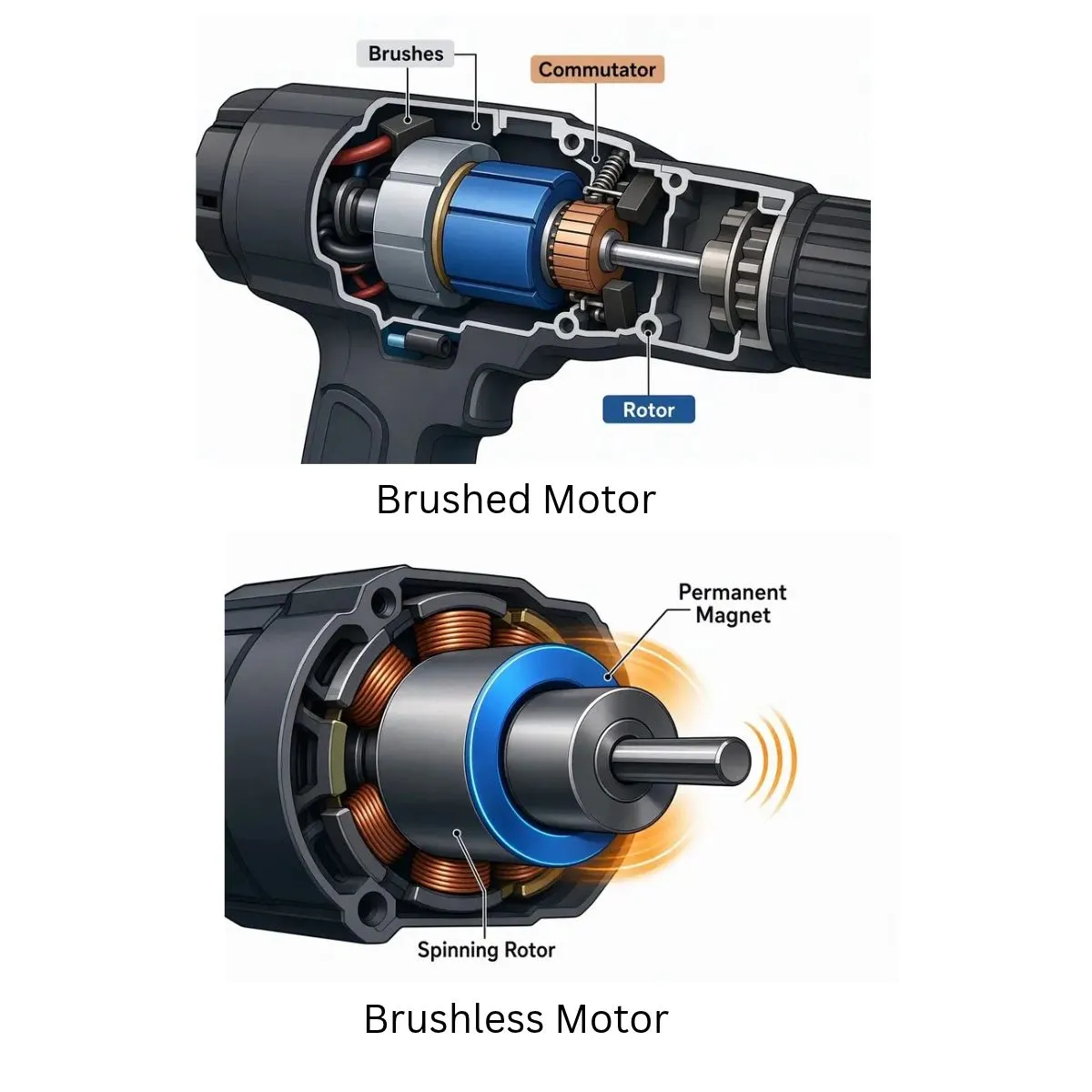
Inside a combi drill, a brushed motor uses small, spring-loaded carbon blocks called brushes. These press against a rotating copper component called a commutator, helping transfer electrical current to the motor’s rotating parts.
- The analogy: Imagine two surfaces making contact while one moves past the other. That contact creates friction, much like brake pads rubbing against a wheel.
- What this means in practice: The brushes and commutator gradually wear through use. Brushed motors can also generate heat and electrical sparks as part of their operation. Depending on the drill’s design and how heavily it is used, the brushes may eventually need replacing.
What is a Brushless Motor (Electronic Control)
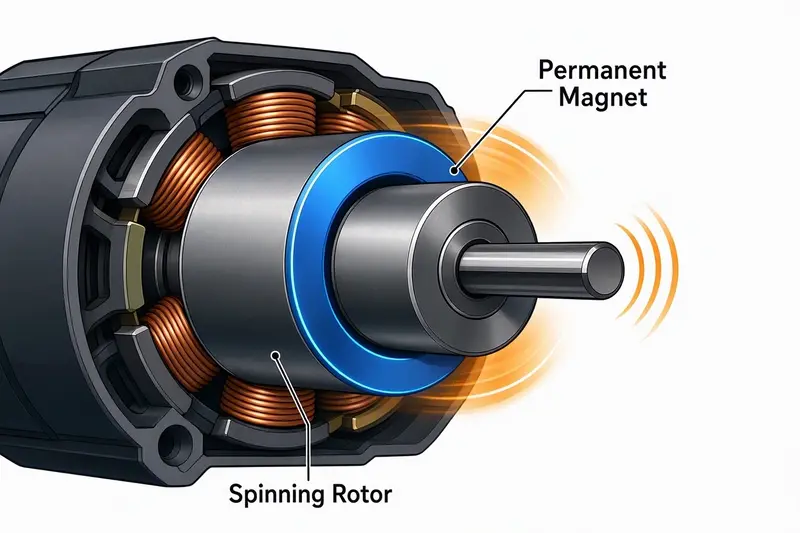
Inside a combi drill, a brushless motor removes the carbon brushes and mechanical commutator. Instead, an electronic controller switches the electrical current through the motor’s windings in the correct sequence to keep the rotor turning. Permanent magnets are commonly used in the rotor.
- The analogy: Rather than using physical contacts to switch the current, electronic controls do the switching for the motor.
- What this means in practice: With no carbon brushes to wear out, brushless motors avoid that particular maintenance requirement. They are also generally more efficient, which can help a battery-powered combi drill deliver more work from each charge. However, the motor still contains moving parts, such as bearings, that can wear over time.
2. Head-to-Head Comparison: Brushed vs. Brushless Combi Drills
| Feature | Brushed Combi Drill (e.g., DeWalt DCD776) | Brushless Combi Drill |
| Upfront Cost | Budget-friendly & affordable | Significantly more expensive |
| Battery Efficiency | Decent, but loses some power to heat/friction | Up to 50% more efficient per charge |
| Tool Lifespan | Good, but carbon brushes eventually wear out | Exceptional (No internal parts to wear down) |
| Physical Size | Slightly longer and heavier body | More compact and lighter |
| Power & Torque | Standard DIY power | Higher output, handles stalls better |
If you only assemble furniture and put up shelves occasionally, a good brushed drill may be all you need. If you use your drill frequently or have bigger jobs planned, the efficiency and reduced brush maintenance of a brushless model may make the extra cost worthwhile.
3. What are the Real World Benefits of Going Brushless
If you are considering spending extra money on a brushless combi drill, what do you actually gain when using it for everyday DIY? Here are four differences worth understanding before you buy.
1. Better Battery Efficiency (More Work Per Charge)
Brushless motors are generally more energy efficient than comparable brushed motors. They avoid the friction and electrical losses associated with carbon brushes, which can help you complete more work on a single battery charge.
This can be particularly useful when driving lots of screws, drilling multiple holes or working on a project where you don’t want to keep stopping to change batteries.
However, don’t assume a brushless drill will automatically give you 30% or 50% more runtime. The actual difference depends on the drill, the task, the material and the battery being used.
Your battery’s capacity also matters. A 5.0Ah battery will generally provide more runtime than a 2.0Ah battery under comparable conditions, although it will usually add weight to the drill.
2. A Potentially Smaller, Lighter Tool Body
Removing the carbon brushes can give manufacturers more freedom when designing a drill. Some brushless combi drills are therefore shorter, lighter or more compact than comparable brushed models.
This can be a real advantage when working inside kitchen cabinets, between joists or in other restricted spaces. A lighter drill can also be more comfortable when working overhead.
However, brushless doesn’t automatically mean smaller or lighter. Always check the published dimensions and weight of the actual models you are comparing, including whether the stated weight includes a battery.
3. Electronic Control and Protection
Brushless drills use an electronic controller to manage how power is delivered to the motor. Depending on the model, this can help regulate performance, improve efficiency and protect the tool against certain overload conditions.
Some higher specification drills also have electronic anti-rotation or kickback protection. This can reduce the risk of injury if the drill suddenly twists when a bit jams.
Don’t assume every brushless drill has this feature, though. Basic electronic motor control is not the same as a dedicated anti-kickback system, and neither removes the need to hold the drill securely, use the correct gear and follow the manufacturer’s safety instructions.
4. Less Motor Maintenance
One clear advantage of a brushless motor is that it has no carbon brushes to wear down or replace. This removes one maintenance task associated with traditional brushed motors.
That doesn’t mean the entire drill is maintenance-free. Bearings, the chuck, gearbox, battery and other components can still wear or develop faults.
For someone who uses a drill regularly, avoiding brush replacement can be a worthwhile benefit. For an occasional DIY user, however, brush wear may never become a significant concern during the time they own the tool.
Real-World Lesson: My DCD776 vs. a Modern Brushless Drill
On my own workbench, I regularly reach for my trusty DeWalt DCD776, which uses a traditional brushed motor. Over the years, it has driven thousands of screws, drilled into brick and helped build garden furniture without missing a beat. It is a good reminder that you don’t need a brushless motor to get excellent results from a combi drill.
However, when I helped a friend renovate his kitchen using a brushless DeWalt combi drill, I noticed two practical differences during extended screwdriving sessions: the brushless tool ran noticeably cooler, and its battery lasted longer between changes.
Those are observations from my experience rather than a controlled test, so the difference you notice will depend on the two drills being compared and the work being carried out.
The takeaway: Brushed drills are not obsolete. A good brushed model can handle plenty of everyday DIY. Brushless technology can offer worthwhile efficiency and maintenance advantages, particularly if you use your drill regularly.
Can You Replace the Brushes in a Brushed Combi Drill?
Yes, on many brushed drills, the carbon brushes can be replaced when they wear down. However, the process varies between models. Some have accessible brush holders, while others require more dismantling.
The important part is finding the correct replacement brushes for your exact drill model. Don’t assume brushes from a similar-looking drill will fit.
Replacement costs also vary, so check the price and availability of the correct parts before deciding whether repair is worthwhile. If the brushes are accessible and you are comfortable carrying out the work, replacement can be a straightforward maintenance job. Always disconnect the battery first and follow the manufacturer’s instructions.
Summary: Is Brushless Worth the Extra Money?
Brushless technology is becoming increasingly common across cordless power tools, including combi drills. It offers genuine advantages, but you still need to weigh those benefits against the purchase price.
In my opinion, if you use a drill professionally or tackle DIY projects regularly, paying extra for a brushless model often makes sense. Better efficiency and the absence of carbon-brush replacement can be worthwhile over years of use.
If you mainly assemble flat-pack furniture, hang shelves or carry out occasional repairs around the house, a good-quality brushed drill can still be a sensible buy.
My advice is simple: Don’t buy a brushless drill just because it sounds more modern. Consider how often you will use it, the type of work you plan to do, the battery system you are investing in and the difference in price between the actual models.
Frequently Asked Questions
Do brushless drills have more raw power?
Not automatically. A drill’s performance depends on its motor, voltage, gearing, electronic controls and overall design. Brushless motors can deliver better efficiency and strong performance under load, but a well-designed brushed drill can still be powerful enough for many DIY jobs.
When comparing drills, look at the manufacturer’s torque figures, speed settings and drilling capabilities rather than choosing based on the motor type alone.
Can I use my old batteries with a brushless drill?
Often, yes, provided the new drill is compatible with your existing battery platform. For example, many DeWalt 18V XR tools use the same battery system, whether the tool has a brushed or brushless motor.
However, don’t assume every battery from the same brand will fit every tool. Check the voltage, battery platform and manufacturer’s compatibility information before buying. You may also need to consider whether your existing charger is compatible.
Are brushless drills waterproof?
No. Brushless technology does not make a combi drill waterproof. Although brushless motors do not have carbon brushes, the tool still contains electrical and electronic components that can be damaged by water.
Some models may have additional protection against dust or moisture, but this varies by product. Check the manufacturer’s instructions and protection rating, if one is provided, rather than assuming a drill is safe to use in the rain. Keep your drill and batteries dry unless the manufacturer explicitly states otherwise.
Next Steps & Related Guides
This article is part of our [Ultimate Beginner’s Guide to Combi Drills]. Explore more of my hands on guides below:
- [12V vs 18V Combi Drills: Which One Do DIY Beginners Need?]
- [Kit vs Bare Unit: How to Buy Your First Power Tool System]
- [Combi Drill Settings Demystified: Torque, Gears, and Modes]