By Enda McLarnon — Experienced UK DIYer sharing practical fixes from my 1958 red brick home.
If you have just bought a shiny new 18V impact driver, you might be wondering if you can save money by using the standard drill bits sitting in your existing toolbox.
The short answer is no—you should not use standard drill bits in an impact driver.
While it might be tempting to slap a cheap drill bit into an adapter and start making holes, doing so can permanently ruin your accessories, damage your tool’s quick-release chuck, and even present a genuine safety hazard from shattering metal shards.
As someone who runs a DeWalt 18V XR impact driver daily, I’ve tried cutting corners with old bits before, and it almost always ends poorly. Here is the technical breakdown of why regular drill bits fail in impact drivers, the physical risks involved, and how to choose the right impact-rated drilling bits for clean, safe holes every time.
Looking for a versatile tool setup? Compare the highest-performing cordless drivers on the UK market in our guide to the 5 Best Impact Drivers for DIY UK.
3 Reasons Regular Drill Bits Fail in Impact Drivers
1. The Shank Fitting Problem (Round vs. 1/4″ Hex)
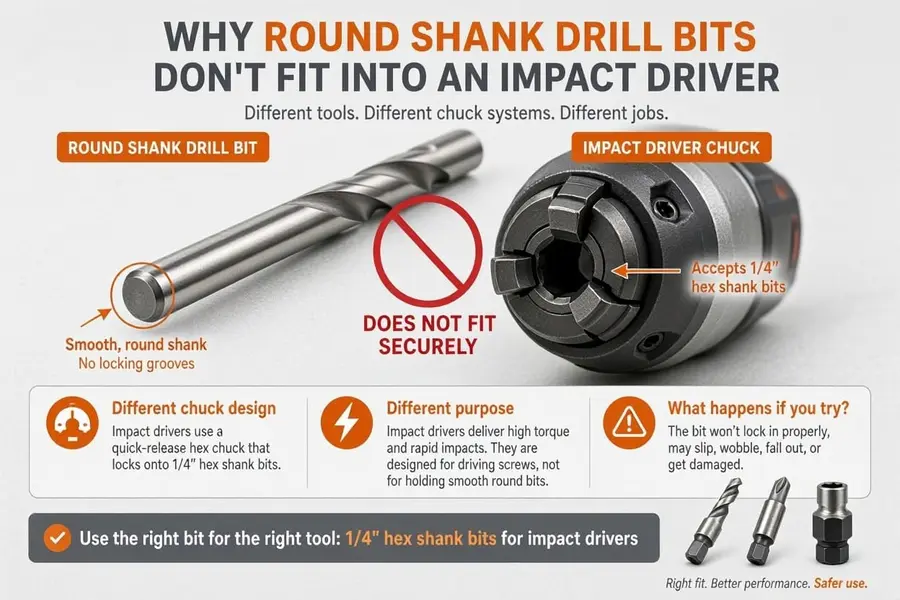
Standard HSS (High-Speed Steel) or wood drill bits feature a smooth, round shank designed to be clamped inside a standard 3-jaw drill chuck (the kind found on a combi drill).
An impact driver does not have a 3-jaw chuck. Instead, it uses a 1/4″ quick-release hex collet.
- Why it fails: You cannot insert a smooth round shank directly into an impact driver—it simply won’t lock. Even if you use a 3-jaw chuck adapter, the extreme rotational impacts will cause the smooth round shank to slip and spin inside the jaws, gouging the steel bit.
2. Standard Steel Is Brittle Under Rotational Impacts
Standard HSS drill bits are engineered for continuous rotational cutting. They are designed to withstand high shearing forces as they slice through wood or metal, but they are not designed for axial or rotational shock waves.
- Why it fails: An impact driver doesn’t just rotate—it delivers up to 4,000 violent rotational hammer impacts per minute whenever it encounters resistance. Standard HSS steel is hard but brittle; under these continuous shock loads, the flutes of a standard bit will twist, fracture, or explosively shatter.
STANDARD HSS vs IMPACT-RATED BITS
| Standard HSS Bits | Hard & brittle. Designed ONLY for smooth, continuous rotation in standard drill chucks. |
| Impact-Rated Bits | Formulated with flexible spring steel alloy & a narrow “torsion zone” to absorb hammer shock. |
3. High Risk of Shank Shearing
Even if you buy cheap, unbranded drill bits that have a 1/4″ hex shank stamped onto the bottom, that does not mean they are impact-rated.
- Why it fails: Cheap hex-shank bits are often constructed in two pieces: a standard round bit glued or crimped into a cheap steel hex base. When the impact driver mechanism engages, the high rotational torque will shear the weld or joint instantly, spinning the base while leaving the cutting tip stuck in your workpiece.
I once tried using a cheap, unbranded hex-shank wood bit to drill a pilot hole into an oak post. The second the DeWalt’s internal anvil engaged, the high rotational torque sheared the joint right at the base instantly. The hex shank spun uselessly inside my tool while the cutting tip remained permanently stuck deep in the timber.
Safety Hazards: What Can Go Wrong?
Using non-impact-rated bits in a high-torque tool isn’t just bad for your pocketbook—it creates real site hazards:
- Flying Metal Shards: When a brittle HSS bit fractures under impact force, metal splinters can fly off at high speed toward your hands, face, or eyes. Always wear BS EN166 safety glasses when drilling.
- Snapped Bits Trapped in Workpieces: A bit that snaps off deep inside an oak post or brick wall is almost impossible to extract without destroying the surrounding material.
- Jammed Anvils: Burred or deformed cheap hex shanks can mushroom inside the chuck, leaving your tool permanently jammed.
Already dealing with a jammed bit? Read our step-by-step troubleshooting guide onWhy Is My Impact Driver Bit Stuck & How to Release It Safely.
What Should You Use Instead?
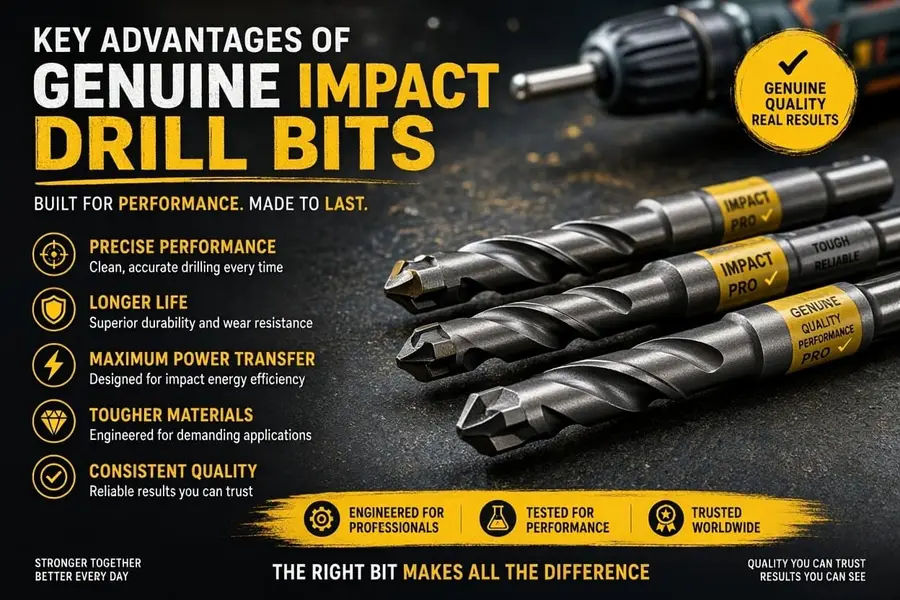
If you need to drill holes using an impact driver, you must use purpose-built Impact-Rated Hex-Shank Drill Bits (from established brands like DeWalt FlexTorq, Milwaukee Shockwave, or Bosch Expert).
CORRECT BITS FOR IMPACT DRIVERS
| Impact Wood Brad-Point | 1/4″ Hex shank, forged spring-steel body |
| Impact HSS Metal Bits | Titanium or Cobalt coated with torsion waist |
| Impact Masonry Bits | Carbide-tipped with shock-resistant brazing |
- For Wood: Impact Wood Brad-Point Bits — Built with a 1/4″ hex shank and a forged spring-steel body.
- For Metal: Impact HSS Metal Bits — Look for Titanium or Cobalt coated options featuring a narrowed torsion waist. I personally keep a set of DeWalt Extreme Impact Drill Bits in my bag for this exact reason.
- For Masonry: Impact Masonry Bits — Equipped with a durable carbide tip held in place with shock-resistant brazing, like the Bosch Expert Hex-9 Sets.
Key Advantages of Genuine Impact Drill Bits:
- One-Piece Forged Construction: The 1/4″ hex shank and cutting flutes are machined from a single piece of heavy-duty alloy steel.
- Torsion Zone Technology: A engineered narrow waist flexes slightly under peak torque spikes, smoothing out the hammer blow before it reaches the cutting tip.
- Split-Point Tips: Prevents “wandering” across the material surface when starting a hole without a pilot mark.
Frequently Asked Questions (FAQ)
Can I use an impact driver with a 3-jaw chuck adapter?
Yes, but only for light-duty drilling in softwood or thin sheet metal. Using a 3-jaw adapter with large-diameter bits or heavy masonry work transfers massive vibration into the adapter, which will quickly loosen the chuck or shear the adapter’s 1/4″ mounting thread.
Is an impact driver better at drilling than a combi drill?
No. A standard combi drill is always superior for clean, precise hole-drilling. Combi drills run faster (up to 2,000 RPM continuous rotation) and produce clean, smooth hole walls. Impact drivers should only be used for drilling as a convenient secondary option when you don’t want to carry two tools on a ladder.
Final Verdict
- Do not use standard, round-shank HSS drill bits in an impact driver—they will slip, snap, or shatter under impact vibration.
- Always invest in genuine, impact-rated 1/4″ hex-shank drill bits when making holes with an impact tool.
- For heavy, precise, or large-diameter hole drilling, put down the impact driver and pick up a proper combi drill.
🔗 Related Articles:
- Prevent stripped screw heads:Why Does My Impact Driver Keep Stripping Screws? (5 Easy Fixes)
- Compare top cordless models:5 Best Impact Drivers for DIY UK
- The Complete Guide to Impact Drivers for UK DIY: Choosing, Using, and Troubleshooting
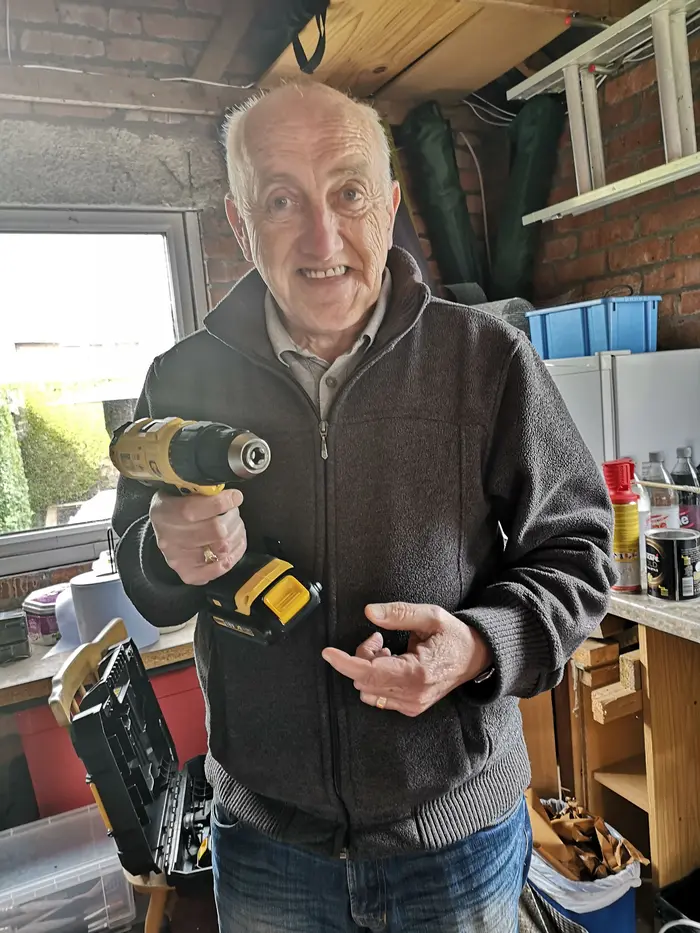
About the Author: Enda McLarnon
I’m an experienced UK DIYer tackling renovation life inside a 1958 red brick home.
I built this blog to help beginners conquer home maintenance anxiety and save a fortune on expensive trade calls.