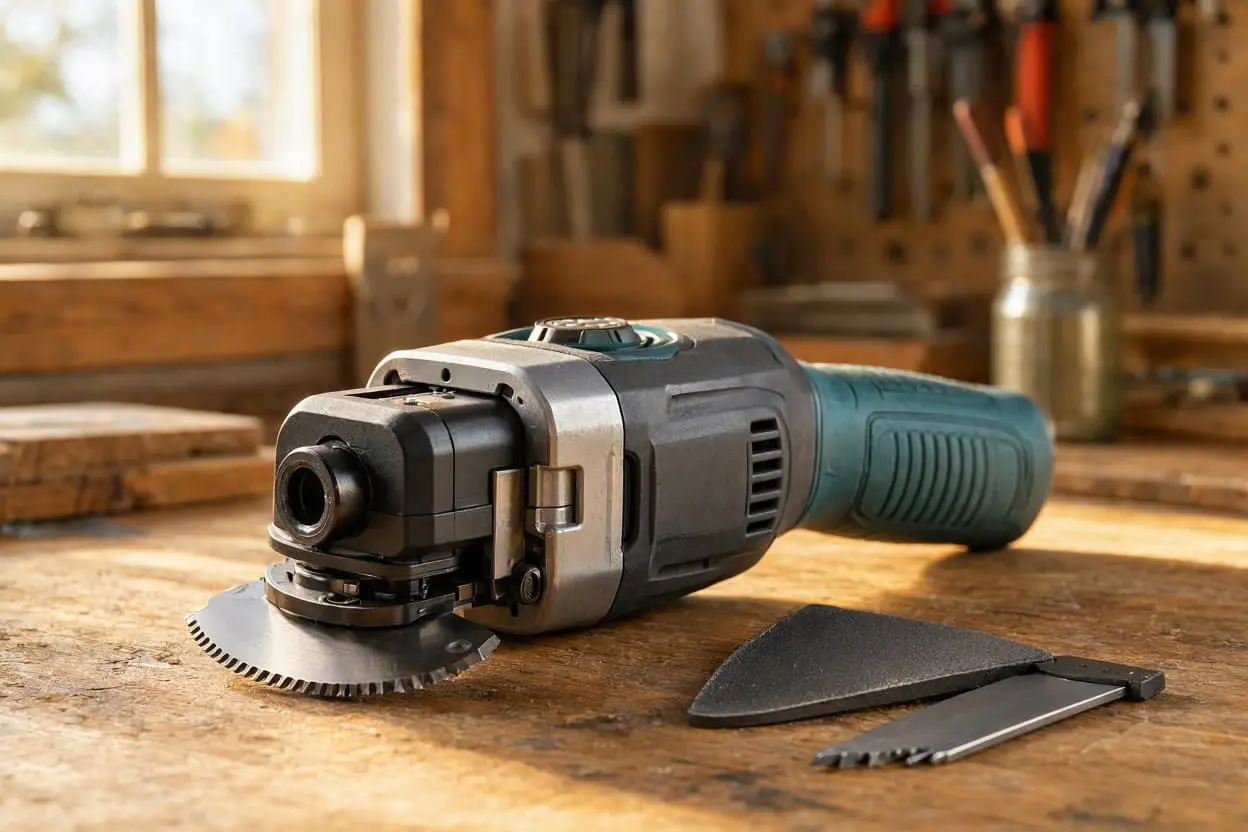
Few things bring a jobsite or DIY project to a halt faster than your multi-tool casing becoming scorching hot in your hand, emitting an acrid burning smell, or suddenly cutting out mid-plunge.
Because oscillating multi-tools package high-torque motors into tight, slender handles designed for one-handed grip, thermal management is their biggest engineering challenge. Unlike circular saws or angle grinders, multi-tools feature compact cooling fans that struggle to push air through dust-clogged vents when worked continuously under heavy load.
If your multi-tool is getting hot enough to burn your skin or cut out, ignoring it will quickly result in blown armature windings or melted internal gears. Here is why your multi-tool is overheating, how to cool it down, and the exact steps to stop it from burning out permanently.
Looking to replace a burnt-out tool? If your current machine is beyond repair, check out my 5 Best Oscillating Multi-Tools UK featuring advanced brushless motor thermal protection and decoupled anti-vibration housings.
4 Common Reasons Your Multi-Tool Is Overheating
1. Clogged Air Intake Vents (Fine Dust Suffocation)
Multi-tools are continuously used to cut plasterboard, chase out masonry mortar, and sand wood filler. These activities produce fine, microscopic dust that gets sucked into the tool’s rear ventilation slots.
- What happens: Fine dust coats the internal motor coils and clogs the cooling fan. Dust acts like a thermal blanket, trapping heat inside the motor casing until the wire insulation melts.
- The Symptom: The plastic body near the air vents gets extremely hot within just 2 to 3 minutes of light use.
2. Excessive Feed Pressure & Motor Stalling
When a cut slows down, many users push harder on the back of the tool body.
- What happens: Pushing too hard reduces the oscillation arc of the blade. This causes the electric motor to pull maximum electrical current (Amps) while operating at reduced OPM (Oscillations Per Minute). This electrical resistance generates massive heat directly inside the copper motor windings rather than converting it into kinetic cutting power.
- The Symptom: You notice an electrical “hot motor” smell and a sudden drop in pitch or speed.
3. Continuous Duty Cycle Overload (Especially Sanding & Grout Removal)
Multi-tools are designed primarily for quick, intermittent “problem-solver” cuts—not continuous 4-hour heavy-duty demolition or floor sanding sessions.
- What happens: Running a multi-tool non-stop for 20 minutes without letting the motor rest allows heat to transfer from the gearbox directly into the front motor bearing and handle grip.
- The Symptom: The front metal gearbox or quick-release lever becomes too hot to touch with bare hands.
4. Worn Carbon Brushes or Faulty Variable Speed Dial (Brushed Models)
If you own an older or entry-level multi-tool (such as a brushed 18V or 230V model like the Makita DTM51 or Draper Storm Force), worn carbon brushes create electrical arcing against the motor commutator.
- What happens: Excessive arcing produces extreme localized electrical heat and blue sparks inside the rear motor vents.
- The Symptom: Visible sparks through the ventilation slots, erratic speed surging, or a strong ozone burning smell.
Step-by-Step: How to Fix & Prevent Multi-Tool Overheating
If your tool is getting hot, follow these five maintenance and operation rules to extend its lifespan:
OVERHEATING PREVENTION CHECKLIST
| Clear Vents | Blow out air slots with compressed air weekly |
| No-Load Cooling | Run tool at full speed in free air for 30 seconds |
| Light Pressure | Let blade teeth cut without forcing heavy weight |
| Match the Speed | Reduce OPM on heat-sensitive materials & sanding |
| Upgrade Blade | Use sharp/carbide blades to reduce motor drag |
Real-World Lesson: My usage and maintenance
I use my multi-tool around a couple of times a month. After use, I clean out the air slots with a can of compressed air, and then run the tool outside. Finally I give it a wipe before putting it away. It takes less than 2 minutes once you get into the habit of doing those basic things.
Step 1: Perform a “No-Load Cooling Cycle”
If your tool starts feeling warm during heavy cutting, do not turn it off immediately and throw it into your kit bag.
- What to do: Pull the blade out of the cut and let the tool run continuously in free air at maximum speed for 30 to 45 seconds without touching anything.
- Why it works: Running the tool without a cutting load allows the internal fan to pull cool ambient air through the housing, rapidly dropping internal motor temperatures before you switch it off.
Step 2: Blow Out the Air Vents with Compressed Air
At the end of every working day (especially after cutting plasterboard or sanding):
- Use a compressed air can or air compressor blow-gun directed into the rear intake vents. You will be amazed by the mountain of white plasterboard dust that blows out!
Step 3: Upgrade to Sharp or Carbide Blades
A dull, worn-out blade creates immense friction resistance, forcing the motor to pull double the current to push through timber.
- Fix: If your blade teeth are worn, replace it immediately. Switching to a high-performance Japanese-tooth blade for wood or a carbide blade for metal reduces motor strain by up to 50%.
Burning through blades too fast? Read my explainer on Why Do Multi-Tool Blades Dull So Fast? to fix technique errors that ruin your blades and overload your tool.
Step 4: Use an Interface Pad for Long Sanding Sessions
Sanding with a delta pad generates extreme heat that melts both the tool’s Velcro pad and transfers heat back into the gear spindle.
- Fix: Use a soft foam interface pad between your delta sanding pad and the sandpaper sheet. The foam absorbs vibration and acts as a thermal barrier, preventing heat transfer into the tool gear housing.
Frequently Asked Questions (FAQ)
My multi-tool smells burnt—is it completely ruined?
Not necessarily. A mild “hot electronics” smell often occurs when new factory grease warms up or when dust hits hot motor coils. However, if you see thick white smoke or a sharp metallic burning odor, the wire varnish insulation on the armature has melted and the motor will need replacing or replacing under warranty.
Are brushless multi-tools less likely to overheat?
Yes! Brushless motors (found on tools like the DeWalt DCS356, Bosch GOP 18V-28, and Fein Multimaster) do not rely on mechanical carbon brushes. They generate up to 30% less internal friction heat, feature built-in electronic overload protection chips, and run significantly cooler than older brushed machines.
Final Verdict: Protect Your Investment
An oscillating multi-tool is one of the most versatile power tools you will ever own, but its compact design requires sensible thermal management.
By keeping air vents clear, letting the motor cool in free air, and avoiding heavy hand pressure, your multi-tool will deliver years of reliable site performance without burning out.
Related Articles:
- Compare top DIY models: 5 Best Oscillating Multi-Tools UK
- Solve blade fitment issues:Starlock vs Universal OIS Multi-Tool Blades Explained