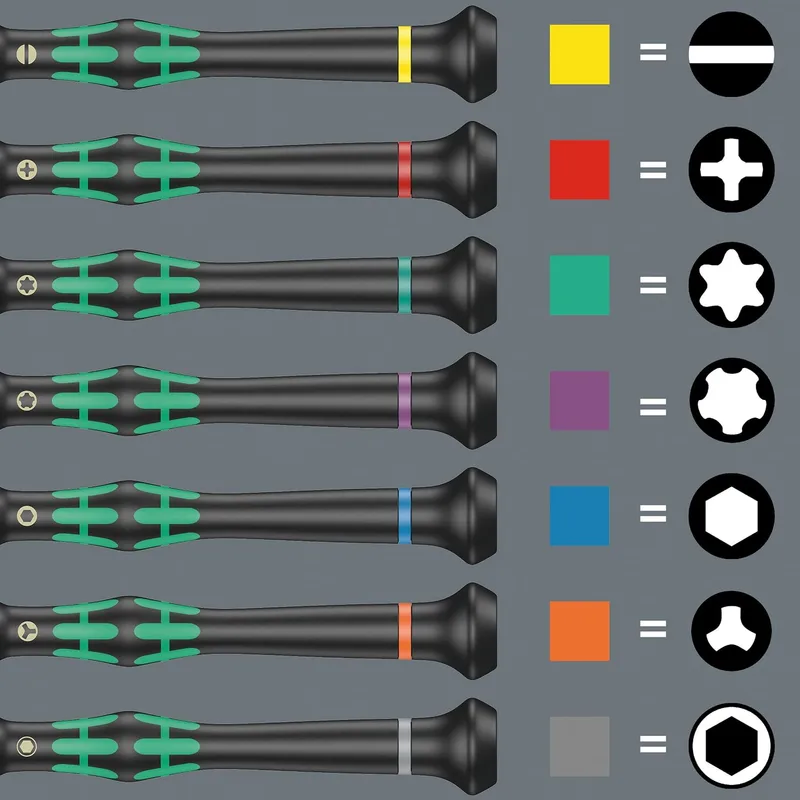
Precision screwdrivers are designed for working with small screws that are too delicate or too small for standard screwdrivers. They’re commonly used for tasks such as repairing glasses, changing batteries in small devices, assembling electronics and carrying out detailed hobby work.
Unlike ordinary screwdrivers, precision screwdrivers have narrow shafts and small tips designed to fit tiny screw heads. Many sets also include several interchangeable tips, allowing you to work with different screw types and sizes.
Choosing the right precision screwdriver is important. A tip that doesn’t fit properly can slip, damage the screw head or make a simple repair much more difficult.
In this guide, we’ll explain what precision screwdrivers are, the different types and sizes available, where they’re useful and what to look for when buying a set. We’ll also cover practical tips for using them safely and avoiding damage to small screws and delicate components.
What Are Precision Screwdrivers Used For?
Precision screwdrivers are used for jobs that require more control than a standard screwdriver can provide. Their small tips and slim shafts make them suitable for working with tiny screws in delicate items.
You don’t need a precision screwdriver set for every DIY task, but it can be very useful to have one available for smaller repairs.
Repairing Glasses
Small screws are commonly used in glasses hinges and frames. A precision screwdriver can help tighten a loose screw or carry out a minor adjustment.
Use the correct tip size and avoid overtightening, as small screws and delicate frames can be damaged easily.
Replacing Batteries in Small Devices
Some small electronic devices have screw-fastened battery covers. Examples may include remote controls, toys, small torches and other household gadgets.
A precision screwdriver can help remove the cover, provided you use the correct tip for the screw head.
Working With Electronics
Small screws are found in certain electronic devices, accessories and components. Precision screwdrivers can be useful for suitable repair and maintenance tasks.
However, opening a device does not automatically make it safe to work on. Disconnect it from its power source and follow the manufacturer’s instructions. Devices containing batteries, stored electrical energy or delicate components may require specialist knowledge.
Small Toys and Household Items
Toys, small appliances and other household products sometimes use tiny screws to secure covers or components. A precision screwdriver set can help with minor repairs where the manufacturer permits access.
Check the screw head carefully, as some products use security screws that need a specialist bit.
Hobbies and Model Making
Precision screwdrivers are useful for model kits, small mechanical assemblies and other detailed hobby projects that use miniature screws.
The small handles allow careful adjustments, helping you avoid damaging small components or surrounding materials.
When Do You Need a Precision Screwdriver?
A precision screwdriver is worth considering when:
- The screw is too small for your standard screwdriver.
- You need to work in a confined space.
- The item contains delicate components.
- You need careful control when tightening or loosening a small screw.
For larger screws and general household fastening jobs, a standard screwdriver is usually more suitable. The key is to choose a tool that fits the screw properly and gives you enough control to work without damaging it.
If you’re unsure which screwdriver type is best for a particular job, our guide to how to choose the right screwdriver explains how to match the tool to the screw head.
Types of Precision Screwdrivers and Their Sizes
Precision screwdrivers are available in several tip types and sizes to match the small screws used in glasses, electronics, toys and other delicate items.
Choosing the correct tip is important because small screw heads can be damaged easily if the screwdriver slips or does not fit properly.
Phillips Precision Screwdrivers
Phillips precision screwdrivers have a small cross-shaped tip. They are used with compatible Phillips screws found in some small electronic devices, toys and household items.
Common markings include PH000, PH00 and PH0. These are smaller than the Phillips sizes typically used for general DIY.
Slotted Precision Screwdrivers
Slotted precision screwdrivers have a narrow, flat tip designed for screws with a single straight slot.
They are useful for certain small fittings, older devices and other items that use slotted screws. The blade width must match the slot to reduce the risk of slipping.
Torx Precision Screwdrivers
Torx precision screwdrivers have a small, six-pointed star-shaped tip. They are used with compatible Torx screws in some electronics, accessories and small mechanical assemblies.
Common examples include T3, T4, T5 and T6, although the sizes available vary by manufacturer and application.
Some devices use security Torx screws with a small pin in the centre. These require a compatible security bit rather than a standard Torx tip.
Other Precision Screwdriver Types
Depending on the device, you may encounter other small screw heads, including hex socket and specialist security designs. A suitable precision bit set can help, but not every set includes every type.
Always identify the screw head before choosing a tool. Avoid forcing a bit into a screw that does not fit properly.
Common Precision Screwdriver Markings
| Marking | Tip type | Typical use |
|---|---|---|
| PH000 | Phillips | Very small Phillips screws |
| PH00 | Phillips | Small Phillips screws |
| PH0 | Phillips | Larger precision Phillips screws |
| SL1.5 | Slotted | Small slotted screws |
| SL2.0 | Slotted | Slightly wider slotted screws |
| T3–T6 | Torx | Small Torx screws |
| H1.5–H2.5 | Hex | Small hex-socket screws |
These are examples rather than universal sizes. Manufacturers may use different ranges and markings, so check the set’s contents before buying.
How to Choose the Correct Precision Screwdriver Size
Start by examining the screw head and selecting the matching tip type. The tip should engage securely without wobbling or needing to be forced into the recess.
If the screwdriver slips, stop and try a different size or type. Applying more force can damage the screw head or the item you’re repairing.
Tip: For a general precision toolkit, a set containing several Phillips and slotted sizes is a useful starting point. Torx and security bits can be helpful if you regularly repair devices that use those screw types.
For a closer look at screwdriver markings and common sizes, see my guide to screwdriver sizes explained.
What to Look for When Buying a Precision Screwdriver Set
A good precision screwdriver set should give you the right tip types and sizes for the small repairs you expect to carry out. You don’t necessarily need a large professional set for occasional household jobs.
Here are the main features to consider before buying.
1. A Useful Range of Tip Types and Sizes
Look for a selection of Phillips and slotted precision screwdrivers as a starting point. Depending on what you repair, Torx, hex and security bits may also be useful.
Check the contents list carefully. Some sets contain fixed precision screwdrivers, while others use a handle with interchangeable bits.
2. Comfortable Handles and Good Control
Precision screwdrivers often have narrow handles with a rotating cap at the end. This allows you to rest a finger on the cap while turning the handle with your other fingers.
The design helps you make small, controlled adjustments without applying unnecessary force.
If possible, choose a set with handles that feel comfortable to hold. Very small tools can become awkward to use if the handles are slippery or difficult to grip.
3. Magnetic Tips
Some precision screwdrivers have magnetic tips that help hold small screws in place while you position them.
This can be useful when working in confined spaces, although magnetic strength varies between tools. A magnetised tip may not be suitable for every component, so follow the equipment manufacturer’s guidance when working with sensitive electronics.
4. Fixed Screwdrivers or Interchangeable Bits?
Both designs have advantages.
Fixed precision screwdrivers are ready to use and can be convenient when you regularly work with particular screw sizes. Interchangeable-bit sets take up less space and may offer a wider range of tips in one case.
For occasional DIY and household repairs, an interchangeable set can be a practical option. If you frequently use the same small screw sizes, dedicated screwdrivers may be more convenient.
5. Build Quality and Tip Accuracy
The tip should be accurately shaped and finished so it engages securely with the screw head. Poorly made or worn tips can slip and damage tiny screws.
Look for clear manufacturer information and a set suited to the work you intend to do. Avoid judging quality by piece count alone.
6. A Practical Storage Case
Small precision screwdrivers and bits are easy to lose. A case with clearly labelled slots helps you identify the correct size and keep the tools organised.
A compact case is particularly useful if you plan to store the set in a household toolbox or carry it between jobs.
7. Avoid Buying More Than You Need
A large set may include many specialist bits that you rarely use. For basic repairs, a modest range of Phillips and slotted sizes may be enough.
If you work on electronics or small mechanical items regularly, a wider range of Torx and security bits may be worthwhile.
Buying tip: Choose a precision screwdriver set based on the screw types and sizes you actually encounter. A smaller, well-made set is often more useful than a large collection of bits you never use.
Affiliate Disclosure: UKToolGuide may earn a commission if you buy a product through links in this article, at no extra cost to you. This helps support the website and allows us to continue providing practical DIY tool guides and advice.
Example of a Popular Precision Screwdriver Set
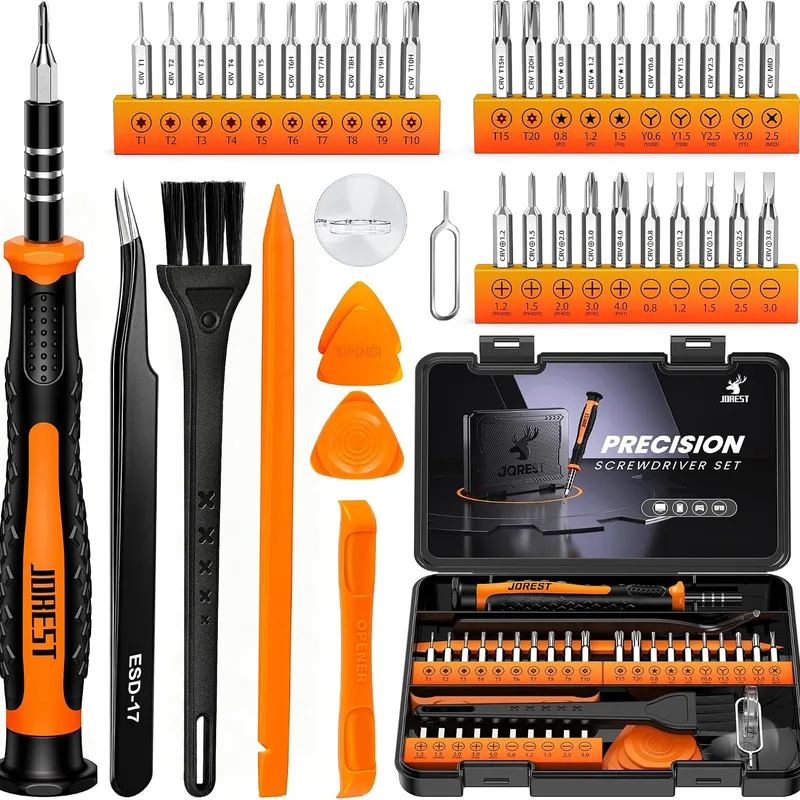
A popular option on Amazon UK is the JOREST 40-piece precision screwdriver set. Unlike a traditional set of separate precision screwdrivers, this kit uses a handle with interchangeable bits and includes specialist tips for a wider range of small repairs.
The selection of bits makes it useful for tasks involving laptops, computers, games consoles, smartphones, glasses and other small devices. It includes security bit types that you may not find in a basic precision screwdriver set.
What makes it useful?
- A selection of precision bits for different screw head types.
- Specialist bits for certain security screws.
- A compact kit that is convenient to store.
- Suitable for a range of small repair and maintenance tasks.
Who is it best for?
This type of kit is particularly useful for DIY enthusiasts who occasionally repair electronics or small household items. If you only need to tighten screws in glasses, a smaller set may be sufficient. If you regularly work on electronic devices, the wider range of bits can be more useful.
Before buying, check the current product listing to confirm the included bits and accessories suit the devices you intend to work on.
If you’re also building a general DIY toolkit, our guide to the best screwdriver sets in the UK compares options for everyday household jobs and workshop use.
How to Use Precision Screwdrivers Safely
Precision screwdrivers are designed for small screws, so using the correct technique is important. Applying too much force or using the wrong tip can damage the screw head, the screwdriver or the component you’re working on.
Choose the Correct Tip
Before turning a screw, make sure the screwdriver tip matches both the screw type and its size. The tip should fit snugly into the screw head without excessive movement.
If the tip is too small, it may slip and damage the screw. If it is too large, it may not seat properly. Never force a screwdriver into a screw head that it doesn’t fit.
Work Slowly and Apply Light Pressure
Small screws can be easily damaged, particularly those used in electronics, glasses and other delicate items.
- Keep the screwdriver aligned with the screw.
- Apply gentle, steady pressure while turning.
- Stop if the tip slips or the screw begins to resist.
- Avoid overtightening when replacing small screws.
If a screw won’t turn, check for a different screw type, the wrong screwdriver size or a retaining clip that needs to be released first.
Keep Small Screws Organised
Precision screws are often tiny and easy to lose. Work on a clean, well-lit surface and place removed screws in a small tray or container.
If you’re dismantling a device, take photographs as you go. This can help you remember where each screw belongs, particularly when different lengths are used in the same item.
Take Care When Working on Electronics
Before opening a device, switch it off and disconnect it from its power supply. Follow the manufacturer’s instructions, especially when working with rechargeable batteries or other components that may retain electrical energy.
Avoid puncturing, bending or crushing batteries. If a battery is swollen or damaged, stop and follow the manufacturer’s safety advice rather than attempting to remove it by force.
Sensitive electronic components can also be damaged by electrostatic discharge. Where appropriate, use suitable anti-static precautions and follow the device manufacturer’s guidance.
Important: A precision screwdriver is not an electrical safety tool. Never use an ordinary precision screwdriver on live electrical equipment. If a repair involves mains wiring or components you are not qualified to handle safely, use a qualified electrician or repair professional.
Look After Your Screwdrivers
Clean the tips after use and store the tools or interchangeable bits in their case. Check for bent shafts, damaged tips or loose handles, and replace damaged tools rather than continuing to use them.
With the correct tip, a steady hand and a little patience, precision screwdrivers can make small repair jobs much easier while helping to prevent unnecessary damage.
Frequently Asked Questions About Precision Screwdrivers
What are precision screwdrivers used for?
Precision screwdrivers are used for small screws found in items such as glasses, watches, electronics, toys and model-making projects. Their smaller tips allow you to work on components that are too delicate for standard screwdrivers.
What sizes of precision screwdrivers do I need?
For general DIY and small repairs, PH000, PH00 and PH0 Phillips screwdrivers, along with small slotted drivers and Torx sizes such as T3 to T6, can be useful. The sizes you need depend on the screws used in the items you intend to repair.
Can I use precision screwdrivers on laptops and mobile phones?
Yes, provided you have the correct screwdriver bit for the device. Some laptops and mobile phones use specialist screw heads, including Torx, security Torx or Pentalobe. Always check the manufacturer’s repair instructions before opening a device.
Are magnetic precision screwdriver bits better?
Magnetic tips can help hold small screws in place, making them easier to position and remove. However, follow the device manufacturer’s guidance if you’re working with sensitive components, as some equipment may require particular handling precautions.
What is the difference between precision screwdrivers and normal screwdrivers?
Precision screwdrivers have smaller tips and slimmer shafts designed for delicate work. Standard screwdrivers are generally larger and better suited to everyday jobs such as assembling furniture, fitting door hardware and carrying out general household repairs.
Is a precision screwdriver set worth buying?
A precision screwdriver set is worthwhile if you regularly work on small household items, electronics, glasses or hobbies. A set with interchangeable bits can offer a wider range of screw types without taking up much storage space. For occasional repairs involving just one or two screw types, a smaller set may be sufficient.
Final Thoughts
Precision screwdrivers are useful tools for anyone who carries out small repairs around the home or works with delicate items. From tightening the screws in glasses to repairing toys and working on electronics, the right screwdriver can make these jobs easier and help prevent damage.
When choosing a precision screwdriver set, look for a useful range of tip sizes, comfortable handles and good-quality tips that fit screws accurately. A set with interchangeable bits can be a practical choice if you work with several different screw types.
You don’t necessarily need the biggest set available. Start with the types and sizes you’re most likely to use, and choose a kit that suits your DIY projects and budget.
With the correct tools, careful technique and a little patience, precision screwdrivers can be a valuable addition to your home toolkit.