By Enda McLarnon — Experienced UK DIYer sharing practical fixes from my 1958 red brick home.
Part of our Complete UK DIYer’s Guide to SDS Drills (Insert Hub URL).
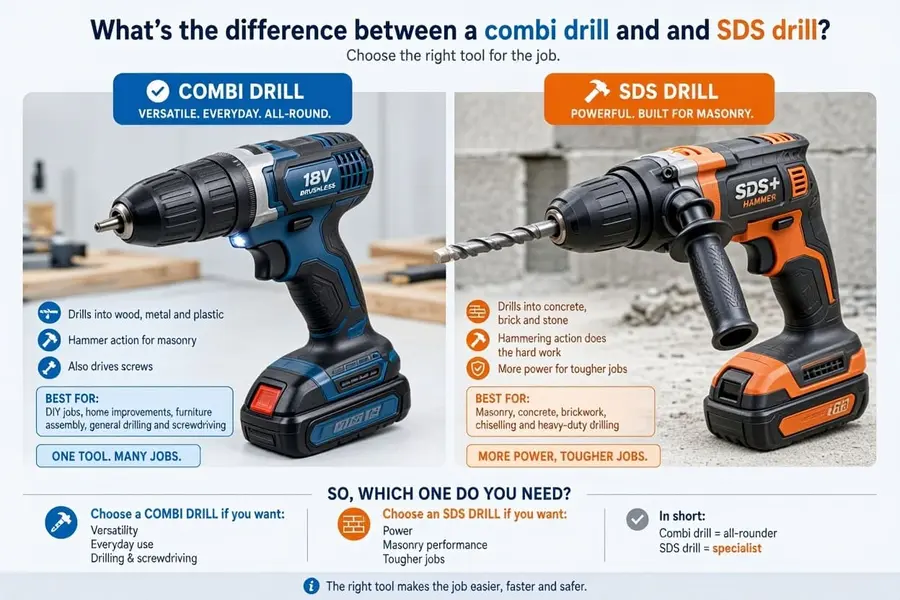
If you already own a decent 18V combi drill, buying a second drill just for masonry can feel like an unnecessary expense. After all, your combi drill has a hammer icon right there on the collar, so do you actually need an SDS Plus drill just to drill into a UK brick wall?
The short answer is no, not for everyday light brick and mortar. For hanging a few picture frames or putting up light shelving with 6mm red wall plugs in standard brick, your combi drill is completely up to the job.
However, UK homes are full of materials that push a combi drill past its mechanical limits. These include pre-stressed concrete lintels, dense 1950s clay bricks, and Class B engineering bricks. Knowing exactly where a combi drill stops and an SDS drill takes over saves you money, ruined drill bits, and sore wrists.
Combi Drill vs. SDS Drill: At a Glance
| Feature | 18V Combi Drill | SDS Plus Rotary Hammer |
| Hammer Mechanism | Mechanical ratchet discs (rapid vibration) | Electro-pneumatic piston (true impact blows) |
| User Effort Needed | High — relies on you leaning into the drill | Minimal — the piston drives the bit forward |
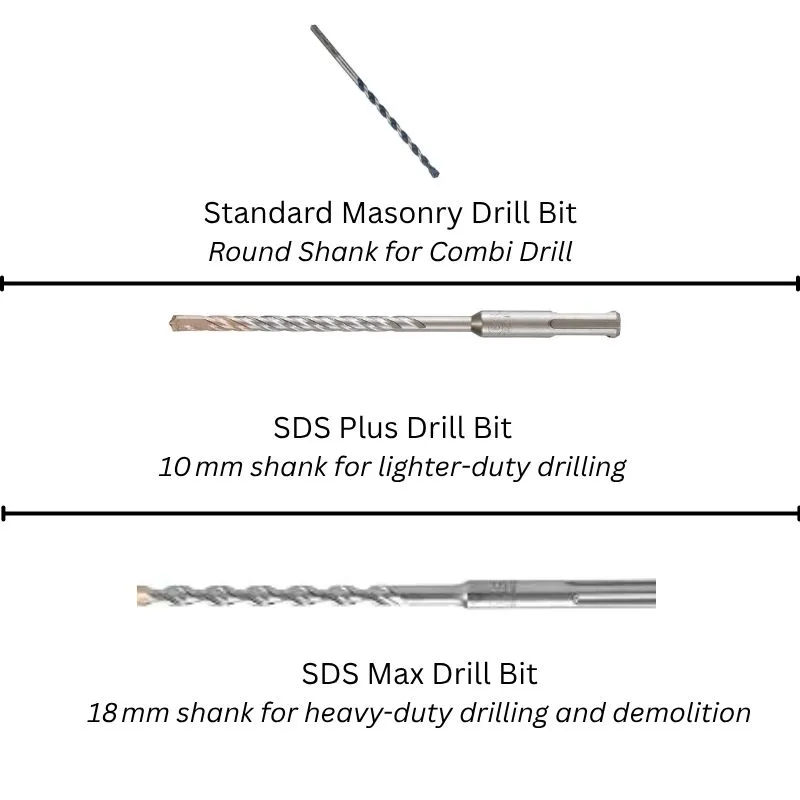
| Chuck Type | 13mm keyless 3-jaw chuck | Quick-release slotted SDS Plus chuck |
| Best Hole Sizes | 4mm to 8mm in brick/block | 6mm to 26mm+ in brick, stone, and concrete |
| Can It Drive Screws? | Yes (has an adjustable torque clutch) | No (no clutch; far too bulky and aggressive) |
| Chisel / Tile Removal | No | Yes (on 3-mode models with rotation-stop) |
Note: Almost every trade will own an SDS drill. My opinion is most DIYers in the UK will never need one, particularly if you are only doing small jobs around your home and garden. If you plan on doing larger renovation work such as stripping tiles from walls and floors, removing plaster from walls, or heavy duty masonry drilling, then an SDS drill will be your new best friend.
1. Stick With Your Combi Drill For These Jobs
A good 18V brushless combi drill remains the undisputed workhorse of any UK home workshop. Reach for your combi drill whenever you are tackling:
- Standard Wall Plugs in Soft Brick or Breeze Block: Drilling 5.5mm, 6mm, or 7mm holes into standard modern house bricks, thermalite blocks, or mortar courses takes seconds with a sharp carbide masonry bit.
- Delicate Masonry & Hollow Tile: Because an SDS drill hits with serious impact energy (usually 1.7 to 3.2 Joules), it can easily blow the back out of thin brick or crack ceramic wall tiles. A combi drill gives you far finer trigger control.
- Mixed-Material Projects: If you are drilling timber battens, steel brackets, plasterboard, and driving 50 screws in the same afternoon, a combi drill handles the entire workflow without swapping tools.
2. Step Up to an SDS Plus Drill For These Jobs
You genuinely need, or will be deeply grateful for, an SDS Plus drill the moment your project involves any of the following:
- Drilling Into Concrete Lintels Above Windows: Almost every UK window and patio door has a dense concrete lintel hidden behind the plaster. A combi drill often overheats and blunts its bit before getting 10mm deep, whereas an SDS drill glides straight through in seconds.
- Hard 1950s Red Brick & Engineering Brick: Older kiln-fired bricks and dense engineering bricks below the damp-proof course will stall a standard ratchet hammer.
- Heavy Structural Fixings (M8 to M16): Bolting a heavy pergola ledger board, satellite dish, security gate, or large TV wall mount into external brickwork requires deep, clean 10mm to 14mm holes that would exhaust both you and a combi drill.
- Batch Drilling: Drilling two 6mm holes in brick with a combi drill is fine. Drilling 30 holes around the house for patio lighting, fencing brackets, or exterior conduit is miserable without an SDS.
- Light Demolition & Tile Stripping: Using an SDS drill in chisel-only mode with a flat cranked tile chisel strips old kitchen or bathroom tiles off a wall in a fraction of the time it takes by hand.
(Already struggling with a hole that won’t budge? Check our troubleshooting guide: Why Won’t My Drill Go Into a Brick Wall? (Lintels, Engineering Brick & Bits)
3. Why You Shouldn’t Replace Your Combi Drill With an SDS
A common mistake beginners make is thinking, “If an SDS drill is stronger, why not just buy an SDS and use a chuck adapter for everything?”
In practice, using an SDS drill for everyday DIY tasks will make your life awkward:
- Weight & Length: Even a compact cordless SDS drill is noticeably longer and heavier than a combi drill, making it tiring to use inside kitchen cupboards or up a step ladder.
- No Torque Clutch: An SDS drill has no slip clutch for driving screws. Trying to drive wood screws with one will snap screw heads or bury them straight through the timber.
- Chuck Wobble: While you can clip a 3-jaw chuck adapter into an SDS Plus chuck to hold normal wood or metal drill bits, adapters add extra length and slight run-out (wobble), making precision drilling tricky.
The ideal UK DIY setup is a two-drill partnership: keep your lightweight 18V combi drill for screws, wood, metal, and everyday 6mm wall plugs, and bring out a dedicated SDS Plus drill whenever concrete, hard brick, or chiselling shows up.
Ready to Explore SDS Drills?
If you have a renovation project coming up, or you are simply tired of leaning your full body weight into stubborn UK brickwork, head back to our main pillar guide to see how SDS modes, bit fitments, and corded vs. cordless options compare:
👉 The UK DIYer’s Guide to SDS Drills: When a Combi Drill Isn’t Enough
About the Author: Enda McLarnon
I’m an experienced UK DIYer tackling renovation life inside a 1958 red brick home.
I built this blog to help beginners conquer home maintenance anxiety and save a fortune on expensive trade calls.