By Enda McLarnon — Experienced UK DIYer sharing practical fixes from my 1958 red brick home.
If you already own an 18V impact driver for woodwork or general DIY, it is incredibly tempting to snap a 1/2-inch square adapter into the collet, attach a socket, and start using it for car maintenance, lawnmower repairs, or driving heavy timber coach bolts.
The short answer is yes, you can use sockets on an impact driver—but only for light-to-medium fastening jobs, and only if you use the correct impact-rated adapters and sockets.
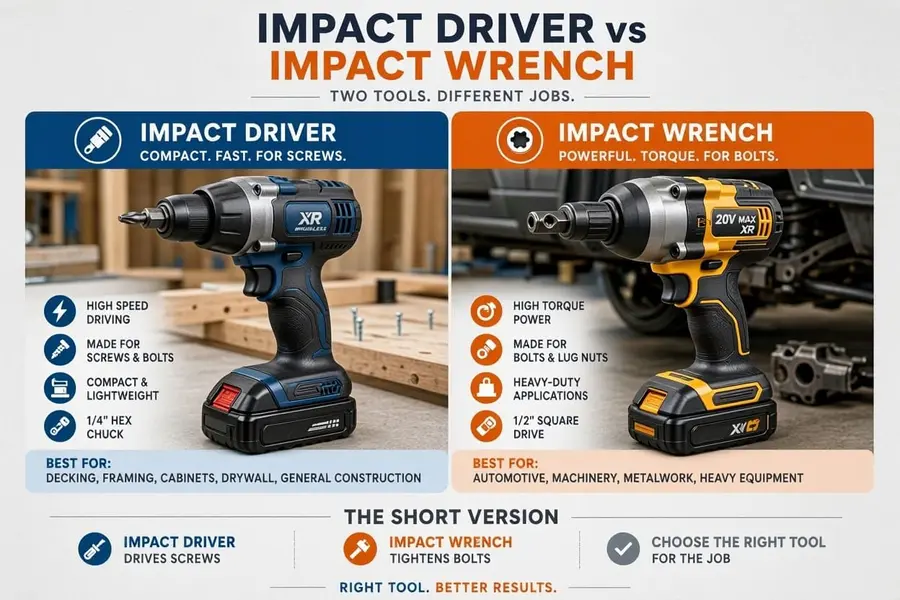
While impact drivers and impact wrenches look almost identical and operate using similar internal rotational hammering mechanisms, they are engineered for completely different torque levels and application loads.
Running a DeWalt 18V XR impact driver as my primary workshop tool means I use it with sockets all the time to speed up mechanical assembly. But I also know exactly where its physical limits lie before things start snapping. Here is the complete breakdown of how to safely adapt your driver, and when you need to put it down and reach for a proper wrench instead.
Looking for a high-torque driver for your kit? Read our hands-on reviews of the 5 Best Impact Drivers for DIY UK to see top-rated 18V picks with up to 226 Nm of rotational power.
Impact Driver vs Impact Wrench: Key Differences
While both tools use an internal anvil and hammer to deliver rapid rotational blows, their tool holders and torque ranges differ significantly.
IMPACT DRIVER vs IMPACT WRENCH
| Feature | Impact Driver | Impact Wrench |
|---|---|---|
| Tool Anvil | 1/4″ Female Quick-Hex | 3/8″ or 1/2″ Square Drive |
| Primary Purpose | Screws, timber fasteners | Heavy bolts, lug nuts |
| Average Torque | 150 Nm – 226 Nm | 400 Nm – 1,500+ Nm |
| Weight & Size | Compact & lightweight | Bulkier & heavier |
- Impact Driver: Built for speed and control when driving screws, timber fasteners, and small lag bolts. The 1/4″ female hex collet allows fast, single-handed bit changes.
- Impact Wrench: Built for raw breaking force (nut-busting torque) on machinery, suspension components, and automotive wheel nuts. The solid 1/2″ square metal anvil handles extreme rotational shock without shearing.
3 Rules for Using Sockets on an Impact Driver
If you want to use sockets on your impact driver without destroying your accessories or snapping your tool collet, follow these three essential safety rules:
Rule 1: Always Use Impact-Rated Hex-to-Square Adapters
To fit a socket onto an impact driver, you need a 1/4″ hex to 1/2″ (or 3/8″) square drive adapter.
- The Risk: Do not use cheap, chrome-plated socket adapters from a hand ratchet set! Standard chrome adapters are brittle and will snap at the narrow 1/4″ neck under impact load.
- The Fix: Buy Impact-Rated Adapters (made from treated Chrome-Molybdenum or spring steel). These adapters feature a flexible waist that absorbs peak torque spikes before the metal fatigue point.
Rule 2: Never Use Standard Chrome Hand-Ratchet Sockets
This is the most dangerous mistake home mechanics make when using power tools under cars.
- Why Chrome Sockets Crack: Standard hand sockets are made from hardened, brittle Chrome Vanadium steel. Under the rapid hammer impacts of a power tool, brittle chrome sockets can stress-fracture and shatter into sharp, flying fragments.
- Use Black Impact Sockets: Always use Black Impact Sockets (made from ductile Chrome Molybdenum steel). Black impact sockets feature thicker walls and softer, shock-absorbing steel that deforms slightly under load rather than shattering.
Rule 3: Understand the Torque Limit (The 1/4″ Hex Neck Problem)
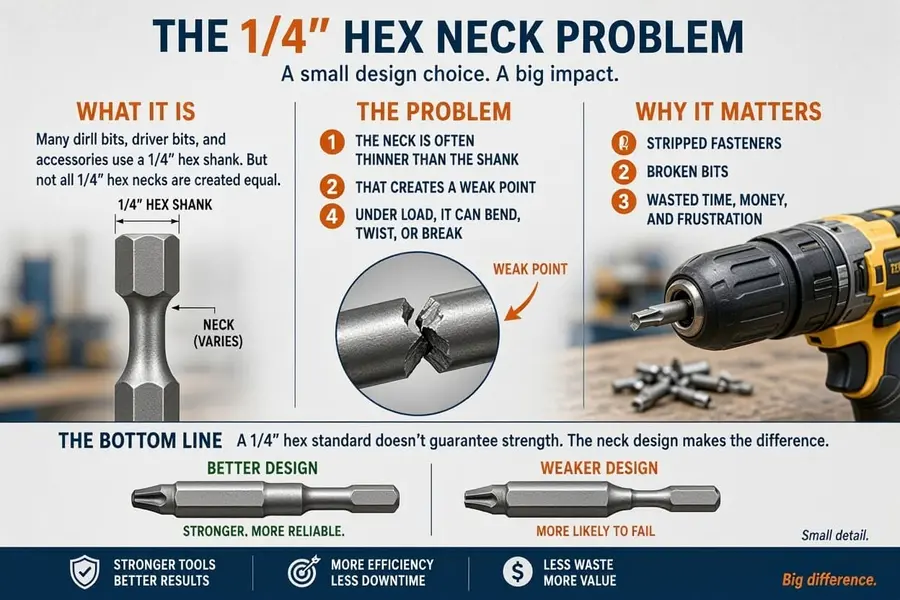
An 18V impact driver generates around 180 Nm to 226 Nm of torque. While that sounds impressive, the entire torque output is being transferred through a tiny 1/4-inch (6.35mm) hex shank neck.
- Where it works: Light automotive bolts, brake caliper bracket bolts, lawnmower blade bolts, timber coach screws, and M8/M10 hex head fixings.
- Where it fails: Car wheel lug nuts (which are often over-torqued to 250Nm+ by tyre shop air guns), rusty suspension arm bolts, and engine crank pulleys. Trying to force a stuck wheel bolt with an impact driver will instantly twist and shear the 1/4″ adapter neck in half.
Dealing with a snapped or jammed adapter shank? Follow our step-by-step extraction guide: Why Is My Impact Driver Bit Stuck & How to Release It Safely.
Can You Undo Car Wheel Lug Nuts with an Impact Driver?
This is one of the most common questions UK car DIYers ask.
- The Short Answer: Only in an emergency or for spinning off loose nuts.
- The Safe Method: If you want to use your impact driver for changing car wheels, use a manual breaker bar to crack the lug nut loose by hand for the first quarter-turn. Once the initial friction bond is broken, attach your impact driver with an impact socket to zip the nuts off in seconds.
For a deep-dive test on wheel bolt torque limits, read my dedicated guide: Can an Impact Driver Remove Car Wheel Lug Nuts? (Real Test & Limits).
Frequently Asked Questions (FAQ)
Will using sockets ruin my impact driver’s quick-release collet?
Using proper impact-rated adapters for light bolt driving will not harm your tool. However, using your impact driver continuously for heavy automotive work where the motor stalls repeatedly will cause heat build-up and premature wear on the internal anvil ball bearings.
What socket adapter size is best for an impact driver?
A 1/4″ hex to 3/8″ square drive adapter is the ideal sweet spot. A 3/8″ socket drive is lighter and less bulky than a heavy 1/2″ drive socket, placing far less strain on your impact driver’s internal gear mechanism.
Final Verdict
- Yes, you can use sockets on an impact driver for light-to-medium bolts, timber coach screws, and general maintenance.
- Always use black Chrome-Moly impact sockets and impact-rated hex adapters—never use brittle chrome hand sockets.
- For heavy suspension work or over-torqued car wheel nuts, leave the impact driver in your kit bag and use a dedicated 1/2″ Cordless Impact Wrench.
🔗 Related Articles:
- Prevent stripped screw heads:Why Does My Impact Driver Keep Stripping Screws? (5 Easy Fixes)
- Compare top cordless models:5 Best Impact Drivers for DIY UK
- The Complete Guide to Impact Drivers for UK DIY: Choosing, Using, and Troubleshooting
About the Author: Enda McLarnon
I’m an experienced UK DIYer tackling renovation life inside a 1958 red brick home.
I built this blog to help beginners conquer home maintenance anxiety and save a fortune on expensive trade calls.