By Enda McLarnon — Experienced UK DIYer sharing practical fixes from my 1958 red brick home.
Part of our Complete UK DIYer’s Guide to SDS Drills
If you have only ever used a standard combi drill, putting grease on a drill bit sounds completely backwards. On a normal three-jaw chuck, grease makes the bit slip and spin inside the jaws.
On an SDS Plus or SDS Max drill, however, the exact opposite is true: greasing the shank of your drill bit is essential maintenance. Skip it, and you risk chewing up the internal locking balls, tearing the rubber dust seal, or getting a drill bit permanently jammed inside the chuck.
Here is why SDS bits need lubrication, what type of grease to use (and what to avoid), and how to apply it cleanly without turning your drill into a dust magnet.
1. Why Do SDS Drill Bits Need Grease?
Unlike a standard drill bit that stays clamped motionless inside a chuck, an SDS drill bit is designed to slide back and forth roughly 10mm to 15mm inside the chuck while the drill is running.
Every time the electro-pneumatic piston fires, the steel shank slams forward and rebounds against the internal retaining balls and guide slots dozens of times per second.
Without a thin film of grease on the shank:
- Extreme Metal-on-Metal Friction: Dry hardened steel hammering against steel generates intense heat, wearing down the locking grooves on your bits and the internal detent balls inside the chuck.
- Torn Rubber Dust Caps: Every SDS chuck has a flexible rubber dust seal at the nose to stop brick dust entering the gearbox. A dry, hot bit shank grips and tears that rubber lip within a few holes.
- Seized Bits: Overheated, unlubricated shanks can gall and bind inside the chuck sleeve, making it almost impossible to pull the sleeve back and release the bit.
2. What Type of Grease Should You Use?
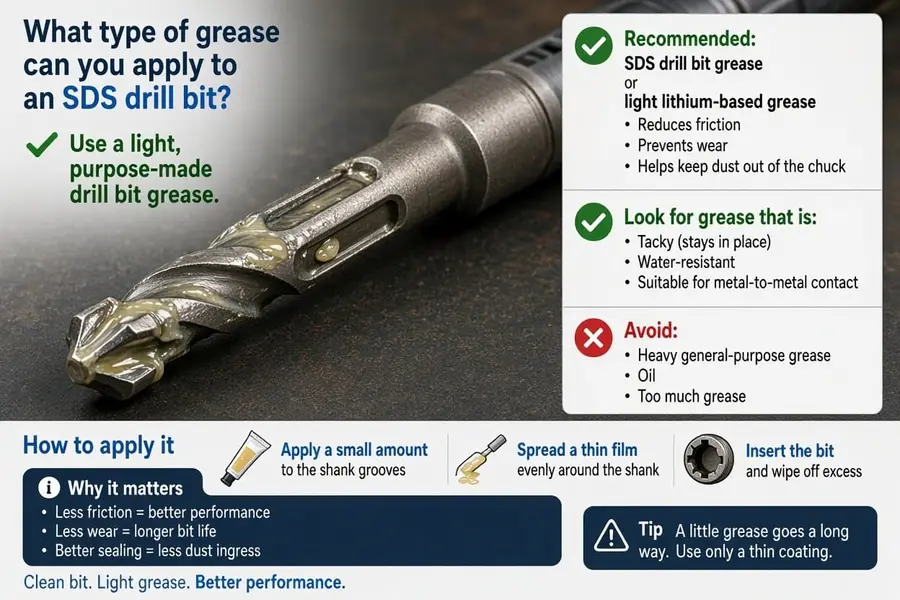
You do not need anything exotic, but you must use a proper high-temperature, high-pressure grease rather than thin spray oils:
- Dedicated SDS Drill Bit Grease (Best Option): Brands like Bosch, Makita, DeWalt, and Hilti sell small tubes of specialised synthetic SDS grease (often included free in the blow-moulded carry case with a new drill). One £6 tube lasts a UK DIYer for years.
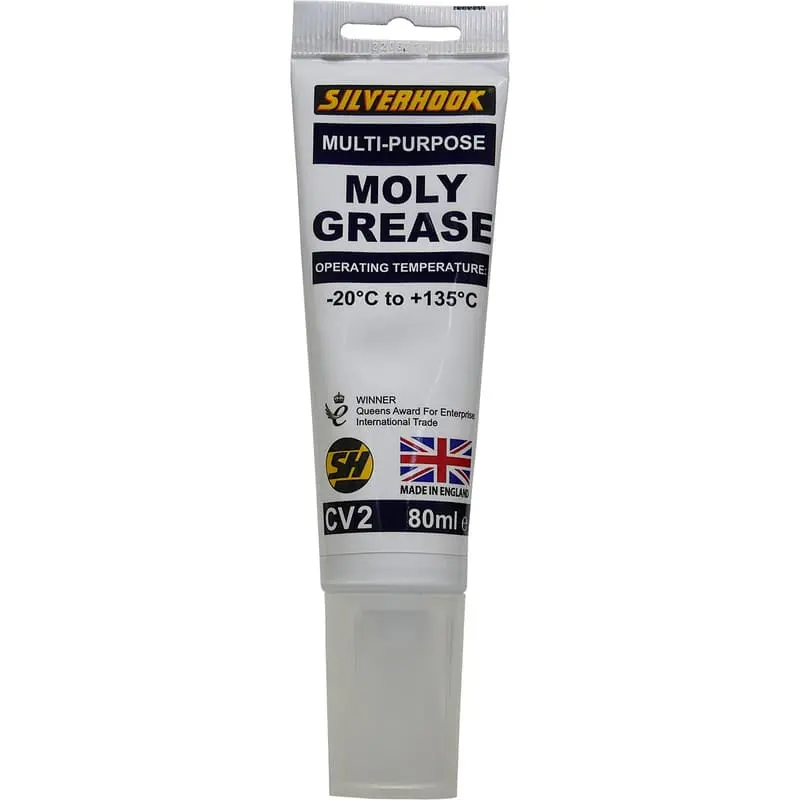
- Lithium Complex or Molybdenum Disulfide (Moly) Grease (Great Workshop Alternative): Standard multi-purpose lithium grease or high-pressure moly bearing grease from Toolstation, or Halfords works brilliantly and handles high friction temperatures without melting.
What NOT to Use:
- Never Use WD-40 or Thin penetrating Oils: Light spray oils evaporate quickly under heat, wash away existing grease inside the chuck, and offer zero cushioning against high-impact hammering.
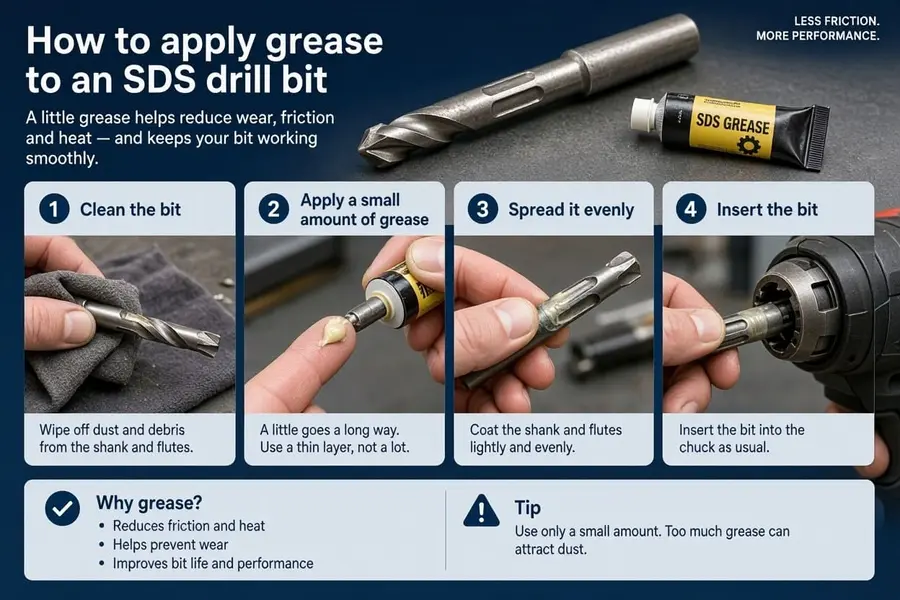
3. How to Grease an SDS Bit Properly (The “Less Is More” Rule)
The biggest mistake beginners make once they learn about greasing SDS bits is slapping a huge blob onto the shank. Too much grease actually causes problems—excess grease squeezes out around the chuck nose and acts like glue for abrasive brick and concrete dust, creating a grinding paste that wears out the mechanism faster.
Follow this quick 4-step routine every time you swap bits:
- Wipe the Shank Clean First: Before adding fresh grease, wipe away any old grease and grey masonry dust from the slotted shank using a clean workshop rag or paper towel.
- Apply a Pea-Sized Dab: Squeeze a small, pea-sized amount of grease onto your finger or directly onto the slotted section of the bit shank.
- Spread a Thin Film Into the Grooves: Rub a light, even coat over the bottom 30mm–40mm of the shank, making sure a little gets into the open and closed locking slots. Wipe off any thick excess.
- Click and Wipe the Nose: Push the bit into the SDS chuck, twist slightly until it clicks into place, give it a firm tug to check it is locked, and wipe away any tiny ring of grease that squeezes out past the rubber dust cap.
4. Quick Chuck Care Tip After Drilling Overhead
When drilling upward into ceilings or high lintels, brick dust falls straight down onto the nose of the drill. Always point the chuck downward before pulling the collar back to release a bit—this stops loose grit from dropping inside the open chuck mechanism while the sleeve is retracted.
Ready to Build Your Complete SDS Setup?
With all five essential guides covered, from diagnosing concrete lintels and comparing combi drills to picking between SDS Plus and SDS Max, using chisel mode, and looking after your bit shanks, you have everything needed to tackle tough UK masonry confidently.
Head back to our main pillar guide to review the full overview or jump over to our top cordless and corded drill recommendations:
👉 The UK DIYer’s Guide to SDS Drills: When a Combi Drill Isn’t Enough

About the Author: Enda McLarnon
I’m an experienced UK DIYer tackling renovation life inside a 1958 red brick home.
I built this blog to help beginners conquer home maintenance anxiety and save a fortune on expensive trade calls.