By Enda McLarnon — Experienced UK DIYer sharing practical fixes from my 1958 red brick home.
Part of our Complete UK DIYer’s Guide to SDS Drills
You have marked your pencil cross, put a brand-new masonry bit into your combi drill, switched the collar to the hammer symbol, and leaned your full weight into the back of the handle. Instead of sinking smoothly into the wall, the bit screams loudly, smokes slightly, and barely leaves a dent in the plaster.
If your drill refuses to go into a brick wall in a UK home, it is rarely because your drill is broken. In 95% of cases, you have hit one of four classic UK building obstacles—or fallen into a simple setup trap that stops a standard combi drill dead in its tracks.
Here is how to diagnose what is stopping your drill bit in seconds, and how to get through cleanly without burning out your tools.
1. You Have Hit a Concrete or Steel Lintel Above a Window
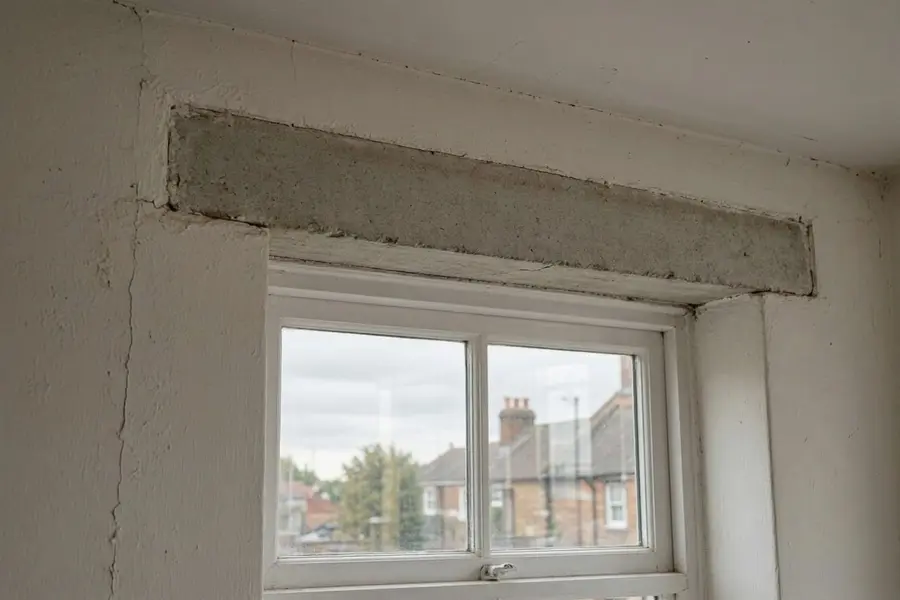
If you are hanging curtain poles, roller blinds, or tracks anywhere near the top of a window or patio door, this is the #1 culprit.
Every window opening in a brick or block wall has a horizontal structural beam called a lintel. This supports the brickwork above. In UK homes built from the 1930s onwards, that lintel is almost always high-density pre-stressed concrete or a galvanised steel box lintel hidden behind a thin skim of plaster.
How to Tell You Hit a Lintel:
- The drill bit breezes through the first 10–15mm of plaster, then stops dead with a high-pitched metallic ring or sharp grinding noise.
- Grey concrete dust (or tiny silver metal shavings) appears on the tip of the bit instead of red brick dust.
How to Fix It:
- If it is a Concrete Lintel: A standard combi drill using a mechanical ratchet hammer will struggle badly and often overheat the tungsten carbide tip before getting 10mm deep. Either step up to an SDS Plus rotary hammer drill (which pulverises concrete with pneumatic impact energy), or start with a fresh 4mm or 5mm carbide pilot bit before stepping up to your 6mm or 7mm wall plug size. (Tip: Avoid drilling into the bottom edge of a concrete lintel where internal steel reinforcing bars sit).
- If it is a Steel Lintel: Stop using your masonry bit immediately—masonry tips cannot cut steel and will melt. Switch your drill to rotary-only mode (no hammer), fit a sharp HSS or cobalt metal drill bit, use a drop of cutting oil, and fix directly into the steel with self-tapping screws.
Note: In newer homes in the UK steel lintels are more popular. They have been around since the 1960s and are now the standard.
2. You Are Drilling Into Hard Engineering Brick or Flint Aggregate
Not all British bricks are created equal. While modern internal blocks and soft facing bricks drill fairly easily, older 1950s red bricks, Victorian kiln-fired bricks, and Class A or Class B engineering bricks (often used below damp-proof courses, around doorways, and on external corners) are extraordinarily dense.
Even worse, concrete blocks and older bricks often contain hard flint stones or pebbles mixed into the aggregate. When your masonry bit hits a piece of flint, the carbide tip simply skids off it and rounds over.
How to Fix It:
- Check the Mortar Joint Option: If the fixing isn’t taking heavy cantilever weight, moving your hole 15mm up or down into the mortar course between the bricks is dramatically easier than fighting solid engineering brick.
- Use a Multi-Construction Carbide Bit: Swap cheap bundled masonry bits for a sharper, diamond-ground carbide bit (such as Bosch CYL-9 MultiConstruction), which bites into hard stone and tile much better than blunt hammer tips.
3. Your Masonry Drill Bit Has Lost Its Temper (Overheated)
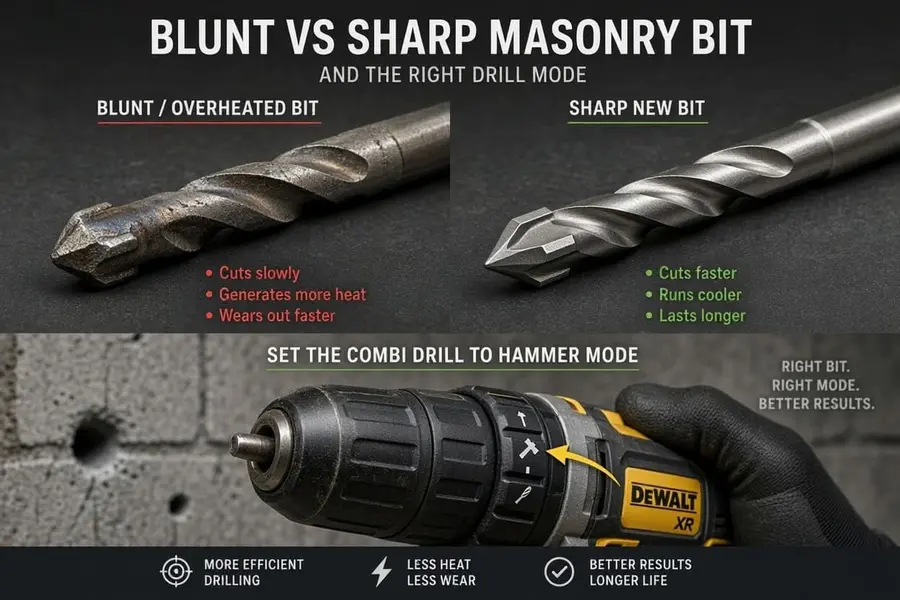
Many DIYers assume that because a masonry bit came out of a brand-new multi-pack, it must be sharp. Unfortunately, two things ruin a masonry bit in under 15 seconds:
- Running at Full Trigger Speed: Spinning a masonry bit at maximum RPM against hard brick creates intense friction. The tungsten carbide tip glows red-hot, loses its temper, and blunts instantly.
- Dipping a Hot Bit in Cold Water: Never quench a glowing masonry bit in a glass of cold water—thermal shock causes microscopic cracks in sintered tungsten carbide, making the tip crumble on the next hole.
How to Fix It:
- Look closely at the wings of the carbide tip. If the edges look shiny, rounded, or discoloured blue/black, throw the bit away—no amount of pushing will make it cut.
- Keep your drill at a medium, controlled speed and pull the bit out every few seconds to clear dust from the flutes.
4. Simple Drill Setup Checks Everyone Overlooks
Before blaming the wall, run through this quick 10-second check on your drill:
- Is the Drill in Forward? It happens to seasoned DIYers more often than anyone admits—check that the forward/reverse switch is pushed firmly to the left (clockwise rotation).
- Is the Hammer Collar Clicked Properly? On many combi drills, the torque clutch ring and the mode selector ring sit right next to each other. Make sure the hammer icon is lined up squarely with the arrow—not sitting halfway between screw mode and drill mode.
- Are You Pushing Too Hard? A combi drill’s mechanical hammer needs slight room to bounce. If you lean all your body weight onto it, you can actually stall the hammering action and just grind the bit flat. Apply firm, steady pressure—not brute force.
When to Stop Fighting and Switch to an SDS Drill
If you are drilling a single 6mm hole for a lightweight picture frame, a fresh carbide bit and a smaller pilot hole in your combi drill will usually get you through.
However, if you are fitting heavy shelving brackets, external security lights, TV wall mounts, or curtain tracks into solid brick and concrete lintels, a combi drill is simply the wrong tool for the job. An SDS Plus rotary hammer drill uses a pneumatic piston to strike the back of the bit with genuine impact force—gliding into concrete lintels in seconds without you having to lean on it at all.
👉 Learn when it’s worth upgrading in our main guide: The UK DIYer’s Guide to SDS Drills: When a Combi Drill Isn’t Enough

About the Author: Enda McLarnon
I’m an experienced UK DIYer tackling renovation life inside a 1958 red brick home.
I built this blog to help beginners conquer home maintenance anxiety and save a fortune on expensive trade calls.