By Enda McLarnon — Experienced UK DIYer sharing practical fixes from my 1958 red brick home.
Disclosure: As an Amazon Associate, I earn from qualifying purchases made through links on this page. If you buy a tool through my links, it costs you nothing extra, but the small commission helps me keep this site running.
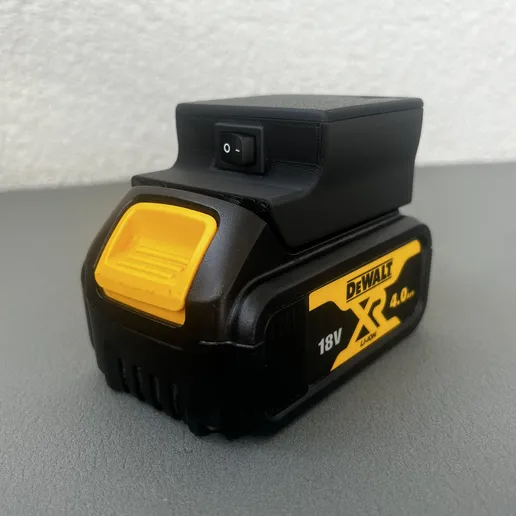
If you own cordless power tools from more than one major brand, the temptation is obvious. Why buy into two separate 18V battery platforms when a £15 plastic adapter on eBay promises to let you run a DeWalt 18V XR battery on your Makita LXT angle grinder, or a Milwaukee M18 pack on your Bosch Professional tools?
With hundreds of cheap conversion adapters available online, thousands of DIYers and tradespeople use them daily to save money.
However, search any tool forum or YouTube comment section and you will find horror stories of melted terminal blocks, burnt-out tool motors, and permanently bricked lithium-ion batteries that refuse to take a charge ever again.
So the real question is, are 18V battery adapters safe?
The short answer is yes, but only if you understand where the low-voltage protection circuit sits for your specific brand. If you pair the wrong brand battery with the wrong tool body, you can permanently destroy a £70 battery in under five minutes.
Here is the technical breakdown of how cross-brand battery adapters work, the dangerous “Low-Voltage Protection” trap, and how to use them safely.
The Core Risk: Where Does Low-Voltage Protection Live?
Lithium-ion (Li-ion) battery cells must never drop below a critical voltage threshold (typically around 2.5-3V per cell, or roughly 15V for a full 18V pack).
If a lithium pack is drained past this point, its internal chemistry degrades, causing permanent capacity loss or thermal shutdown during re-charging.
This is the important thing to understand. Power tool manufacturers handle low-voltage cut-off protection in two entirely different ways:
APPROACH A: Protection Inside the BATTERY
(e.g., DeWalt XR, Milwaukee M18)
SAFE WITH ADAPTERS: Battery cuts power regardless of what tool it is plugged into.
APPROACH B: Protection Inside the TOOL BODY
(e.g., Makita LXT, Bosch Professional)
DANGER ZONE: Tool keeps draining battery past 0%, permanently killing the pack!
1. In-Battery Protection (DeWalt & Milwaukee)
DeWalt 18V XR / 54V FlexVolt and Milwaukee M18 battery packs contain an integrated Battery Management System (BMS) circuit board inside the battery casing itself.
The battery monitors its own cell voltages and actively shuts off power output when voltage gets dangerously low, regardless of what tool it is plugged into.
2. In-Tool Protection (Makita & Bosch)
Makita 18V LXT (Star Protection) and Bosch Professional 18V systems put the low-voltage cut-off circuitry inside the tool body, not the battery pack.
The tool communicates with the battery via extra data pins (like the yellow terminal block on Makita batteries).
The Danger Combinations: Which Adapters Will Kill Your Batteries?
Understanding protection placement reveals which cross-brand setups carry a high risk of battery destruction:
🔴 High Risk: DeWalt/Milwaukee Battery ➔ Makita/Bosch Tool Body
- What Happens: The Makita or Bosch tool expects the battery to handle its own low-voltage shutdown. The DeWalt battery expects the tool to send a stop signal via its communication pin. Because the cheap plastic adapter only routes positive and negative power terminals (ignoring data pins), neither device triggers a shut-off.
- The Result: The tool will run the battery down to absolute zero (0V). When placed back on its native charger, the charger will detect a deep-discharge fault and permanently refuse to charge it.
🟢 Safe Combination: Makita/Bosch Battery ➔ DeWalt/Milwaukee Tool Body
- What Happens: The Makita battery has internal star-protection thermal fuses, and the DeWalt tool body will cut power when overall voltage drops.
- The Result: Low risk of over-discharge, though thermal monitoring across non-native pins is still bypassed.
Brand-by-Brand Compatibility Matrix
| Battery Brand You Own | Tool Body You Want to Run | Safety Rating | Primary Risk Factor |
| DeWalt 18V XR | Makita 18V LXT Tool | ⚠️ Use with Caution | Over-discharge risk if run until dead. Stop when power drops! |
| Milwaukee M18 | DeWalt 18V XR Tool | 🟢 Safe | Both platforms feature robust BMS circuit handling. |
| Makita 18V LXT | Milwaukee M18 Tool | 🟢 Safe | Low risk of cell damage; monitor battery heat under heavy load. |
| Bosch 18V Pro | DeWalt 18V XR Tool | 🟢 Safe | Good mechanical fit with quality adapters; solid voltage behavior. |
| DeWalt 18V XR | Bosch 18V Pro Tool | ⚠️ Use with Caution | Adapter lacks thermistor communication; avoid high-draw tools. |
4 Golden Rules for Safely Using 18V Battery Adapters
If you choose to use cross-brand adapters in your workshop or on site, follow these strict rules:
- NEVER Leave Adapters Attached to Batteries: Cheap adapters have a small continuous parasitic draw. Leaving an adapter clipped to a battery in your kit bag overnight can drain the battery down to 0V even when the tool isn’t being used.
- NEVER Attempt to Charge Through an Adapter: Battery chargers must monitor individual cell balances, thermistor resistance, and internal temperatures. Only charge batteries on their official brand charger.
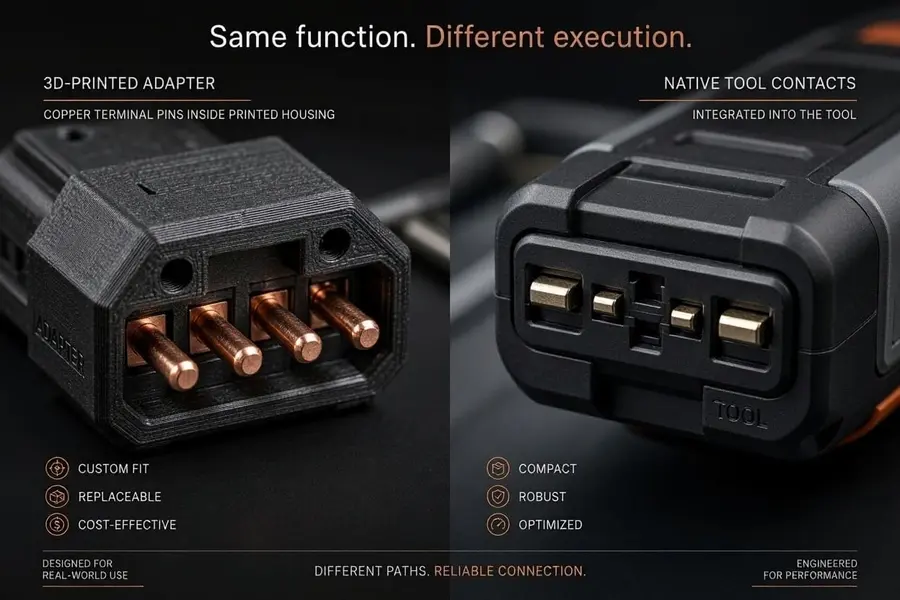
- Avoid High-Draw Tools: Do not use battery adapters on continuous high-current tools like 125mm angle grinders, heavy SDS breakers, or portable circular saws. High current causes heat build up across thin brass adapter pins, melting the plastic housing.
- Stop at the First Sign of Power Drop: If you notice your tool slowing down slightly, stop immediately and swap the battery. Do not squeeze the trigger to squeeze out “one last cut.”
Recommended Bare Tools & Adapter Sources
When adding bare-tool bodies to your collection or sourcing heavy-duty adapters, stick to reputable UK merchants and vetted hardware:
“If you already own a bank of DeWalt 18V batteries, expanding your kit by picking up [cordless bare tool bodies on Amazon] keeps your entry cost low without cluttering your workshop with duplicate chargers.”
“Never use un-fused cheap plastic shells. If you’re adapting across battery brands, stick to [fused PETG battery adapters on eBay] fitted with thick copper terminals and a proper inline blade fuse to prevent short-circuit thermal damage.”
“To protect your cordless motors from low-voltage cell drop, ensure you are running [genuine DeWalt 18V XR 5.0Ah batteries on Amazon]
About the Author: Enda McLarnon
I’m an experienced UK DIYer tackling renovation life inside a 1958 red brick home.
I built this blog to help beginners conquer home maintenance anxiety and save a fortune on expensive trade calls.