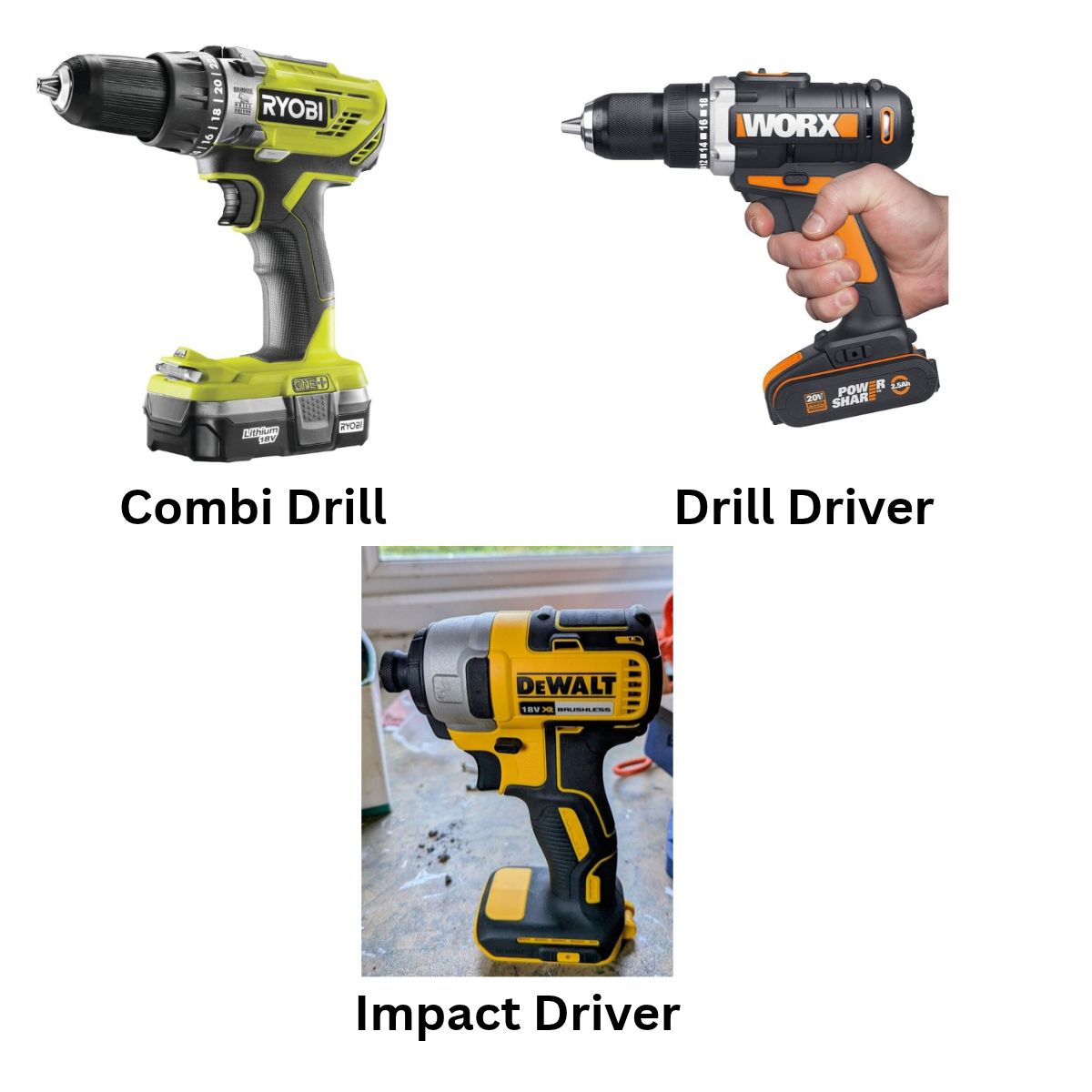
If you are a UK DIY beginner choosing your first power tool, you should buy a combi drill.
While a standard drill driver is great for putting together flat-pack furniture, it cannot drill into brick or concrete. And while an impact driver is brilliant for driving huge screws into decking, it lacks the delicacy and versatility a home beginner needs.
Because almost every British home features solid brick internal or external walls, a standard drill driver will eventually hit a wall you can’t get through. A combi drill is the safest, future-proof choice because it includes a hammer setting specifically designed to power through tough UK masonry.
Looking for tool recommendations? Check out my comprehensive guide: [Best Combi Drills for Beginners UK] to see my top-tested recommendations.
The Brand Confusion (It’s Not Your Fault!)
If you feel confused by the variety of tool names when walking through Screwfix, B&Q, or Wickes, you are not alone and it is not your fault. Tool manufacturers love using confusing, overlapping terminology on their boxes. Depending on the brand, you might see a combi drill labelled as a:
- Combination Drill
- Hammer Drill Driver
- Percussion Drill
To make matters worse, a basic drill driver and a combi drill look 99% identical on the shelf. They take the same batteries and share the same basic body shape.
The only visual difference is a tiny hammer icon printed on the twisting mode ring of a combi drill. Don’t blame yourself for the confusion; blame the marketing teams!
1. What is a Drill Driver?
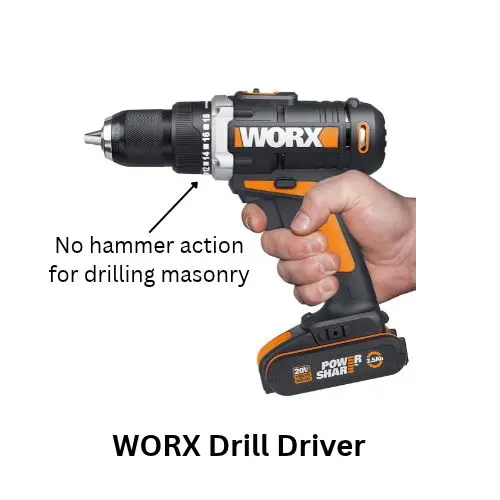
A drill driver is a classic, everyday power tool designed for two core jobs: boring (drilling) holes and driving in or removing screws. It works using a steady, constant rotational force.
- The Pros: These are lightweight, compact, and very easy to control in tight spaces.
- The Cons: They don’t have a hammer action—it cannot drill into brick or concrete walls.
- Best For: These are a good choice for assembling flat-pack furniture, putting up wooden shelves, and drilling into timber or plasterboard studs.
2. What is a Combi Drill?
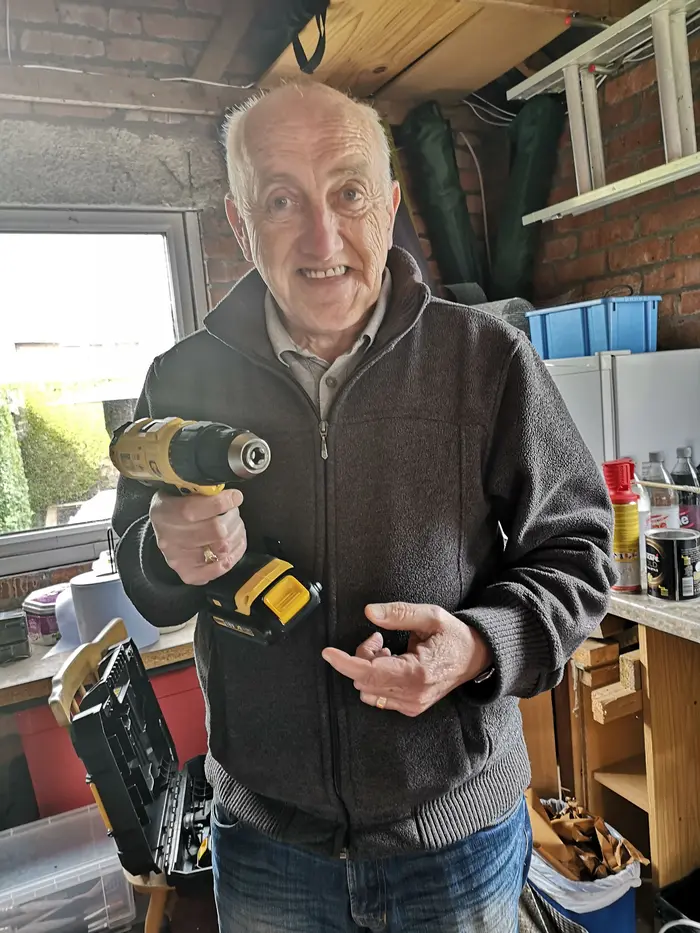
“Combi drill” is short for combination drill. It looks almost identical to a drill driver, but features three distinct settings: Screwdriving, Standard Drilling, and Hammer Drilling.
When you engage Hammer Mode, it drills but also activates mechanical cams inside the drill that rapidly strike the back of the chuck as it spins. This percussive pulsing acts like a small jackhammer to pulverise brick and stone as the bit turns.
- The Pros: Highly versatile; handles almost every home repair or installation task.
- The Cons: The extra internal hammer mechanism makes it slightly heavier and bulkier.
- Best For: Hanging heavy mirrors and TV mounts on UK brick walls, garden DIY, and general home maintenance.
Key Difference: A combi drill features a hammer function. This is what allows you to drill into common UK masonry like red bricks, breeze blocks, and concrete mortar joints.
3. What is an Impact Driver?
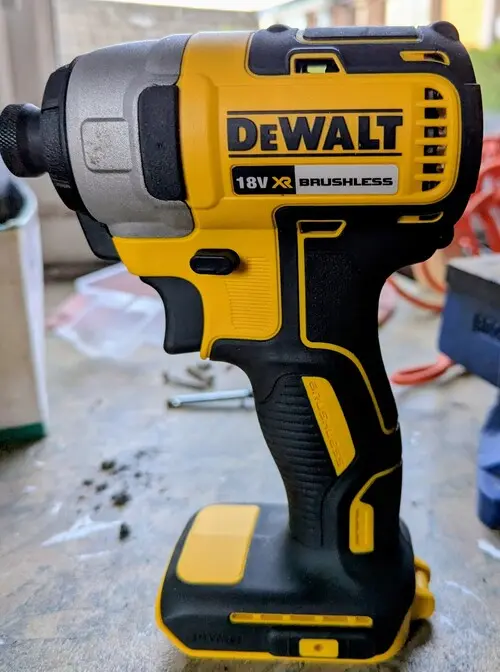
An impact driver is built for one specific job: driving screws and structural fixings quickly and forcefully.
Instead of a traditional adjustable keyless chuck, an impact driver uses a quick-release 1/4-inch hex collet. Screwdriver bits are inserted straight into this collet. When the driver encounters high resistance, an internal hammer and anvil mechanism kicks in, delivering rotational “slaps” (impacts) behind the bit.
- The Pros: Immense rotational torque without kicking back and twisting your wrist. Virtually eliminates stripped screw heads.
- The Cons: It is really loud, has no clutch control, and cannot drill clean precision holes in wood or brick.
- Best For: Driving long wood screws into timber, building garden decking, fencing, and heavy construction work.
At-a-Glance 3-Way Comparison
Have a look at my comparison table below. When you are deciding which one to buy, this will help you out. If in doubt, buy a combi drill as that will always be the most useful choice. The only time you need an impact driver is if you plan on using long screws (over 75mm or 3″) for some thing like building a deck, fencing or building a shed. (Think heavy duty construction work)
| Feature | Standard Drill Driver | Combi Drill | Impact Driver |
| Drills Wood & Metal | ✅ Yes | ✅ Yes | ❌ Limited (Needs hex bits) |
| Drives Small/Medium Screws | ✅ Excellent | ✅ Excellent | ⚠️ Easy to over-tighten |
| Drives Long/Heavy Screws | ⚠️ Can strain | ✅ Good | ✅ Outstanding |
| Drills into UK Brick Walls | ❌ No | ✅ Yes | ❌ No |
| Chuck Mechanism | 10mm / 13mm Chuck | 10mm / 13mm Chuck | 1/4″ Hex Quick-Release |
| Wrist Kickback | Moderate | Moderate | ❌ Almost None |
Real-World Lesson: The Hidden Brick Wall
In modern UK housing, you never quite know what is hiding behind your plaster or wallpaper until you start drilling.
A few years ago, I went to hang a heavy mirror in my daughter’s hallway. I tapped the wall, heard a hollow sound, and assumed it was standard plasterboard. I grabbed her lightweight drill driver, lined it up, and squeezed the trigger. The drill bit slid in effortlessly for about two centimetres and then hit a literal brick wall.
It turned out the house used a common UK construction method called “dot and dab,” where plasterboard sheets are stuck over solid internal blockwork with dabs of adhesive. Her basic drill driver couldn’t cut it. It just spun in place, getting hot very quickly.
Luckily, I had my 18V DeWalt DCD776 combi drill with me in the car. I swapped out the wood bit for a masonry bit, clicked the collar over to the hammer icon, and the 2.0Ah battery powered the drill through the hidden blockwork in seconds. If I had relied solely on a standard drill driver or an impact driver, I would have had to abandon the project entirely and make an emergency trip back home for the right drill.
Frequently Asked Questions
Can a combi drill be used as a screwdriver?
Yes, absolutely. To drive screws safely, turn the collar to Screwdriver Mode and set the numbered torque ring to a low setting (e.g., 1 to 4 for soft materials). This ensures the drill automatically stops spinning once the screw is flush, preventing stripped screw heads or split wood.
Why do shops sell Combi Drill & Impact Driver “Twin Packs”?
Retailers like Screwfix and Toolstation frequently bundle these two together because they complement each other perfectly. On a job like building a deck, you use your combi drill to drill pilot holes, and your impact driver to drive the screws home without changing bits continuously.
Can I use a combi drill as a standard drill driver?
Yes. A combi drill completely replaces a drill driver. Simply turn the mode ring away from the hammer icon to the drill bit or screw icon, and it will function identically to a standard drill driver.
Can a drill driver drill into brick if I buy a high-quality masonry bit?
No. Even with a top-tier carbide masonry bit, a standard drill driver lacks the physical hammering impact needed to fracture brick. You will overheat the motor, ruin the drill bit, and potentially damage your wall.
Final Verdict: Which One Should You Buy First?
- Buy a Combi Drill if: You are a DIY beginner who wants one tool to do it all. It is the only tool out of the three that can safely hang mirrors on UK brick walls while still handling basic furniture assembly.
- Buy a Drill Driver if: You only plan to build flat-pack furniture or live in a modern flat where you are 100% sure your walls are strictly plasterboard stud work.
- Buy an Impact Driver if: You are tackling large timber projects like decking, garden sleepers, or fencing, where you need to drive hundreds of long screws quickly.
Money-Saving Tip: If you have the budget, keep an eye out for 18V twin-pack bundles (Combi Drill + Impact Driver). They share the same battery system and give you the ultimate toolkit for both drilling masonry and heavy screwdriving.
Next Steps & Related Guides
This article is part of my [Ultimate Beginner’s Guide to Combi Drills]. Explore more of my hands-on guides below:
- [Combi Drill Settings Demystified: What Do the Numbers Mean?]
- [What Drill Bit for Red Brick? The UK Beginner’s Guide]
- [Wall Plugs & Bit Sizing: How to Match Drill Bit, Plug, and Screw]