If you use a high-speed slitting disc on an angle grinder to cut through mild steel, iron, or aluminum, you already know the power it offers. Within seconds, it slices right through the material. However, your grinder leaves behind a nasty byproduct: burrs.
Burrs are the jagged, razor-sharp ridges of displaced metal left along the edges of a fresh cut. If left untouched, they create massive headaches: they prevent metal joints from fitting flush, scratch off protective paint causing premature rust, and will easily slice through heavy workshop gloves.
Learning how to debur metal properly transforms rough fabrication work into a clean, professional finish. While power sanders have their place, the most accurate clean-up work relies on two simple, indispensable workshop hand tools: engineer’s files and swivel deburring blades.
The Fabricator’s Toolkit: Essential Hand Tools
Before jumping into the process, you need to know the specific hand tools designed to tackle displaced metal. Do not reach for wood rasps or cheap, unbranded multi-tool files—hardened steel will strip their teeth instantly.
1. Engineer’s Hand Files
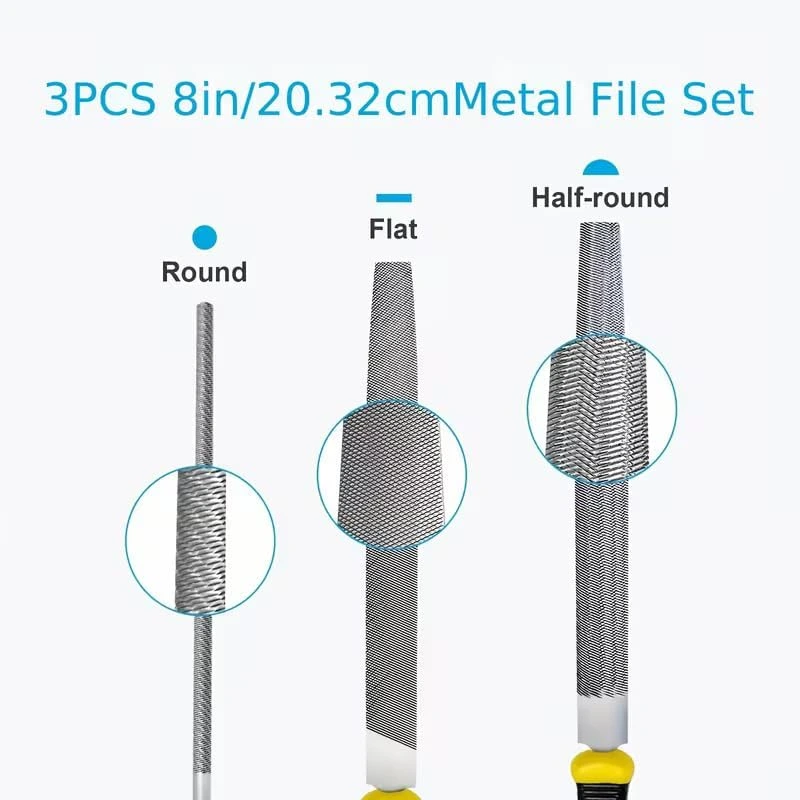
Every home workshop needs a dedicated set of machinist’s or engineer’s files. Unlike wood files, these feature fine, double-cut teeth pattern hardened specifically for cutting metal.
- The Flat File (Bastard or Second Cut): Your default tool for flat outer edges and squaring up external corners. A “second cut” profile offers the ideal balance between aggressive material removal and a relatively smooth finish.
- The Half-Round File: A versatile option featuring one flat side and one curved face. It lets you clean up the inner radius of metal tubing or curved metal cutouts seamlessly.
2. Swivel Head Deburring Tools
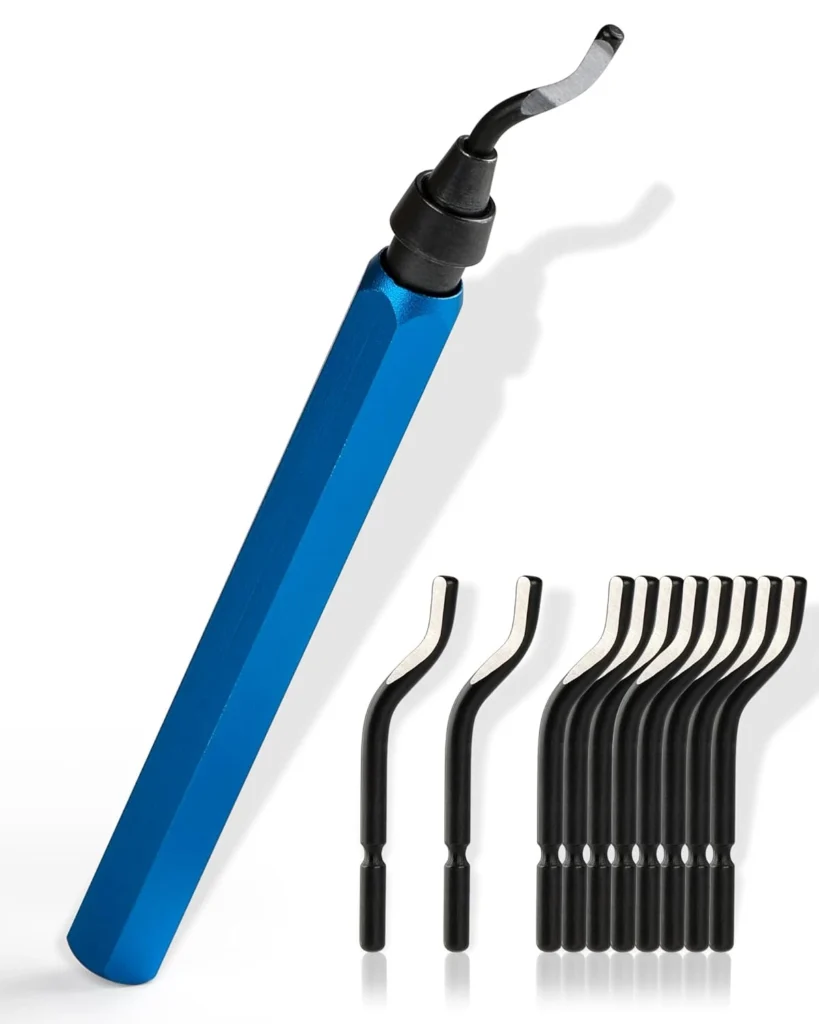
If you work with copper pipes, drilled sheet metal, or hollow structural sections (SHS), a standard file can be too clumsy to clean up inner rims cleanly. This is where a specialized swivel blade shines.
- How it works: It features a small, curved High-Speed Steel (HSS) hook blade seated inside a free-spinning handle. As you pull the hook along the inside rim of a cut pipe or hole, it automatically follows the contour, peeling away a single ribbon of sharp metal wire smoothly.
How to Debur Metal Step-by-Step
Follow this systematic manual procedure to clean up your cut lines cleanly without accidentally changing the dimensions of your workpiece:
1.Secure the Workpiece Firmly:
Never try to hold a fresh piece of cut steel in one hand while filing with the other. The file will skid across the surface, ruining the finish or causing an injury. Clamp the metal securely in a heavy bench vice or to your workstation using robust G-clamps, keeping the cut edge positioned just above the jaw line to eliminate vibration.
2.Master the Forward Filing Stroke:
Hand files are designed to cut exclusively on the forward stroke. Place the heel of the file against the metal edge at a 45-degree angle. Push forward firmly and smoothly using two hands—one on the handle, one supporting the tip. Lift the file completely off the metal as you bring it back. Sawing back and forth rapidly simply dulls the teeth and ruins the tool.
3.Clear Internal Rims With a Swivel Blade:
For the inside edges of box sections or pipes, insert the hook of your swivel deburring tool against the inner lip. Apply moderate outward pressure and sweep the tool around the rim in a continuous clockwise rotation. The blade will swivel naturally, cleanly shaving off the internal burr in one fluid movement.
4.Execute a Blind Touch Check:
Brush away loose metal filings with a stiff wire bench brush. Do not use your bare hands or a rag, as microscopic metal slivers easily hook into skin and cloth fibers. Lightly run a gloved finger crossways over the finished edge. If you feel any resistance or sharp catches, repeat step 2 at a shallower angle until the edge feels completely smooth to the touch.
Choosing Your Setup: Hand Files vs. Swivel Tools
| Metric | Premium Engineer’s Files (e.g., Bahco) | Swivel Deburring Tools (e.g., Noga) |
| Primary Use Cases | Outer edges, flat plates, weld preparation | Inner tube diameters, drilled holes, copper pipe |
| Material Capability | High (Mild steel, iron, stainless, brass) | Medium (Aluminum, copper, mild steel, plastics) |
| Skill Curve | Requires consistent hand angle control | Highly intuitive, fast swivel action |
| Lifespan | Long lasting if kept clean with a card brush | Requires periodic HSS blade replacement |
Final Pro-Tip: Maintain Your Files
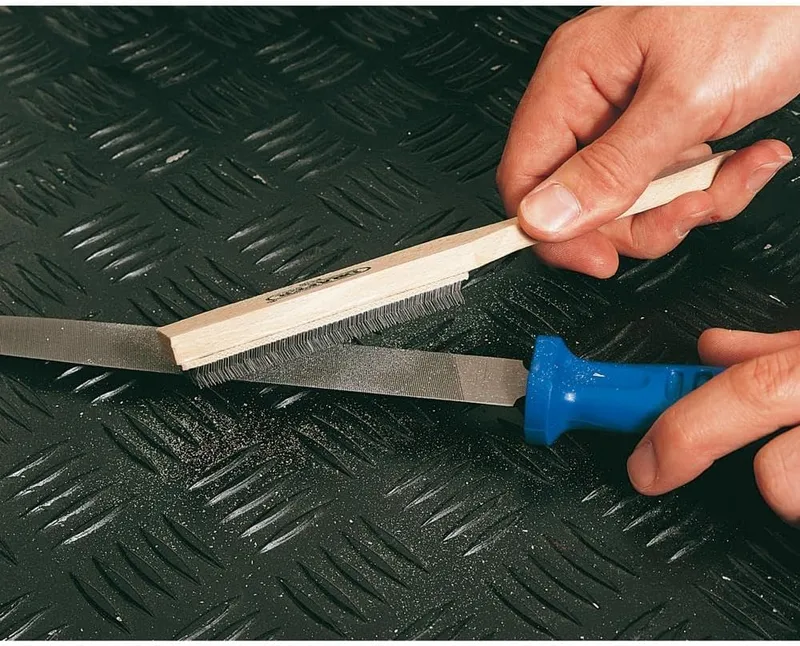
To ensure your premium hand files last a lifetime, never store them thrown loosely into a drawer where their teeth can knock together and dull. Hang them up on a pegboard or keep them in a dedicated tool roll.
Additionally, soft metals like aluminum can clog the file teeth—a problem known as “pinning.” Invest a few pounds in a cheap file card (a stiff wire brush tool) to sweep out trapped metal fragments regularly, ensuring your hand tools stay sharp and ready for the next project.