
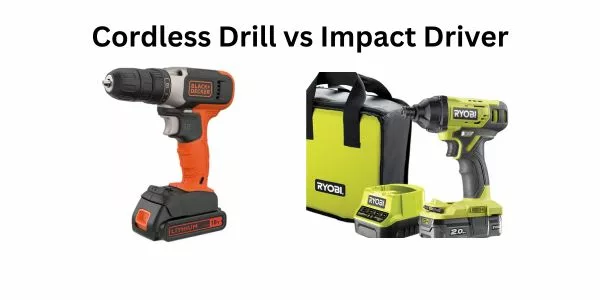
I have been asked by many people, especially by those new to buying power tools in the UK, what are key differences between a cordless drill and a cordless impact driver. Those two tools, along with an impact wrench often confuse buyers as to which one they actually need.
This can get even more confusing as there are various types of cordless drills. Below I have listed the four main types of cordless drills. Just below that, I have included information on the impact driver, the impact wrench and what they are used for. That way you will be quickly able to see the differences between all of these.
“A simple answer, is that a cordless drill can drill holes and act as an electric screwdriver, to screw in and remove smaller screws, whereas, an impact driver is used to quickly fasten or loosen long screws or large bolts. An impact driver looks like a drill, buts it is not designed to drill holes.”
Let’s have a closer look at these, if you want to know the detail.
Expert Verdict: “I see this confusion all the time on-site. People try to drive a 4-inch coach screw with a standard drill and wonder why their wrist is sore or the motor is smoking. While they look similar, a drill is a precision instrument, while an impact driver is a brute-force specialist. For a big UK project, you usually need both.“
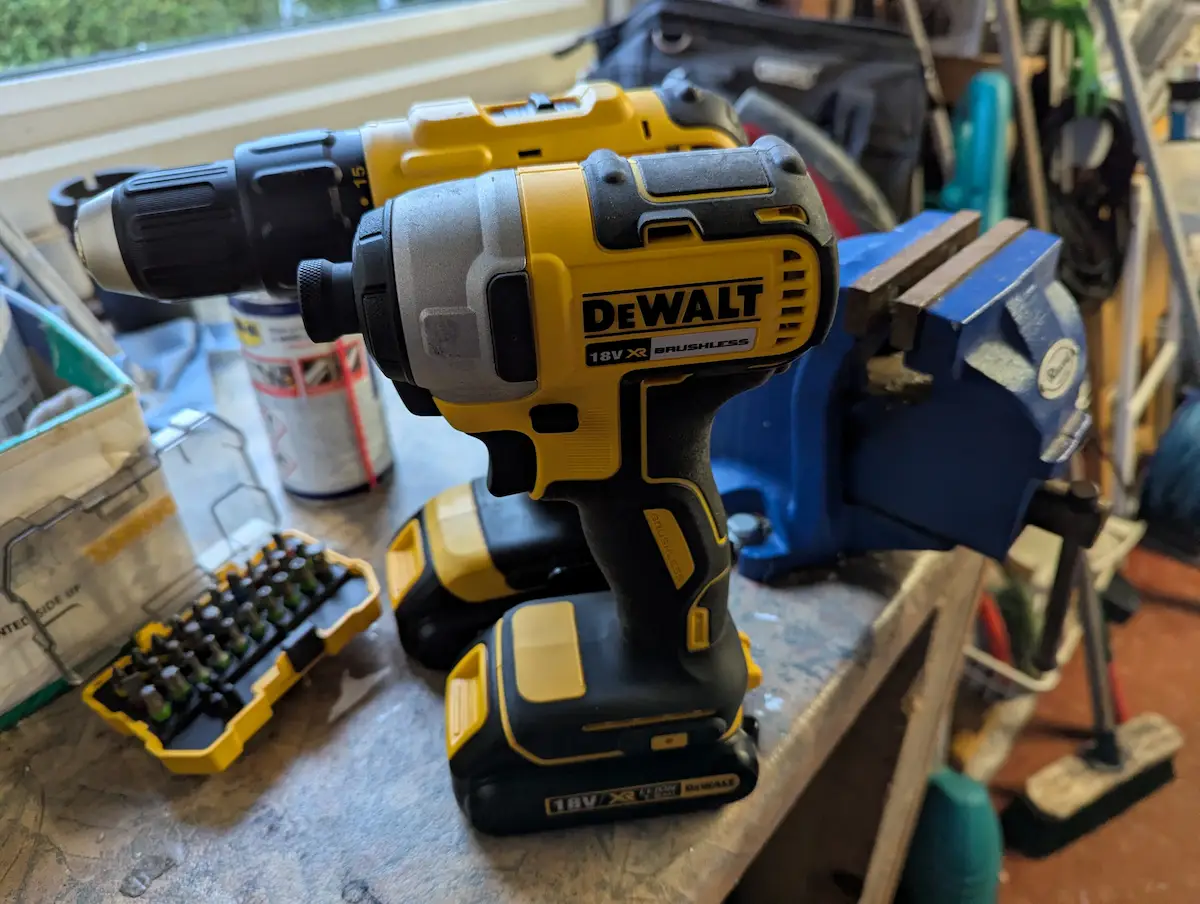
DCF776 and DCF787N side by side on my UK garage workbench
1. The Quick Comparison: At a Glance
Feature | Cordless Combi Drill | Impact Driver |
|---|---|---|
Best For | Drilling holes & small screws | Driving long, heavy screws |
Action | Constant rotational pressure | Rotational “Hammer & Anvil” blows |
Chuck Type | 3-Jaw (Adjustable) | 1/4″ Hex (Quick Release) |
Torque (Power) | Moderate (Approx 40-60Nm) | Massive (Approx 150-220Nm) |
The “Kick” | Can twist your wrist if it snag | Zero kickback into your arm |
2. What is an Impact Driver? (The “Hammer & Anvil”)
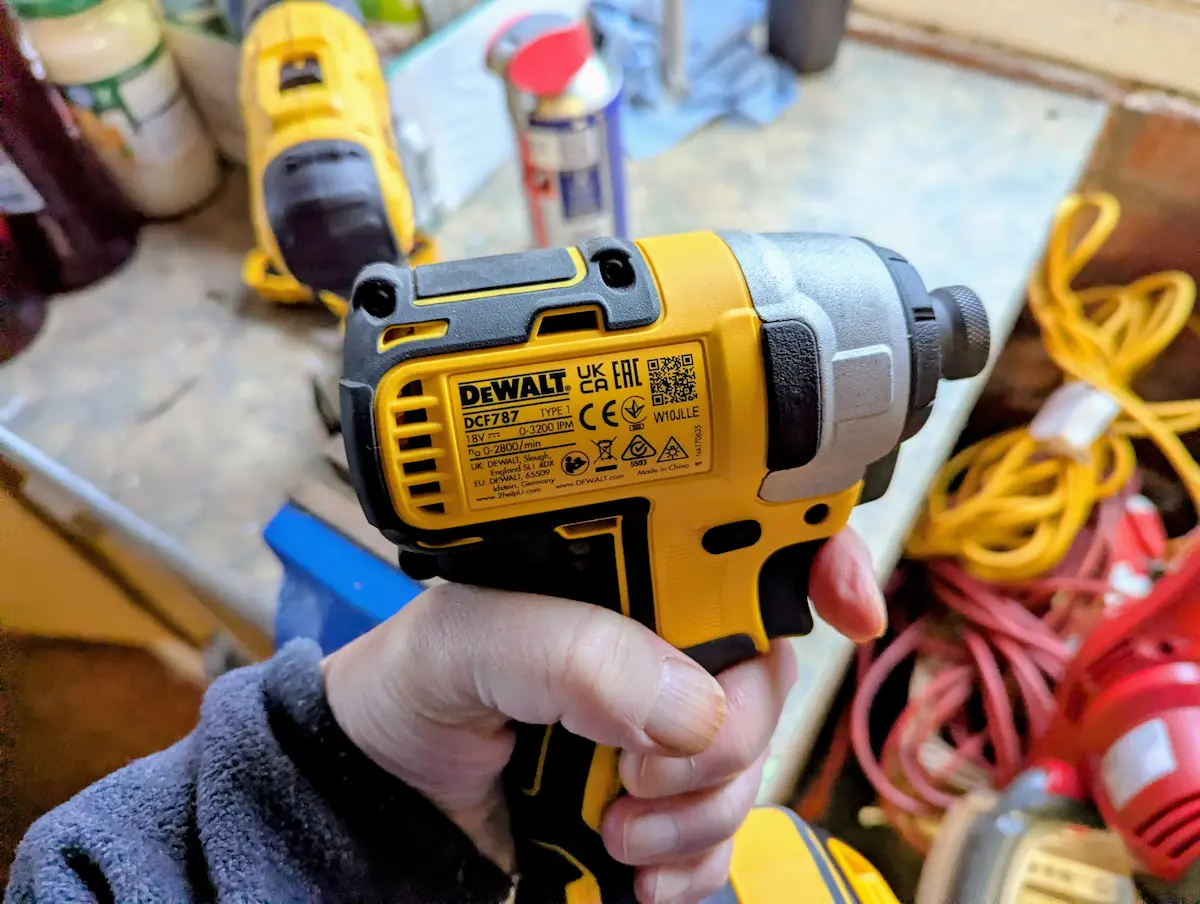
Enda holding his DCF787N impact driver in his garage
Unlike a drill that just spins, an Impact Driver has an internal mechanism that kicks in when it feels resistance.
Imagine you are trying to loosen a rusty bolt with a spanner. If you can’t move it, you might hit the end of the spanner with a hammer. That is exactly what an impact driver does. It strikes the internal “anvil” thousands of times per minute to force the screw in.
Enda’s Site Note: When I’m helping out with decking or roofing, I never touch my combi drill for the screws. The impact driver does 90% of the work. Because it uses those ‘shocks’ to turn the screw, you don’t have to lean on it nearly as hard.
3. The 3 Main Differences You’ll Notice
A. The Chuck (Where the bit goes)
- The Drill: Has an adjustable chuck that takes round or hex bits. You can use it for any size drill bit.
- The Impact: Has a “Quick Release” hex collet. It only takes 1/4″ hex-shank bits. You can’t put a standard round masonry bit in an impact driver.
B. The Torque (Rotational Strength)
- The Drill: Good for neatness. If you use it for big screws, it might “stall” or the motor might smell hot.
- The Impact: It has roughly 3 to 4 times the torque of a drill. It will drive a screw through a solid oak sleeper without needing a pilot hole.
C. The Sound
- The Drill: A steady whirring sound.
- The Impact: Quiet at first, but once it starts “impacting,” it makes a very loud rat-tat-tat noise.
Veteran Tip: If you’re working in a terrace or semi-detached house on a Sunday, your neighbours will hear an impact driver through the walls!
4. When to Use Which?
Use your Combi Drill for:
- Drilling neat holes in wood or metal.
- Drilling into brick or mortar (using Hammer Mode).
- Assembling flat-pack furniture (where too much power would ruin the MDF).
Use your Impact Driver for:
- Driving long “sleeper” screws or decking screws.
- Removing old, stuck, or rusted screws.
- Any job where you have to drive hundreds of screws in a day.
5. Why the “Twin Kit” is the Winner
This is why the DeWalt DCK266P2T or similar kits are so popular.
- You put your drill bit in the Combi Drill to make a pilot hole.
- You put your screwdriver bit in the Impact Driver.
- You never have to waste time swapping bits back and forth.
Enda’s Veteran Tip: If you’re only doing light household repairs, a single Combi Drill is plenty. But the moment you decide to build a fence, a shed, or a deck, the Impact Driver becomes your best friend. It’s the difference between an afternoon of hard work and an afternoon of easy progress.
My Conclusion
The simplest way to remember the difference is that for most jobs around the home or garden a Combi drill is the perfect tool. Only if you plan on doing bigger projects like working on decks, roofing or fences do you really need to buy an impact driver.
If you work in the trades or are a serious DIYer, then you will likely want to own both power tools.