
If you have bought a cordless drill, batteries and a charger, then it is a really good idea to know how to store them properly. Cordless drills have become a popular and very useful tool for homeowners, DIY enthusiasts, and professionals alike.
However, like any tool, proper storage is crucial for maintaining their performance and extending their life. We will walk you through our key recommendations in this detailed article.
Expert Verdict: “I’ve seen £300 drills ruined in a single winter because they were left on a cold concrete floor in a damp shed. A cordless drill is a high-tech piece of electronics, so best treat it like one. With ten minutes of ‘TLC’ a month, a good Makita or DeWalt will easily last you a decade.”
1. The “Post-Job” Wipe Down
Don’t be tempted to just throw the drill back in the box.
- The Vents: This is the most important part. Use a soft brush (an old toothbrush is perfect) or a quick blast of compressed air to clear the dust from the motor vents. If these clog, the motor will overheat and “cook” itself.
- The Casing: Use a slightly damp microfibre cloth to wipe off grease and grit.
Enda’s Veteran Tip: If you’ve been drilling overhead into plaster, that fine white dust is ‘drill killer.’ It’s abrasive and sucks the moisture out of the internal grease. Always blow the dust out of the chuck and vents immediately after an overhead job.
2. Managing the “Chuck Rust” (The WD-40 Trick)
In the UK, humidity is the enemy. The metal jaws of your chuck are prone to surface rust, which makes them “stick.”
- The Fix: Open the chuck fully (no bit inside). Spray a tiny amount of WD-40 Multi-Use or a PTFE lubricant onto a rag and wipe the inside of the jaws.
- The “Enema”: If the chuck feels “gritty,” hold the drill nose-down, spray a little lubricant inside, and run the drill for 10 seconds. It will spit out the old grit and dust. Wipe away the excess so it doesn’t attract more dirt.
3. Battery Care: The “Winter Rule”
The batteries are the most expensive part of your kit. They hate the cold.
- Never store on concrete: Concrete floors pull the heat out of batteries and can encourage condensation. Store them on a wooden shelf or in their plastic case.
- The 10°C Rule: If the temperature in your shed or garage drops towards freezing, bring your batteries inside the house. Lithium-ion cells can be permanently damaged if they are stored in sub-zero temperatures.
- Charge Levels: If you aren’t going to use the drill for a few months (like over winter), don’t store the battery totally empty. Aim for about 50-70% charge. This keeps the cells “healthy” without stressing them.
4. Enda’s “Damp-Proof” Storage Strategy
If your garage is prone to damp (like many in the UK!), follow these steps:
- Use the Case: The plastic TSTAK or Makpac cases aren’t just for transport; they create a micro-climate that protects the tool from humid air.
- Silica Gel Packets: Don’t throw away those little “Do Not Eat” packets that come in shoe boxes. Toss two or three into your drill case. They will soak up any stray moisture and prevent rust.
- Remove the Bit: Never store a drill with a bit left in the chuck. It puts constant pressure on the internal springs and provides a “bridge” for rust to move from the bit to the tool.
Enda’s Final Check: “Listen to your tool. if it starts making a high pitched squeal or you see sparks through the vents that weren’t there before, stop! It usually just needs a bit of internal grease or the ‘carbon brushes’ (on older models) replaced. Catch it early, and it’s a £5 fix; leave it, and it’s a £150 replacement.”
Storage Options
Once your cordless drill has been cleaned and the bits put away, then is the time to choose a suitable storage solution. Here are some popular options that are worth your consideration:
OPTION A The Wall-Mount (The “At-a-Glance” Choice)
- Best for: Small workshops or sheds.
- The Enda View: “I love a wall rack (like a pegboard or a MegaMaxx rack). It keeps the drill at eye level. If you see an empty slot, you know you’ve left your drill sitting out in the garden!”
Lots of these exist in garages, shed and workshops throughout the UK. They are really useful, versatile and are an inexpensive storage solution for many tools. You can hang your drill on a pegboard using sturdy hooks or brackets.
This type of pegboard provides easy access and visibility, making it ideal for frequently used tools. If the pegboard is in an environment prone to dampness, such as a garage without heating, then these would not be a good choice.
Option B: The Modular Box (The “Mobile” Choice)
- Best for: People helping out family or working on-site.
- The Enda View: “If you’re moving between the house and the van, systems like DeWalt ToughSystem or Milwaukee Packout are worth the money. They are weather sealed, which is vital in our climate.”
Cordless Tool Storage Racks
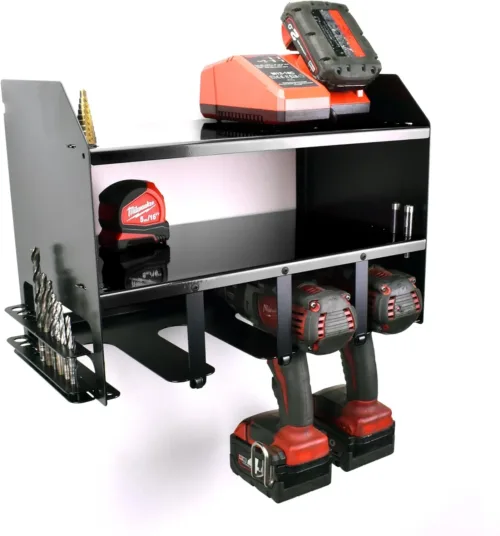
These are by far the best option and what we would recommend for most people. They have convenient hanging places at the bottom of the rack where you can hang your drills. The better ones also come with a power storage station for up to four power tools, when they are not in use. Again, the better ones will have cord cut outs that allow your chargers chargers to be placed on top. They will also have storage shelves that have a multi-sized drill bit holder on the side and additional holes for bit storage.

I recommend the Jbl wall mountable shelving storage unit charging station shown above. Check Amazon UK for availability. Depending on where you buy something like this, they cost around £30-£50, so good value for money. They are also easy to clean and makes finding your tools faster and easier.
Option C: The Hybrid (The “Veteran” Choice)
- Best for: Longevity.
- The Enda View: “I keep my drill in its hard case to keep the damp out, but I keep my drill bits on a magnetic wall strip so I can grab the 6mm red-plug bit without digging through a box.”
Hopefully, when you bought your drill, it came with some type of storage case or a bag. These have been designed to perfectly fit your drill, so make sure to use that. In most cases, that storage case is made of a really hard plastic, which is pretty tough and adds good protection.
If you didn’t get a case, or want something better, then a dedicated tool storage case is the best choice for protecting your cordless drill and accessories. These cases are made of tough, durable materials like plastic or aluminum and feature compartments or dividers to keep your tools organised and prevent damage. Choose a case that fits your drill snugly and has enough space for other essential tools like drill bits, screwdrivers, and wrenches.
Additional Storage Tips
For the very best storage and protection, consider these additional tips:
- Battery Removal: If you have a cordless drill, I would highly recommend removing the batteries after use. This really helps extend the lifespan of your batteries. It is a manufacturer recommended practice to remove them when storing the drill for extended periods. The reason for this is that it reduces the strain on the battery cells and helps prevent damage from any type of discharge.
- Upright Storage: Where possible, if you are not going to remove the battery, try to store your cordless drill in an upright position. That will at least stop the battery from shifting or becoming loose during storage.
- Desiccant Packets/Mini dehumidifier: If your only storage option is in an area with high humidity or prone to condensation and dampness, it is worth considering moisture absorbing desiccant packets to protect your cordless drill from moisture damage. You put these inside the tool storage case or near the drill on the shelf. Likewise, many people use a small disposable dehumidifier to help remove moisture from the air.
Battery Storage
If you have gone down the route of cordless tools then very quickly, you can end up with owning at least a couple of batteries and a charger or two. You will also no doubt have realised that these are expensive items to buy. They vary in price depending on the brand and the Ah rating. It is a really good idea to properly look after them.
It is also worth noting that in any cordless drill user guide, they allocate an entire section to battery safety and storage. That seldom gets read, but it is very important. Proper battery storage is crucial for maintaining their performance and extending their lifespan:
- Cool and Dry Storage: – Always store batteries in a cool, dry place away from direct sunlight and heat sources. Any type of extreme temperature, hot or cold, can damage battery cells and reduce their capacity.
- Partial Charge: – Here is a very useful tip. If you have to store batteries for an extended period, charge them to 40-50% capacity. Don’t fully charge them. This helps maintain the battery’s health and prevents deep discharge, which can damage the cells.
- Avoid Extremes: – Avoid storing batteries near ovens, refrigerators, or in outdoor unheated sheds. The temperature fluctuations in these places can damage the battery cells.
- Regularly Inspect: – Once every couple of months, inspect your batteries for any signs of damage, such as swelling, leaks, or corrosion. If you notice any damage, dispose of the batteries properly and replace them with new ones. If you own a corded drill, then check the electrical lead for any signs of wear and tear. If you find that, then it is best to replace the lead.
Maintenance Tips for Cordless Drills
Every tool you own will benefit from some care every now and then. Your cordless cordless drill is no exception and will keep it in the best condition:
- Cleaning and Lubrication: – Give your drill a quick clean after use or if it has been sitting around for a while. I would recommend a small soft to medium brush or a a soft cloth. Never use any type of harsh chemicals or abrasive cleaners. Lubricate the moving parts of the drill, such as the chuck and trigger mechanism, with a light-duty oil. The easiest way to do this is to fully open the chuck. Put a few drops of lubricant into the chuck and open and close it few times to spread the oil around. Operate the drill for about 20 seconds and then dab off any excess oil that may have splashed out. Light machine oil is best, and if you haven’t got that, then WD40 will do the job.
- Inspection for Damage: – It is always a good idea to quickly look at your drill for any signs of damage, such as cracks, loose parts, or worn-out components. If you notice any damage, have the drill repaired by a qualified technician.
- Prompt Replacement: – If any parts of your cordless drill start to become worn out or damaged, replace them promptly to prevent further damage and maintain optimal performance. Always worthwhile checking warranties first to see what is covered.
As you can see, good storage and maintenance will help extend the overall lifespan of your cordless drill, ensuring it remains a reliable tool for years to come. By following the tips and guidelines outlined in this comprehensive guide, you can keep your cordless drill in top condition and ready for any project.
Further Reading
You might also enjoy reading my articles on:
- Full Drill Buyers Guide for UK
- The Top 10 Cordless Drills in the UK
- Drill Maintenance & Cleaning
- Cordless Torque Explained for Cordless Drills