
Expert Verdict: “In 50 years of doing DIY, the most common mistake I see isn’t people using the wrong drill. It actually is using the wrong bit for the plug. If the hole is too big, your shelf falls down; if it’s too small, you’ll snap the screw head off. This guide is the ‘Cheat Sheet’ I keep taped to the inside of my own toolbox.”
1. The UK Wall Plug “Cheat Sheet”
If you are drilling into brick or mortar, you are likely using the standard “Coloured” plugs. Here is exactly which bit matches which plug.
Plug Colour | Drill Bit Size | Best Screw Size | Typical Jobs |
|---|---|---|---|
Yellow | 5mm | 3.0 – 3.5mm (No. 4-6) | Lightweight pictures, smoke alarms |
Red | 6mm | 3.5 – 5.0mm (No. 6-10) | Most common: Shelves, curtain poles |
Brown | 7mm | 4.5 – 6.0mm (No. 10-12) | Heavy stuff: TVs, kitchen cupboards |
Blue | 10mm | 6.0 – 8.0mm (No. 12-14) | Heavy-duty gates, timber to brick |
Enda’s Veteran Tip: The box might say 5.5mm for a Red plug, but in an old UK house with ‘sandy’ mortar, a 6mm bit is usually what you actually need. If the plug is a bit loose, don’t panic, and just wrap a bit of masking tape around the plug before you tap it in. It’s an old chippy’s trick that works every time.
2. Identifying Your Bits (The 3-Second Test)
Drill Bit Type | Best for | What to look for? |
|---|---|---|
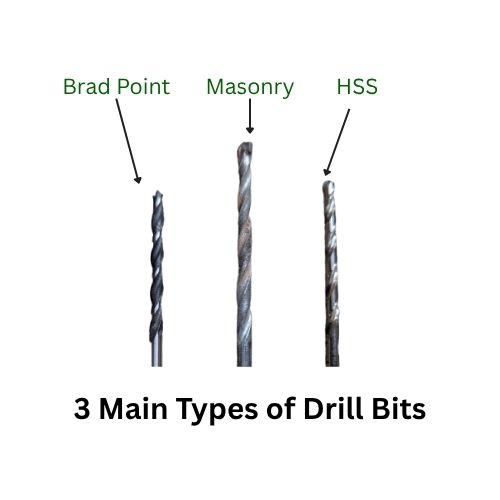
Wood Bit | Making clean holes in wood, MDF, and particleboard. | A sharp, central ‘spike’ on the tip (a brad point). |
Masonry Bit | Drilling into brick, concrete, and stone | A flattened, chisel-shaped tip (often with a tungsten carbide point). |
HSS Bit | Drilling into metal, plastic, and non-masonry walls. | A standard, pointed, conical tip with a spiralled fluted body. |
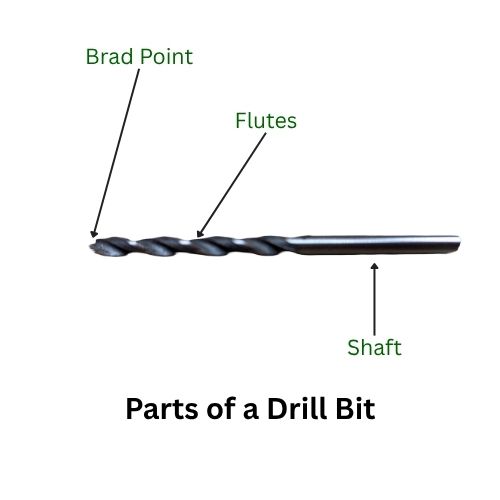
Drill Bit Type
This is the biggest mistake beginners make. That is, using a bit designed for the wrong material. Choosing the right type of bit is crucial for safety, getting a clean hole, and protecting your tools.
1. Wood Bits (Brad Point)
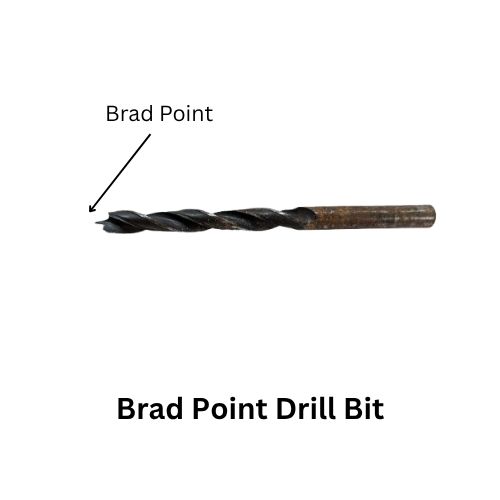
What they look like: The defining feature is the sharp, central point at the very tip, often called a “brad point.” The outer cutting edges are also sharp.
- Why they’re different: The brad point helps to precisely position the bit and prevents it from wandering. The outer cutting edges score the wood fibres, creating a very clean, neat hole with minimal splintering.
- When to use them: Anytime you’re drilling into wood, MDF, chipboard, or soft materials where a clean finish is important.
2. Masonry Bits
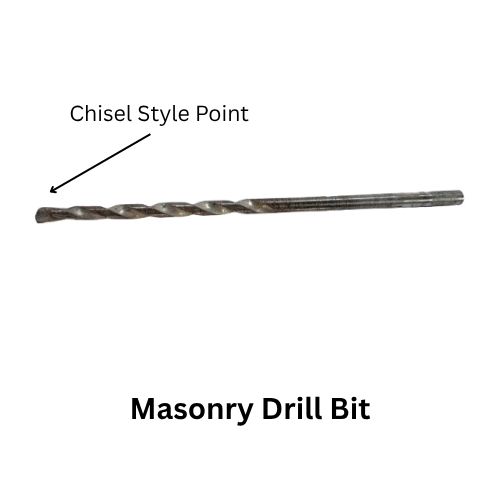
What they look like: The tip is the key. It’s a flattened, arrowhead-shaped tip, usually made of a tougher, harder material like tungsten carbide. The flutes (the spiralled grooves) are wider.
- Why they’re different: Masonry bits are designed to smash and grind hard materials like brick, concrete, and stone. They are used with a hammer drill, which uses a hammering action to break up the material.
- When to use them: For any project where you need to drill into a brick or block wall, such as hanging shelves or mounting a TV bracket. Never use them on wood or metal.
3. HSS Bits
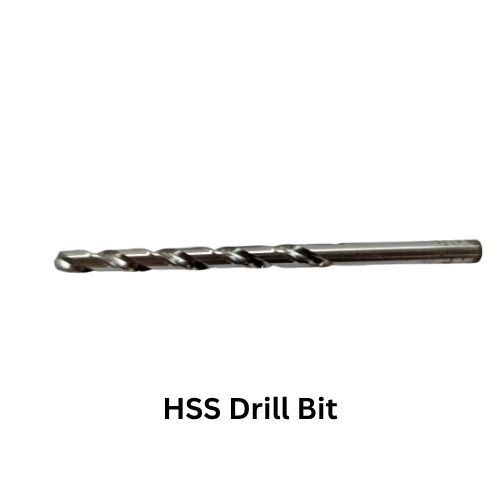
(Image: A close-up photo of a standard HSS bit’s tip, showing a simple pointed end with no central spike.)
- What they look like: This is the most common-looking drill bit, with a pointed conical tip and a classic twist-flute body.
- Why they’re different: They are designed to cut through hard materials by removing shavings. They’re a general-purpose bit for non-wood, non-masonry materials.
- When to use them: For drilling into metal, plastic, and soft plasterboard. They are also used for making pilot holes for screws in wood, although wood bits are better for clean holes.
“Size” – Drill Bit Diameter (mm & inches)
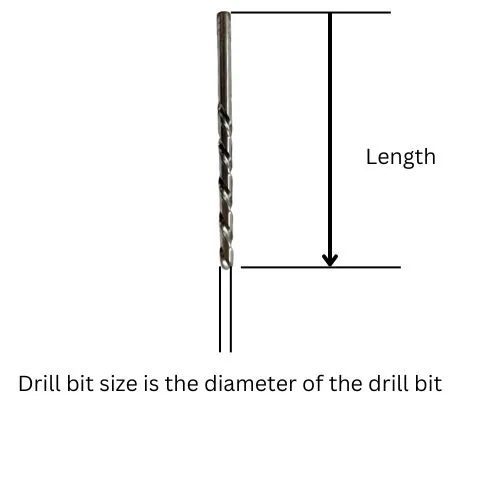
This is about the thickness of the hole you want to make. In the UK, you’ll mainly see metric (millimetre) sizes, but imperial (inch) sizes are still around. Drill bits are sized based on their diameter, usually expressed in inches or millimetres.
The size of the drill bit corresponds to the diameter of the hole the drill can create.
Metric (mm): This is the modern standard. Common sizes are 3mm, 6mm, 8mm, and 10mm.
Imperial (inches): You might still find these, especially on older drill sets. A few common conversions:
- 1/8″ ≈ 3.2mm
- 1/4″ ≈ 6.4mm
- 3/8″ ≈ 9.5mm
Choosing the Right Diameter:
- For Rawl Plugs: The drill bit diameter must exactly match the size of the rawl plug. If the plug is 6mm, use a 6mm masonry bit. A hole that’s too big means the plug won’t grip!
- For Pilot Holes: If you’re drilling a pilot hole for a screw, the bit should be slightly smaller than the screw’s diameter. This gives the screw’s threads something to bite into.
You are not limited to these common diameter sizes of course. Most people buy drill bits in sets. The diameters of these will range from around 1.5mm up to 10mm.
Drill Bit Length
You can buy drill bits in various different lengths. Masonry drill bits in particular are popular in longer lengths. These allow you for example to drill through deep cavity walls for jobs like getting pipes in and out of your home.
Part 3: The Third “Size” – Shank Type
This refers to the end of the drill bit that goes into your drill’s chuck.
- Straight Shank: The classic, cylindrical end. This is what you’ll find on 99% of bits for standard drill/drivers.
- SDS Plus Shank: This is a special shank with grooves that locks into an SDS chuck on a heavy-duty hammer drill. You only need to worry about this if you’re doing serious masonry work.
Your Quick Reference Chart: Right Bit for the Job
Your Project Is | You Need a | Why? |
|---|---|---|
Hanging a heavy shelf on a brick wall. | Masonry Bit | For drilling into hard material. |
Assembling flat-pack furniture (drilling pilot holes). | HSS or Wood Bit | To prevent the wood from splitting. |
Drilling a hole in a metal sheet. | HSS Bit | HSS stands for High-Speed Steel, designed for cutting metal. |
Hanging a picture frame on a plasterboard wall. | HSS Bit | Plasterboard is soft; a general-purpose HSS bit is fine. |
Drilling a clean hole in wood. | Wood Bit | The brad point ensures an accurate, neat hole. |
“Having the right bits is half the battle, but you need a motor with enough ‘grunt’ to turn them. If you’re looking for an upgrade, here are the [6 Best Cordless Drills for UK Homes in 2026].”
“Help! My Bit Doesn’t Fit My Drill”
If you’ve bought a new bit and it won’t go into your drill, you likely have an SDS Bit.
- Standard Shank: Smooth and round. Fits almost every “Combi” drill (like your Bosch or Makita).
- SDS Shank: Has deep grooves and slots at the end. These only fit into SDS drills (like the DeWalt DCH273 we talked about). Don’t try to force an SDS bit into a standard 3-jaw chuck; you’ll ruin the drill.
Why 2026 is the Year of the “Multi-Construction” Bit
If you’re helping out on site or doing a quick DIY job, I always recommend the Bosch Expert HEX-9 or Multi-Construction bits.
- The Benefit: You can drill through a piece of wood, into the brick behind it, and even through a bit of metal lintel without ever changing the bit. It’s the single biggest time-saver for a modern workshop.
Enda’s Toolbox: The 3 Kits Every UK Home Needs
“I’ve wasted a lot of money over 50 years on ‘bargain’ bit sets that snap the moment they hit a hard knot in the wood. If you want to stop the frustration, these are the three I keep in my own garage.”
1. The “Daily Driver”: Bosch X-Line 50-Piece Set
- Best For: Most UK homeowners who need a bit of everything. This is the “Emergency Box.” It has the 5mm, 6mm, and 7mm bits for your Yellow, Red, and Brown wall plugs, plus all the screwdriver bits for flat-pack furniture.
- Veteran Tip: The titanium coating on these bits means they stay sharp roughly 30% longer than the basic steel ones you find in supermarket kits.
[Check Price for Bosch X-Line on Amazon UK]
2. The “Problem Solver”: Bosch Expert HEX-9 Multi-Construction
- Best For: When you aren’t sure what’s behind the wall. If you are drilling through a kitchen cupboard (wood) into a brick wall (masonry), you usually have to stop and swap bits. These HEX-9 bits do both in one go. I’ve even used them to go through ceramic tiles without cracking them.
- Veteran Tip: If you only buy one “premium” set, make it this one. It’s a massive time-saver.
[Check Price for Bosch HEX-9 on Amazon UK]
3. The “Brick Specialist”: DeWalt Extreme Masonry Set
- Best For: Tough Victorian brick or concrete. Standard masonry bits can “dance” around when you try to start a hole. These DeWalt bits have a unique “no-walk” tip that bites into the brick immediately.
- Veteran Tip: These are much better at clearing out the “brick dust” as you drill, which prevents the bit from getting stuck and overheating.
[Check Price for DeWalt Extreme on Amazon UK]
Tool Safety & Maintenance Tips for Drill Bits
- Wear Safety Glasses: Always protect your eyes from flying debris, especially when drilling into masonry.
- Match the Speed: Use a slower speed for drilling into metal to prevent overheating the bit.
- Check for Sharpness: A dull bit works harder and can burn wood or struggle to penetrate metal. Replace dull bits promptly.
- Keep Them Clean: Wipe bits down after use and store them in a clean, dry case to prevent rust.
Choosing the right drill bit is the first step to a successful project. By understanding the three simple “sizes” – the type, the diameter, and the shank – you’ll feel confident tackling almost any drilling task around the home.
What’s the first project you’ll be drilling for? Share it in the comments below!