
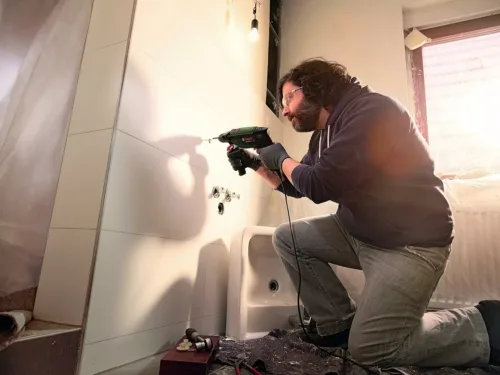
If you are not sure whether to buy a corded drill or a cordless drill, then my guide will help you make that final buying decision. The final decision comes down to what you will regularly use the drill for.
That is the most important consideration to understand. All tool brands that sell drills in the UK make both types, so don’t worry there are plenty of models available of either type.
Expert Verdict: “The world has gone cordless mad, but don’t be too quick to throw away the plug. While a cordless drill is king for convenience, a corded drill is still the king of raw, uninterrupted power. If you’re facing a day of drilling into heavy engineering brick or concrete, you’ll be glad of that cable.”
1. The Quick Comparison: Pros & Cons
Feature | Corded (Mains) Drill | Cordless (Battery) Drill |
|---|---|---|
Power | Unlimited & Consistent | High (but fades as battery dies) |
Weight | Lighter (No battery pack) | Heavier (Battery adds 0.5kg+) |
Price | Much Cheaper (£30 – £70) | More Expensive (£80 – £250+) |
Convenience | Restricted by cable/extension | Total freedom (Garden/Roof) |
Best For | Heavy masonry, long DIY days | Quick repairs, furniture, tight spots |
2. Why Corded Still Wins (The “Old School” Benefits)
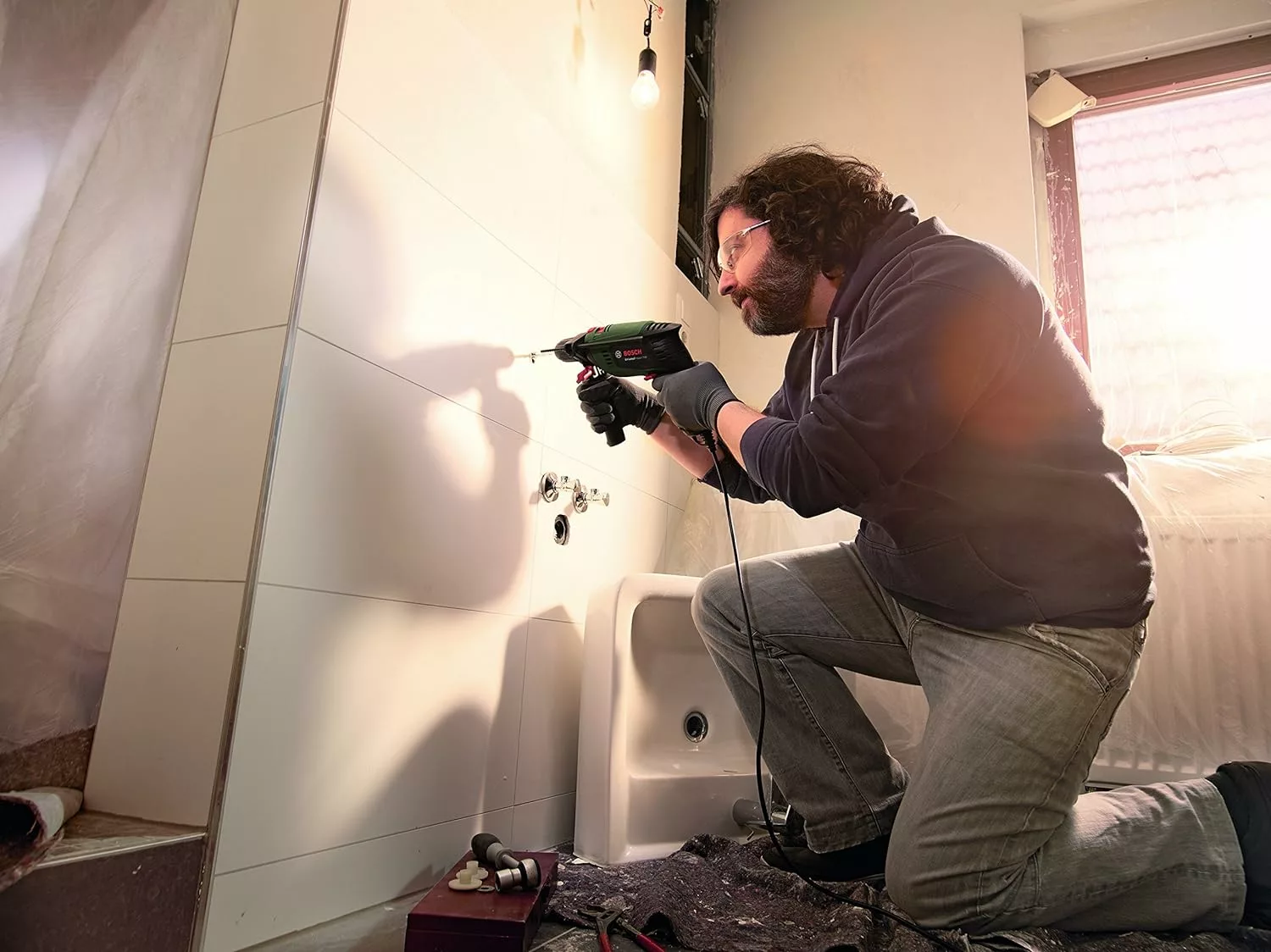
The “Price-per-Watt” Ratio
You can buy a professional grade corded drill like the Bosch EasyImpact 550 for under £50. To get that same level of “punch” in a cordless version, you’d need to spend nearly £200 once you include the batteries and charger.
Enda’s Veteran Tip: If you only do DIY once every six months, buy a corded drill. Batteries hate sitting empty in a cold garage; they can fail if they aren’t used. A corded drill will sit in its box for five years and work perfectly the second you plug it in.
Consistent Torque (No “Fading”)
Have you ever noticed your cordless drill slowing down as the battery reaches 10%? That’s called “voltage sag.” A corded drill gives you 100% power from the first hole to the 100th.
Weight & Overhead Work
This surprises a lot of people. Because a corded drill doesn’t have a heavy 5.0Ah battery hanging off the bottom, it’s actually much easier on your wrists when you’re drilling into a ceiling for a curtain pole or a light fitting.
When Cordless is the Only Way to Go
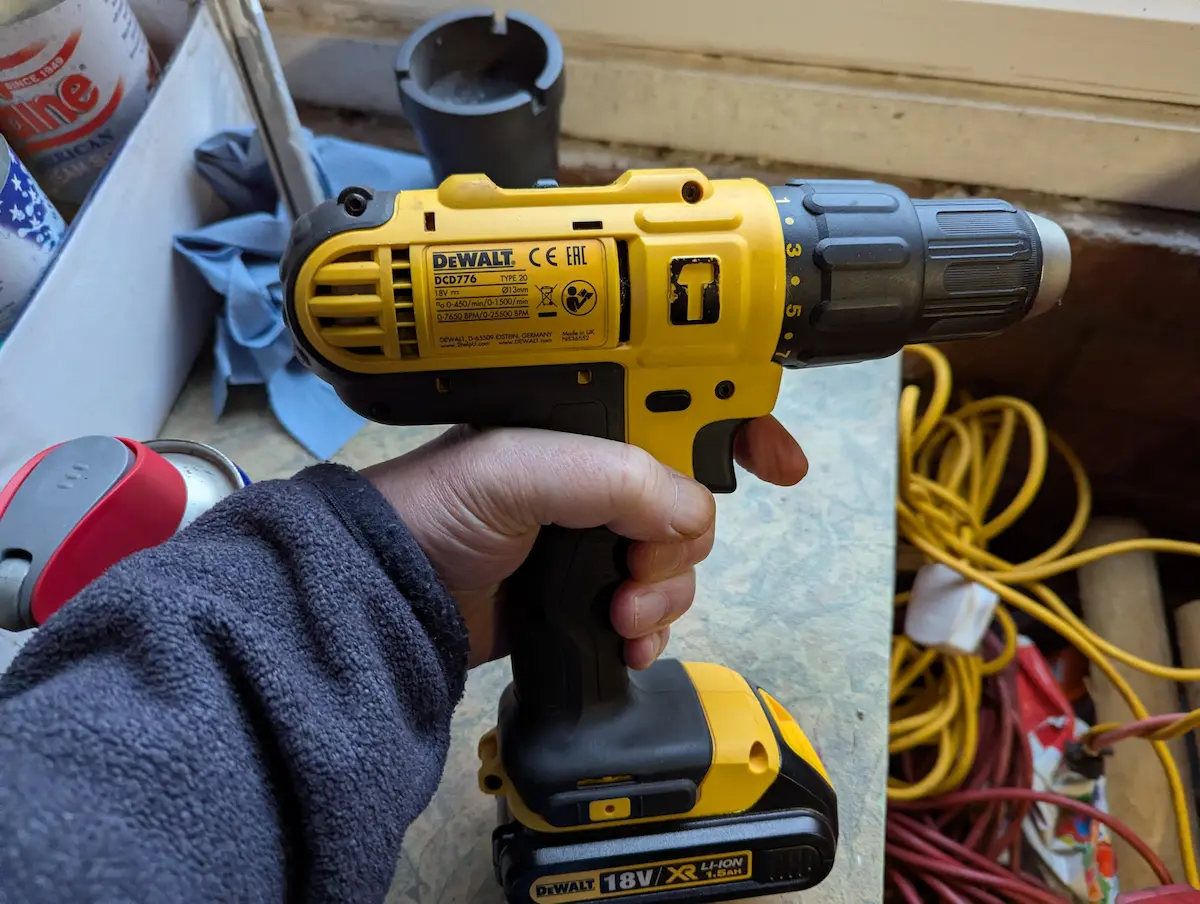
Enda holding the dewalt dcd776 cordless drill and using a 1.5Ah battery
I’m not a dinosaur despite my age. I know that 90% of the time, I grab my cordless first.
- The Safety Factor: No cables means no tripping hazards. If you’re up a ladder or working in a cramped cupboard, a cable is a nightmare.
- The “One Battery” World: If you already have a Ryobi or DeWalt battery, buying a “bare” cordless drill is very affordable.
- The Garden & Beyond: If you need to fix a fence at the bottom of the garden, you don’t want to be daisy-chaining three extension leads together in the rain!
4. Enda’s “Two-Drill” Strategy
If you’re taking your DIY seriously, here is how I recommend you set up your workshop:
- The Workhorse (Cordless): Get a good 18V Brushless Combi Drill (like the Makita DHP484). This will handle 95% of your daily tasks.
- The Heavy Hitter (Corded): Buy a budget-friendly corded SDS drill (like the Evolution SDS or a Bosch Professional). Keep this in the back of the shed for those times you need to drill a 20mm hole through a brick wall for a waste pipe.
Enda’s Site Note: When I help out on sites, we use cordless for everything, until we hit the heavy concrete lintels. Then the ‘big orange extension lead’ comes out and we plug in the mains drill. There’s no shame in it; it’s just the right tool for the job.
5. What to Look for in a Corded Drill
If you decide to go corded, look for these three things:
- Wattage: Look for at least 550W. Anything less will struggle with UK brickwork.
- Cable Length: Try to get one with at least a 2.5m or 3m cable. Cheap drills often have 1.5m cables that are always just too short.
- Side Handle: Because corded drills have high torque, they can “kick” if the bit snags. You need that second handle to keep control.
My Final Thoughts
I do a lot of work around the home and also for other people. I own a corded and a cordless drill. I use the corded drill for drilling into masonry as it is just more powerful and faster. For everything else, I use my corded drill.
My advice is buy a cordless drill with 2 batteries and a charger. That means you ca have one battery charging while you use the other one. Only ever buy a corded drill if you need to regularly drill hard materials. If you want to read more, I suggest that you read my drill buying guide for UK readers.