

The circular saw is arguably one of the most common and essential cutting tool on any job site or in for many UK DIYers. Yet, the saw blade, the component that does all the work, is the most critical and most frequently neglected maintenance item.
Sadly, many users treat the blade as a consumable that only needs replacing when it breaks, which is a big and also costly mistake. A dull blade doesn’t just produce a poor-quality cut, but it introduces severe safety hazards and puts enormous, unnecessary strain on your saw’s motor and gearing.
When a blade dulls, it stops cutting properly and starts burning and tearing the material. This drastically increases friction, leading to heat build up, reduced power, and, most dangerously, a higher risk of kickback and binding.
This comprehensive guide is designed to explain the definitive visual and performance indicators that signal the need for blade replacement. We will also guide you through the process of selecting the correct new blade for specific materials, ensuring every cut is safe, efficient, and precise.
Stop wasting material and putting yourself at risk. It is time to master the simple art of proactive blade management. The same applies to any power tool with a blade.
Definitive Signs Your Blade is Duller Than You Think
A blade doesn’t dull overnight as it slowly degrades. Knowing the specific indicators of a failing blade will save you time, money, and potentially prevent injury.
We can categorize the signs into two actionable tests: The Look Test and The Performance Test.
Indicator | Description | Safety Risk |
|---|---|---|
Burnt or Scorched Wood | Black or brown scorch marks appear on the cut line, particularly in hardwoods. This is caused by excessive friction as the dull teeth drag instead of slice. | High heat can damage the saw’s arbor and bearing over time. |
Excessive Splintering/Tear-out | Rough, splintered edges, especially on plywood, veneer, or laminates. A sharp blade slices cleanly; a dull one tears the fibres. | Ruins material and requires extensive post-cut sanding or rework. |
Slow Feed Rate / Labouring Motor | You have to force the saw through the material, and the motor sounds strained, dropping its RPM significantly. | Places excessive load on the motor, leading to overheating and premature motor failure. |
Increased Kickback | A dull blade is more likely to bind in the cut or grab the material because the teeth aren’t clearing the waste efficiently. | Extreme risk of injury to the user. |
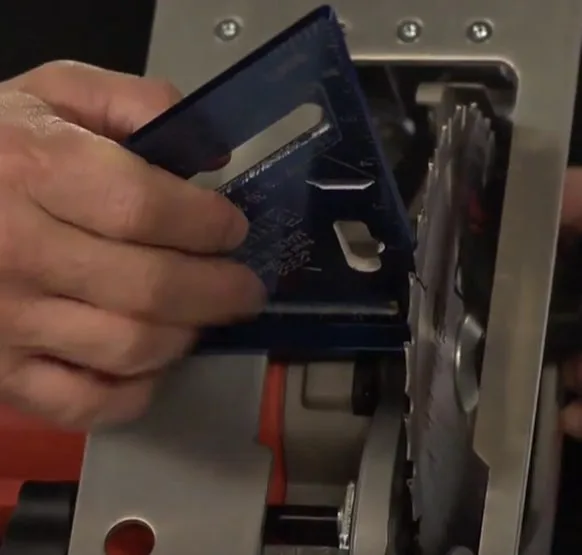
Visible Damage | Any missing carbide tips, bent teeth, or a wobbling blade should lead to immediate disposal. | Blade failure during use can be catastrophic. |
The Look Test: Visual Inspection
Before powering up the saw, conduct a quick visual check:
- Missing or Chipped Carbide Teeth: Carbide tips are actually quite brittle and can shatter if they hit a nail, knot, or stone. Any missing or fractured teeth create an imbalance, causing excessive vibration and putting immense stress on the adjacent teeth, which will fail next. A blade with two or more missing teeth should never be used.
- Excessive Pitch or Resin Buildup (Gummimg): As you cut wood, sap, resin, and pitch build up on the sides of the blade, especially near the carbide tips. This sticky residue effectively increases the kerf width (the thickness of the cut) and reduces the necessary clearance, leading to significantly increased friction and heat. This “gumming” is a leading cause of burning and kickback.
- Visual Damage to the Plate: Look for signs of warping, bending, or cracks in the steel plate of the blade. A severely overheated blade may show discolouration (blueing), which indicates the steel’s temper has been compromised, making the blade structurally unstable.
The Performance Test: Cutting Indicators
These signs are apparent during operation and indicate the saw is fighting the material:
- Burnt Wood or Smoke: This is the most obvious red flag. Friction generates excessive heat, and a dull blade is friction’s best friend. The heat scorches the wood, leaving black or brown burn marks along the cut line. This not only ruins the material finish but indicates the blade is dangerously overheating, which can compromise the tool’s motor.
- Increased Motor Strain and Slowdown: When the blade is sharp, the motor should maintain a consistent speed. If the saw sounds laboured, slows down significantly, or if you feel the need to push the tool harder to complete a cut (known as forcing the feed), the blade is dull. Forcing the feed stresses the motor, wears out the carbon brushes (in non-brushless tools), and leads to premature tool failure.
- Ragged or Chipped Cuts (Tear-out): Sharp teeth slice the wood fibres cleanly. Dull teeth rip them. If the quality of the finished edge deteriorates—especially with sensitive materials like plywood or laminates—resulting in excessive tear-out (splintering), your blade has lost its sharpness and accuracy.
- Kickback and Binding: This is the most serious safety risk. Kickback occurs when the blade jams mid-cut, lifts the tool aggressively out of the material, and throws it back at the user. Dull blades are far more prone to binding because they require more force to cut, increasing the chances of the blade pinching in the wood. If your saw kicks back, stop immediately and replace the blade.
- Excessive Noise and Vibration: A healthy saw running a balanced, sharp blade operates with a smooth, purposeful hum. A dull or damaged blade will cause the saw to hum, chatter loudly, or vibrate excessively, indicating an imbalance or excessive friction
Blade Anatomy: Understanding Selection for Different Materials
Knowing when to replace a blade is only half the battle. Knowing which blade to choose is equally important. The blade is a precision instrument, and its suitability is defined by three key anatomical features.
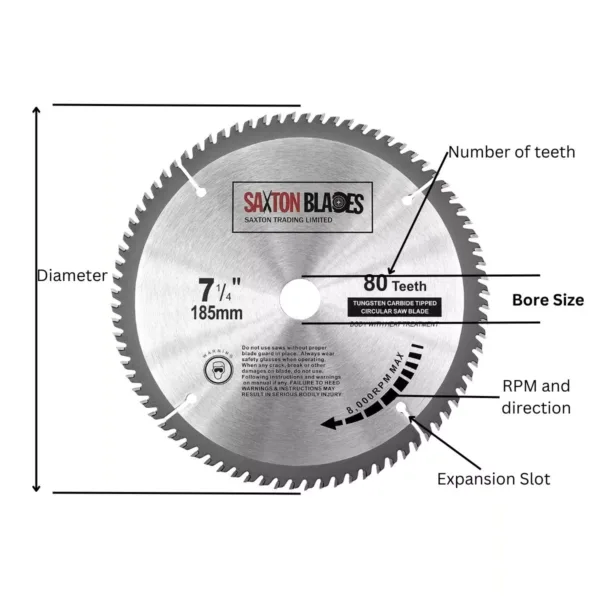
Tooth Count (TPI – Teeth Per Inch)
This is the fundamental metric. The general rule is: The more teeth, the smoother the cut; the fewer teeth, the faster the cut.
- Low TPI (24T – 32T): Ideal for fast, rough cuts (e.g., framing timber, thick posts). The large spaces between the few teeth allow for rapid chip (sawdust) ejection, preventing the blade from clogging, but they leave a rougher finish.
- Medium TPI (40T – 60T): The best all-purpose blade. Excellent for cutting plywood, MDF, and general sheet goods. This balance provides a smooth-enough finish for most applications while maintaining a decent cutting speed.
- High TPI (60T – 80T+): Reserved for smooth, precise finishing of delicate materials like melamine, laminates, and veneer. These blades cut slowly and meticulously, leaving virtually no tear-out.
Tooth Grind (Form)
The shape and angle of the carbide tip determine how the tooth enters and exits the material. Using the wrong grind can instantly ruin your cut quality.
- ATB (Alternate Top Bevel): The universal standard for wood cutting. The teeth are angled left and right alternately, creating a knife-like scoring action that slices wood fibres cleanly. Best for natural wood and plywood.
- TCG (Triple Chip Grind): Essential for cutting non-ferrous metals (like aluminium) and dense plastics/laminates. The TCG uses one high, flat tooth to rough-cut the kerf, immediately followed by two bevelled teeth that clean the edges. This prevents chipping of brittle material edges.
- FTG (Flat Top Grind): Less common, typically reserved for very fast ripping (cutting parallel to the grain) where cut quality is irrelevant.
Kerf Width and Blade Material
- Kerf Width: This is the thickness of the material removed by the blade. Thin-kerf blades are increasingly popular as they require less power to push through the material, making them ideal for lower-powered saws and preserving battery life on cordless models. Full-kerf blades offer greater stability but demand more powerful motors.
- Blade Material: While High-Speed Steel (HSS) is used in some saw blades, the overwhelming standard is Carbide-Tipped blades. Solid carbide tips brazed onto a steel plate offer the best balance of hardness, heat resistance, and value. Ensure the carbide is a high quality C3 or C4 grade for professional use.
UK Blade Arbor Sizes
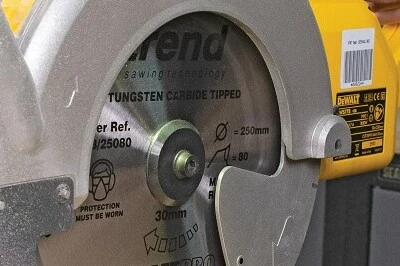
Ensure your replacement blade matches your tool’s arbor (the spindle the blade mounts onto). Most UK-spec circular saws use either a 16mm or 30mm arbor size.
Always check your saw’s manual or the current blade stamping before ordering replacements.
Selecting the Right Blade for Your Project Type
Using the anatomical knowledge above, here is a quick reference guide for selecting the optimal blade for common UK job types:
Material/Project | Recommended TPI | Recommended Grind | Key Consideration |
|---|---|---|---|
Framing Timber/Softwood | 24T | ATB | Focus on low TPI for rapid chip removal and speed. |
Plywood/MDF/OSB | 40T – 60T | ATB | Use higher TPI on thin sheet goods to minimize tear-out. |
Laminates/Melamine | 60T – 80T+ | TCG | TCG is non-negotiable to prevent chipping the surface layer. |
Non-Ferrous Metals (Aluminium) | 40T – 60T | TCG | Must use a specific metal-cutting blade and the TCG. Requires lubrication. |
Hardwoods (Oak, Maple) | 40T – 60T | ATB (Negative Hook) | Requires patience and a high-quality, sharp blade to prevent burning. |
Extending Blade Life: Cleaning and Maintenance Tips
The best way to prolong blade life is not just to replace it when dull, but to aggressively maintain its sharpness and cleanliness.
Cleaning: Tackling Resin and Pitch
Resin buildup (gummimg) is the number one non-impact cause of blade failure. Cleaning is simple and highly effective:
- Safety First: Disconnect the saw from power or remove the battery.
- Soak: Remove the blade and soak it in a shallow container of specialized pitch remover (available from tool suppliers) or a strong, non-acidic household cleaner like heavy-duty oven cleaner (CAUTION: Wear gloves and eye protection when using caustic cleaners).
- Scrub: After soaking for 15-30 minutes, scrub the blade gently with an old toothbrush or a non-metallic scouring pad. Never use steel wool or metal brushes, as they can damage the carbide tips and the plate.
- Rinse and Dry: Rinse the blade thoroughly with clean water and dry it immediately to prevent corrosion. A clean blade drastically reduces friction and heat.
Storage and Sharpening Economics
- Proper Storage: The most common way a carbide tip is damaged is through chips occurring while the blade is in storage or transport. Always store blades in their original packaging, in blade sleeves, or in a dedicated caddy to protect the sensitive tips.
- Sharpening vs. Replacement: For most budget or medium-range blades (under £30), the cost of professional sharpening often approaches the cost of a brand-new blade, making replacement the most economical choice. However, if you invest in premium, high-TPI blades (over £50), professional sharpening by a specialist can restore the blade to near-new condition and is generally a worthwhile investment. Most quality carbide blades can be sharpened 3-5 times.
Summary
Mastering blade selection and maintenance fundamentally changes the way you work, transforming rough, laboured cuts into smooth, efficient ones. The financial benefits of prolonging your blade’s life are obvious, but the biggest payoff is the drastic reduction in safety hazards like kickback, binding, and motor strain. A sharp blade is an efficient tool; an efficient tool is a safe tool.
Ensure the rest of your kit is just as well maintained by mastering the full scope of safety and battery care, which forms the core of professional tool ownership.Don’t let a dull blade compromise your kit or your safety. Master the full scope of power tool maintenance, from battery care to safety protocols, in our ultimate guide:
The Essential Guide to Power Tool Safety, Care, and Long-Term Maintenance.