
In the competitive world of professional power tools, the 18V (or 20V Max) impact driver is usually a workhorse on any job site, in a workshop, or working on an larger DIY project.
For UK tradespeople, the choice usually boils down to the Big Three: Makita, DeWalt, and Milwaukee. That does mean that it’s more than just a tool purchase; it’s an investment in a full battery ecosystem.
We have stripped away the marketing jargon to give you a definitive, data-driven comparison of their flagship impact drivers, covering everything from raw torque and speed to ergonomics and battery life for the 2025 job site.
The sheer volume of tools and battery types in each range can make commitment to anyone brand a difficult choice.
For that reason, our analysis focuses on the standard-setting 18V (or 20V) impact drivers. We want to provide you with the clarity you need to select the most efficient and cost-effective platform for your long-term needs.
Key Models Under the Microscope:
- DeWalt: DCF887 / DCF850 (XR 18V)
- Makita: DTD153 / DTD171 (18V LXT)
- Milwaukee: M18 FUEL (2953-20 / M18 BLID2)
Section 1: Raw Performance – Torque, Speed, and Impact Rate
When comparing impact drivers, these three specifications are the true measure of a tool’s power. Torque is the rotational force that drives screws, while IPM (Impacts Per Minute) determines how fast the tool can apply that force.
The latest generation of brushless motors has pushed all three brands into an elite performance bracket, but key differences remain.
Specification | 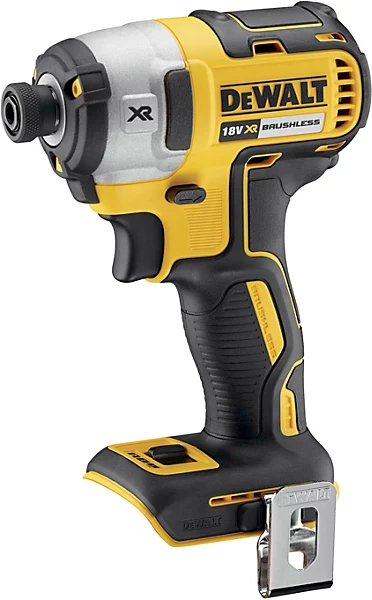 DeWalt DCF887 impact driver | 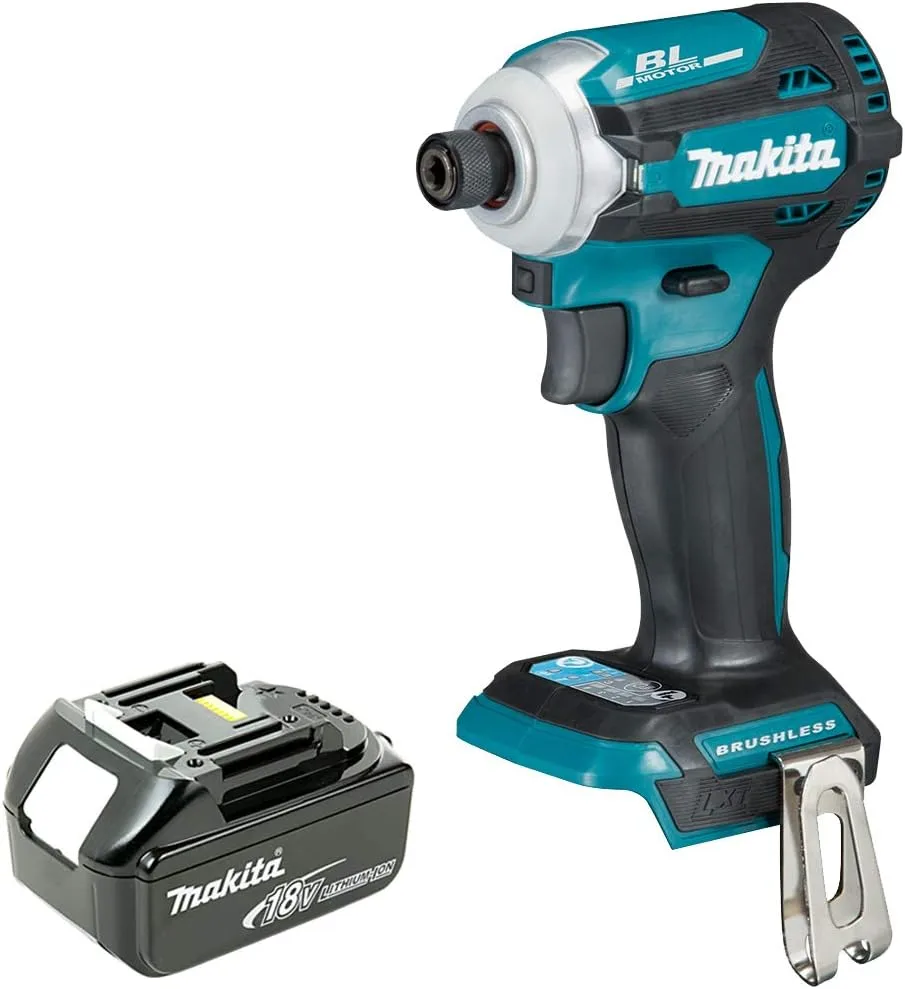 Makita DTD171 18V Brushless 4-Stage Impact Driver | 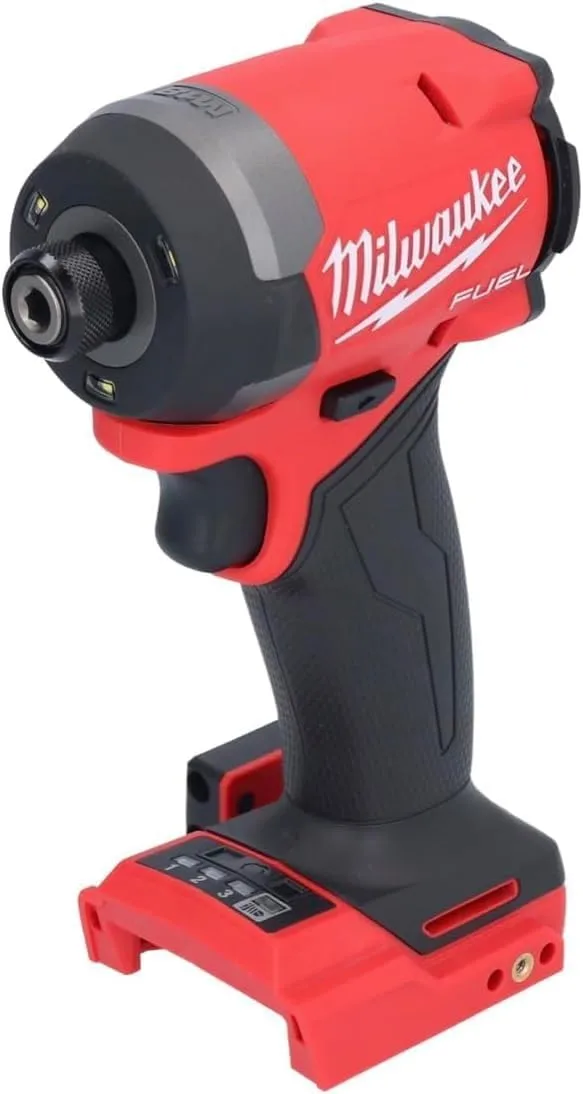 Milwaukee M18 2953-20 impact driver |
|---|---|---|---|
Max Torque | Up to 205 Nm | Up to 180 Nm | Up to 226 Nm |
No Load Speed (RPM) | Up to 3,250 RPM | Up to 3,600 RPM | Up to 3,900 RPM |
Impact Rate (IPM) | Up to 3,800 IPM | Up to 3,800 IPM | Up to 4,400 IPM |
Our Analysis: Power vs Speed
- Raw Power Winner (Torque): Milwaukee takes the crown with an industry-leading 226 Nm. This extreme torque is critical for heavy-duty applications, such as driving lengthy 150mm coach screws into solid wood or removing rusted fasteners. The M18 FUEL is engineered for unrelenting force under the heaviest load.
- Speed & Efficiency (IPM/RPM): Milwaukee also leads on speed with up to 2900 RPM and 4400 IPM. This high impact rate is what makes the tool feel fast on repetitive, smaller tasks like deck building or installing metal studs.
- DeWalt’s Balanced Force: DeWalt is a close second in power, with 205 Nm. This is more than enough for 95% of site work and offers a fantastic blend of power and control.
- Makita’s Focused Power: Makita’s 180 Nm is still substantial but places it slightly behind the other two for maximum grunt. However, Makita compensates with its focus on precise control and weight.
Advanced Control Modes
Modern impact drivers are defined by their electronic control modes, which prevent over driving and snap offs.
- Milwaukee (Drive Control): Features 4 dedicated modes, including a Self-Tapping Screw Mode designed to reduce stripping by starting fast and slowing down when it senses resistance.
- DeWalt (Precision Drive): This feature electronically pauses the tool for 0.75 seconds before impacting in the lowest speed setting, providing unparalleled start-up control for fine joinery or fitting.
- Makita (Four-Stage Modes): Makita’s DTD171 is famous for its extensive electronic control settings, which include a “T-Mode” for thick metal and an “A-Mode” for wood. The A-Mode uses low-speed start up and then accelerates for smooth driving, preventing screw wobble.
Section 2: Ergonomics and User Experience (The Job Site Test)
How a tool feels in your hand over an 8-hour day is often more important than the raw specs for some trades. The best tool is the one that feels right after a full day of use.
This is known as ergonomics, which is simpler to understand as a combination of balance, weight, and grip. All of these are important over a longer period of time
Weight and Balance Comparison
The table below shows the approximate weights when paired with a common 5.0Ah battery, which is the preferred setup for most tradespeople.
Brand | Model (Example) | Approx. Tool + 5.0Ah Weight | Best For: |
|---|---|---|---|
Makita | DTD171 | 1.5 Kg | Overhead work and tight spaces. |
DeWalt | DCF887 | 1.7 Kg | All-day balance and consistent torque delivery. |
Milwaukee | M18 FUEL 2953-20 | 1.8 Kg | Durability and sustained heavy use. |
Makita: The Lightweight Champion
Makita is famous for its comfort and compact design. Their flagship impact drivers are noticeably lighter and often shorter than their competitors, making them the best choice for overhead work or prolonged use in tight spaces.
Its smaller grip diameter is popular among users with smaller hands, and the lighting system is positioned below the chuck, reducing shadows.
Makita’s grip is generally thinner, appealing to users who prefer a slender handle. At 1.5 Kg fully loaded, it is noticeably lighter, significantly reducing fatigue during prolonged overhead or repetitive tasks like plaster boarding.
- Key Advantage: Smallest and lightest tool body.
DeWalt: Balanced & Robust
DeWalt tools are best known for their excellent front-to-back balance, especially when paired with a 4.0Ah or 5.0Ah battery. The grip features a firmer, textured overmould that feels solid and stable under high torque loads.
DeWalt excels in front-to-back balance. The battery sits flush and the tool is weighted for excellent stability when held in the firing position. The firm rubber overmould handles sweat and rough use effectively.
Recent models offer the most aggressive three-LED lighting ring around the chuck, which eliminates shadows completely.
- Key Advantage: Best in-hand balance and superior lighting.
Milwaukee: Rugged and Feature-Rich
Milwaukee’s M18 FUEL line is built for toughness. It typically features the most rugged housing and a durable rubberised grip.
Milwaukee tools often feel the most rugged and dense. While heavier, this weight contributes to a feeling of incredible durability, backed by a strong, thick rubber overmould designed to survive extreme job site conditions.
Crucially, the ONE-KEY models add Bluetooth customisation, allowing professionals to save custom torque and speed settings for specific materials or screw types. This is a feature no competitor currently matches for precision.
- Key Advantage: Durability and electronic customisation (ONE-KEY).
Section 3: The Ecosystem – Battery, Warranty, and Value
The impact driver is merely the entry point to a platform of 100+ other tools. The true cost of ownership is tied to the price, longevity, and future capability of the battery system you choose.
Choosing a brand means committing to a battery platform. Here’s what you get with each system in the UK.
Battery Technology & Charging Speed
We have detailed the complete cost breakdown in our article on battery technology and speed which you can read here. We have included a summary just below:
Brand | Platform Name | Key Innovation & Charging Efficiency |
|---|---|---|
Makita | 18V LXT | Fastest Charging: Makita’s Rapid Optimum Charger can charge a standard 5.0Ah battery in under 45 minutes, minimising tradesperson downtime. |
DeWalt | 18V XR / FLEXVOLT | Dual Voltage (FLEXVOLT): 18V/54V capability provides the foundation for their heaviest tools (saws, breakers), giving the platform unmatched versatility for site equipment. |
Milwaukee | M18/M12 FUEL | Largest Range & HO Cells: Arguably the largest professional cordless range globally, with High Output (HO) batteries offering better heat management for sustained high power. |
Deep Dive: When you compare the price of a standard 5.0Ah battery, Milwaukee generally offers the lowest individual entry point, while DeWalt’s high cost is justified by the backward compatibility with FlexVolt for extreme power applications.
For a complete analysis, see: “The True Cost of Battery Platforms.“
Digital Customisation and Tracking
In 2025, a top-tier tool should be smarter than just using a simple switch. This is where Milwaukee and DeWalt pull ahead in terms of technology.
Milwaukee ONE-KEY:
- This is Milwaukee’s flagship technology. It allows users to connect the tool via Bluetooth to a smartphone app which allows you to:
- Set custom drive profiles (torque and speed) for specific applications.
- Track the tool’s location on the job site (up to 30 metres range).
- Disable the tool remotely if stolen.
DeWalt Tool Connect:
DeWalt’s equivalent focuses heavily on inventory management and security. It enables tracking and remote disablement, helping larger sites and companies maintain asset control.
Makita
Makita does not currently offer integrated Bluetooth customisation or tracking on its impact drivers, focusing instead on robust on-tool electronic control.Deep Dive: For a full analysis of which platform wins on smart technology, read our article on “ONE-KEY vs Tool Connect.“
Ecosystem Size and Future-Proofing
All three brands have massive ecosystems, but their specialities differ:
- Milwaukee: With over 250 compatible M18 tools, Milwaukee is unmatched in specialty tools (e.g., pipe cutters, underground utility equipment).
- DeWalt: Dominates the heavier-duty side, particularly in construction, due to the 54V FLEXVOLT battery system which powers site equipment like table saws and high-powered grinders.
- Makita: Excellent range coverage, specializing in outdoor power equipment (OPE) and cordless grounds maintenance (garden tools) due to its battery efficiency.
UK Warranty Comparison
All three brands offer a standard 1-year warranty, extendable to 3 years on tools (excluding batteries and chargers) upon timely online registration.
The key difference lies in the service network and long-term cost of spare parts and batteries.
Summary Which Impact Driver is Right for Your Job?
Deciding on a tool is a decision about which ecosystem (Batteries, chargers and available tools) best supports your future projects and the type of trade you are in.
Priority | Recommended Brand | Why |
|---|---|---|
Maximum Power & Speed | Milwaukee M18 FUEL | Highest max torque, top-tier impact rate, and superior durability for constant, heavy job site abuse. |
Comfort & Downtime Reduction | Makita 18V LXT | Lighter body, superb ergonomics, and the fastest battery charging speeds on the market—ideal for repetitive or overhead work. |
System Versatility & Heavy Equipment | DeWalt 18V XR / FLEXVOLT | Excellent balance of power, a strong lighting system, and seamless compatibility with the powerful 54V FlexVolt range for larger tools. |
The Two Final Questions to Ask Yourself:
- Do you need to drive the largest screws? Choose Milwaukee.
- Do you hate waiting for batteries to charge? Choose Makita.
Further Reading & Deep Dives
For a complete picture before you commit to a platform, explore our in-depth analysis of specific components.
The True Cost of Battery Platforms: A 2025 Makita vs DeWalt vs Milwaukee Battery Price Comparison (UK)Where the real money goes! We break down the cost per Ah for single and multi-packs and compare the long-term investment of the three ecosystems. [Link to Cluster Article 1]
ONE-KEY vs Tool Connect: Advanced Tool Tracking and Customisation Review
A deep-dive into the smart technology. Can remote disabling and custom drive modes really make you more efficient? [Link to Cluster Article 2]
Brushless Motor Technology Explained: Is Makita’s Brushless Design Better for Longevity?We look at how each brand’s motor and control electronics contribute to tool lifespan and efficiency.