
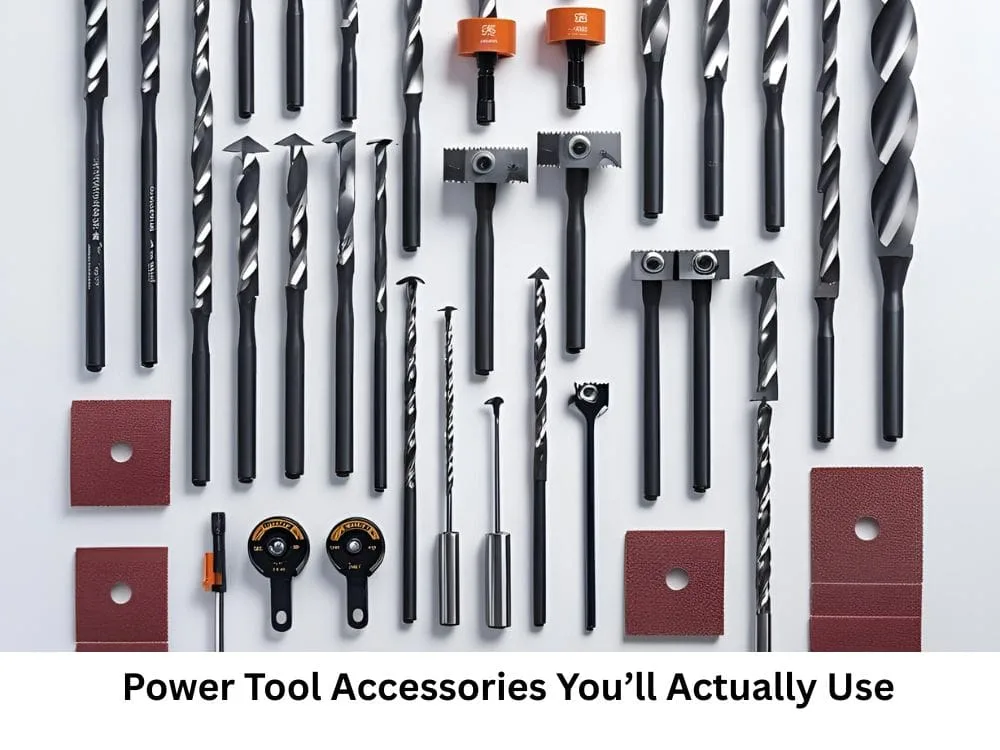
Power tools are really only half the story. It’s the accessories make them useful. Whether you’re drilling, cutting, sanding or assembling, the right add-ons can improve performance, safety, and results.
This guide covers the essential power tool accessories every UK DIYer should know about and consider. There are a lot of these, some useful and some not so much. The accessories we have mentioned below are of course extremely useful.
Drill Bit Set
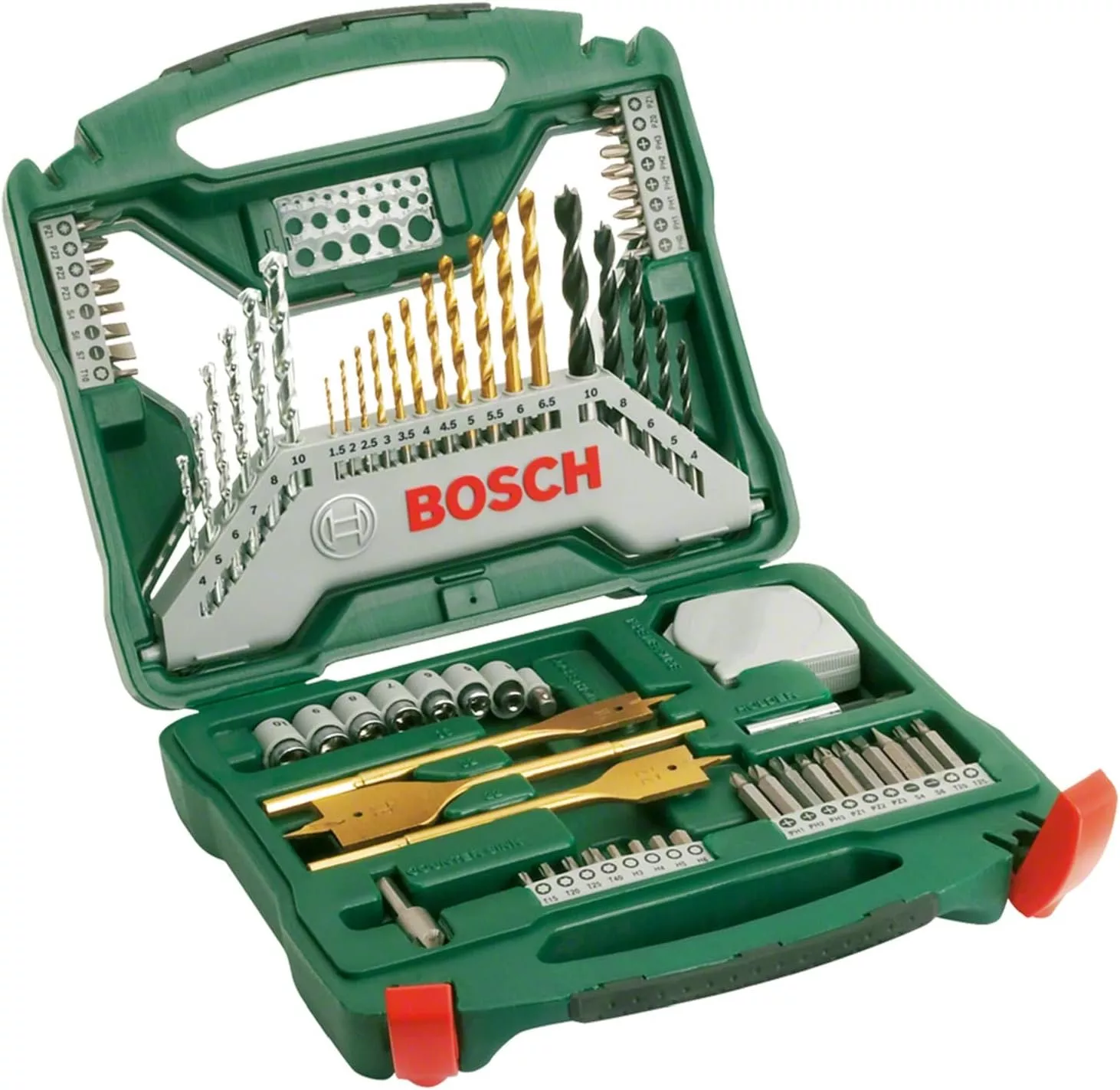
A cordless drill is only as good as the bits you feed it. A mixed set lets you tackle wood, metal, masonry, and plastic with ease.
Look for:
- HSS bits for metal
- Brad point bits for wood
- Masonry bits for brick and concrete
- Titanium-coated or black oxide for durability
Tip: Choose a set with labelled compartments to stay organised.
You can collect these over time. It is worth knowing that you can buy individual drill bits, but buying a set is always better value. Like most things in life, avoid buying really cheap bits, as they simply don’t last. It’s much better to buy a set of Bosch or Makita drill bits that work well and are made to last for a good length of time.
Jigsaw Blades

Jigsaws are versatile—but only with the right blade. Keep a variety on hand for clean cuts, curves, and different materials.
Types to stock:
- Wood blades (coarse and fine)
- Metal blades (bi-metal or HSS)
- Laminate blades (reverse-tooth)
- Curve-friendly blades (narrow width, high TPI)
Tip: T-shank blades fit most modern jigsaws—check compatibility before buying.
Clearly you only need to buy these if you own a jigsaw. We find Bosch jigsaw blades to be the best. It really depends on what you are cutting. For laminates like wooden floors or worktops, make sure to use a very fine jigsaw blade to avoid rough unsightly edges.
Sanding Sheets/Pads
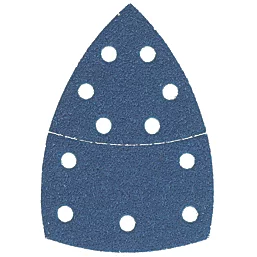
Whether you use an orbital, detail, or multi-tool sander, you’ll need a range of grits to prep surfaces properly.
Recommended grits:
- 60–80 for rough shaping
- 120–150 for smoothing
- 180–240 for finishing
Choose:
- Hook-and-loop pads for easy changes
- Packs with multiple shapes for tight corners
There are a few different types of sanders on the UK market. These include belt, orbital, random orbital, sheet and detail sanders. They all take slightly different shapes of sheets. We would recommend using the pads or sheets recommended by the manufacturer of your sander. That way you can be certain that they fit. That means you just need to decide on the grit you need. Many manufacturers sell a set with mixed grits.
Spare Batteries & Charger
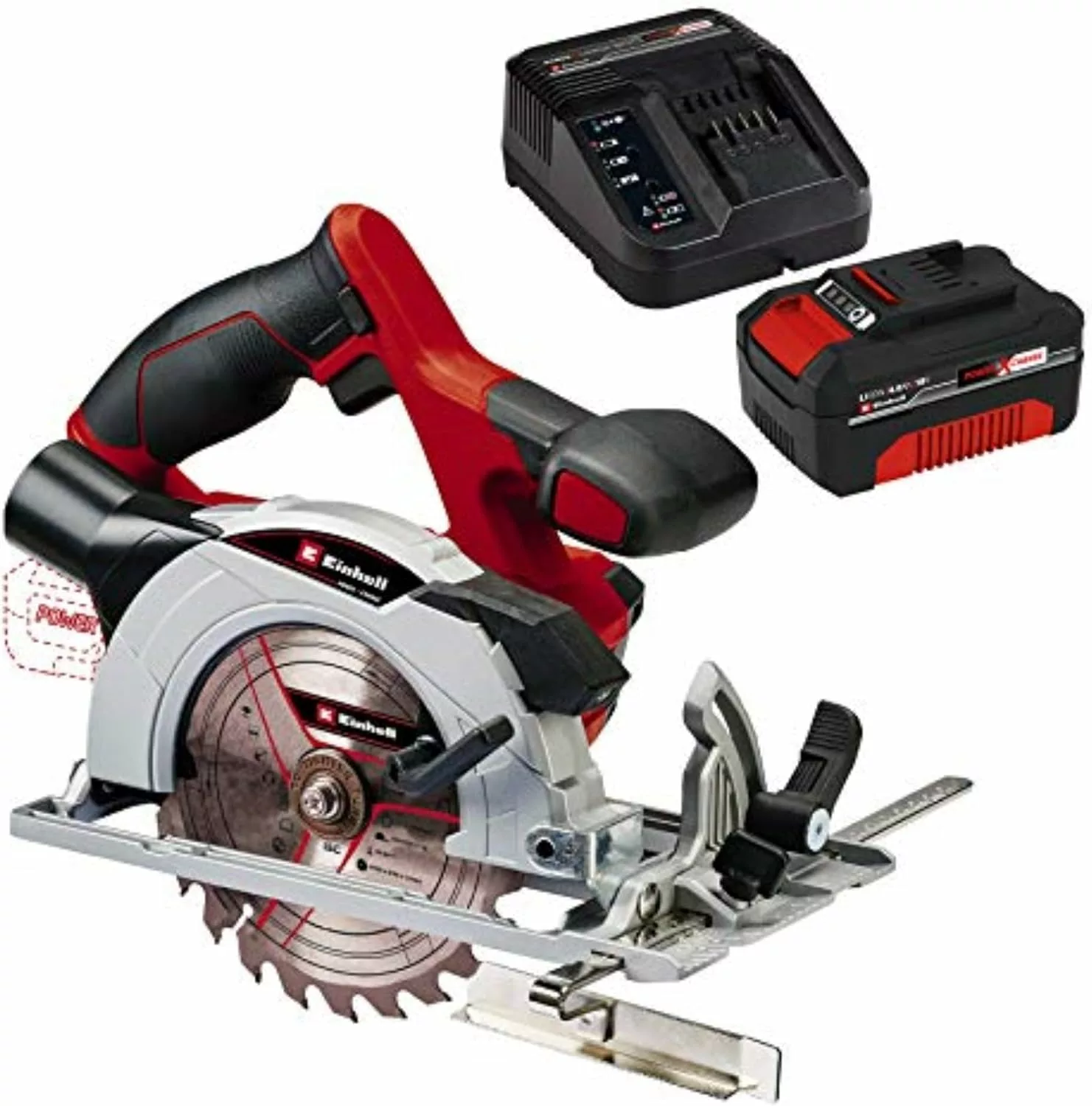
If you’re using cordless tools, extra batteries are a must—especially for longer projects or multi-tool setups.
Look for:
- Fast chargers (30–60 mins)
- Battery level indicators
- Compatibility with your tool brand’s ecosystem
Tip: Consider investing in a twin-pack or starter kit with two batteries.
When you are buying your first cordless tool, it is always more expensive as you have to buy the battery and charger. Once you own those, then as long as you stick with the same brand, you only have to buy the tool.
We recommend trying to buy your first kit that it comes with two batteries and a charger. There is nothing more frustrated than running out of battery charge when you are trying to get something done.
With a spare battery, you do a quick swap and you are good to go. At the same time you can then recharge the other battery.
Storage Case or Tool Bag
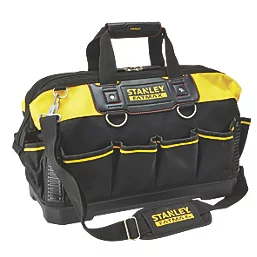
A tidy toolkit saves time and protects your gear. Whether it’s a hard case, soft bag, or modular box system, good storage is worth it.
Options:
- Stackable boxes with compartments
- Magnetic strips for blades and bits
- Tool rolls or pouches for accessories
You will not be spoiled for choice when it comes to buying storage cases or tool bags in the UK. It is worth knowing that most starter kits come with a hard plastic case. These are ideal for storing power tools.
Never store power tools where there is damp or moisture as they will rust. Even a simple tool bag can stop that from happening.
Safety Gear
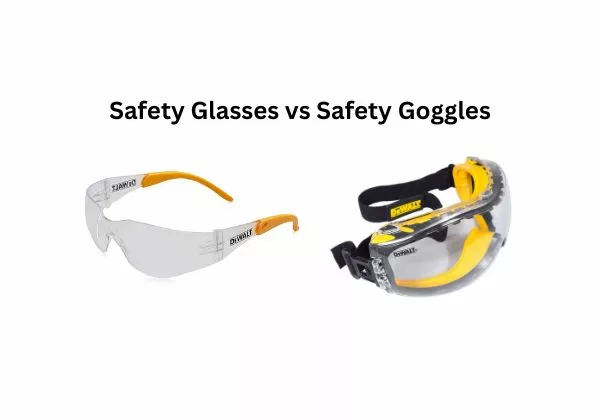
Not technically an accessory—but absolutely essential. Keep a dedicated kit for protection and peace of mind.
Must-haves:
- Safety glasses
- Dust mask or respirator
- Ear defenders
- Gloves (for handling, not cutting)
Tip: Store PPE with your tools so it’s always within reach.
Please always wear these to protect your eyes, ears, hands and what you might be breathing in. A small selection of PPE keeps you safe and out of A&E.
Accessories aren’t just extras—they’re the key to getting the most out of your power tools. Start with the basics: drill bits, blades, sanding pads, and safety gear, then expand as your projects grow. A well-stocked kit means smoother cuts, cleaner finishes, and fewer frustrations.
Want to build your toolkit further? Check out:
- Essential Power Tools for DIY Beginners
- Top 5 Cordless Drill Sets for Home Use
- Power Tool Safety Tips for DIY Beginners